Automating Database Migration Troubleshooting with AWS DevOps Agent and Model Context Protocol

Migrating a production database is widely regarded as one of the most high-risk operational maneuvers in modern enterprise IT. While tools like AWS Database Migration Service (DMS) provide robust mechanisms for the actual transport of data—moving rows reliably across relational databases and data warehouses—the most critical failures rarely occur during the data copy phase. Instead, the "danger zone" typically emerges in the hours and days following a cutover. On-call engineers frequently face a cascade of post-migration issues: queries that performed optimally on the legacy engine suddenly triggering inefficient full scans, connection pools exhausted by new architecture constraints, or downstream microservices timing out due to unexpected latency.
These challenges are fundamentally operational rather than data-centric. Resolving them under the pressure of a live production outage often requires engineers to manually correlate disparate data points—ranging from DMS task states and Amazon CloudWatch metrics to Amazon RDS Performance Insights and historical deployment logs. To mitigate these risks, organizations are increasingly turning to autonomous operational agents. The integration of the AWS DevOps Agent with a Model Context Protocol (MCP) server provides a sophisticated framework for diagnosing and resolving these migration hurdles by acting as an always-available, specialized teammate.
The Evolution of Migration Troubleshooting
Historically, database migration support has relied on a reactive model. An engineer receives an alert, logs into multiple management consoles, cross-references logs, and attempts to reconstruct the state of the database at the time of failure. This process is time-intensive and prone to human error, particularly when dealing with complex, high-throughput environments.
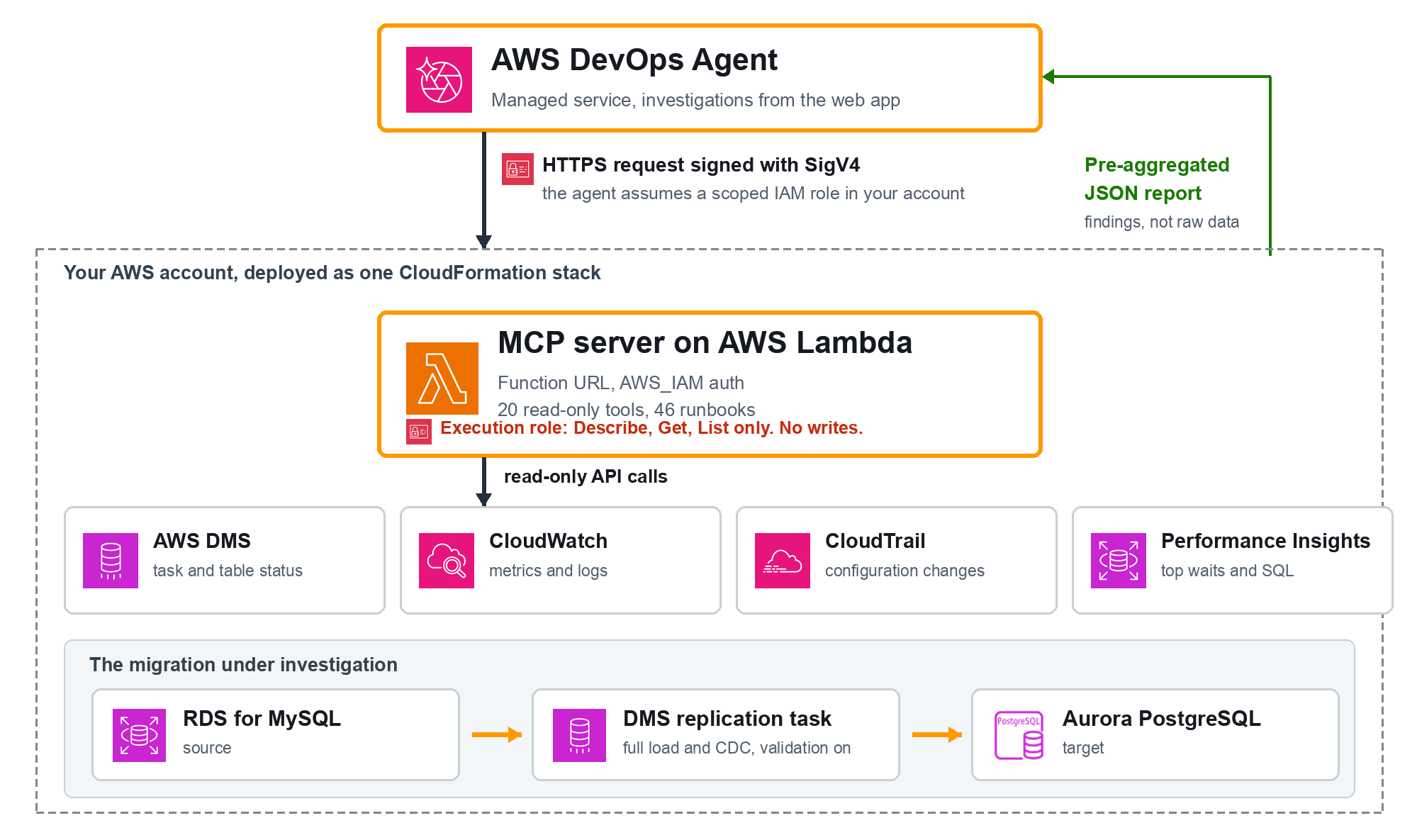
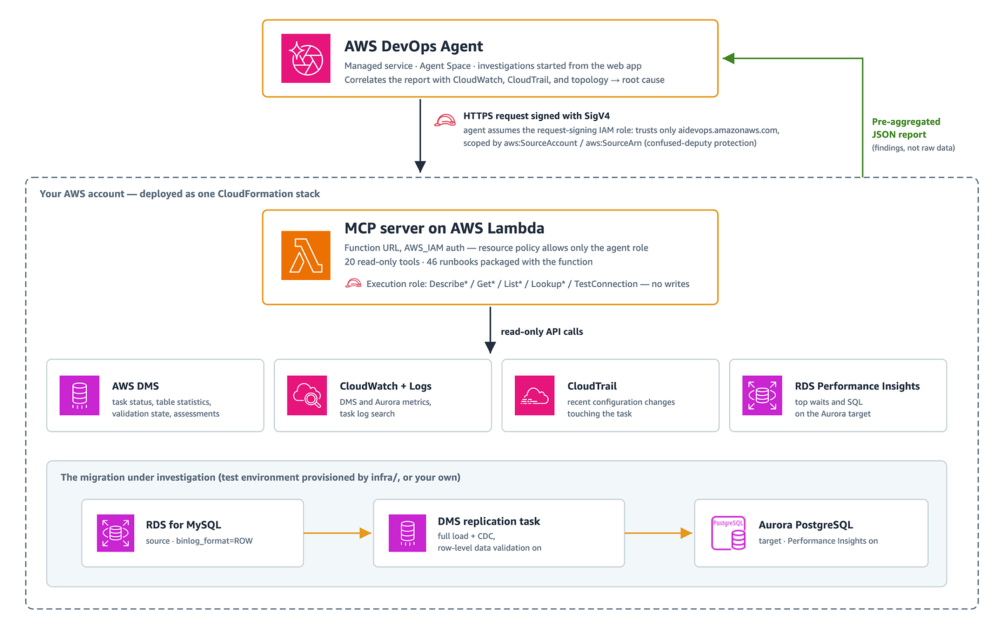
The AWS DevOps Agent introduces a paradigm shift by functioning as an autonomous system that understands both the infrastructure and the application layer. By deploying a custom MCP server, engineers can grant the agent read-only access to migration-specific tools. This allows the agent to ingest telemetry, validate code configurations, and correlate deployment data to identify root causes. Crucially, the agent operates within the security bounds of AWS Identity and Access Management (IAM), utilizing Signature Version 4 (SigV4) for authenticated, secure communication. This architecture ensures that the agent can investigate without requiring shared secrets or permanent credentials, adhering to the principle of least privilege.
Architectural Framework and Implementation
The implementation strategy centers on a serverless architecture, where the MCP server is deployed via AWS Lambda. By utilizing a Lambda function URL with AWS_IAM authentication, the system ensures that only authorized principals can invoke the diagnostic tools. This setup is managed through AWS CloudFormation, enabling teams to maintain consistent, repeatable infrastructure.
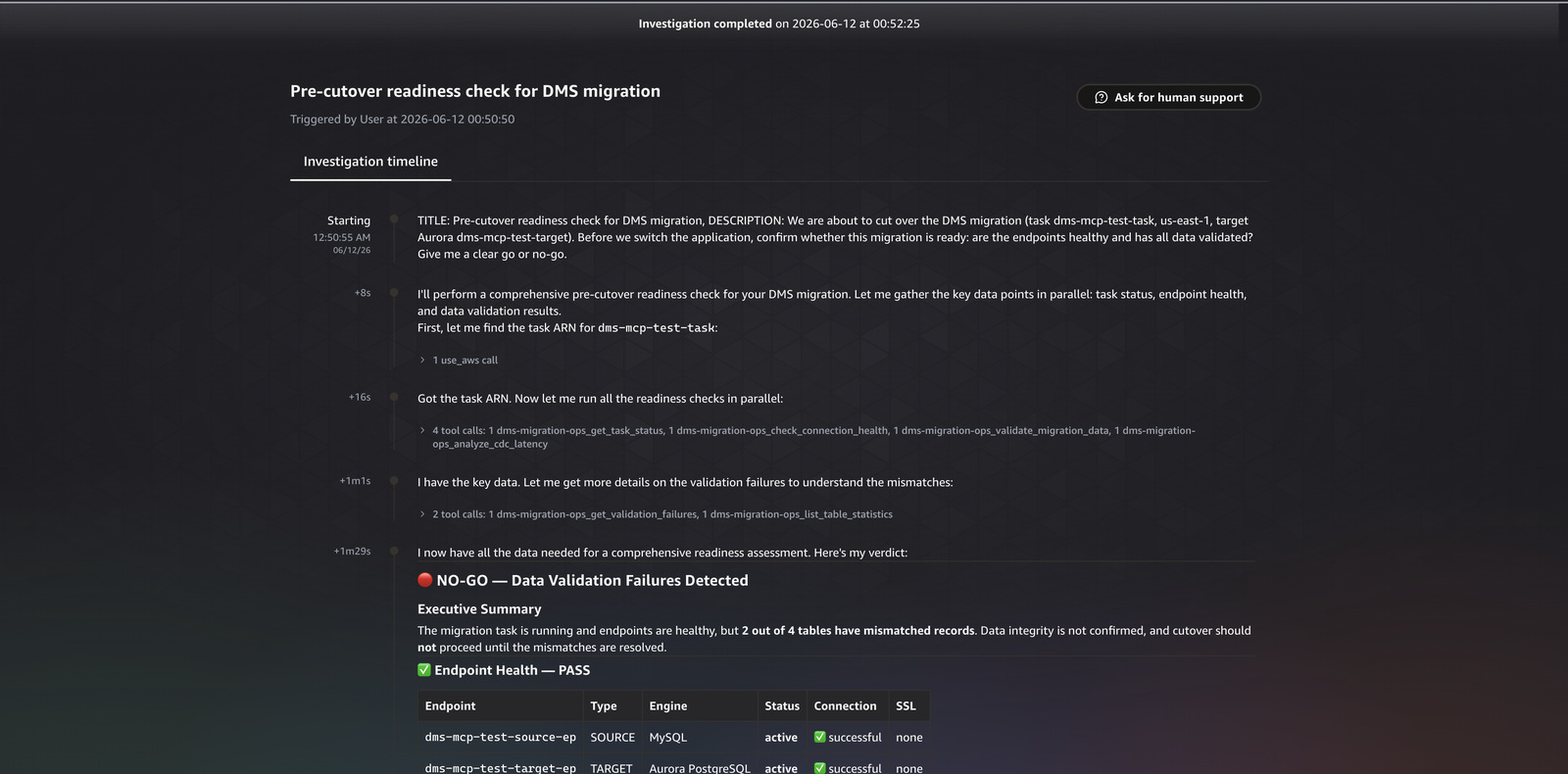
Once deployed, the agent is granted access to a suite of tools capable of executing read-only operations such as Describe*, Get*, and List*. These tools are specifically designed to traverse the lifecycle of a migration. For instance, the validate_migration_data tool provides a distribution report of validation states, identifying failed or suspended tables, while the analyze_cdc_latency tool compares source and target Change Data Capture (CDC) latency to pinpoint performance bottlenecks.
Beyond real-time diagnostics, the system incorporates a catalog of 46 specialized runbooks. These documents cover critical areas including full load progress, connectivity health, and post-cutover readiness. When a symptom appears, the agent does not merely report the data; it maps the issue against these runbooks to provide actionable, grounded recommendations.
Chronology of an Investigation: From Symptom to Resolution
To validate the efficacy of this autonomous approach, developers tested the system against a live migration scenario involving an Amazon RDS for MySQL source replicating to an Aurora PostgreSQL target. The investigation process follows a distinct, repeatable pattern:
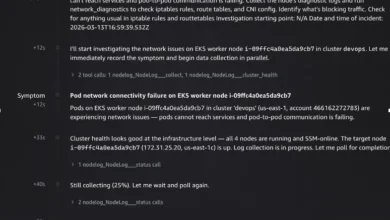
- Symptom Identification: The agent receives a natural language query regarding a specific migration task.
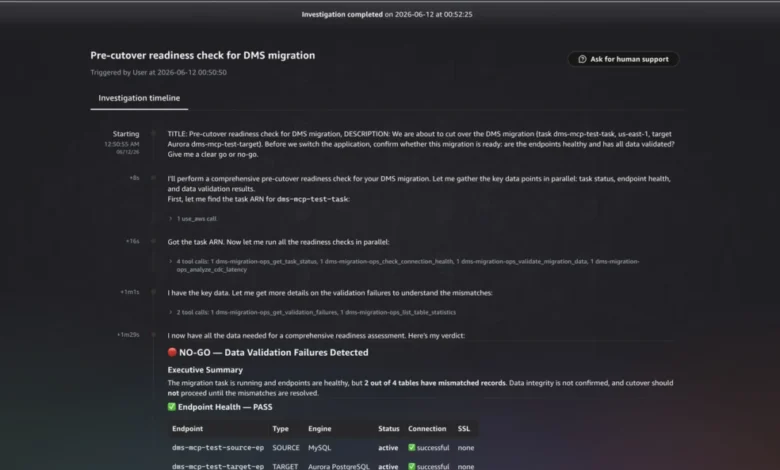
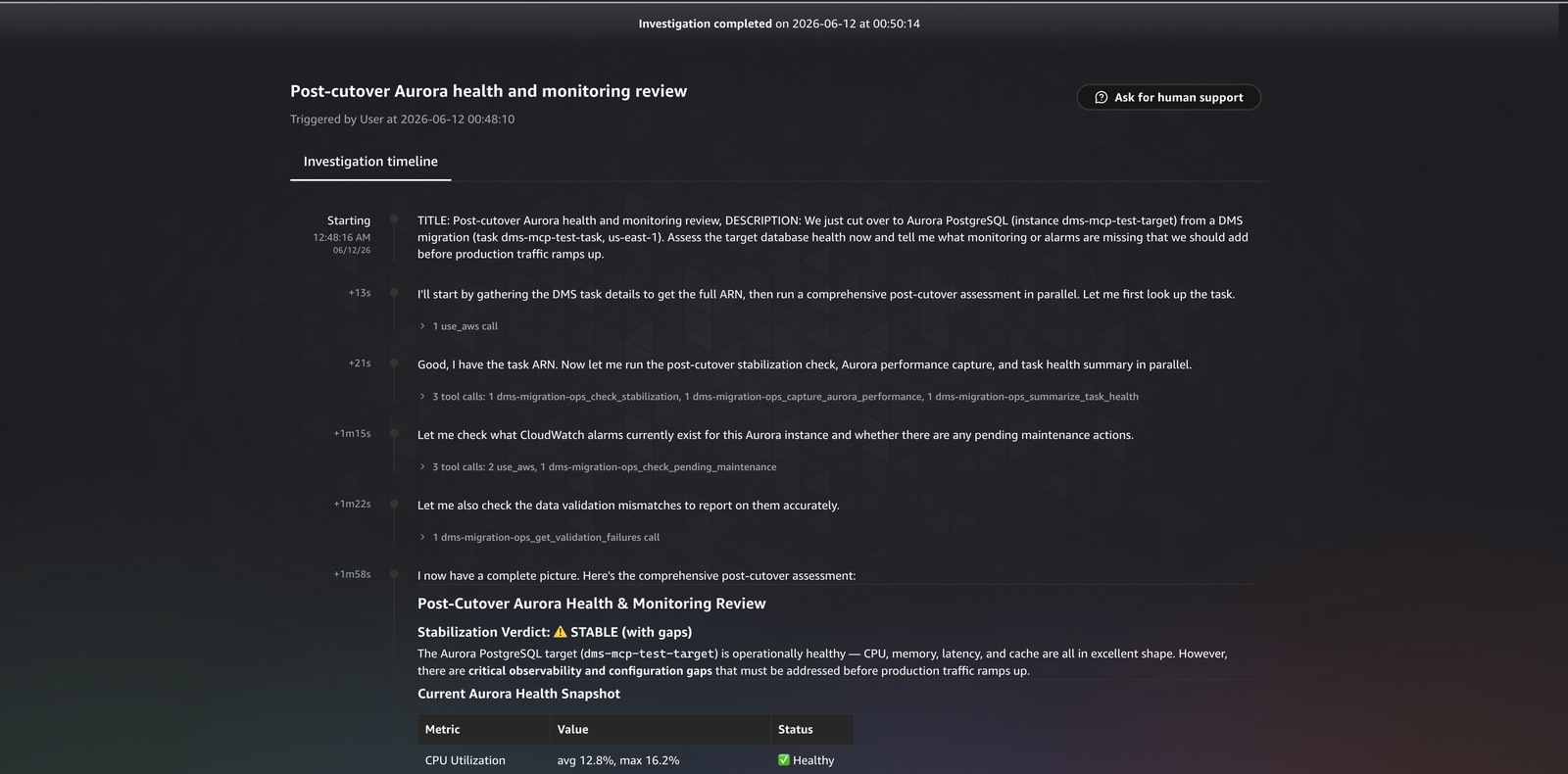
- Tool Selection and Reasoning: Unlike fixed-script automation, the agent evaluates which tools are necessary for the specific query. In a typical readiness assessment, it might trigger
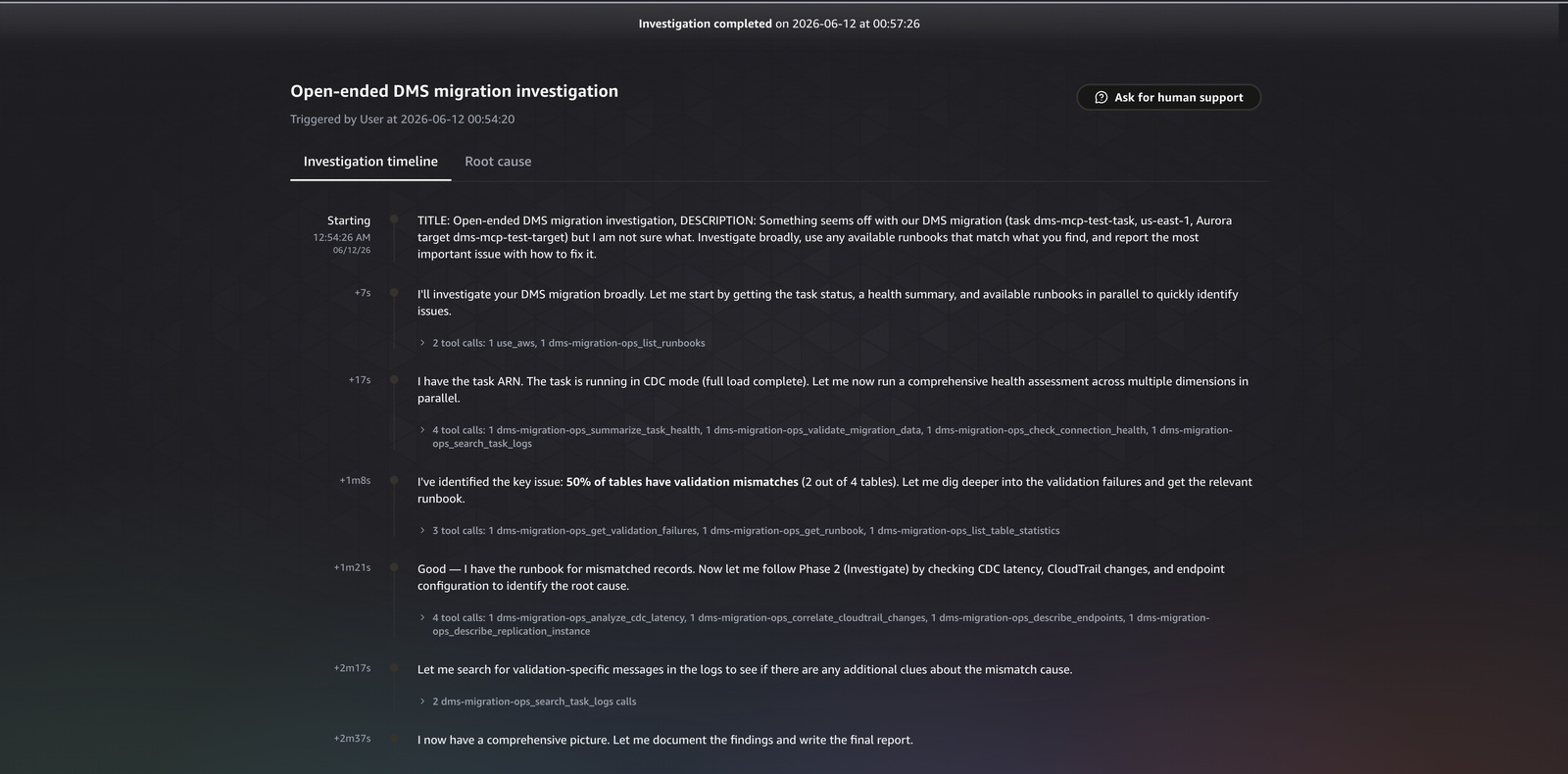
check_connection_healthandvalidate_migration_datato ensure all prerequisites are met before the final cutover. - Cross-Correlation: The agent synthesizes information from diverse sources. For example, in an investigation involving validation failures, the agent might analyze 73 journal records and execute 33 tool calls to link source modifications to CDC latency delays.
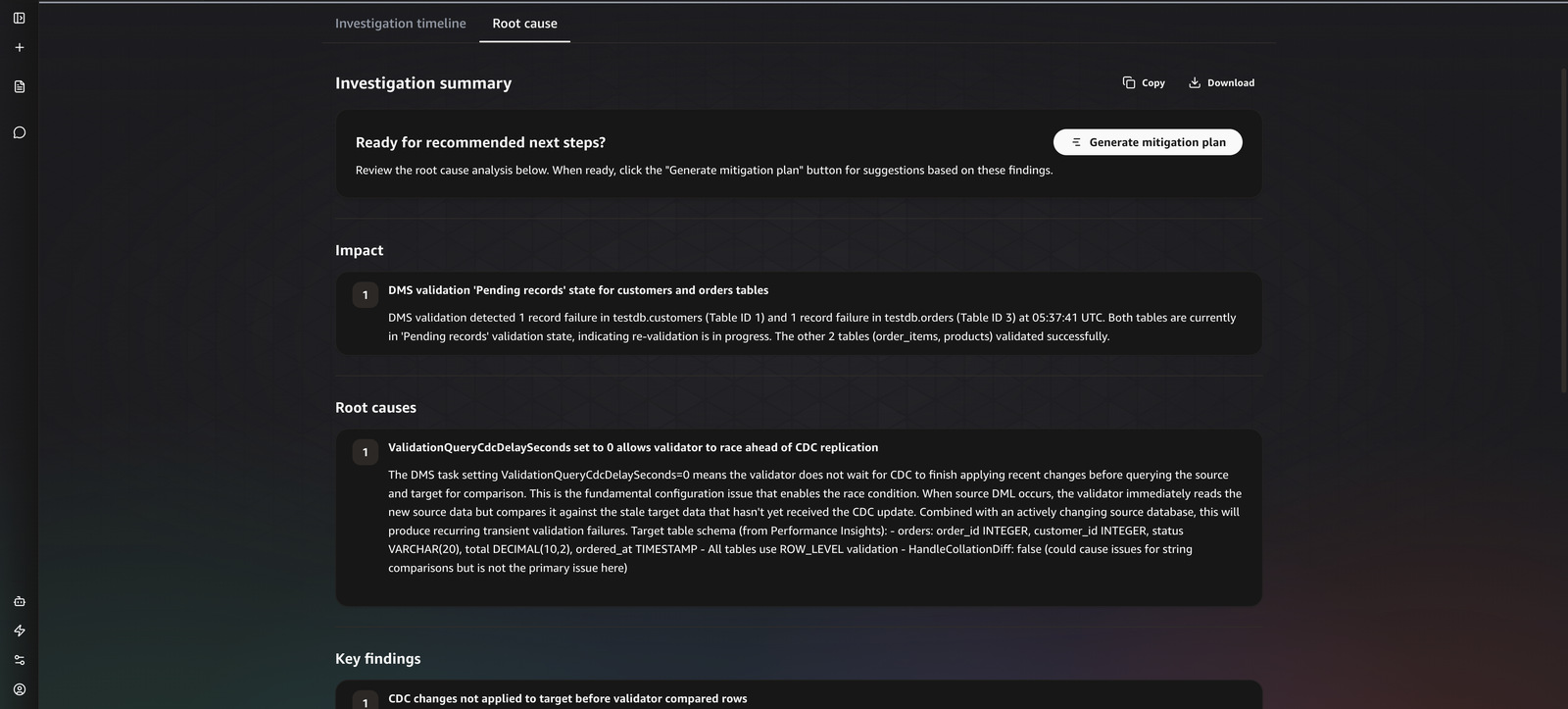
- Root Cause Discovery: The system identifies the specific configuration variable—such as
ValidationQueryCdcDelaySeconds—that caused a race condition, offering a precise remediation path rather than a generic error message.
This method significantly reduces the "Mean Time to Resolution" (MTTR). In simulated tests, what previously required 30 minutes of manual console navigation and log analysis was resolved in approximately three minutes.
Data-Driven Insights and Operational Impact
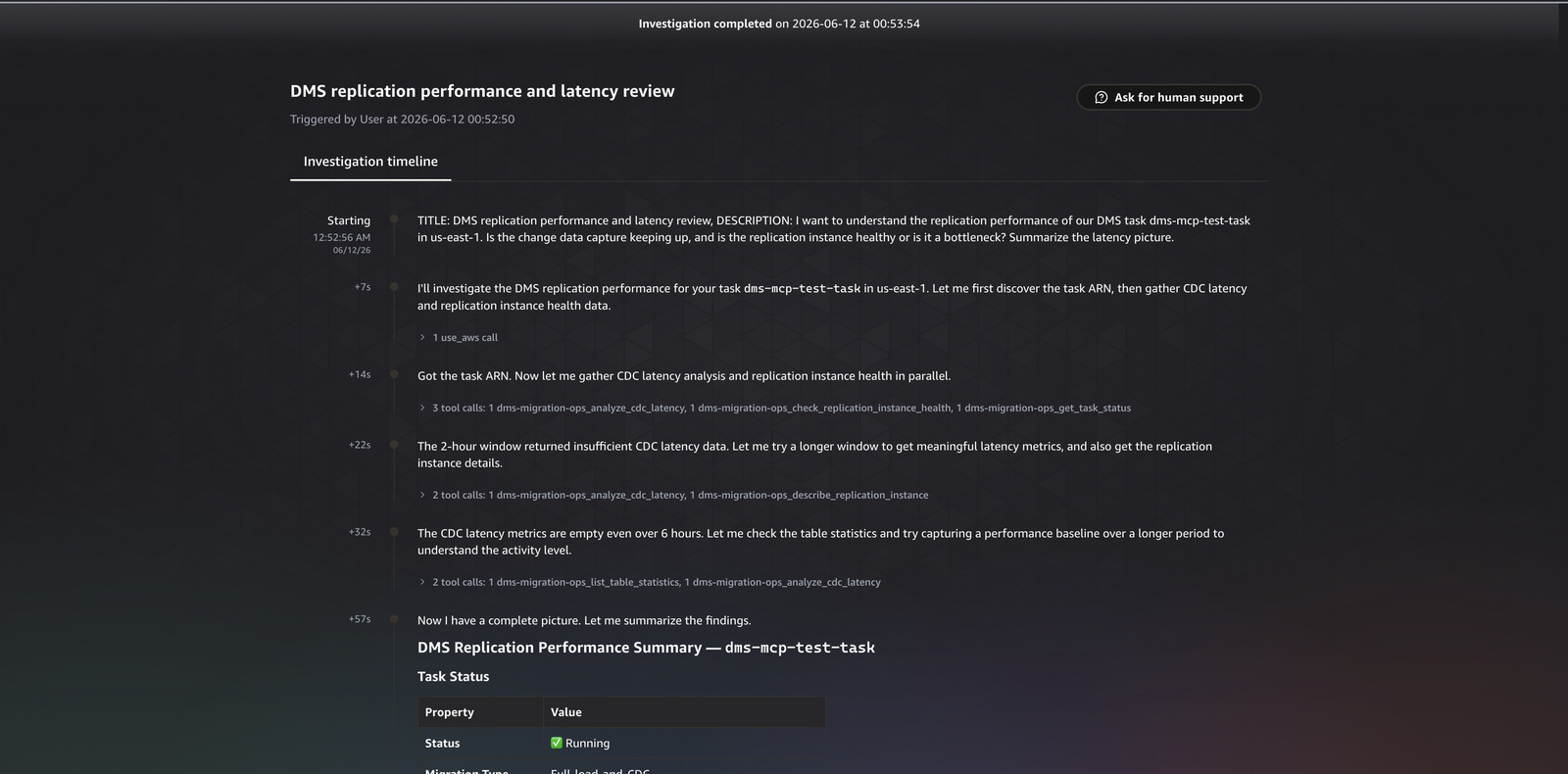
The integration of MCP-based tools provides a structured way to handle the "unknown unknowns" of database migration. In open-ended investigations—where an operator notes that "something seems off" but cannot identify the specific cause—the agent utilizes its runbook library to perform a broad sweep of the migration environment.
The impact of this approach extends beyond simple troubleshooting. By capturing the reasoning process in "DevOps Agent Skills"—Markdown instruction sets that guide the agent’s decision-making—teams can effectively institutionalize their migration knowledge. When the agent identifies a new type of failure, that discovery can be folded back into a skill or runbook. Consequently, the agent becomes smarter and more efficient with every subsequent migration, creating a "flywheel" effect of continuous operational improvement.
Implications for Enterprise IT
The shift toward autonomous migration troubleshooting carries significant implications for the broader IT landscape. As enterprises continue to migrate legacy workloads to the cloud, the complexity of these transitions is increasing. Traditional monitoring tools often fail to provide the context required to understand why a database is underperforming after a lift-and-shift or re-platforming event.
The ability to provide an autonomous agent with the context of a migration—the "what, why, and how" of the data movement—bridges the gap between raw telemetry and actionable intelligence. Furthermore, the focus on read-only tools ensures that the agent acts as an advisor and investigator, rather than an unmanaged actor, maintaining the security and integrity of the production environment.
Conclusion and Future Outlook
The use of AWS DevOps Agent, bolstered by an MCP-based diagnostic layer, represents a mature step forward in cloud operations. It addresses the fundamental disconnect between data movement and operational health. By automating the correlation of logs, metrics, and deployment history, organizations can move away from manual, high-stress triage toward a proactive, intelligence-led model.
For organizations planning large-scale database migrations, this approach provides a reliable framework for minimizing downtime and accelerating cutover timelines. As the industry moves toward increasingly autonomous infrastructure, the ability to codify expertise into runbooks and skills will become a competitive advantage, ensuring that migrations are not just successful, but systematically optimized. The accompanying sample implementation, available on GitHub, offers a clear path for teams to begin integrating these capabilities into their own operational workflows, turning the once-daunting task of database migration into a controlled, predictable, and fully observable process.
Related posts: