Range Rover Previews the Future of Electric Luxury with the Debut of the All-Electric Grand Tourer Built on Advanced EMA Architecture

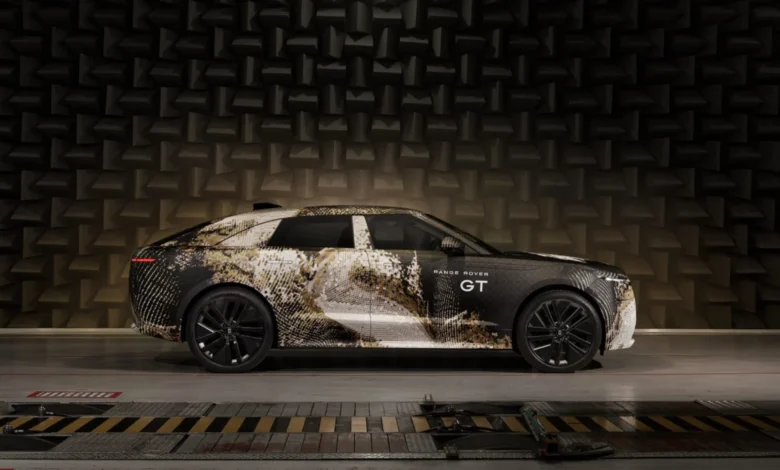
Range Rover has officially signaled a transformative shift in its design philosophy and engineering focus, unveiling preliminary details regarding its upcoming all-electric Grand Tourer (GT). This move represents a significant departure for a brand historically defined by its commanding, high-riding SUVs. According to Martin Limpert, the Managing Director of Range Rover, the company has dedicated several years to "obsessively" refining the fundamentals of the GT formula. The objective is to deliver a vehicle that maintains the brand’s hallmark sophistication while introducing a driving dynamic that is the most "car-like" in the marque’s history.
The upcoming GT is built upon the Electric Modular Architecture (EMA), a dedicated battery-electric vehicle (BEV) platform that represents a cornerstone of Jaguar Land Rover’s (JLR) "Reimagine" strategy. Limpert emphasized that this new model is intended to complement the existing powertrain portfolio, ensuring that the brand offers a comprehensive set of options ranging from internal combustion engines and plug-in hybrids to full electrification. By utilizing the EMA platform, Range Rover aims to fuse high-performance electric propulsion with long-distance refinement and the all-terrain capability that remains a non-negotiable trait of the brand’s identity.
A Strategic Pivot in Platform Engineering
The development of the Range Rover GT is inextricably linked to JLR’s broader multi-platform strategy. Currently, the company utilizes three primary architectures to facilitate its transition toward an electrified future. The first is the Modular Longitudinal Architecture (MLA), which currently underpins the flagship Range Rover and Range Rover Sport models. The MLA is a flexible platform capable of accommodating internal combustion, hybrid, and fully electric powertrains.
The second is the aforementioned EMA (Electric Modular Architecture). Unlike the MLA, the EMA has been designed from the ground up with an "electric-first" mindset. While it was initially anticipated to serve the next generation of smaller Range Rover models, such as the Evoque and Velar, its application in a high-performance GT suggests a high degree of modularity and technical sophistication. The EMA is expected to feature an 800-volt system, enabling ultra-fast charging capabilities—a necessity for a vehicle marketed as a "Grand Tourer" intended for long-distance travel.
The third platform in the group’s arsenal is the JEA (Jaguar Electric Architecture). This platform is being developed exclusively for Jaguar’s rebirth as an ultra-luxury brand. Jaguar is currently preparing its own four-door grand tourer, codenamed the Type 01, which is expected to debut later this year. The simultaneous development of the Range Rover GT and the Jaguar Type 01 suggests a dual-pronged assault on the high-end electric sedan market, though the two vehicles will likely target different demographics through distinct design languages and driving characteristics.
Interior Design: Minimalism Meets Regulatory Compliance
In a preview of the GT’s interior, Range Rover has showcased a cabin that marks a stark departure from the traditional, upright aesthetic of its SUV lineup. The design team has embraced an "ultraminimalist" approach, focusing on clean lines, high-quality sustainable materials, and a reduction in visual clutter. However, this minimalism does not come at the expense of functionality or safety.
Crucially, Range Rover has resisted the industry trend of migrating all vehicle functions to a singular touchscreen. This decision is partly driven by emerging safety regulations in Europe and other global markets. Organizations such as Euro NCAP have recently signaled that from 2026, vehicles must feature physical controls for essential functions—such as turn signals, windshield wipers, hazard lights, and SOS calls—to receive a maximum five-star safety rating. Range Rover’s design ensures that while the cabin feels futuristic, it remains compliant with these rigorous safety standards.
The technological centerpiece of the dashboard consists of two high-definition OLED screens: a primary instrument display for the driver and a central infotainment touchscreen. In a notable move to preserve a focused driving environment, designers have opted not to include a third screen for the front passenger, a feature that has become common in competitors like Porsche and Mercedes-Benz. Instead, a head-up display (HUD) has been made standard, projecting critical information directly into the driver’s line of sight to minimize distractions.
Chronology of the Range Rover Electric Transition
The journey toward the Range Rover GT is part of a multi-year timeline established by JLR to modernize its fleet and manufacturing capabilities:
- February 2021: JLR announces the "Reimagine" strategy, pledging to turn Jaguar into an all-electric brand by 2025 and launch six pure-electric Land Rover variants by 2026.
- April 2023: JLR rebrands as a "House of Brands," elevating Range Rover, Defender, and Discovery to individual brand status alongside Jaguar. The company announces a £15 billion investment over five years into industrial footprints, vehicle programs, and digital technologies.
- Late 2023: Testing begins for the first-ever fully electric Range Rover SUV (based on the MLA platform), with a waiting list opening for prospective customers.
- Early 2024: Details emerge regarding the EMA platform’s specific role in the lineup, shifting from a compact SUV focus to including a high-performance GT.
- Late 2024 (Expected): Full reveal of the Range Rover GT and the Jaguar Type 01, including technical specifications regarding range, horsepower, and acceleration.
Technical Analysis and Performance Expectations
While specific horsepower and torque figures remain under wraps, the industry consensus suggests that the Range Rover GT will need to compete with established players like the Porsche Taycan, Audi e-tron GT, and Lucid Air. To maintain its "all-terrain" branding, the GT is expected to utilize a sophisticated dual-motor all-wheel-drive system.
Industry analysts suggest that the EMA architecture will likely support battery capacities exceeding 100 kWh, providing a target range of over 300 miles (480 km) on a single charge. Furthermore, the "calming interior" mentioned by Limpert suggests the inclusion of advanced active noise cancellation technology, a feature JLR has pioneered to combat the unique acoustic challenges of silent electric drivetrains.
The vehicle’s "car-like" handling will likely be achieved through a lower center of gravity—inherent in battery-electric designs where the pack is mounted in the floor—and an advanced air suspension system capable of adjusting ride height for both aerodynamic efficiency on the highway and clearance for light off-road excursions.
Market Implications and Competitive Landscape
The introduction of a Grand Tourer is a strategic gamble for Range Rover, a brand synonymous with the "King of the Hill" SUV posture. However, market data indicates a growing appetite for luxury electric sedans and GTs, particularly in the Chinese and North American markets. By diversifying into the GT segment, Range Rover is attempting to capture "conquest" customers who might otherwise look toward BMW’s i7 or Mercedes-Benz’s EQS.
Furthermore, the GT serves as a halo vehicle for the EMA platform. If Range Rover can prove that a low-slung GT can possess the same "effortless performance" and "all-terrain capability" as its larger siblings, it validates the platform for future models.
Official reactions from within the industry have been cautiously optimistic. Automotive analysts note that JLR’s decision to maintain physical buttons is a savvy move that prioritizes ergonomics and safety, potentially giving them an edge over competitors who have faced criticism for overly complex, screen-heavy interfaces.
Future Outlook
As the automotive world moves closer to the 2030s, the distinction between traditional vehicle segments is blurring. The Range Rover GT represents this evolution—a vehicle that is neither a traditional sedan nor a conventional SUV, but a "modern grand tourer" designed for an electrified era.
The company has confirmed that more details, including the final exterior design currently hidden under camouflage, will be released toward the end of the year. This reveal will be a pivotal moment for JLR, as it seeks to prove that its most "car-like" vehicle can still be an "unmistakably capable" Range Rover. With the EMA architecture providing the foundation, the GT is poised to define the next chapter of British luxury motoring, balancing the heritage of all-terrain dominance with the requirements of a sustainable, high-performance future.
Related posts: