Amazon Q3 2026 Earnings Report Reveals Massive AI Investment Spend and Cloud Growth Surge

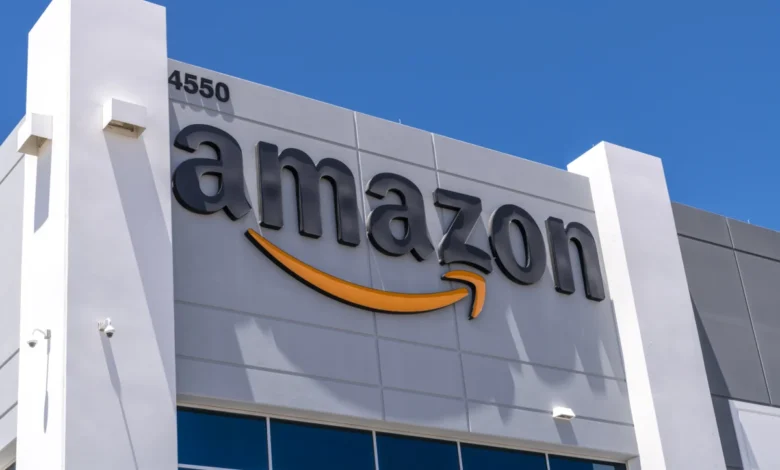
Amazon’s third-quarter earnings report, released on Thursday, October 29, 2026, painted a complex portrait of a technology giant caught in a massive transition. While the company’s cloud computing division, Amazon Web Services (AWS), showcased robust momentum with a 39% year-over-year revenue increase, the broader fiscal picture rattled investors. The e-commerce behemoth missed Wall Street’s consensus expectations for both total revenue and earnings per share, signaling that the immense costs associated with the ongoing artificial intelligence arms race are beginning to weigh heavily on the company’s balance sheet.
The most jarring figure within the filing was the dramatic shift in free cash flow, which plummeted to a negative $42.4 billion for the trailing 12 months. This stands in stark contrast to the positive $14.8 billion in free cash flow recorded for the same period ending September 30, 2025. This swing underscores the sheer scale of Amazon’s capital expenditure (CapEx) strategy as it pivots its global infrastructure to support the compute-intensive demands of generative AI and large language models.
A Chronology of Escalating Capital Expenditures
To understand the magnitude of Amazon’s current spending, one must look at the trajectory of its capital investments over the last 24 months. Following the initial surge of interest in generative AI in late 2023, Amazon began a deliberate, systematic overhaul of its data center infrastructure.
By early 2025, the company had already signaled that traditional infrastructure maintenance would be superseded by high-density GPU cluster installations. Throughout 2025, the company maintained a consistent cadence of investment, focused on procuring advanced silicon and upgrading its proprietary server architecture, Trainium and Inferentia.
However, the 2026 fiscal year marked a significant acceleration. By the end of Q1 2026, analysts noted that Amazon’s infrastructure spending was trending significantly higher than initial guidance. By mid-year, Amazon executives confirmed that the infrastructure build-out was not merely a reaction to market demand but a preemptive strike to ensure it remained the primary host for enterprise-level AI applications. As of the Q3 2026 report, the company reiterated its guidance for an annual CapEx of approximately $220 billion, a figure that dwarfs the spending habits of almost any other corporation in history.
Dissecting the Financial Performance
The disparity between the company’s cloud performance and its retail-driven fiscal outcomes highlights a bifurcation in Amazon’s business model. AWS continues to be the primary engine of growth and profitability. The 39% growth rate in the cloud segment suggests that despite fierce competition from Microsoft Azure and Google Cloud, Amazon’s strategy of offering a vertically integrated AI stack—from custom chips to managed LLM services—is resonating with enterprise clients.
However, the retail segment, which traditionally provides the cash flow necessary to fund the company’s various experimental ventures, faced headwinds. Rising logistics costs, the continued integration of regionalized fulfillment centers, and the cooling of consumer discretionary spending during the summer months likely contributed to the revenue miss.
The most concerning data point for analysts remains the $42.4 billion negative free cash flow. While Amazon has historically operated with a "growth at all costs" mentality, the current scale of expenditure relative to revenue generation is unprecedented. For the fourth quarter of 2026, Amazon projected net sales in the range of $240 billion to $247 billion. When juxtaposed with the annual CapEx forecast of $220 billion, it becomes clear that Amazon is effectively reinvesting a significant portion of its total annual revenue back into its own infrastructure.
The AI Infrastructure Gamble
Amazon’s leadership has framed this massive spending as a "once-in-a-generation" investment opportunity. In the company’s earnings call, management emphasized that the current capital outlays are primarily directed toward two areas: increasing the availability of high-performance compute clusters and expanding the capacity of their power grid connections.
Industry analysts suggest that this strategy is not without merit. The demand for AI compute power currently outstrips supply, and firms that can guarantee capacity have significant pricing power. By locking in long-term supply chains for next-generation chips and securing vast tracts of data center space, Amazon is attempting to create a "moat" that is difficult for smaller competitors to cross.
However, the risk is twofold. First, there is the risk of technological obsolescence. If the current generation of AI hardware is superseded by more efficient designs within the next 18 to 24 months, the billions currently being spent on current-gen hardware could result in significant write-downs. Second, the reliance on high-cost AI infrastructure places immense pressure on the retail division to maintain margin efficiency. If consumer spending slows further, Amazon will have fewer internal resources to offset the high costs of maintaining its AI infrastructure.
Market Reactions and Future Implications
The market reaction to the Q3 report was characterized by a period of volatility. Investors, while pleased by the AWS growth numbers, expressed caution regarding the company’s long-term profitability. Financial analysts at major investment banks lowered their near-term price targets, citing the uncertainty surrounding the timeline for "AI monetization."
The consensus among analysts is that while Amazon’s cloud growth is a positive indicator of long-term health, the company’s path to generating a return on its $220 billion investment remains opaque. Investors are looking for evidence that the massive investment in AI will eventually lead to a more efficient operating model for the company’s logistics and retail businesses, rather than just serving as a cost center for cloud services.
Moving into the fourth quarter, all eyes will be on the holiday shopping season. As the most critical period for Amazon’s retail business, the performance during this window will provide a vital litmus test for the company’s ability to balance its aggressive capital investment strategy with its core consumer-facing obligations. If the fourth quarter fails to produce a significant rebound in cash flow, the narrative surrounding Amazon’s fiscal discipline may face further scrutiny in the coming fiscal year.
Strategic Context: A Shift in Corporate Strategy
Historically, Amazon has been known for its willingness to sacrifice short-term earnings for long-term market dominance—a philosophy championed by founder Jeff Bezos. The current spending spree is in many ways an evolution of this strategy, applied to the era of artificial intelligence.
In 2025, the conversation centered on whether the company could successfully pivot to AI without cannibalizing its margins. By the end of 2026, that question has been answered: it is sacrificing margins, and doing so with extreme conviction. The implications for the broader tech sector are profound. Other "hyperscalers" like Microsoft and Meta are following similar, albeit slightly more conservative, paths. Amazon, however, has chosen the most aggressive trajectory.
Whether this move will be remembered as a visionary masterstroke that secured Amazon’s dominance for the next decade, or as an era of reckless spending, remains the central debate on Wall Street. For now, the company has signaled that it has no intention of slowing down, betting that the future of the digital economy will be built on the back of the very infrastructure it is currently racing to construct.
As we look toward 2027, the success of this strategy will be measured by the adoption rate of AWS’s new AI-integrated services among the Fortune 500. If the revenue generated from these services begins to accelerate, it may validate the massive capital expenditure. If not, the company may find itself facing increasing pressure from shareholders to curb its spending and return to the more balanced, cash-generative model that characterized the company in the years leading up to the AI boom.