Anti-vaccine embrace: The political intersection of public health policy and the Children’s Health Defense movement

The upcoming Children’s Health Defense (CHD) annual conference, framed as a "pursuit of a more perfect future," has become the focal point of a widening debate regarding the intersection of federal health policy and the anti-vaccine movement. Scheduled for September 17, with an introductory reception on the preceding evening, the event serves as a high-profile platform for figures who have long challenged established medical consensus. The gathering is set to host a roster of influential political and ideological figures, signaling a convergence of the "health freedom" movement with mainstream legislative power.
The guest list includes high-ranking political figures such as Senator Ron Johnson (R-Wisc.) and Senator Rand Paul (R-Ky.), both of whom have frequently questioned the efficacy and safety protocols of national immunization programs. Also featured are Mark Gorton, president of the MAHA Institute, and Jan Jekielek, a senior editor at the Epoch Times. These speakers, alongside CHD leadership including CEO Mary Holland, highlight the organizational structure of a movement that has transitioned from the fringe of public discourse to the halls of legislative and executive influence.
The Financial and Logistic Scale of the Event
The commercial success of the conference underscores the continued resonance of these themes within certain segments of the public. According to the organization’s official event portal, in-person tickets priced at $250 sold out well in advance of the start date. To meet demand, the organizers have released limited seating passes for auxiliary areas of the main conference room at $125, alongside digital access passes for $100. The rapid sale of these tickets suggests that the ideological base of the organization remains highly engaged, providing the financial infrastructure necessary for large-scale advocacy and lobbying efforts.
Chronology: The Evolution of RFK Jr.’s Public Stance
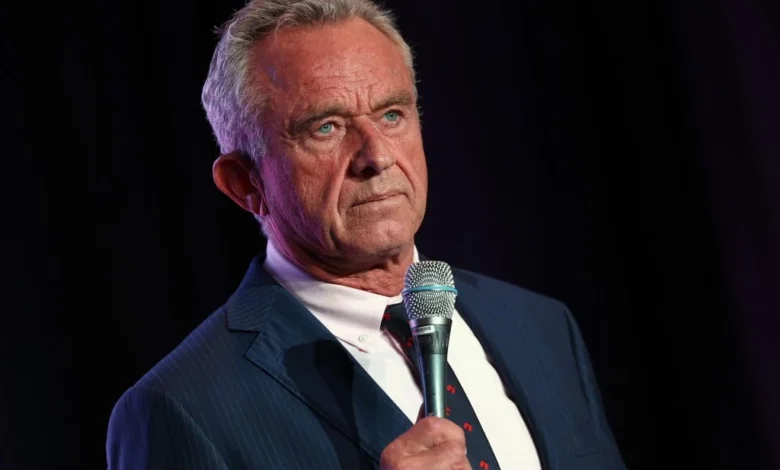
The participation of Robert F. Kennedy Jr. at this event marks a significant milestone in a complex political trajectory. Kennedy, a long-time activist who gained national prominence through his work with CHD, formally severed his professional ties with the organization upon his nomination for the position of health secretary in early 2025.
During his confirmation hearings, Kennedy adopted a strategy of distancing himself from his previous activism. He repeatedly stated on the record that he considers himself "pro-vaccine," a departure from decades of public rhetoric in which he questioned the safety of pediatric vaccination schedules. However, his decision to headline the CHD conference—an organization founded to challenge the very medical consensus he claimed to support during his confirmation—has reignited concerns among public health officials and scientific organizations.
This shift in optics appears to coincide with reports emanating from the executive branch. Recent media accounts have indicated that President Trump has expressed frustration regarding the pace of vaccine-related policy changes, specifically urging Kennedy to prioritize the investigation of the scientifically discredited link between vaccines and autism. By aligning himself with the CHD platform, Kennedy appears to be signaling a return to the foundational tenets of his career, effectively bridging the gap between his executive responsibilities and his long-held personal beliefs.
Scientific Context and Global Health Data
The resurgence of these debates comes at a precarious time for global and domestic public health. The Centers for Disease Control and Prevention (CDC) and the World Health Organization (WHO) maintain that vaccines are among the most rigorously tested medical products in history. Decades of data, including large-scale longitudinal studies involving millions of children, have consistently failed to demonstrate a causal link between standard childhood vaccines and autism spectrum disorder.
Despite this, the rhetoric surrounding the "health freedom" movement often relies on the selective interpretation of anecdotal reports and a distrust of institutional oversight. The implications of this discourse are significant. When high-level government officials challenge the integrity of public health agencies, it can lead to a measurable decline in public trust. Historical data from previous outbreaks of vaccine-preventable diseases—such as measles, which requires a 95% community vaccination rate to prevent outbreaks—demonstrate that even marginal shifts in public sentiment can lead to significant public health consequences.
Official Responses and Stakeholder Perspectives
Public health advocacy groups and professional medical organizations have expressed alarm over the optics of the event. Representatives from the American Academy of Pediatrics (AAP) and the American Medical Association (AMA) have frequently reiterated that the politicization of immunization schedules risks undoing decades of progress in reducing infant mortality and preventing outbreaks of polio, mumps, and rubella.
Critics argue that the influence of the CHD, now bolstered by the presence of federal officials at their events, creates a "false equivalency" in the public eye. By providing a platform for the critique of vaccine safety, these events can normalize skepticism that is not supported by peer-reviewed evidence. Conversely, proponents of the "health freedom" movement argue that their efforts are essential for government accountability and the protection of individual autonomy, suggesting that federal health mandates are an overreach of state power.
Analysis: The Broader Political Implications
The upcoming conference serves as a barometer for the current state of American political discourse. The movement has effectively moved beyond simple skepticism; it has cultivated a sophisticated network of media outlets, political allies, and donor bases. The presence of Senators Johnson and Paul, in particular, illustrates that this ideology is no longer confined to private advocacy groups but is deeply embedded in the legislative process.
The implications for the Department of Health and Human Services (HHS) are profound. If the head of the department maintains close ties to an organization that actively lobbies against the department’s own guidance on infectious disease control, it creates an unprecedented conflict of interest. Such a conflict could lead to a restructuring of internal priorities, potential shifts in funding for vaccine research, and a change in the messaging strategy regarding national health security.
Moreover, the normalization of these views within the executive branch could have long-term effects on the internal morale of agencies such as the FDA and the CDC. Scientific experts within these organizations often rely on the assumption that policy will be driven by consensus data; a pivot toward ideological policy-making may lead to a loss of institutional expertise as career scientists choose to leave the public sector.
Future Outlook
As the September 17 event approaches, the political landscape remains highly polarized. The conference is expected to solidify the partnership between the "health freedom" movement and the current executive administration’s policy goals. Whether this will lead to legislative changes, such as the removal of vaccine mandates or the funding of studies aimed at verifying debunked theories, remains to be seen.
What is clear is that the discourse surrounding medical mandates has become inextricably linked to the broader culture wars in the United States. The success of the CHD in organizing this event—and the willingness of senior officials to participate—demonstrates that the movement is currently in a phase of strategic expansion. For the scientific community, the challenge lies in balancing the need for open public debate with the necessity of maintaining a baseline of factual accuracy that protects the integrity of the nation’s public health infrastructure.
Ultimately, the event on September 17 will not only provide a venue for speakers to share their perspectives; it will serve as a definitive marker in the history of the relationship between American political power and medical science. Whether the long-term result is a shift toward a more skeptical approach to public health policy or a hardening of institutional resolve to defend evidence-based medicine, the impact of these developments will likely be felt for years to come.