The landscape of terminal-based application development in Python continues to evolve rapidly, driven by modern frameworks that bring graphical user interface paradigms to command-line environments. A significant milestone in this ecosystem has been marked by the latest updates to textual-cogs, an open-source helper package designed to streamline the creation of Terminal User Interfaces (TUIs). Developed alongside the writing of comprehensive technical literature on the Textual framework, the library has rolled out versions 0.0.4 and 0.0.5, introducing critical dialog components that bridge the functional gap between traditional desktop software and modern terminal applications.
Main Facts of the Release
The textual-cogs package, hosted on GitHub and distributed via standard Python package management channels, is a specialized collection of reusable dialogs and interface widgets tailored for the Textual ecosystem. The recent rollout focuses heavily on file system navigation, addressing some of the most common requirements for desktop-grade applications operating within a terminal emulator.
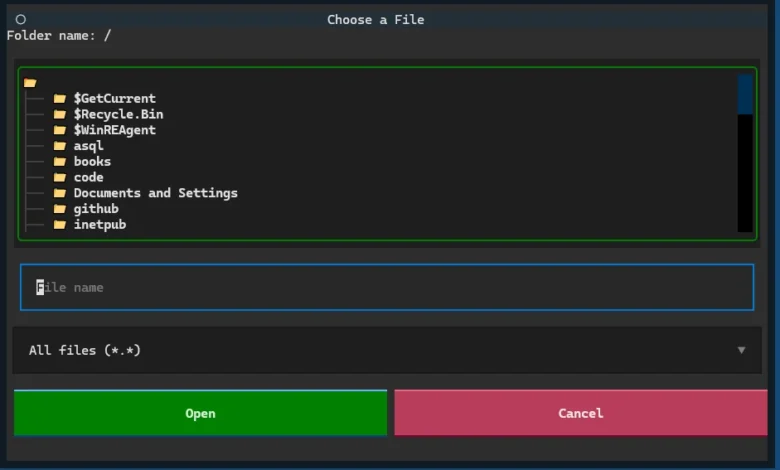
Version 0.0.4 introduced the long-awaited Open File Dialog, complementing the previously established Save File Dialog. Shortly thereafter, version 0.0.5 brought forward the Directory Dialog, conceptually similar to the classic wx.DirDialog found in GUI toolkits like wxPython. Together, these components provide developers with out-of-the-box mechanisms to prompt users for directory selections, folder creation, and file access without requiring custom implementations for basic operating system interactions.
Background and Context of Terminal User Interfaces
To understand the significance of these additions, one must examine the renaissance currently occurring in terminal-based software development. For decades, command-line interfaces (CLIs) were viewed as utilitarian tools—powerful, yet visually austere and strictly hierarchical. While graphical user interfaces (GUIs) dominated consumer software design, developers and system administrators frequently relied on lightweight terminal environments for remote server management and scripting.
In recent years, however, frameworks like Textual have revolutionized how developers approach terminal applications. By leveraging CSS-like styling, responsive layouts, asynchronous event loops, and rich widget libraries, modern TUIs offer a user experience that rivals traditional desktop applications. Despite these advancements, developers building complex terminal software often found themselves repeatedly writing boilerplate code for standard interactions, such as browsing file systems or selecting destination directories.
The creation of textual-cogs was born out of this exact developmental bottleneck. When authoring specialized technical resources on building TUI applications with Python and Textual, the necessity for modular, reusable interface components became immediately apparent. Rather than keeping these utility widgets siloed within a single project, the decision to open-source the repository allowed the broader Python community to benefit from standardized UI patterns.
Chronology of Development and Recent Updates
The trajectory of the textual-cogs library reflects an organic response to developer demands within the Python TUI community.
Phase one of the project established the foundational architecture, focusing primarily on basic dialog structures and initial save-file functionalities. As the Textual framework itself matured, gaining traction among developers seeking cross-platform terminal utilities, the requirements for more granular file system controls grew.
In version 0.0.4, the library achieved a major milestone with the deployment of the Open File Dialog. While save-file capabilities were present from early developmental stages, the inability to natively prompt users to open existing files within a standardized cog had limited the scope of applications that could be rapidly prototyped using the package.
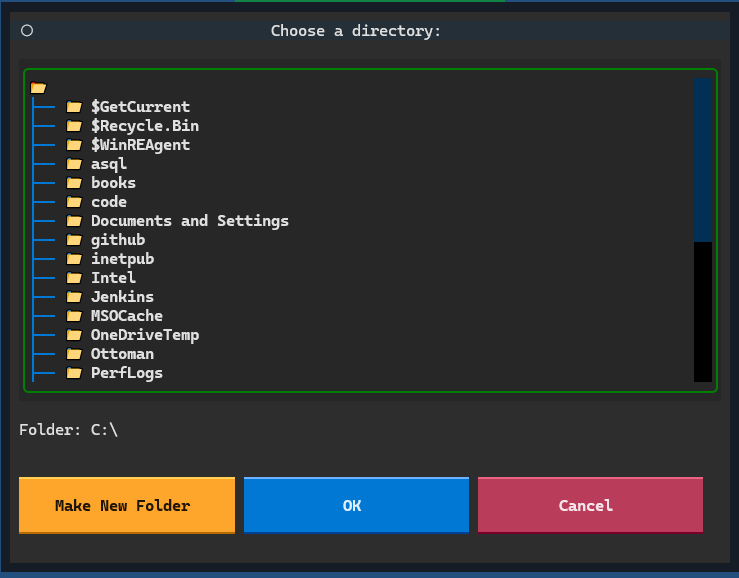
The subsequent release of version 0.0.5 just days later introduced the Directory Dialog. This component directly addresses the need for workspace selection and destination mapping. Beyond merely displaying directory hierarchies, the dialog incorporates operational utility, allowing users to instantiate new folders directly from the terminal interface. This mirrors the functional expectations of mainstream operating system file pickers, adapted seamlessly for text-based grid rendering.
Supporting Data and Installation Metrics
Integrating textual-cogs into existing Python environments has been designed to align with modern packaging standards. Developers can incorporate the library using the standard Python package installer or contemporary deployment tools like uv.
The installation command remains consistent across supported environments:
python -m pip install textual-cogs
By maintaining compatibility with standard Python packaging infrastructure, the library ensures minimal friction for development teams adopting Textual for enterprise or open-source projects. The codebase is publicly accessible via GitHub, encouraging community contributions, bug reporting, and peer review of widget implementations.
Industry Implications and Broader Impact
The introduction of specialized helper packages like textual-cogs signals a broader maturation of the Python TUI ecosystem. As terminal applications become increasingly sophisticated—spanning database clients, log analyzers, container management dashboards, and developer toolsets—the demand for robust, pre-tested interface components continues to rise.
Historically, Python developers building desktop-style applications defaulted to heavy GUI frameworks such as PyQt, Tkinter, or wxPython. However, the operational constraints of cloud-native development, containerized environments, and remote Secure Shell (SSH) sessions have elevated the value of applications that run efficiently within a terminal window. By abstracting complex file system interactions into reusable cogs, libraries of this nature reduce development time and enforce consistent user interface patterns across disparate command-line tools.
Furthermore, the synergy between technical documentation—such as dedicated books on Textual development—and open-source tooling demonstrates a sustainable model for software dissemination. Authors and maintainers are able to provide functional, production-ready code examples that evolve alongside the core frameworks they support.
Future Outlook for textual-cogs
While the current iterations of textual-cogs are heavily weighted toward dialog windows—specifically file and directory management—the roadmap for the package anticipates further expansion into general-purpose widgets. As the maintainers continue to refine the existing codebase, developers can expect additional contributions that address common UI requirements in terminal environments, such as advanced data tables, form validation wrappers, and notification overlays.
The continuous refinement of open-source TUI libraries underscores a permanent shift in how developers conceptualize command-line utilities. No longer confined to plain text output and rigid argument parsers, modern terminal software is rapidly approaching feature parity with traditional desktop environments, empowered by modular packages that make sophisticated interface design accessible to the wider Python community.