The Python programming language continues to evolve as a cornerstone of modern software development, characterized this week by significant updates to its security framework, performance tooling, and administrative infrastructure. From the release of Python 3.15.1, 3.14.9, and 3.13.17 to the formal relaunch of the Python Software Foundation (PSF) wikis, the ecosystem is currently undergoing a period of consolidation and refinement aimed at addressing the complexities of the contemporary supply chain and the growing demand for artificial intelligence integration.
The Security Landscape and PSF Initiatives
Security has become the paramount concern for the Python ecosystem, a sentiment echoed by the recent discourse surrounding the future of Python’s software security and supply chain defense. Seth Larson, serving as the PSF’s Security Developer in Residence, has been at the forefront of these efforts. His recent discussions highlight a strategic shift toward proactive vulnerability management. This focus is not merely reactive; it represents a systematic attempt to harden the language against modern attack vectors, such as dependency confusion, malicious package injection, and build-time exploits.
The PSF’s commitment to security was further evidenced by the restoration of its official wikis this month. In February 2026, the PSF, Python, and Jython wikis were transitioned to a read-only state. This decision was precipitated by an unsustainable volume of automated traffic and potential security vulnerabilities inherent in the platform’s legacy infrastructure. The successful relaunch of these resources signifies the completion of a major internal audit and modernization project, ensuring that developers once again have access to reliable, community-verified documentation without the risks posed by compromised or outdated hosting environments.
Performance Optimization and Language Evolution
As Python’s footprint in high-performance computing and data science grows, the demand for granular control over resource management has reached an all-time high. The community’s focus has shifted toward practical optimization, with new educational initiatives emphasizing the importance of systematic bottleneck identification. Techniques such as utilizing the timeit module to establish benchmarks before applying surgical optimizations have become standard best practices.
This performance-oriented culture is being supported at the language level. The recent release of Python 3.15, 3.14, and 3.13 maintenance versions includes the introduction of a new profiling module. This module centralizes and organizes Python’s built-in profiling capabilities, allowing developers to diagnose memory and CPU usage with greater precision. Furthermore, the discussion surrounding PEP 836—which explored the path toward a supported Just-In-Time (JIT) compiler for CPython—remains a pivotal, albeit complex, chapter in the language’s development. While the proposal was withdrawn, it serves as a historical record of the community’s ongoing ambition to bridge the gap between Python’s ease of use and the execution speeds required for high-frequency operations.
Infrastructure and Package Management
The infrastructure supporting Python, most notably the Python Package Index (PyPI), continues to implement administrative guardrails to maintain operational stability. A notable change this week was the introduction of a 128-character limit for version strings on PyPI. While seemingly minor, the move is a pragmatic response to the sheer scale of the ecosystem; with approximately 10 million releases archived, maintaining consistent metadata structures is essential for efficient page rendering and tool performance. Data from the PSF indicates that only two releases in the history of the repository exceeded this limit, rendering the change a non-breaking update that ensures future-proofing without disrupting current workflows.
Concurrently, the development of toolsets like uv has signaled a move toward a more integrated development experience. The experimental integration of uv with ty represents a shift toward "first-class" support for Python scripts within command-line interfaces and editors. This unified approach, which includes a centralized uv check command, seeks to lower the barrier to entry for developers who manage multi-file projects or complex virtual environments, effectively streamlining the transition from local development to production deployment.
Artificial Intelligence and Agentic Workflows
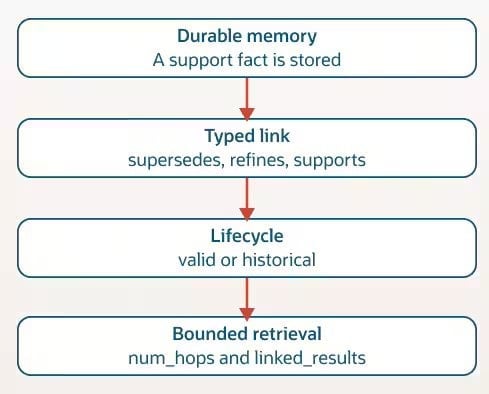
The integration of Python with artificial intelligence agents has necessitated new approaches to memory management and web interaction. A recurring challenge for developers building autonomous agents is the handling of state and historical context. When a user updates a preference within a Python agent, traditional vector search methods may inadvertently return both the old and new data, leading to inconsistency. Recent technical documentation from industry participants suggests that linking new memory states to historical versions—thereby marking the former as superseded while keeping it accessible—is a critical architectural pattern for ensuring agent reliability.
Furthermore, the "agentic" workflow is evolving to overcome the limitations of standard web scraping. Coding agents, such as those powered by Claude or Cursor, frequently struggle with blocked, half-rendered, or markup-heavy web content. The rise of specialized Middleware or "MCP" (Model Context Protocol) servers, such as those provided by Zyte, allows agents to interact with rendered pages as clean, structured Markdown. This evolution in the stack—from raw HTML fetching to structured data ingestion—is indicative of the next phase of Python-driven automation, where the focus moves from simply executing code to intelligently navigating the web environment.
Architectural Best Practices and Community Governance
As Python applications grow in complexity, the importance of architectural design has gained renewed attention. Discussions held during events such as Python NL have underscored that coupling and cohesion remain the primary drivers of long-term maintainability. Experts advise that developers must balance the convenience of rapid prototyping—often facilitated by Python’s dynamic nature—with the structural rigors of enterprise-grade software. This involves making informed decisions about library support lifecycles, as noted by maintainers who must balance the maintenance burden of supporting legacy Python and Django versions against the desire to implement cutting-edge features.
Governance also remains a central pillar of the community’s health. The announcement of the PSF Fellow Members for Q3 2026 highlights the organization’s reliance on community stewardship. These individuals are instrumental in fostering the collaborative environment required to sustain a project of Python’s magnitude. Additionally, the Django Software Foundation’s ongoing quarterly contributor outreach serves as a model for how major sub-frameworks can keep their community aligned, ensuring that feature development is responsive to user feedback and security requirements.

Future Outlook
Looking ahead, the trajectory of the Python ecosystem appears defined by three distinct trends: the professionalization of the supply chain, the commoditization of performance optimization, and the maturation of AI-native tooling. The withdrawal of PEP 836 and the advancement of PEP 850 (concerning Wheel Variants and providers) suggest a community that is increasingly comfortable with incremental, well-tested improvements rather than radical, potentially destabilizing shifts.
As developers continue to leverage tools like pre-commit for hook management, Flowmpeg for media workflows, or Citeprobe for academic verification, the versatility of the language remains its greatest asset. The ecosystem is no longer just a collection of scripts; it is a sophisticated, global infrastructure. Whether it is through the rigorous auditing of packages on PyPI or the adoption of stateful AI graph structures, the Python community is demonstrating a capacity to adapt to the security, architectural, and computational demands of the late 2020s.
In summary, while the core of Python remains accessible, the periphery is becoming increasingly robust. For developers, the message is clear: as the language matures, the focus must shift toward understanding the underlying infrastructure—how memory is handled in agents, how performance is benchmarked, and how security is managed at the package level—to build software that is both innovative and resilient. The combination of official PSF oversight and community-driven innovation ensures that Python remains not only the preferred language for data science and AI but also a secure, reliable foundation for the next decade of software development.