Python Language Summit 2026 Convenes in Kraków to Chart the Future of the World’s Most Popular Programming Language

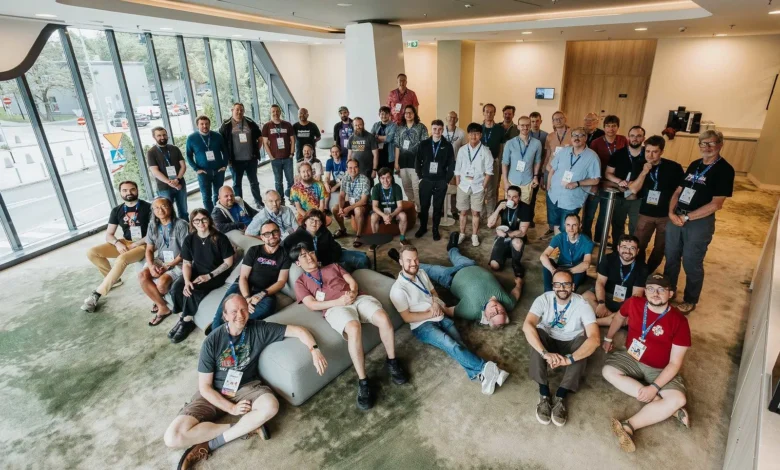
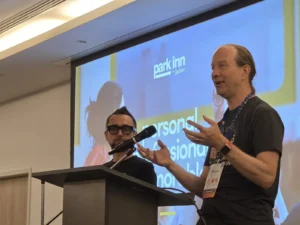
On July 14, 2026, the global Python community reached a significant milestone as 47 core developers and select industry experts gathered in Kraków, Poland, for the annual Python Language Summit. Hosted concurrently with EuroPython 2026, the summit served as a high-level forum for discussing the technical trajectory of the Python language. The event, which focused on critical architectural shifts such as free-threading, memory management, and the integration of Rust, marks a pivotal moment in the language’s history as it balances the demands of modern high-performance computing with its foundational philosophy of simplicity and readability.
A Historic Return to Europe
The 2026 summit was particularly noteworthy for its location. This event represented the first time the Python Language Summit has been hosted on European soil since 2011, when the delegation gathered in Florence, Italy. For over a decade, the summit had been a staple fixture of PyCon US, held annually in North America. By returning to Europe, the organizers sought to better reflect the global nature of the Python ecosystem, which has seen explosive growth in academic, research, and enterprise sectors across the EMEA region.
In an effort to ensure long-term geographic diversity, the Python Steering Council has officially announced a new rotation policy: moving forward, the summit will alternate annually between PyCon US and EuroPython. This shift is designed to reduce travel barriers for international contributors and ensure that European core developers, who have historically played a major role in the language’s evolution, have equitable access to these high-level strategic discussions.
Strategic Leadership and Coordination
The event was organized by a committee of seasoned Python community leaders, including Emily Morehouse, Hugo van Kemenade, Lysandros Nikolaou, and Łukasz Langa. Their coordination ensured that the summit remained focused on actionable technical outcomes rather than broad, theoretical discourse. Documentation and community dissemination of the event’s findings were managed by Seth Larson, whose comprehensive summaries of the ten full-length and five lightning talks serve as the primary record for the global developer base.
Key Technical Agenda Items
The 2026 summit agenda was dominated by discussions centered on how Python can evolve to meet the needs of the next decade, specifically regarding performance and safety.
Free-Threading and the GIL
Perhaps the most anticipated topic was the ongoing work regarding free-threading and the potential retirement of the Global Interpreter Lock (GIL). As multi-core processors have become standard, Python’s historical reliance on the GIL has emerged as a bottleneck for CPU-bound tasks. The summit saw intensive discussions on the transition to a lock-free or fine-grained locking architecture. While the community remains cautious about the stability implications, the consensus suggests that moving toward a world where Python can leverage hardware concurrency without performance-draining locks is now a strategic necessity rather than an optional improvement.
Rust Integration and Performance
The inclusion of Rust as a primary discussion topic underscores a broader industry trend toward memory-safe systems languages. Several sessions explored how Rust can be utilized to optimize CPython’s performance-critical internals. By replacing legacy C components with Rust, the core team hopes to improve memory safety and reduce the frequency of segmentation faults, while simultaneously providing a more robust foundation for future language extensions.
Type Annotations and Ecosystem Standardization
Since the introduction of PEP 484, type annotations have transformed the Python landscape. However, the summit highlighted growing concerns regarding "annotation bloat" and the fragmentation of static analysis tools. Developers debated the future of typing, with a focus on standardizing how runtime type checking interacts with static analysis. The objective is to refine the typing experience so that it remains a tool for developer productivity rather than a source of administrative overhead.
Memory Management and Garbage Collection
As Python is increasingly deployed in environments with strict memory constraints—such as edge computing and embedded systems—the efficiency of the language’s garbage collector (GC) has come under scrutiny. The summit featured presentations on optimizing the GC to reduce latency spikes, a critical requirement for real-time applications.
Data-Driven Evolution: The State of the Language
Python’s dominance in the programming world remains unchallenged, with indices such as TIOBE and Stack Overflow consistently ranking it as the most popular language. As of mid-2026, the language powers approximately 60% of data science workloads and a significant portion of server-side web infrastructure.
However, this ubiquity brings challenges. The "scale" at which Python is now used requires more rigorous governance. The summit’s focus on long-term sustainability reflects an understanding that Python is no longer just a scripting language; it is the backbone of the global AI and data infrastructure. Analysts estimate that the transition toward a more performant, thread-safe Python will significantly reduce cloud computing costs for enterprises that rely on the language for large-scale model training.
Perspectives from the Core Team
While formal statements from the Steering Council are typically reserved for official PEP (Python Enhancement Proposal) releases, the atmosphere in Kraków was one of deliberate progress. Attendees noted that the "bazaar" model of development—which has defined Python for three decades—is maturing into a more structured, engineering-focused discipline.
"The challenges we discussed this year are fundamentally different from those we tackled in 2011," one attendee noted during the closing reception. "We are no longer just trying to make the language easier to learn; we are trying to ensure it can survive the transition to the era of massive parallelism."
Broader Implications and Future Outlook
The 2026 summit serves as a clear signal that the Python core team is prioritizing internal architectural modernization. The decision to alternate the summit between continents is not merely symbolic; it is a recognition of the need for a distributed, global workforce to address the increasingly complex technical debt accumulated over 35 years of development.
The implications for the average Python developer are significant. If the initiatives discussed in Kraków—particularly regarding free-threading and performance optimization—are successfully integrated into the next three major releases, Python could see a double-digit percentage increase in efficiency for multi-threaded applications. Furthermore, the push for deeper Rust integration suggests that CPython will become increasingly resilient to the memory vulnerabilities that have plagued many high-level languages.
Chronology of the 2026 Summit
- July 14, 2026: Official opening of the Python Language Summit at EuroPython in Kraków.
- Morning Sessions: Focused on CPython internals, specifically the path to removing the GIL and implementing more efficient memory management.
- Afternoon Sessions: Dedicated to the developer experience, including the future of type annotations and the integration of third-party systems languages like Rust.
- Lightning Talks: Rapid-fire presentations on niche technical hurdles, including namespace resolution and potential updates to the standard library.
- Conclusion: The summit concluded with a mandate for the Steering Council to formalize the proposals discussed into upcoming PEPs for the 2027 development cycle.
As the attendees dispersed from Kraków, the sentiment was one of cautious optimism. The roadmap for Python is no longer just about adding new syntax; it is about reinforcing the pillars of a language that serves as the foundation for the modern digital economy. With the next summit scheduled for 2027 in the United States, the community has clear benchmarks to hit before the next global gathering of its architects.