Mastering Textual DOM Queries Part Two Advanced Widget Manipulation and Filtering Techniques

The evolution of terminal-based user interfaces has experienced a significant paradigm shift with the widespread adoption of the Textual framework for Python, allowing developers to construct rich, responsive, and aesthetically sophisticated applications directly within the command line. Building upon foundational concepts introduced in previous developer guides regarding basic DOM queries, software engineers are now looking toward advanced manipulation techniques to handle complex UI states efficiently. Central to this capability is the DOMQuery object, a powerful construct designed to streamline how applications interact with, modify, and query groups of widgets dynamically. As command-line applications grow in complexity—often managing dozens or hundreds of individual UI elements simultaneously—the ability to perform bulk updates, precise filtering, and targeted exclusions becomes an indispensable skill for Python developers.
To understand the full scope of capabilities offered by the DOMQuery object, developers frequently utilize Python introspection tools to examine its internal API. By executing the built-in dir() function against a DOMQuery instance, programmers can reveal a comprehensive manifest of available methods, attributes, and operational hooks. This exploratory approach allows developers to look beyond standard list-like behaviors and uncover specialized utility methods engineered specifically for terminal user interface management. For instance, creating a diagnostic application script named domquery_methods.py enables developers to capture and display these methods dynamically within a graphical layout. By subclassing Textual’s App class, implementing the compose method to yield basic interface components such as Labels and Buttons, and subsequently evaluating the query results upon button interaction, engineers gain immediate visual feedback regarding the object’s internal structure. This hands-on introspection serves as a vital first step toward mastering advanced widget control.
Navigating Query Results with Precision Methods
Among the primary features exposed through advanced DOMQuery manipulation are the specialized selection methods designed to retrieve specific subsets or boundary elements within a query set. While developers can traditionally access elements using standard Python list indexing—such as selecting the initial element with index zero or the final element using negative indexing—Textual provides dedicated methods to enhance code clarity and enforce type safety. Specifically, the first() and last() methods offer streamlined access to boundary widgets matching a given CSS selector or query criteria.
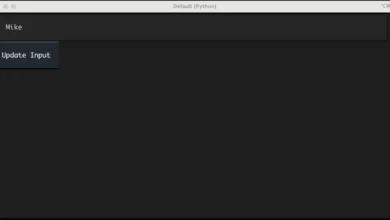
To demonstrate this functionality in a practical environment, developers can implement a dedicated script, designated as first_and_last.py, which initializes multiple interactive button widgets alongside a central notification label. When a user triggers an event by pressing any button within the application layout, the event handler invokes the query method to gather all button components, subsequently extracting the boundary elements via widgets.first() and widgets.last(). Beyond mere convenience, these methods accept an optional expect_type parameter, allowing developers to explicitly declare the expected data type of the returned widget. If the targeted element fails to match the designated class type—such as expecting a Button but encountering a different widget class—Textual raises a specialized WrongType exception. This mechanism drastically reduces runtime errors by catching structural UI discrepancies early in the execution lifecycle.
Refining Query Sets Through Filtering and Exclusion
As terminal applications expand, the necessity to isolate specific categories of UI elements from a broader query collection becomes paramount. Textual addresses this requirement by incorporating robust filtering and exclusion paradigms directly into the DOMQuery interface. The filter() method functions as a selective sieve, allowing developers to parse a generalized collection of widgets and extract distinct subsets based on specific CSS selectors, component types, or property states. For example, executing a broad query to capture all active interface components and subsequently chaining or applying the filter method for specific classes—such as isolating all Label instances from Button instances—enables highly modularized interface updates.
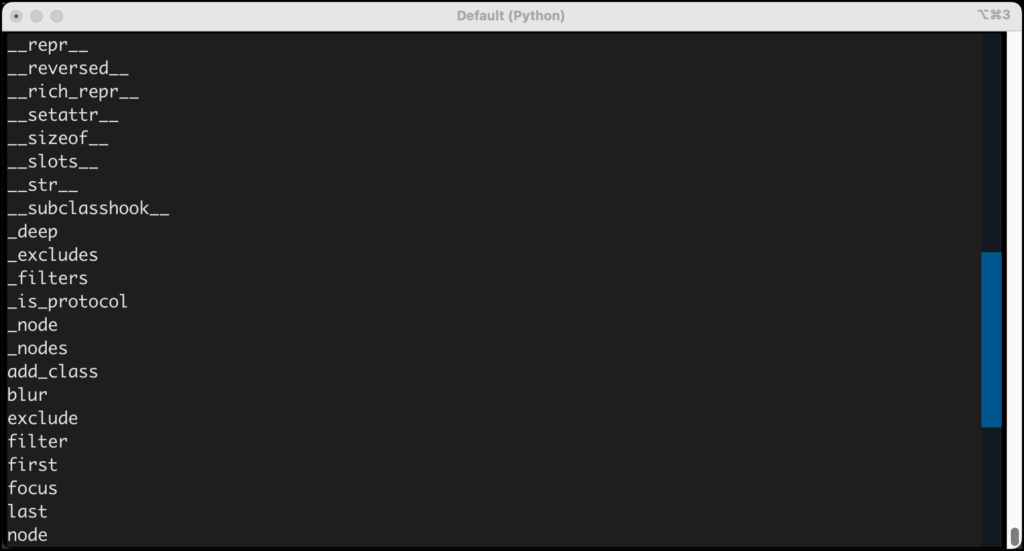
Conversely, the exclude() method operates as the logical counterpart to filtering, empowering developers to strip away unwanted components from an existing query set. By passing a CSS selector to the exclude method, engineers can purge matching widgets from the active DOMQuery collection, leaving behind a refined subset tailored for targeted operations. This bidirectional capability—filtering to include specific elements and excluding to remove peripheral components—grants developers granular control over complex document object models without necessitating cumbersome manual iteration loops.
Executing Bulk Operations and CSS Class Management
One of the most profound performance and architectural advantages of the Textual framework’s DOMQuery object is its capacity to execute bulk operations across all matched elements simultaneously. Traditional programming patterns often require developers to retrieve a collection of objects, initialize a formal for loop, and invoke individual update or modification methods on each iteration. In contrast, DOMQuery supports a suite of native methods designed to propagate changes across an entire query set instantaneously.
A prominent example of this architectural efficiency is the application of dynamic styling and state marking through methods such as add_class(). Rather than iterating through individual input fields to mark them as active, focused, or completed, a developer can execute a single line of code—such as targeting all input fields via self.query("Input").add_class("started")—to apply the specified CSS class across every matching element in the application tree. This capability extends to a wide array of pre-built and custom CSS pseudo-classes and operational methods defined within the Textual documentation. By leveraging these bulk-processing routines, developers can significantly reduce boilerplate code, optimize execution speeds, and maintain cleaner, more maintainable codebases.
Broader Implications and Industry Adoption
The maturation of frameworks like Textual signifies a broader industry trend toward reviving and modernizing command-line interfaces for professional software development, DevOps tooling, and enterprise administration systems. As developers increasingly rely on terminal environments for container orchestration, log analysis, and system monitoring, the demand for sophisticated, reactive TUI applications has surged. Mastering advanced DOM query techniques directly impacts the scalability and maintainability of these tools. Efficient widget querying and bulk state manipulation reduce CPU overhead and memory consumption, ensuring that terminal applications remain responsive even under heavy data loads and complex event streams.
Furthermore, the architectural patterns established by Textual—mirroring web-based DOM manipulation paradigms within a Pythonic terminal environment—bridge the gap between traditional backend development and modern frontend engineering concepts. By treating terminal interfaces as structured, queryable document object models, Python developers can apply familiar mental models of cascading style sheets, selectors, and event bubbling to command-line software. This cross-pollination of architectural design principles not only accelerates onboarding for new developers but also elevates the overall quality and polish of modern command-line utilities. Continued exploration into these advanced querying mechanisms ensures that developers remain well-equipped to design the next generation of robust, interactive terminal applications.