In modern software development, particularly within data-intensive fields like machine learning and high-performance computing, the reliability of scripts often hinges on how gracefully they handle resource management. While most developers are introduced to Python’s with statement through simple file operations—with open(path) as f:—this mechanism is fundamentally a protocol for resource lifecycle management. When a script manages external dependencies, state changes, or temporary hardware allocations, failure to properly close these resources can lead to memory leaks, stale configuration states, or corrupted data pipelines. By moving beyond basic file handling, engineers can utilize context managers to ensure that cleanup routines are executed reliably, even when unexpected exceptions occur during complex evaluation processes.
The Problem of Incomplete Cleanup
The primary issue in many automated evaluation pipelines is the separation of setup and teardown logic. Consider a standard machine learning evaluation script that prepares a temporary workspace. Such a script might initialize a scratch directory, modify environment variables to point to a high-speed cache disk, suppress verbose logging from third-party libraries, and start a performance timer. In a linear, error-free run, the script concludes by removing the directory, restoring the original environment variables, resetting the logger, and printing the execution duration.
However, production environments are rarely perfect. If a malformed data record causes the evaluate() function to raise an exception, the execution flow is interrupted, and the "cleanup" lines at the bottom of the file are bypassed. This leads to the accumulation of "zombie" resources: gigabytes of extracted files cluttering the disk, persistent logger settings that hinder debugging for subsequent users, and stale environment paths. These issues are not merely cosmetic; they represent a technical debt that accumulates over time, potentially leading to production failures when subsequent processes interact with these unintended residues.
Understanding the Context Manager Protocol
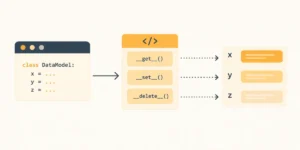
The with statement serves as a robust boundary for code execution. It relies on the Python data model, specifically the __enter__() and __exit__() dunder methods. When Python encounters a with block, it first executes the __enter__() method of the expression provided. The object returned by this method is then bound to the variable specified after the as keyword. Following the completion of the code block—or immediately upon an exception—the __exit__() method is triggered.
Crucially, the __exit__() method receives information about any exception that occurred within the block. This allows developers to design context managers that either suppress errors or propagate them after performing necessary cleanup. A common pitfall is to have __exit__() return a truthy value, which suppresses the exception and allows the program to continue as if nothing happened—often masking critical failures. Best practices dictate that unless an error is explicitly expected and handled, __exit__() should return False to ensure that the traceback remains intact for the developer.
Architecting Custom Managers for Instrumentation
The stopwatch scenario mentioned earlier provides an excellent case for a custom context manager. By encapsulating timer logic within a class, developers can guarantee that the duration is recorded regardless of whether the process succeeded or crashed.
import time

class Timer:
    def __init__(self, label):
        self.label = label
        self.elapsed = None

    def __enter__(self):
        self._start = time.perf_counter()
        return self

    def __exit__(self, exc_type, exc_value, traceback):
        self.elapsed = time.perf_counter() - self._start
        status = "failed" if exc_type else "ok"
        print(f"self.label: self.elapsed:.3fs (status)")
        return False
This implementation ensures that every execution is accounted for. The perf_counter() function, which measures wall-clock time with high resolution, is ideal for these scenarios. Such instrumentation provides clear visibility into which segments of a pipeline—such as feature extraction or model inference—are the primary bottlenecks. By making the timer a context manager, developers eliminate the need for manual start and end calls, reducing the risk of "forgotten" measurements.
Simplifying Cleanup with @contextmanager
For simpler tasks where maintaining a full class structure feels overly verbose, the contextlib module offers the @contextmanager decorator. This utility allows developers to write a generator function that performs the setup, yields control back to the main block, and then handles the teardown after the yield statement.
Using a try...finally block within the generator ensures that even if an exception occurs during the yield, the code following it is guaranteed to run. This is particularly useful for changing global settings, such as logging levels. By wrapping a logger configuration in a quiet context manager, a developer can ensure that the logging level is restored to its default state automatically, maintaining a clean state for other parts of the application.
Automating Workspace Management
The standard library’s tempfile.TemporaryDirectory is a quintessential example of how context managers can simplify complex infrastructure tasks. By using this manager, developers ensure that a temporary directory is created for the life of the operation and—more importantly—wiped clean afterward, regardless of the outcome.
This approach solves the issue of unique directory naming and cleanup persistence. Before the widespread adoption of such managers, developers often relied on static directory names, leading to collisions when running parallel jobs. TemporaryDirectory generates a unique path for every instantiation, ensuring isolation. When an exception occurs, the directory is removed, preventing the accumulation of redundant files in the project workspace. For developers who need to debug failed runs, newer versions of Python even allow for configurable deletion behavior, balancing the need for cleanup with the necessity of post-mortem analysis.
Advanced Resource Orchestration: The ExitStack
When a program needs to handle an arbitrary number of resources, such as opening multiple shards of a large dataset simultaneously, standard nesting of with statements becomes impractical. The contextlib.ExitStack is designed specifically for this complexity. It acts as a dynamic manager that can hold a stack of context managers and arbitrary cleanup functions.
When the ExitStack block closes, it unwinds the stack in reverse order—the same order as nested with statements—ensuring that dependencies are closed correctly. This is particularly effective for high-performance data loading, where opening and closing hundreds of file descriptors must be handled with precision. By using ExitStack, engineers can treat a dynamic collection of resources as a single unit of work, significantly reducing the surface area for resource leaks.
Managing Global State
Global state changes, such as those involving os.environ, represent a significant source of "silent" bugs. Modifying environment variables can inadvertently affect other modules or threads if not reverted correctly. The unittest.mock.patch.dict utility, while often associated with testing, is a powerful production tool for managing temporary dictionary-like state.
By wrapping environment modifications in patch.dict, developers ensure that the original state of the environment is preserved or restored exactly as it was. This is essential for configuration-heavy applications where different modules may require slightly different settings. However, developers must exercise caution; since environment changes are process-wide, they should not be used in highly concurrent or asynchronous code without proper synchronization.
Implications and Best Practices
The transition from manual resource management to context managers represents a shift toward more resilient and maintainable code. The following summary provides a framework for choosing the right tool for the job:
- Classes (
__enter__/__exit__): Best when the manager needs to maintain state that the caller must access (e.g., a timer’s elapsed time). @contextmanager: Best for simple, linear setup-cleanup patterns that do not require complex internal state.- Built-in Managers (
tempfile,patch.dict): Always prefer these when the standard library already provides a solution for the resource type. ExitStack: Necessary when the number of resources is determined at runtime or when combining multiple disparate cleanup tasks.
In conclusion, context managers are not merely a convenience for file handling; they are an architectural tool for managing the lifecycle of any resource. By adopting these patterns, developers can move away from fragile, error-prone cleanup code and toward a system where resource management is a declarative, reliable part of the code’s structure. This shift is critical for building scalable machine learning systems that must operate reliably in automated, high-pressure production environments where the cost of a failed cleanup is measured in system instability and lost development time.