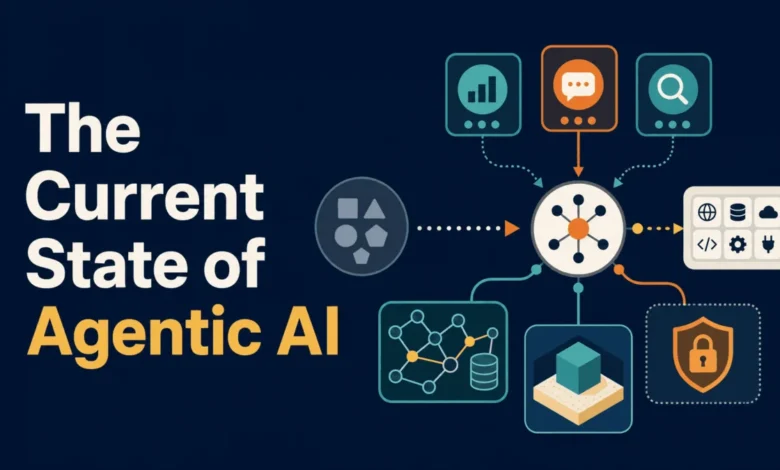
By mid-2026, the landscape of agentic Artificial Intelligence has undergone a profound transformation, moving decisively from the monolithic, brute-force orchestration prevalent just a year ago to a sophisticated ecosystem defined by specialized multi-agent swarms, natively intelligent foundation models, and standardized communication protocols. This seismic shift marks the maturation of agentic AI from a theoretical concept and experimental playground into a robust engineering discipline, addressing critical issues of scalability, efficiency, and security in real-world deployments.
The Paradigm Shift in AI Reasoning: Beyond Orchestrated Loops
A year ago, AI engineers grappling with agentic systems primarily focused on hand-crafting intricate reasoning and acting (ReAct) loops. This "brute-force orchestration" paradigm involved laboriously designing prompt chains and external code to compel large language models (LLMs) to perform complex tasks like planning, tool execution, and context management. Frameworks like LangChain and LlamaIndex became essential scaffolding, allowing developers to simulate higher-order cognitive functions by forcing models through iterative steps of thought and self-correction. While effective in early demonstrations, this approach often led to brittle systems, increased latency, and significant token overhead, as models were repeatedly prompted to reflect on their own errors.
The most dramatic change in how agents "think" stems from advancements in foundation models themselves. Current-generation models, emerging throughout late 2025 and into 2026, now integrate "System 2" thinking directly into their architectures. This means models natively generate hidden reasoning tokens, explore multiple solution branches internally, and perform self-correction before outputting a final response. This internal cognitive capability renders much of the external orchestration scaffolding redundant. Industry analysts estimate that this native reasoning capability has reduced the need for external reflection loops by as much as 40% in complex task execution, drastically streamlining agent design and reducing computational costs. "The models are learning to think for themselves, removing the need for us to hold their hand every step of the way," stated Dr. Lena Chen, a lead AI architect at a major tech firm, in a recent industry conference.
The implication for architecture is clear: the orchestration layer’s role has fundamentally shifted. Instead of coercing a model to plan or reflect, engineers now focus on routing tasks, managing system-wide state, and providing robust execution environments. This allows for leaner, more efficient agents that can leverage their inherent reasoning capabilities without external interference, freeing up engineering resources for more valuable system-level design challenges, particularly the decomposition of work across specialized units.
The Rise of Multi-Agent Architectures: Specialization and Swarms
With individual models handling their own reasoning, the previous bottleneck of attaching dozens of tools to a single monolithic agent has been largely overcome. The industry has converged on "agent swarms" – collections of smaller, highly specialized agents that communicate and collaborate to achieve complex objectives. This mirrors the microservices architecture prevalent in traditional software development, where a large application is broken down into independent, focused services.
This shift was anticipated by leading researchers, who argued that "beyond giant models, AI orchestration is the new architecture." The inherent limitations of a single agent attempting to master 50 distinct tools—ranging from database queries to customer support interactions—became evident in early production deployments, often leading to tool confusion, increased error rates, and difficulty in debugging. A recent study by the AI Institute of Technology indicated that specialized agent swarms achieved a 25% higher success rate in complex, multi-modal tasks compared to monolithic agents with equivalent tool access, primarily due to reduced cognitive load and improved error isolation.
In a typical swarm pattern, a "Triage Agent" acts as the entry point, routing incoming requests to the most appropriate specialist. For instance, a complex query might first go to a "Data Fetcher Agent" skilled in SQL, which then hands off the retrieved data to a "Data Analyst Agent" proficient in Python’s pandas library for insights generation. The key insight here is that while complexity doesn’t disappear, it becomes manageable, testable, and replaceable. Each agent can be developed, tested, and updated independently, fostering greater agility and resilience in the overall system.
Frameworks like the OpenAI Agents SDK and LangGraph Swarm have emerged as leading tools for building these distributed systems. These platforms facilitate the definition of agents, their specific system prompts, and the crucial "handoff" mechanisms that allow control and context to pass seamlessly between agents. For example, once the sql_agent completes its task, it doesn’t just return data; it calls a transfer_to_analyst tool, explicitly transferring control and the relevant data context to the analysis_agent. This approach maintains individual agents as stateless per call, keeping their context windows lean and efficient, while the overall swarm maintains a stateful progression of the task. This also allows for strategic resource allocation, where cheaper, faster small language models (SLMs) can handle specialized tasks, reserving larger, more capable models for routing, synthesis, or highly complex, less frequent operations.
Standardizing Interoperability: The Model Context Protocol (MCP)
The proliferation of specialized agents necessitates a robust and standardized way for them to interact with external systems and data sources. Historically, integrating an AI agent with external APIs was a tedious process, requiring custom JSON schemas, intricate HTTP request handling, and bespoke error parsing. Every new API meant reinventing the wheel, hindering rapid deployment and scalability.
The Model Context Protocol (MCP), an open standard that gained significant traction throughout late 2025 and into 2026, has emerged as the universal adapter for AI models. MCP acts as a standardized intermediary layer, abstracting away the complexities of disparate APIs and data formats. It allows agents to connect to isolated MCP servers, which in turn expose available tools and resources in a uniform manner. This means an agent doesn’t need to know the specific syntax for a GitHub API or a Slack API; it simply communicates its intent to the MCP server, which handles the underlying translation and execution.
The adoption of MCP represents a paradigm shift from hardcoding API keys and custom wrappers to a modular, plug-and-play approach. "MCP has dramatically cut down our integration time, allowing our engineering teams to focus on agent logic rather than API minutiae," commented the CTO of a large financial institution that recently deployed an MCP-enabled agent swarm for data reconciliation. The protocol facilitates a clear separation of concerns: agents focus on reasoning and task decomposition, while MCP servers handle secure credential management, API execution, and data formatting. This standardization is not merely a convenience; it is a critical enabler for the widespread adoption of agentic systems across diverse enterprise environments, allowing organizations to leverage existing infrastructure with minimal bespoke integration work.
Towards Autonomous Learning: Memory Graphs and Continuous Improvement
The aspiration for agents to learn from their own experiences, a core promise of advanced AI, is now becoming a production reality through the implementation of memory graphs. This mechanism addresses the inherent per-call statelessness of individual agents by introducing a system-level persistent memory.
In a modern agent swarm, while individual agents remain stateless during each invocation to maintain efficiency and lean context windows, a separate "Memory Agent" operates asynchronously in the background. This specialized agent’s sole purpose is to observe the main swarm’s execution trajectory, extract salient facts, decisions, and outcomes, and then update a persistent knowledge base, typically implemented as a graph database like Neo4j or managed alternatives.
Here’s how it works:
- Observation: As the primary swarm executes a task, the Memory Agent monitors its interactions, tool calls, and final outputs.
- Extraction: Using its own analytical capabilities, the Memory Agent identifies key entities, relationships, and successful or unsuccessful strategies from the swarm’s activity. For instance, if an agent successfully retrieved specific data using a particular SQL query for a particular type of request, this "fact" is noted.
- Graph Update: These extracted facts are then codified and integrated into the graph database. This might involve creating new nodes (e.g., a new type of customer issue, a new data source) or updating relationships (e.g., a specific tool is highly effective for a certain query pattern).
- Context Injection: In subsequent, similar tasks, the Triage Agent or other specialized agents can query this memory graph to retrieve relevant historical context, successful past approaches, or known pitfalls. This information is then injected into the agent’s prompt, enhancing its performance without requiring fine-tuning of the underlying model.
This process transforms agentic development from "prompt engineering" to "context engineering." It allows the system to continuously improve over time, accumulating knowledge and adapting its behavior based on real-world interactions. Early deployments of memory-graph-enabled systems have shown a 15-20% improvement in task completion efficiency and a reduction in error rates for recurring tasks over a six-month period, demonstrating the tangible benefits of this continuous learning loop. "Memory graphs are the key to unlocking true agent autonomy and intelligence that compounds over time," remarked Dr. Aris Thorne, a leading expert in cognitive AI architectures.
Fortifying the Frontier: Security in Agentic Swarms
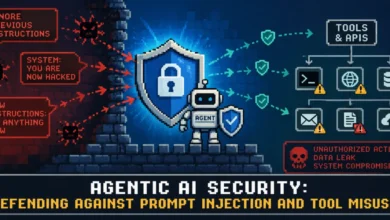
With multi-agent systems increasingly connected via universal protocols and integrated into critical enterprise workflows, the attack surface has expanded dramatically. The threat of "AIjacking"—indirect prompt injections hijacking automated workflows—has escalated from a theoretical concern to a primary enterprise security challenge. The distributed nature of swarm architecture, while offering benefits in resilience and specialization, also introduces new vulnerabilities that mirror traditional network intrusion patterns.
Consider a scenario where Agent A, designed to read external emails, can transfer context and control to Agent B, which possesses privileged database access. A cleverly crafted malicious instruction embedded within an email could pivot laterally through the swarm, granting unauthorized access or command execution. This "lateral movement" capability, enabled by the same handoff mechanisms that make swarms useful, makes them inherently more susceptible to sophisticated attacks than monolithic models.
In response, three emerging defense mechanisms are converging to secure these complex systems:
- Multi-Layered Sandboxing: This involves isolating agents in highly restricted environments, limiting their access to tools and resources based on strict "least privilege" principles. Each agent operates within its own sandbox, and inter-agent communication is tightly controlled and monitored.
- Intent Verifiers: These are specialized AI agents, often smaller, more secure models, whose sole purpose is to scrutinize the intent of commands and data transfers between agents. Before Agent A can hand off a task to Agent B, an intent verifier assesses whether the proposed action aligns with the system’s security policies and the legitimate scope of Agent A’s role. A "security-first" design principle mandates that these verifiers operate with a highly constrained and audited context.
- Zero-Trust Communication Protocols: Adopting a zero-trust model means that no agent, internal or external, is implicitly trusted. Every communication, every handoff, and every tool call requires explicit verification and authentication. This prevents malicious instructions from propagating unchecked through the swarm, even if one agent is compromised.
While these defenses are not yet universally standardized, they represent the active frontier of production agentic security. Enterprise adoption, particularly in regulated industries, increasingly mandates at least one, if not a combination, of these measures as a baseline requirement. Security experts predict that by early 2027, robust security frameworks for agentic systems will be as critical and commonplace as firewalls and intrusion detection systems are for traditional networks.
The Path Forward: Engineering for Resilience and Scale
Agentic AI has firmly transitioned from a research curiosity to a mature engineering discipline, complete with defined constraints, predictable failure modes, and critical design decisions at every layer. The foundational primitives – sophisticated tool calling, intelligent routing, and native model reasoning – are maturing at an unprecedented pace. The remaining leverage and the focus of leading AI engineering teams lie in the systems layer: how to design resilient swarm topologies, architect memory systems that allow knowledge to compound over time, and establish robust security boundaries that enable safe and scalable operation.
The most successful teams today are not fixated on merely developing "smarter" individual agents. Instead, they are building more resilient, highly specialized, and securely interconnected swarms. For organizations embarking on their agentic AI journey, the advice is to start small: select a well-defined problem, implement a three-to-five agent swarm using established patterns, and instrument it meticulously. The architectural intuitions and operational insights gained from a small, controlled deployment are directly transferable and scalable to more complex, thirty-agent systems, paving the way for a new era of autonomous and intelligent enterprise applications.