Waymo Resumes San Francisco Robotaxi Operations Following Brief Service Suspension Amid Major Power Outage and Heightened Regulatory Scrutiny

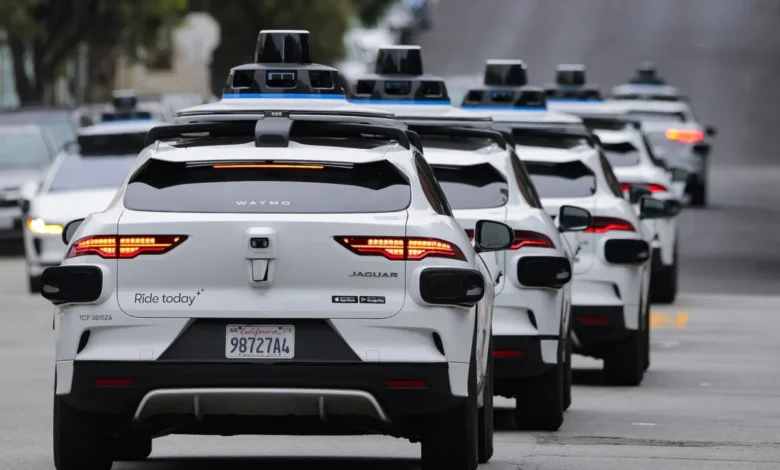
Waymo, the autonomous driving subsidiary of Alphabet Inc., has officially resumed its robotaxi operations in San Francisco after a strategic service suspension triggered by a widespread power outage on July 18, 2026. The disruption, which initially paralyzed portions of the city’s electrical grid, prompted the company to pause its fleet for approximately one hour to assess safety risks and coordinate with municipal authorities. While service has returned to the streets of San Francisco, the incident has reignited a heated debate regarding the resilience of autonomous vehicle (AV) infrastructure and the necessity for more stringent oversight from state and local regulators.
The July 18 Power Outage and Immediate Response
The service interruption began in the early afternoon when a significant power failure struck several neighborhoods in San Francisco. According to reports from Pacific Gas and Electric (PG&E), the utility provider responsible for the region, the outage affected roughly 7,000 customers. The cause of the failure, while not immediately disclosed, resulted in the loss of traffic signals and street lighting in high-traffic corridors, creating a complex navigational environment for both human drivers and autonomous systems.
Waymo’s internal monitoring systems flagged the anomaly shortly after 12:00 PM PDT. By 12:30 PM, users of the Waymo One app received notifications that service was "temporarily paused." A screenshot shared on social media by a local commuter revealed that Waymo had also disabled "freeway routes," a precautionary measure likely intended to prevent vehicles from entering high-speed environments where exit-ramp traffic signals might be non-functional.
In a statement provided to TechCrunch, a Waymo spokesperson clarified the company’s decision-making process: “We decided to pause service for approximately one hour to assess the scale of the power outage affecting a large portion of San Francisco and coordinate with local officials. We are making temporary adjustments to our service while we monitor local conditions. We know riders depend on us, and we will return to normal operations as soon as possible.”
By 1:30 PM PDT, Waymo confirmed that the majority of its fleet was back online, though the company continued to monitor localized "dead zones" where infrastructure remained dark.
A Chronology of Systemic Challenges
The July 18 incident is not an isolated event but rather the latest in a series of challenges that have tested the limits of autonomous technology in San Francisco’s dense and often unpredictable urban environment. To understand the gravity of this latest suspension, one must look at the timeline of events over the past year:
- December 2025: The Winter Blackout Stall. During a severe winter storm that caused widespread blackouts, dozens of Waymo vehicles lost connectivity or entered "fail-safe" modes simultaneously. This resulted in several robotaxis stalling in the middle of active lanes, causing significant traffic congestion until manual recovery teams could arrive.
- July 4, 2026: The Independence Day Fireworks Fiasco. Just weeks prior to the current outage, a massive surge in pedestrian traffic and unauthorized road closures during the Golden Gate Bridge fireworks show paralyzed Waymo’s routing algorithms. Vehicles became trapped in gridlock, unable to navigate through crowds, leading to public frustration and criticism from emergency responders.
- July 16, 2026: The Mayor’s Call for Regulation. Following the July 4th incident, San Francisco Mayor Daniel Lurie publicly pushed for tougher state regulations. Lurie argued that the current framework does not adequately address how AVs should behave during "major incidents, planned or not."
This pattern of disruptions has shifted the public discourse from the technical marvel of self-driving cars to the practicalities of urban management and public safety.
The Technical Vulnerabilities of Autonomous Fleets
The decision to pause service during a power outage highlights a critical technical vulnerability: the dependence of autonomous vehicles on external infrastructure. While Waymo’s vehicles are equipped with a sophisticated suite of Lidar, radar, and cameras that allow them to "see" in the dark, they still rely on a predictable environment.
When power is lost, traffic lights typically revert to a flashing red (acting as a four-way stop) or go dark entirely. While Waymo’s AI is trained to handle these scenarios, the presence of 7,000 customers without power implies that a vast number of intersections were simultaneously compromised. In such a scenario, the "compute load" required to safely navigate hundreds of dark intersections increases exponentially.
Furthermore, the outage can affect the cellular networks used for tele-operation. Waymo maintains a staff of remote assistants who can provide "hints" to the cars when they encounter ambiguous situations. If local cell towers are affected by the power outage or become congested with emergency traffic, the link between the vehicle and the human backup is weakened. By pausing service, Waymo chose a "safety-first" approach, avoiding the risk of a mass-stall event similar to the one witnessed in December 2025.

Political and Regulatory Implications
The July 18 outage has provided fresh ammunition for local officials who believe that the California Public Utilities Commission (CPUC) and the Department of Motor Vehicles (DMV) have been too lenient in granting operational permits to AV companies.
Mayor Daniel Lurie’s administration has been vocal about the "regulatory gap" that exists between state-level approvals and local-level consequences. "When a power outage hits, our first responders are already stretched thin," a source from the Mayor’s office suggested in an inferred reaction to the event. "Having to navigate around stalled or confused robotaxis adds a layer of complexity to an already dangerous situation. We need a seat at the regulatory table."
The Mayor’s push for tougher rules includes several key demands:
- Real-time Data Sharing: Requiring AV companies to share live fleet location and status data with the San Francisco Municipal Transportation Agency (SFMTA) during emergencies.
- Enhanced Fail-Safe Protocols: Mandating that vehicles must be able to move to a "safe harbor" (such as a parking lane) rather than stopping in the middle of the road during a system failure.
- Localized Kill-Switches: Giving city emergency controllers the authority to temporarily geofence certain areas during fires, outages, or civil unrest.
Market Analysis: The Alphabet Perspective
For Alphabet Inc., Waymo represents a multi-billion dollar bet on the future of mobility. Despite the frequent headlines regarding stalls and outages, Waymo remains the undisputed leader in the US robotaxi market, especially following the temporary withdrawal of GM’s Cruise from the streets and the slower-than-expected rollout of Tesla’s "Full Self-Driving" (FSD) as a commercial taxi service.
San Francisco serves as the "gold standard" testing ground for Waymo. The city’s fog, steep hills, and complex traffic patterns provide the data necessary to refine the "Waymo Driver" software. However, the recurring operational pauses suggest that the path to a 99.999% reliable service is longer than previously anticipated.
Investors are closely watching how Waymo handles these "edge cases." Each time the fleet is paused, it results in lost revenue and a slight erosion of consumer trust. However, a major accident caused by a vehicle failing to navigate a dark intersection would be far more damaging to Alphabet’s valuation and the AV industry as a whole. The "one-hour pause" strategy is, therefore, a calculated move to preserve long-term viability at the expense of short-term uptime.
Future Outlook: Building a More Resilient Urban Grid
As Waymo expands its footprint to cities like Phoenix, Los Angeles, and Austin, the lessons learned from the San Francisco power outage will likely be integrated into its global operational playbook. The industry is moving toward a more collaborative model where AV companies and city planners work together to create "resilient corridors."
One potential solution being discussed by urban planners is the implementation of V2X (Vehicle-to-Everything) technology. If traffic lights were equipped with short-range radio transmitters and backup battery power, they could communicate their status directly to Waymo’s fleet even during a grid failure. Until such infrastructure is widespread, robotaxis will remain susceptible to the same municipal frailties that affect human drivers.
For now, Waymo’s return to service in San Francisco marks a return to the status quo, but the conversation has clearly changed. The July 18 outage was a minor event in terms of duration, but its impact on the regulatory landscape of California may be felt for years to come. As the city recovers and the lights come back on, the pressure on Waymo to prove it can handle the "unplanned" continues to mount.
The company has stated it will continue to work closely with PG&E and the Mayor’s office to ensure that future outages do not result in a total loss of service. However, with Mayor Lurie’s proposed regulations looming, the "temporary adjustments" Waymo made this week may soon become a mandatory part of its operational license.
Related posts: