Facing a difficult decision: NASA, Boeing, and the future of human spaceflight in low-Earth orbit

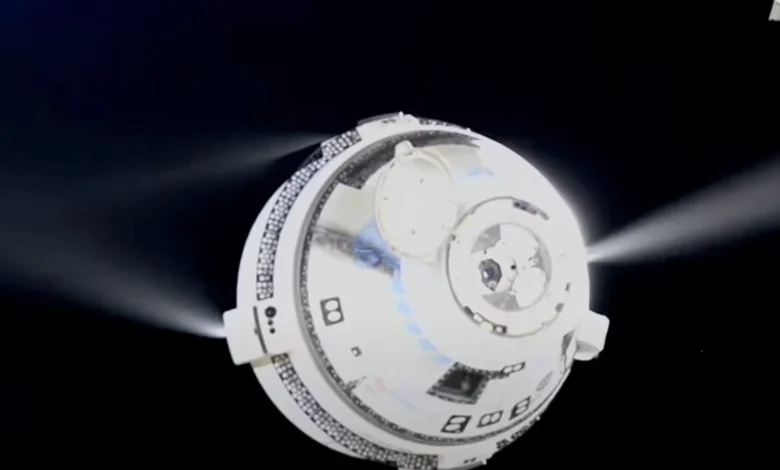
As the decade approaches its midpoint, NASA finds itself at a critical strategic crossroads regarding the future of human access to space. With the venerable International Space Station (ISS) slated for retirement by 2030—and with active discussions underway to potentially extend that operational window to 2032—the space agency is balancing the sunset of current technologies against the nascent rise of a commercialized low-Earth orbit (LEO) ecosystem. Central to this transition is the retirement of the SpaceX Dragon spacecraft, a workhorse of the modern era, which is expected to be phased out by or before 2030. This looming departure necessitates a robust, reliable, and sustainable successor to ensure that American astronauts maintain a continuous presence in orbit, whether aboard the ISS or the incoming generation of Commercial LEO Destinations (CLDs).
The dilemma facing NASA officials is multifaceted. They must reconcile the high cost of developing new crew transportation systems with the limited, albeit essential, demand for astronaut flights. Current projections indicate a modest requirement of roughly two seats every six to nine months. Against this backdrop, the Boeing Starliner program—despite a history marked by technical setbacks, schedule delays, and significant budget overruns—has emerged as the agency’s most viable bridge to the next era of space exploration.
A Chronology of the Commercial Crew Program
The genesis of this current predicament lies in the 2014 Commercial Crew Program (CCP) awards. At the time, NASA sought to end its reliance on Russian Soyuz launches by contracting with both SpaceX and Boeing. The dual-provider strategy was intended to ensure redundancy; if one system failed, the other would remain available.
SpaceX achieved its first crewed mission, Demo-2, in May 2020. Since then, the Dragon spacecraft has performed reliably, logging numerous crew rotations and proving the viability of the public-private partnership model. Boeing’s path, however, proved significantly more arduous. The uncrewed Orbital Flight Test (OFT) in 2019 encountered software anomalies that prevented it from reaching the ISS. A subsequent uncrewed flight, OFT-2, did not occur until May 2022. The long-awaited Crew Flight Test (CFT), which carried astronauts to the station, faced persistent challenges with propulsion system valves and helium leaks, highlighting the immense complexity of crew-rated spacecraft development.
Despite these hurdles, NASA’s leadership has maintained that the nation has invested too much capital and strategic effort into the Boeing Starliner to abandon it now. Abandoning the platform would not only result in a total loss of the billions of dollars in taxpayer funding already expended but would also leave the United States without a domestic backup should the current commercial landscape shift.
The Economic Realities of LEO Access
The financial landscape of space transport is shifting from a government-led model to one driven by market competition. However, the market for LEO transport remains thin. While private space stations, being developed by consortia led by companies like Blue Origin and Voyager Space, are designed to host commercial astronauts, researchers, and tourists, the primary anchor tenant remains NASA.
The current pricing structure reflects this transition. For missions Starliner-2 through Starliner-6, NASA and Boeing have settled on a price point of approximately $90 million per seat. While this figure is higher than the costs associated with more mature systems, it represents a fixed-price arrangement that shifts the burden of operational risk onto the contractor. Yet, as Boeing looks toward the 2030s, the company has remained notably reticent regarding future pricing. This lack of transparency has sparked concerns among stakeholders who fear that if Dragon exits the market, Boeing could effectively hold a monopoly on crewed transportation, potentially driving up costs and stifling innovation.
John Mulholland, Boeing’s Vice President and Program Manager of Commercial Crew, addressed these concerns during a recent news conference. He noted that the company is currently focused on the certification of the United Launch Alliance (ULA) Vulcan rocket as the primary launch vehicle for future Starliner missions. "We couldn’t provide detailed pricing to the CLD suppliers as the Vulcan rocket has not been certified, and the spacecraft has not been certified, and we don’t have detailed pricing on the Vulcan," Mulholland stated. He emphasized that once these technical milestones are achieved, Boeing intends to position itself as a competitive supplier for the private station era.
The Debate Over a Second Competition
In the aerospace industry, voices have emerged suggesting that NASA should initiate a second crewed transportation competition. Proponents argue that by funding a new development cycle, the agency could invite participation from emerging players like Blue Origin—which is currently developing its own orbital vehicle—and The Exploration Company, an ambitious European-based firm looking to compete in the LEO cargo and crew market.
The argument for a new competition is based on the principles of market health. A diverse fleet of vehicles would prevent the vulnerability of a single-point failure and encourage price competition. However, the cost of such an initiative would be astronomical. Estimates for developing a new, crew-rated spacecraft from the ground up range in the billions of dollars, and the timeline for such a project would likely exceed a decade.
During recent briefings, stakeholders such as Jared Isaacman—who has led multiple private space missions—expressed skepticism regarding the necessity of a massive new government investment. Given the modest demand for seats, Isaacman and others suggest that the market may not support three or four competing providers. If the national investment in Boeing is nearing fruition, the most logical path, according to many at NASA, is to see that investment through to its full operational capability rather than starting over.
Broader Implications for U.S. Space Policy
The strategic decision to rely on Boeing represents a broader shift in how NASA interacts with private industry. The agency is moving away from being a "customer" that dictates every design specification toward being an "anchor tenant" that buys services from commercial providers. This transition, while cost-effective in the long term, requires a delicate balance of oversight and flexibility.
The implications for the U.S. position in space are significant. As China expands its Tiangong space station and develops its own fleet of crewed vehicles, the U.S. must ensure that its own infrastructure remains resilient. Any delay in the Starliner program creates a potential "capability gap"—a period during which the U.S. might lack an independent means of reaching orbit. History has shown that such gaps are expensive and politically damaging; the period between the retirement of the Space Shuttle in 2011 and the arrival of Dragon in 2020 cost NASA billions in payments to the Russian space agency, Roscosmos, for seat availability on Soyuz vehicles.
Furthermore, the integration of the Vulcan rocket into the Starliner program adds a layer of complexity. As a new heavy-lift launch vehicle, Vulcan’s reliability is paramount. Its certification is not merely a Boeing milestone; it is a national security and scientific priority. If the combination of Starliner and Vulcan proves successful, it will provide the U.S. with a highly capable, heavy-lift crew and cargo architecture that can support missions not just to LEO, but potentially to the lunar gateway and beyond.
Looking Toward the Future
As the decade concludes, the space agency’s focus will remain on stabilizing the current crewed infrastructure. The transition from the ISS to private stations will be the most significant shift in the history of the Commercial Crew Program. For Boeing, the challenge is clear: it must move from a development-heavy culture to one of high-cadence, reliable operations. The company’s enthusiasm is palpable, with leadership signaling an intent to become the preferred transportation supplier for the next generation of space habitats.
However, the burden of proof remains on Boeing. The company must demonstrate that it can fly consistently, safely, and within the constraints of its contract. For NASA, the challenge is to maintain a competitive environment while ensuring that the transition to the post-ISS era does not result in a loss of American leadership in orbit.
Ultimately, the decision to continue backing Starliner is a bet on the endurance of American industrial capacity. It is a recognition that spaceflight is inherently difficult, and that the long-term benefits of maintaining a robust, domestic, and commercialized crew transportation sector outweigh the short-term frustrations of technical development. As NASA moves toward the 2030s, the eyes of the aerospace community will remain fixed on the launchpad, watching to see if this pivot toward commercial longevity can survive the pressures of cost, competition, and the unforgiving nature of orbital mechanics.