Next.js Advisory Board Schedules Comprehensive Security Patch for September 30, 2026 to Resolve Nine Vulnerabilities Across Ecosystem

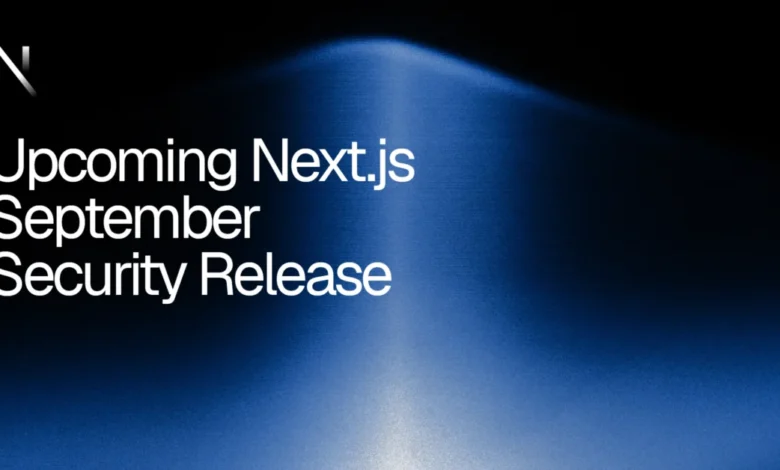
Development teams utilizing the popular React framework Next.js have been put on formal notice following an official announcement regarding an upcoming, scheduled security release slated for September 30, 2026. This advance warning, provided well ahead of the patch deployment, is designed to give enterprise engineering departments, independent developers, and IT infrastructure managers adequate lead time to schedule maintenance windows, review dependency trees, and plan necessary upgrade paths. The forthcoming patch deployment represents a critical milestone in the ongoing maintenance lifecycle of the framework, addressing a total of nine distinct vulnerabilities that span a wide spectrum of severity levels. Among the identified security flaws, the distribution includes one critical vulnerability, two high-severity issues, five medium-risk concerns, and one low-risk anomaly. To remediate these issues comprehensively, project maintainers plan to publish two specific point releases—version 16.3.7 and version 15.5.27—simultaneously with the publication of the full security advisories. These advisories will detail the exact nature of the flaws, assess potential impacts, list all affected versions, and provide step-by-step upgrade instructions. Industry experts and framework maintainers strongly advise all organizations relying on the affected versions to apply the patches immediately upon their public release to safeguard web applications against potential exploitation.
The Anatomy of the Scheduled Security Release
The decision to provide an advance notice for a scheduled security patch underscores a maturing approach to vulnerability management within the open-source community. Rather than dropping zero-day disclosures or unannounced emergency patches that can catch organizations off guard, the Next.js maintainers are adopting a predictable disclosure schedule. This methodology aligns with enterprise software best practices, mirroring the patch Tuesday models utilized by major technology conglomerates like Microsoft and Oracle.
The impending release on September 30, 2026, is particularly noteworthy due to the density and severity distribution of the bugs it resolves. Out of the nine total vulnerabilities, the single critical flaw demands the immediate attention of system administrators. While specific technical details regarding the critical vulnerability are intentionally being withheld until the official advisories go live, critical vulnerabilities in web frameworks typically involve remote code execution (RCE), severe server-side request forgery (SSRF), or authentication bypass mechanisms that could allow malicious actors to compromise underlying server infrastructure or access sensitive user data.
The two high-severity vulnerabilities, while slightly narrower in scope or harder to exploit than the critical flaw, still pose substantial risks, potentially enabling data leakage, cross-site scripting (XSS) at scale, or denial-of-service (DoS) conditions. The five medium-severity and one low-severity vulnerabilities round out the package, addressing edge-case bugs, lesser information disclosure risks, and internal logic flaws that require specific environmental conditions to exploit. By bundling these fixes into cohesive releases—versions 16.3.7 and 15.5.27—the development team ensures that teams operating on both the cutting-edge branch and the stable enterprise branch of the framework have a direct, streamlined path to total security remediation.
Chronology of the Next.js Security Lifecycle and Vulnerability Management
Understanding the significance of the September 30, 2026 release requires examining the broader historical context of how Next.js has handled security reporting, vulnerability discovery, and patch deployment over the years. As Next.js evolved from a niche server-side rendering tool for React into one of the dominant full-stack web development frameworks on the global market, its attack surface grew proportionally.
In the early years of the framework, security patches were often rolled out on an ad-hoc basis as individual researchers reported issues via GitHub or direct email disclosures. However, as enterprise adoption accelerated—driven by major corporate migrations, e-commerce deployments, and high-traffic media sites—the informal vulnerability handling process proved insufficient. The integration of the framework into Vercel’s broader ecosystem catalyzed a restructuring of its security operations.
Vercel established formal reporting channels, integrated automated dependency scanning tools, and partnered with bug bounty platforms to institutionalize security research. The establishment of Vercel’s Open Source Bug Bounty program on HackerOne marked a turning point. This platform created a structured, financially incentivized environment where ethical hackers, security researchers, and penetration testers could systematically probe Next.js and its sibling open-source projects for weaknesses.
Over the past several years, the cadence of Next.js releases has accelerated to match the rapid release cycle of React and the underlying Node.js runtime environments. Major version updates, such as the transition into the 15.x and 16.x eras, introduced profound architectural shifts, including native support for React Server Components (RSCs), advanced caching mechanisms, and turbopack integration. Each architectural leap, while boosting performance and developer experience, introduced novel security paradigms. The upcoming patch on September 30, 2026, is a direct byproduct of this continuous security auditing process, reflecting months of collaborative triage between internal core maintainers and external security researchers reporting through the HackerOne ecosystem.
Supporting Data and Ecosystem Vulnerability Statistics
To contextualize the scale of the September 30 patch, it is valuable to analyze broader trends in web framework security and the composition of modern JavaScript supply chains. According to recent industry analyses by software composition analysis (SCA) firms, open-source JavaScript applications rely on an average of several hundred transitive dependencies. In this interconnected ecosystem, vulnerabilities in core frameworks like Next.js carry disproportionate systemic risk.
When a vulnerability is discovered in a foundational framework, the potential blast radius extends across millions of deployed web applications globally. Historical data from similar major framework updates indicates that critical vulnerabilities in server-side rendering engines typically see a spike in automated scanning activity by malicious entities within forty-eight hours of public advisory publication. Consequently, the advance warning window provided for the September 30 release serves as a crucial defensive buffer, reducing the window of vulnerability exposure for proactive engineering teams.
Furthermore, the distribution of the nine vulnerabilities—skewing heavily toward medium and high severity rather than an isolated critical flaw—indicates a comprehensive codebase sweep rather than a single point of failure. Codebases undergoing deep cryptographic, routing, and hydration auditing frequently yield clusters of related bugs. The inclusion of fixes across both version 16.3.7 and version 15.5.27 demonstrates a commitment to supporting multiple active major branches, acknowledging that enterprise applications cannot always instantly migrate to the absolute newest major version due to breaking changes or complex dependency constraints.
Official Responses, Security Programs, and Industry Collaboration
Behind the scenes, the management of Next.js security relies heavily on collaborative frameworks between corporate entities, independent maintainers, and the global security research community. Vercel, as the primary corporate sponsor and steward of Next.js, operates a robust security posture designed to intercept, analyze, and remediate software defects before malicious actors can weaponize them.
Through Vercel’s Open Source Bug Bounty program hosted on HackerOne, external security professionals are actively invited to audit the framework. This crowdsourced approach to defensive security has become the industry standard for major open-source projects, bridging the gap between limited internal security staffing and the vast, distributed talent pool of global ethical hackers. The program offers financial bounties scaled according to the severity of the reported vulnerability, incentivizing rigorous, high-quality research.
In official statements regarding vulnerability management, representatives for the security operations team emphasize transparency, responsible disclosure, and rapid remediation. While individual researchers are bound by coordinated disclosure timelines—allowing maintainers sufficient time to write, test, and package patches—the ultimate goal of the program is to ensure that end-users are never left in the dark regarding the health of their software supply chain.
For organizations seeking clarification, guidance, or assistance regarding the security program, vulnerability reporting protocols, or specific compliance inquiries, Vercel maintains a dedicated communication channel. Inquiries can be directed securely to [email protected], where a specialized incident response and vulnerability management team handles reports on a 24/7 basis. This formal communication channel ensures that enterprise legal, compliance, and security teams have a direct line to framework maintainers when conducting third-party risk assessments.
Broader Impact and Implications for Enterprise Engineering Teams
The announcement of the September 30, 2026 security release carries profound implications for how enterprise engineering organizations manage technical debt, software updates, and supply chain security. As modern web architectures become increasingly complex—incorporating edge computing, serverless functions, hybrid rendering models, and complex caching layers—the surface area for potential security misconfigurations and framework-level bugs expands correspondingly.
For CTOs, VP of Engineering, and DevOps leads, the advance notice serves as an operational call to action. Engineering managers must factor the September 30 maintenance event into their sprint planning cycles. Waiting until a vulnerability is actively exploited in the wild before initiating upgrade procedures is no longer a viable risk-management strategy in modern software development.
The requirement to upgrade to versions 16.3.7 or 15.5.27 also highlights the critical importance of maintaining comprehensive automated testing suites. Framework upgrades, even within minor or patch version increments, can occasionally introduce regressions or interact unexpectedly with custom middleware, authentication wrappers, or specialized routing configurations. Teams with robust continuous integration and continuous deployment (CI/CD) pipelines, automated end-to-end testing, and thorough staging environments will be best positioned to validate the new patches rapidly without disrupting production traffic.
Moreover, this event emphasizes the broader industry shift toward proactive vulnerability governance. Regulatory frameworks, cyber insurance providers, and enterprise procurement departments increasingly demand rigorous patch management metrics. Being able to demonstrate that critical framework vulnerabilities are patched within days—or hours—of official advisory publication is rapidly becoming a baseline requirement for doing business in regulated sectors such as fintech, healthcare, and enterprise SaaS.
As the tech industry counts down to the September 30, 2026 release date, the focus shifts squarely to execution. By providing clear timelines, transparent categorization of the nine addressed vulnerabilities, and a dual-version patch strategy covering both the 16.x and 15.x branches, the Next.js maintainers have established a textbook example of responsible vulnerability disclosure. It now falls upon the global community of developers and system administrators to utilize this advance warning effectively, ensuring that the web ecosystem remains resilient, secure, and prepared for the challenges of modern application delivery.