Tesla Semi Surge Highlights Economic Pivot Toward Electrified Freight Amid Global Energy Volatility

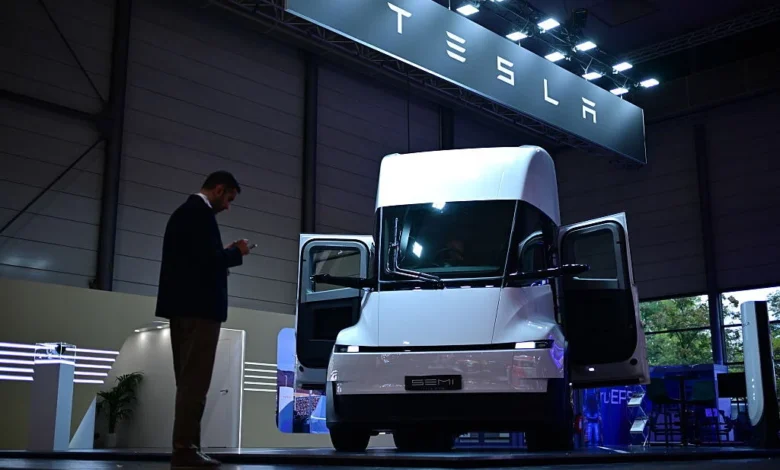
The heavy-duty logistics industry is undergoing a structural transformation, catalyzed by a convergence of record-breaking diesel prices and a strategic, collective procurement effort by some of the world’s largest shippers. Despite a domestic regulatory environment that has recently pulled back on federal subsidies for electric vehicle (EV) adoption, the economic imperative to electrify long-haul trucking has never been more pronounced. A landmark agreement finalized this week, featuring a record-setting order for 2,500 Tesla Semi units from a coalition including Microsoft and PepsiCo, signals a potential inflection point for the logistics sector, effectively doubling the current population of heavy-duty electric trucks operating on American roads.
The Macroeconomic Context of the Shift
The current landscape for the trucking industry is defined by extreme price sensitivity. As the ongoing conflict in the Middle East continues to disrupt global shipping lanes and oil production, US diesel prices have surged to unprecedented levels, effectively doubling compared to year-over-year figures. For logistics firms, where fuel typically accounts for the largest variable expense, this volatility has rendered the total cost of ownership (TCO) for electric trucks increasingly attractive.
During a pre-taped address, Elon Musk emphasized the shifting economic calculus of freight. "The truck is going to make a ton of sense economically because the cost of electricity is much less than the cost of diesel, especially in these crazy times," Musk noted. This statement arrives with a degree of irony, given that Musk previously spent millions to support the Trump administration and the GOP—a political bloc that notably cut billions in federal support for EV development last year. The administration’s current policy trajectory, which includes active efforts to lower fuel economy standards for heavy-duty truck engines, stands in stark contrast to the aggressive climate-driven targets favored by previous regulatory frameworks.
Heavy-duty trucking is a significant contributor to the global carbon footprint, accounting for approximately 7 percent of total US greenhouse gas emissions. While the current administration has sought to roll back standards that would have forced manufacturers to hit aggressive emissions benchmarks, the market appears to be self-correcting through demand-side pressure. By pooling their purchasing power, the alliance of shippers involved in the recent Tesla order has managed to negotiate lower unit prices, demonstrating that economies of scale can mitigate the high initial capital expenditure (CAPEX) associated with zero-emission vehicles.
Chronology of the Tesla Semi Development
The path to this week’s order has been long and marked by significant delays, reflecting the complexities of transitioning heavy-duty logistics to battery-electric propulsion.
- November 2017: Tesla officially unveils the Semi prototype, promising revolutionary range and performance. At this time, Musk publicly pledges that the vehicle will be equipped with Enhanced Autopilot features.
- 2018–2021: Repeated production delays push the original delivery timelines back, as Tesla prioritizes its high-volume passenger vehicle lines—the Model 3 and Model Y—amid global supply chain constraints.
- Late 2022: Initial deliveries of the Tesla Semi begin to early corporate customers, marking the start of real-world operational testing.
- 2023: The federal government cuts billions in EV support, creating a challenging fiscal environment for domestic manufacturers.
- 2024: Global energy markets experience extreme volatility due to geopolitical conflict, driving diesel prices to record highs and accelerating corporate interest in alternative fuels.
- Current Week: The alliance of shippers, facilitated by the nonprofit Smart Freight Centre, announces the order for 2,500 units, to be delivered over the next 18 months.
Competitive Landscape and Procurement Strategy
The decision to choose Tesla was not made in a vacuum. According to Meena Bibra, a spokesperson for the Smart Freight Centre, the selection process was a rigorous assessment of price, performance, production capability, and service support. While Tesla secured the bulk of this recent order, the market remains competitive. Manufacturers such as Kenworth, Volvo, and startup Ride are actively vying for market share, offering their own electric platforms that may better suit the specific operational needs of carriers accustomed to legacy internal combustion engine (ICE) architectures.
The strategy of "pooling demand" is a critical development. By aggregating the needs of multiple corporations—including industry giants like Microsoft and PepsiCo—the shippers have essentially de-risked the procurement process for the manufacturers. This collaborative approach allows for more predictable production schedules and helps drive down the cost per vehicle, addressing one of the primary barriers to widespread adoption: the price premium of electric trucks over their diesel counterparts.
Technical Limitations and Future Integration
Despite the excitement surrounding the record-setting order, significant questions remain regarding the technological maturity of the platform. Notably, Tesla’s "Full Self-Driving (Supervised)" feature, which is currently being integrated into the company’s passenger lineup, is not yet available for the Semi. While Musk stated that the technology would debut in "the very near future," industry observers remain cautious. The promise of autonomous or semi-autonomous trucking has been a recurring theme since the 2017 launch, yet the regulatory and technical hurdles for heavy-duty autonomous vehicles remain substantially higher than those for passenger cars.
Safety remains a paramount concern. The integration of advanced driver assistance systems (ADAS) into commercial freight requires rigorous validation and testing to ensure that systems can handle the unique dynamics of an 80,000-pound vehicle. Whether the Tesla Semi will eventually provide the level of autonomy required to offset labor costs—a major driver of the total cost of ownership—remains to be seen.
Broader Implications for Logistics and Emissions
The movement toward electric freight is not merely a corporate sustainability initiative; it is an increasingly defensive financial strategy. As oil markets remain vulnerable to geopolitical shocks, the transition to electricity provides a degree of energy independence for companies with large captive fleets. Electricity prices, while subject to regional fluctuations, generally lack the extreme volatility seen in the global crude oil market, providing a level of cost predictability that is invaluable for long-term logistics planning.
Furthermore, the impact of this order on the broader industry cannot be understated. By doubling the number of heavy-duty electric trucks on the road, the current order creates a critical mass of vehicles that will necessitate infrastructure investment. The deployment of high-capacity charging networks along major freight corridors is the next logical hurdle. As these trucks enter service over the next 18 months, the data gathered regarding battery degradation, charging speed, and uptime will serve as a bellwether for the rest of the industry.
The current administration’s focus on lowering fuel economy standards may, in the short term, reduce the regulatory pressure on manufacturers to innovate. However, the market signals from major shippers suggest that the transition is being driven by fundamental economic realities rather than policy mandates alone. If the Tesla Semi and its competitors can prove their reliability in high-mileage, high-utilization environments, the adoption curve for electric heavy-duty vehicles may steepen significantly, regardless of the political climate in Washington.
As the industry prepares for the delivery of these 2,500 units, the logistics sector stands at a crossroads. The transition to electric power is no longer a speculative exercise; it is an active response to the high cost of oil and the need for operational resilience. For companies like Microsoft and PepsiCo, the investment is an early bet on a future where the cost of freight is decoupled from the fluctuations of the global oil market—a move that may prove to be a defining competitive advantage in the decade ahead. Whether this shift will be sufficient to materially impact national greenhouse gas emissions depends on the sustained commitment of these shippers and the ability of manufacturers to scale production to meet rising demand.