Tesla’s Semi Truck Ambitions Face a Complex Road Amidst Geopolitical Volatility and Shifting Federal Policy

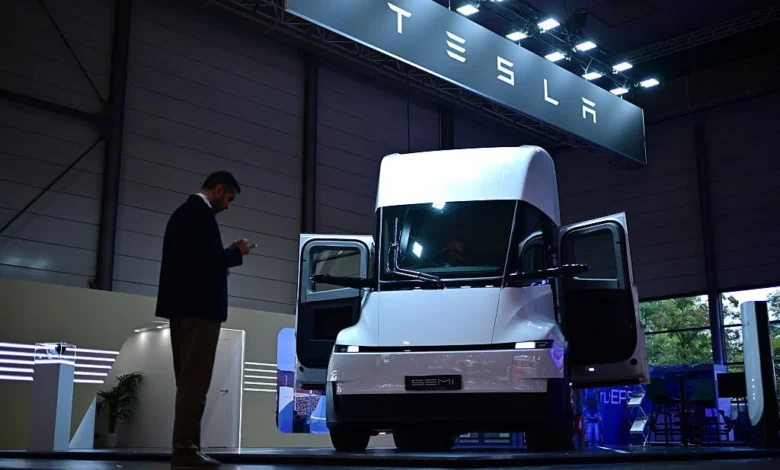
The transportation sector is currently navigating a period of profound instability, defined by the convergence of volatile global energy markets, aggressive corporate decarbonization mandates, and a federal regulatory environment that has sharply pivoted away from state-sponsored electric vehicle (EV) support. Against this backdrop, Tesla has secured a significant milestone: a collective order for 2,500 Semi trucks from an alliance of major shippers, including industry titans Microsoft and PepsiCo. This deal, while signaling robust demand for heavy-duty electric logistics, emerges despite a policy climate in Washington that has recently sought to dismantle the very subsidies that helped accelerate the EV transition.
The Paradox of Policy and Market Demand
The current administration, buoyed by the financial backing of figures such as Elon Musk, has taken a combative stance toward the electrification of the automotive sector. Over the past year, federal support for EV development and consumer incentives has been curtailed by billions of dollars. Furthermore, the administration has signaled its intent to roll back fuel economy standards for heavy-duty truck engines. This regulatory shift directly challenges the climate targets previously established to curb the carbon footprint of the trucking industry, which is responsible for approximately 7 percent of total greenhouse gas emissions in the United States.
However, the laws of economics are proving more resilient than legislative maneuvers. As the conflict in the Middle East continues to destabilize global oil production and logistics, domestic diesel prices have surged to record highs. Prices at the pump for commercial haulers are now nearly double what they were a year ago. This inflationary pressure has transformed the Tesla Semi from a speculative technological experiment into an immediate economic imperative. In a pre-taped address, Musk highlighted this shift, noting that the cost-per-mile disparity between electricity and diesel has widened significantly, rendering the electric semi-truck a financially sound investment for fleet operators despite the hostile political landscape.
A Landmark Order for Heavy-Duty Electrification
The recent procurement agreement represents a massive leap forward for the heavy-duty electric vehicle (HDEV) market. By pooling demand, the alliance of shippers—which includes major players like Microsoft and PepsiCo—has successfully leveraged economies of scale to negotiate more competitive pricing with manufacturers. The 2,500-vehicle order is slated for delivery over the next 18 months, a timeline that, if met, would effectively double the total number of heavy-duty electric trucks currently in operation across the United States.
According to Meena Bibra, a spokesperson for the nonprofit Smart Freight Centre, the decision-making process was rigorous and multifaceted. Carriers evaluated vehicles based on four primary pillars: purchase price, operational performance, manufacturing capacity, and the quality of long-term service support. While Tesla’s offering won this particular contract, the market remains competitive. Carriers are actively exploring diverse portfolios, maintaining relationships with established heavy-duty manufacturers such as Kenworth, Volvo, and Ride. These legacy players are aggressively scaling their own electric platforms, providing shippers with the necessary redundancy to ensure supply chain stability.
The Evolution of the Tesla Semi: From Promise to Production
The journey of the Tesla Semi has been marked by long delays and shifting expectations. When the vehicle was first unveiled in 2017, the company made ambitious claims regarding the integration of autonomous technologies, specifically promising the inclusion of Enhanced Autopilot. Nearly seven years later, the technological landscape has evolved. While the company is now pushing its "Full Self-Driving (Supervised)" software across its passenger vehicle fleet, this technology remains unavailable on the Semi.
Musk has recently indicated that autonomous features for the Semi will arrive in the "very near future," though industry analysts remain cautious. The complexity of managing an 80,000-pound Class 8 truck in highway conditions presents significantly higher regulatory and safety hurdles than those faced by passenger vehicles. Tesla’s ability to deliver on these software promises will be critical as the company transitions from low-volume pilot programs to full-scale commercial deployment.
Economic and Environmental Implications
The move toward heavy-duty electrification is not merely a corporate sustainability exercise; it is an infrastructure necessity. The heavy trucking industry is notoriously difficult to decarbonize due to the high energy density required for long-haul transport. However, the economic argument for electrification is becoming increasingly difficult to ignore. Beyond the volatility of diesel prices, fleet operators are facing mounting pressure from institutional investors and retail consumers to meet Scope 3 emissions targets.
A transition to electric freight offers a dual benefit: long-term hedge against fuel price volatility and a significant reduction in operational maintenance costs. Electric drivetrains, characterized by fewer moving parts than internal combustion engines, generally require less frequent servicing. When scaled across a fleet of hundreds or thousands, these savings compound rapidly.
However, the infrastructure to support such a transition remains the primary bottleneck. The current U.S. power grid, particularly along major interstate freight corridors, is ill-equipped to handle the high-capacity charging requirements of thousands of electric semis. Without a significant federal investment in fast-charging infrastructure—a goal that currently sits at odds with the administration’s stated policy priorities—the widespread adoption of the Tesla Semi and its competitors will be geographically constrained to major urban hubs and well-serviced logistics corridors.
Chronology of the Electric Truck Transition
- November 2017: Tesla unveils the initial prototype of the Semi, promising 500 miles of range and Enhanced Autopilot capabilities.
- 2022–2023: Federal policy shifts as the administration initiates a reduction in EV tax credits and subsidies for charging infrastructure, coupled with attempts to weaken emissions standards for heavy-duty engines.
- 2024: Global energy markets experience extreme volatility due to geopolitical tensions in the Middle East, leading to record-high diesel prices.
- Mid-2024: A consortium of major corporations, including Microsoft and PepsiCo, announces a collective purchase agreement for 2,500 Tesla Semis.
- Late 2024–2025: Scheduled delivery window for the record-setting order, which is expected to double the current U.S. fleet of HDEVs.
The Road Ahead: Analysis of Future Challenges
As Tesla moves to fulfill its largest order to date, the company faces a critical test of its manufacturing prowess. Historically, the brand has struggled with production bottlenecks when scaling new vehicle platforms. For the Semi, the challenge is compounded by the need for specialized service support networks, which differ significantly from the requirements of the Model 3 or Model Y.
Furthermore, the legal and regulatory landscape is poised for a period of intense litigation. Environmental groups are already challenging the administration’s attempts to lower fuel economy standards, arguing that such moves violate the Clean Air Act. The outcome of these legal battles will determine the baseline against which all electric truck manufacturers must compete. If standards are kept high, the demand for electric vehicles will remain a structural necessity; if standards are weakened, the transition will become entirely dependent on the fluctuating price of diesel.
For now, the shippers involved in the 2,500-truck deal are betting on the latter. By securing these assets, companies like PepsiCo and Microsoft are positioning themselves to withstand future energy shocks. Their commitment suggests that for the private sector, the transition to electric heavy-duty transport is no longer a matter of "if," but a matter of "when." As the industry watches the first of these units roll off the assembly line, the true measure of success will be whether these vehicles can maintain the operational uptime that logistics firms require to keep the nation’s supply chain moving.
While the political rhetoric in Washington remains focused on protecting traditional energy interests, the reality on the ground—driven by high fuel costs and corporate ESG mandates—continues to force a shift toward a cleaner, electrified future. Whether Tesla can maintain its leadership position in this space while navigating a volatile political and economic climate remains the defining question of the next decade in American logistics.
Related posts: