Accelerating Legacy AS/400 Modernization: How Agentic AI Transforms Business Rule Extraction from Months to Days

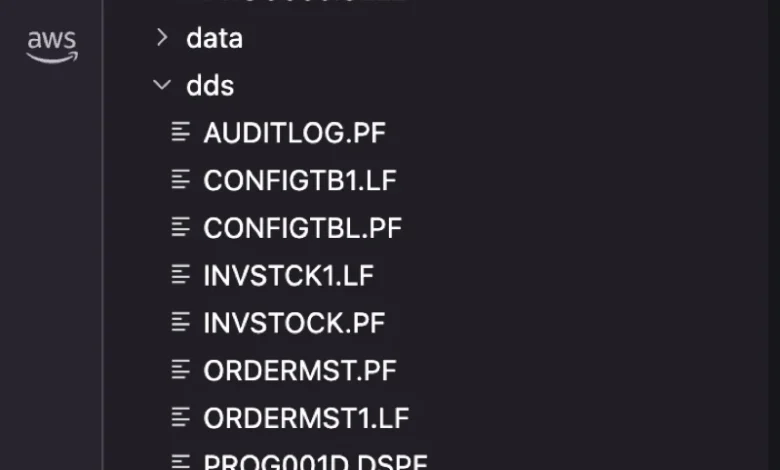
The modernization of legacy AS/400 systems has long been considered one of the most daunting tasks in corporate information technology. Organizations worldwide continue to rely on critical business logic embedded in decades-old RPG and COBOL code bases—systems that underpin essential functions like order fulfillment, inventory management, and financial processing. For years, the process of extracting these business rules—a prerequisite for any successful migration to modern cloud environments—has been a labor-intensive, manual endeavor, often requiring months of effort from a diminishing pool of Subject Matter Experts (SMEs). A new paradigm shift is emerging, however, as agentic AI development environments like Kiro demonstrate that this process can be compressed into a matter of days rather than weeks or months.
The persistence of AS/400 environments in modern enterprises is not due to a lack of ambition to modernize, but rather the extreme complexity of the legacy code itself. In many of these systems, business logic is not centralized; it is fragmented across thousands of interconnected programs, subroutines, and Data Description Specifications (DDS). When an organization decides to move away from these systems, they often face an "information vacuum." The original developers have frequently retired, and the documentation, if it exists at all, is often obsolete or incomplete.
Historically, companies attempting to modernize these systems have relied on a traditional approach involving teams of consultants and technical writers tasked with manually tracing code execution. This process is prone to human error and carries significant overhead. A typical engagement involving a standard system of five integrated programs—approximately 40,000 lines of code—would traditionally consume between 40 and 80 person-hours of effort, stretching over a timeline of four to six weeks.
The introduction of Kiro, an agentic AI-powered development environment that spans IDE, CLI, web, and mobile surfaces, offers a technical alternative to this manual bottleneck. By utilizing an autonomous workflow that analyzes code dependencies, traces execution paths, and generates documentation against predefined standards, Kiro allows organizations to shift from manual discovery to automated verification.
The core of the Kiro methodology relies on three distinct phases of operation: configuration of steering files, construction of an actionable AI specification, and autonomous execution. Steering files function as the "north star" for the AI, defining the project context, technical standards, and output formats. By setting constraints—such as requiring 10 to 20 lines of code context for every extracted rule or mandating the translation of cryptic DDS field names into human-readable business terms—organizations ensure that the AI’s output is consistent and ready for immediate technical implementation.
Once the steering parameters are established, users construct a Kiro Spec, a structured roadmap of discrete, trackable tasks. This might include parsing physical and logical file definitions, identifying subroutines within RPG programs, mapping data flows across CALL/PARM statements, or analyzing how configuration tables drive runtime behavior. By breaking down the extraction process into a dependency graph, Kiro can manage the complex relationships between different programs, ensuring that the final documentation is not just a collection of fragments, but a holistic view of the system’s logic.
For example, consider the process of stock allocation in an AS/400 environment. A traditional developer would need to manually parse the F-specs and the logic within a subroutine like ALLCST, interpreting how the program chains to the inventory file and updates availability. With an agentic AI approach, the system reads the source code, identifies the subroutine boundaries (lines 3820-3960), and automatically generates a plain-language description and a pseudocode equivalent. This output serves as a bridge, allowing modern developers who may have no experience with RPG or COBOL to understand exactly what the legacy system is doing.
The data gathered during this process is transformative for the migration effort. By translating abbreviated AS/400 field names like ZIORCD into "Order Code" or ZIPERD into "Fulfillment Period," the AI eliminates the guesswork that typically plagues legacy migration. This mapping is vital; without it, developers building a new, cloud-native replacement system are forced to reverse-engineer data structures in the dark, which is a common source of costly post-migration bugs.
Recent deployments of this technology suggest significant gains in efficiency. In a benchmark study of a five-program system, the adoption of an AI-assisted workflow reduced the total effort from 40-80 person-hours to just 12. More impressively, the timeline for completing the extraction documentation was reduced from six weeks to three days, representing a roughly 90% acceleration in the discovery phase. This efficiency creates a multiplier effect: as the team moves from one system to the next, the upfront setup costs for templates and steering files are amortized, making the extraction for subsequent systems even faster.
However, industry experts and developers emphasize that while AI can automate the heavy lifting of extraction, it does not replace the need for architectural judgment. The Kiro workflow is designed as a read-only analysis tool; it does not modify the source code or attempt to execute the programs. The extracted rules must still be vetted by an AS/400 SME. The role of the human expert shifts from being a manual code reader to being a high-level validator, focusing on the strategic implications of the extracted logic rather than the minutiae of line-by-line syntax.
The broader implications for the IT sector are profound. As the global workforce of RPG and COBOL programmers continues to shrink, the cost of maintaining these legacy systems is rising, while the risk of system failure grows. Automated business rule extraction provides a path forward that is both faster and more accurate than traditional methods. It lowers the barrier to entry for modernization projects, allowing organizations that were previously paralyzed by the complexity of their code bases to finally initiate migration strategies.
Looking forward, the integration of agentic AI into the mainframe modernization stack suggests a future where legacy systems are treated not as "black boxes" that must be painstakingly unraveled, but as well-documented assets that can be reliably mapped to modern infrastructure. As organizations continue to prioritize digital transformation, the ability to rapidly convert decades of operational knowledge into modern, machine-readable specifications will become a critical competitive advantage.
Ultimately, the successful transition of an AS/400 system to a modern architecture requires more than just new hardware or cloud hosting—it requires a complete understanding of the business logic that has kept the company running for decades. By reducing the time required to achieve that understanding, tools like Kiro are providing a vital service to the enterprise, enabling them to move past the limitations of their legacy infrastructure and focus on building the features and capabilities their customers demand in an increasingly digital economy.
The path forward for these organizations remains clear: leverage automation to de-risk the discovery phase, utilize SMEs to validate the AI’s findings, and prioritize the creation of documentation that is actually usable by modern development teams. With these pillars in place, the specter of the "modernization project that never ends" may finally be consigned to the past, replaced by a repeatable, predictable, and highly efficient workflow.