Serve Robotics Pivots Toward Infrastructure as a Service by Launching Physical AI Services Division

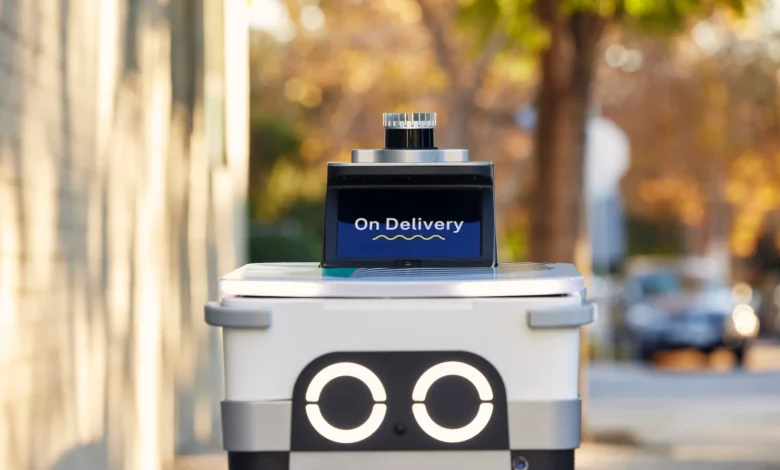
Serve Robotics, the sidewalk delivery robot manufacturer that emerged from the Postmates acquisition by Uber, is undertaking a significant strategic pivot. By transitioning from a pure-play robotics operator to a technology supplier, the company aims to establish itself as a foundational layer in the burgeoning robotics ecosystem. This expansion, dubbed Physical AI Services, marks a departure from its original business model, which focused exclusively on deploying autonomous units for last-mile delivery. Instead, the company is now positioning itself to provide the essential "plumbing"—connectivity, data management, and edge computing—that other firms require to operate robots in complex, human-centric environments.
The Evolution of Serve Robotics: A Chronology of Growth
The origins of Serve Robotics are deeply intertwined with the rapid consolidation of the delivery tech market in the early 2020s. In 2021, Uber completed its $2.65 billion acquisition of Postmates, a deal that included the latter’s internal robotics division. Recognizing the potential for a standalone entity, Uber spun off the robotics team into Serve Robotics. The company’s trajectory has been marked by high-profile partnerships and capital infusions, culminating in an April 2024 public market debut that raised approximately $40 million.
Throughout this period, Serve focused on perfecting the "googly-eyed" sidewalk robot, a unit designed to navigate the unpredictable terrain of urban pedestrian paths. The company further broadened its reach in early 2026 by acquiring Diligent Robotics, a firm specialized in hospital-assistant robots. This acquisition served as a critical proof point for the company’s vision: that the software and navigation intelligence required for a delivery robot on a city street could be repurposed for the internal logistics of a healthcare facility.
By late 2024, the company began diversifying its delivery operations, moving away from an exclusive reliance on the Uber platform to forge new commercial relationships with major logistics and retail players such as DoorDash and Wonder. This diversification provided the necessary operational data to justify the current launch of its Physical AI Services division.
Decoding Physical AI Services: A Three-Pronged Strategy
The new business line is built upon three core pillars designed to solve the perennial challenges of latency, data curation, and environment navigation. According to company leadership, these services are intended to democratize the proprietary technology Serve has spent years refining for its own fleet.
The first component, Serve Link, addresses the critical issue of connectivity. Operating a robot in an uncontrolled, outdoor environment necessitates constant communication with off-board intelligence. Serve Link provides a high-performance bridge between field-deployed robots and data centers, enabling companies to offload complex computational tasks to the cloud. This architecture mitigates the need for expensive, high-power onboard hardware, which can often be a bottleneck for weight and battery life. In tandem with its partnership with T-Mobile, Serve is leveraging edge computing to ensure these links remain stable even in environments with intermittent network performance.
The second component is a sophisticated data curation tool. As robots collect massive volumes of raw sensor data, distinguishing "noise" from "edge cases"—the rare, unpredictable events that can cause an autonomous system to falter—is a massive undertaking. Serve’s tool automates the identification of these edge cases, allowing developers to feed high-value data back into their machine learning models to improve overall system reliability.
Finally, the company is offering a real-world foundation-model data catalog. This is perhaps the most ambitious aspect of the expansion. By leveraging the millions of miles of data collected by its sidewalk robots, Serve is providing a library of visual and spatial information that teaches AI systems how to interpret human-populated environments. This catalog serves as a "pre-trained" foundation for other robotics companies, drastically reducing the time required to bring new autonomous systems to market.
The "AWS Moment" for Robotics
CEO and co-founder Ali Kashani has characterized this transition as an "AWS moment"—a reference to Amazon’s strategic decision to turn its internal cloud infrastructure into a service for the broader market. The logic follows a historical precedent in the tech industry: firms that successfully build complex, end-to-end applications in nascent markets often find that their internal toolsets are more valuable than the end products themselves.
"When the technology is so nascent, you have to build the end-to-end application because that’s the only way you know what to build," Kashani noted during the company’s third-quarter earnings call. "But as the technology matures, you want to open your technology so others can build on your platform."
This shift is not merely a business decision but a response to the current state of the robotics industry. While capital has flowed into robotics hardware, the software stack required to reliably operate these machines in public spaces remains fragmented. By offering its stack as a service, Serve is attempting to become the standard-bearer for robotic navigation and connectivity.
Industry Implications and Market Analysis
The pivot has already attracted early adopters, most notably Bedrock Robotics, which is utilizing Serve’s systems to enhance the autonomy of construction equipment. This partnership suggests that Serve’s technology is platform-agnostic, capable of supporting systems ranging from small delivery bots to heavy machinery.
From an analytical perspective, this move mitigates the concentration risk associated with the volatile delivery market. By pivoting toward an infrastructure-based model, Serve shifts from being a high-burn-rate operator to a software-as-a-service (SaaS) provider. This transition typically commands higher valuation multiples and provides more predictable, recurring revenue streams.
However, the strategy is not without risks. Competitors in the robotics space are simultaneously developing their own proprietary navigation stacks. Furthermore, as AI models for physical robots continue to evolve—particularly with the rise of "embodied AI"—Serve will need to maintain a technological edge to ensure its data catalog remains the industry standard. The company must also manage the operational complexity of maintaining its own delivery fleet while simultaneously supporting the needs of external clients.
Future Outlook and Strategic Alignment
Looking ahead, Serve Robotics’ success will likely depend on its ability to integrate its Physical AI Services with existing industrial workflows. The collaboration with T-Mobile is particularly telling; it indicates that Serve recognizes that the "Physical AI" revolution is tethered to the advancement of 5G and edge-computing infrastructure.
The decision to offer these tools at this juncture suggests that the company has reached a level of data maturity where its proprietary algorithms are significantly ahead of the current market average. By licensing its "lessons learned" to other players in agriculture, warehousing, and construction, Serve is essentially betting on the growth of the entire robotics sector rather than just its own share of the delivery market.
As the industry moves toward a future where autonomous machines operate routinely alongside humans, the companies that control the underlying communication and data infrastructure will likely exert the most influence. By transforming its internal R&D efforts into a public-facing service, Serve Robotics has signaled its intention to be the foundational partner for the next generation of autonomous systems. Whether this strategy will lead to the widespread adoption of its platform remains to be seen, but the company has successfully defined a new, high-growth path that moves beyond the traditional delivery-for-hire model.