The Rise of the Immersive LLM Chat Pattern
The rapid proliferation of LLM-based interfaces represents one of the most significant shifts in user experience (UX) design since the introduction of the graphical web. Platforms such as OpenAI’s ChatGPT, Anthropic’s Claude, Google’s Gemini, and GitHub’s Copilot have standardized a specific design language: a conversational sidebar for navigation, a main chat window for the exchange, and an input field for prompt engineering.
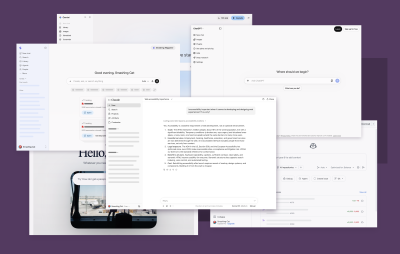
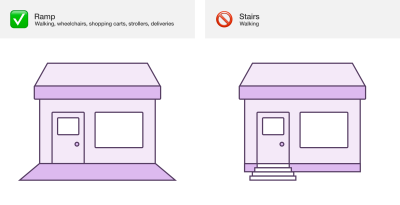
This specific configuration—the "immersive chat experience"—is distinct from simple pop-up chatbots or inline text-generation tools. Because these platforms are often built on web technologies and wrapped in native shells using frameworks like Electron or Tauri, they are subject to the same Web Content Accessibility Guidelines (WCAG) as any other digital asset. However, the complexity of these environments often leads developers to overlook the fundamental requirements for screen reader compatibility and keyboard navigation, inadvertently creating digital barriers that mirror physical architectural failures, such as buildings lacking ramps.
The Social Model of Disability in Digital Design
The prevailing challenge in LLM development is the industry’s inherent "visual bias." Software development frequently defaults to visual cues—color-coded status indicators, spatial alignment of speech bubbles, and animated streaming text—to convey progress and hierarchy. Under the social model of disability, however, it is the environment, not the individual, that creates the barrier. If a user cannot see the screen, the system fails not because of the user’s sensory profile, but because the software fails to communicate the existence and status of data via alternative modalities.
For a screen reader user, an LLM conversation is often a "silent" experience. When a prompt is submitted, the system may show a loading animation or a streaming response, but without proper implementation of Accessible Rich Internet Applications (ARIA) live regions, the assistive technology remains unaware of these updates. This creates a disconnect where the user is left waiting for a response that has already arrived, leading to a breakdown in utility and trust.
Strategic Implementation of Accessibility Features
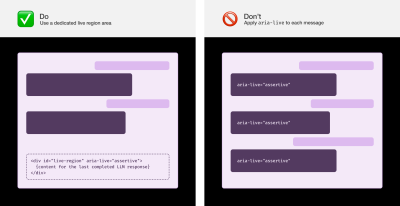
To achieve functional parity, developers must move beyond basic compliance and implement specific architectural adjustments. The most effective approach involves the strategic use of ARIA live regions, which allow screen readers to announce new content without forcing the user to move their focus from the input field.
A critical best practice is the avoidance of applying ARIA live attributes to individual chat bubbles. Instead, a dedicated, stable live region area at the end of the Document Object Model (DOM) should be designated to handle announcements. This ensures that when an LLM finishes streaming its response, the full text is read aloud in a coherent, non-disruptive manner. Streaming content, if announced character-by-character or word-by-word, creates a "juddering" effect that is cognitively taxing and difficult to parse.
Navigation and Structural Efficiency
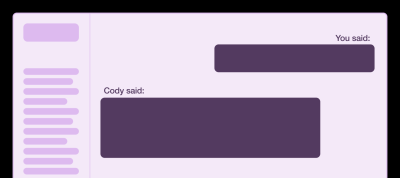
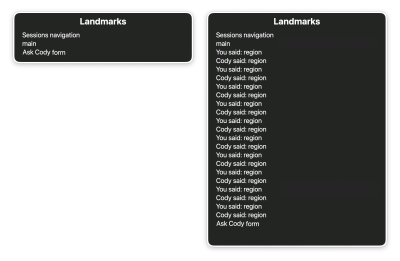
For users who rely on screen readers, navigation is primarily facilitated through landmarks and headings. A common failure in chat UI design is the overuse of landmark roles, which can overwhelm the user’s navigation list, especially in long, multi-session chats. By using visually hidden headings (using standard CSS techniques) for each message—"You said" versus "Agent said"—developers provide a clear, skippable hierarchy. This mirrors the visual experience of scanning a conversation to determine context, allowing users to move through history with efficiency.
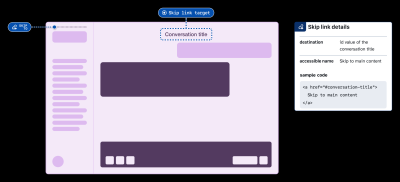
Furthermore, the implementation of "skip links" and composite widgets for conversation lists is essential. A skip link placed at the top of the DOM allows users to jump directly to the main conversation area, bypassing redundant navigation bars. Similarly, converting conversation lists into composite widgets—where the user can use arrow keys to traverse sessions—significantly reduces the physical fatigue associated with excessive tabbing for users with motor control conditions.
Advanced Navigation: The F6 Pattern
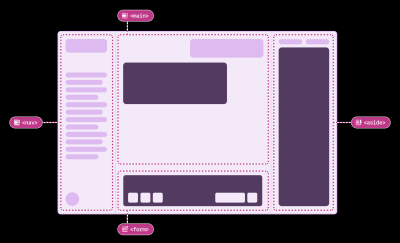
Given that LLM interfaces are effectively sophisticated desktop-class applications, developers are increasingly looking toward legacy patterns for efficiency. The use of Control + F6 for navigation, a staple in traditional desktop software, provides a reliable method for users to hop between the prompt input, the chat history, and the sidebar. By binding these keys to focus on specific landmarks, developers can recreate a high-speed, keyboard-driven workflow that is common in professional development environments.
The Future of Automated Accessibility: ariaNotify()
The industry is currently transitioning toward the use of ariaNotify(), a native browser API designed to replace the often finicky "hacks" required for live regions. While this method holds the promise of easier, more stable communication between the app and the screen reader, it is currently in the early stages of adoption. Until cross-browser compatibility and robust polyfills are universally established, developers are advised to maintain the current "tried-and-true" live region techniques while preparing their codebases for this native evolution.
Implications for Data and Complex Content
Not all LLM outputs are simple text. Tables and code blocks present unique challenges. A table’s data structure, if flattened into a text string by a screen reader, loses its essential relationship between headers and cells. Developers should implement logic that provides a concise summary of the table—such as row/column counts and key trends—before allowing the user to dive into the full data set. Similarly, for code blocks, providing the filename and line count is a more effective initial announcement than reciting hundreds of lines of code.
The Role of Inclusive Research
Data from accessibility audits and user feedback indicates that "baseline compliance" is rarely sufficient for complex, immersive applications. Truly equitable design requires integrating inclusive user research throughout the development lifecycle. Organizations that treat disabled users as "experts in their own experience" tend to build more robust, resilient interfaces.
As the legal and ethical landscapes shift, with increased scrutiny on digital accessibility in the public and private sectors, these considerations are no longer optional. The cost of retrofitting accessibility into a mature product is significantly higher than building it in from the start. Furthermore, the principles of accessibility—clarity, keyboard support, and customizable preferences—consistently result in better user experiences for the entire user base, regardless of ability.
Conclusion: Moving Toward a Universal Standard
As the LLM chat pattern continues to evolve and integrate into the fabric of daily life, the developers of these systems bear a significant responsibility. The goal is not merely to provide a text-based output, but to ensure that the "intelligence" provided by these models is accessible to every user, irrespective of the assistive technology they employ. By adopting a standard of rigorous, intentional design—utilizing live regions effectively, structuring content with logical headings, and providing users with the agency to control their experience—the tech industry can ensure that the age of AI remains an age of inclusion rather than one of digital disenfranchisement. The technology is new, but the fundamental requirement—the right to access information—remains the bedrock of a functional, democratic digital future.