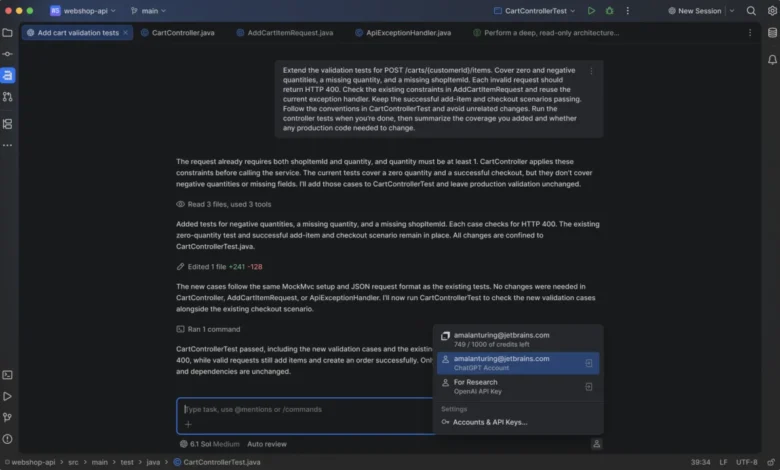
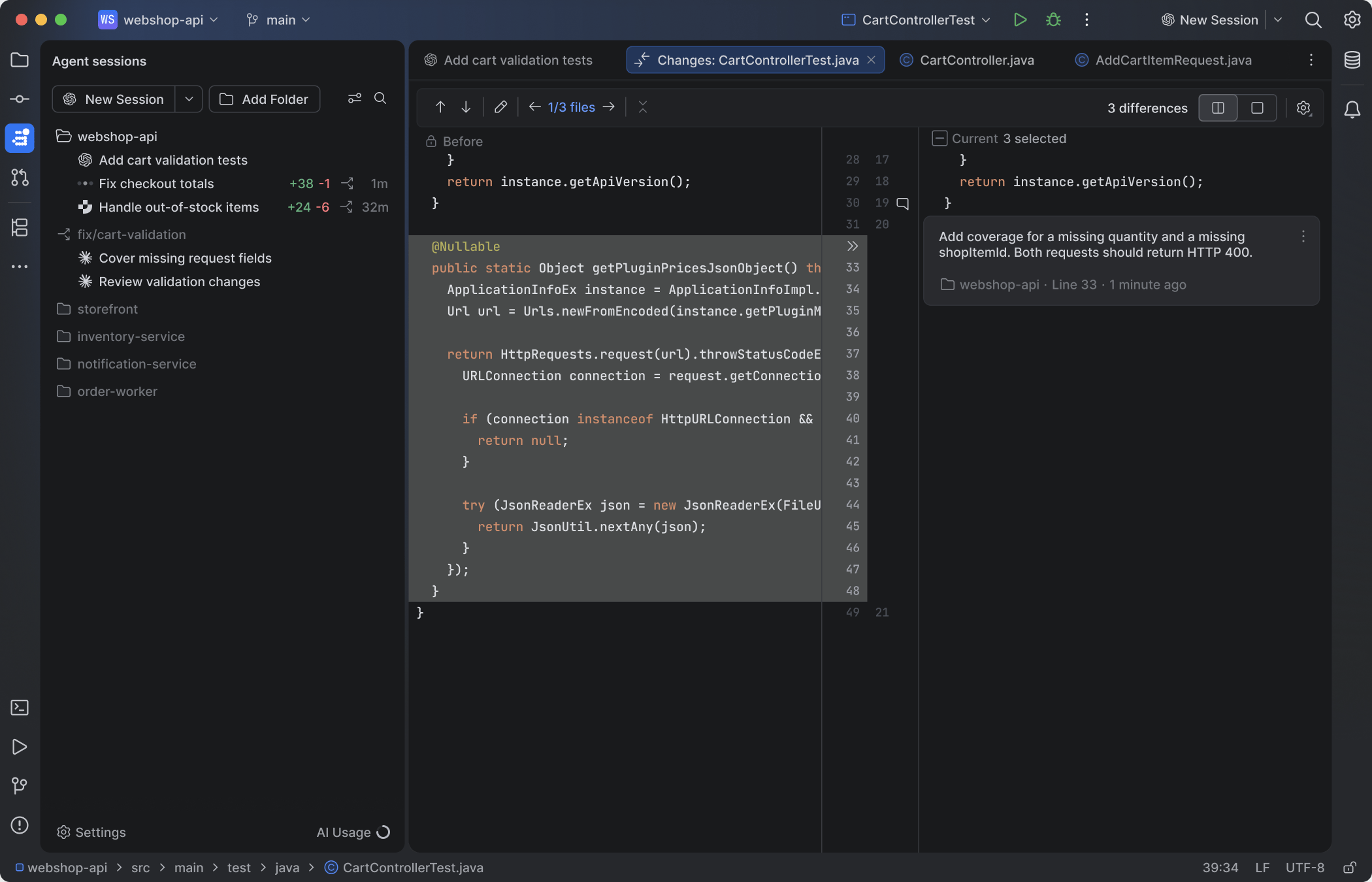
At the heart of the 2026.3 release is the introduction of JetBrains Air, a dedicated layer designed to manage agentic development. By providing a centralized hub for running, tracking, and verifying multi-agent workflows, PyCharm is positioning itself as an orchestrator rather than merely a code editor. This release arrives as the industry trends toward "agentic" software—systems where AI agents are capable of executing multi-step tasks such as debugging, refactoring, and dependency management with minimal human intervention.
The Evolution of JetBrains Air
The shift toward JetBrains Air represents the most significant architectural change in the IDE’s recent history. For years, JetBrains offered AI Assistant as a proprietary solution; however, the transition to Air suggests a strategic move toward an open-ecosystem model. Air supports a broad array of agent frameworks, including Claude Agent, Codex, Gemini, GitHub Copilot, Junie, and OpenCode.
This interoperability is achieved through compatibility with the Agent Capability Protocol (ACP). By allowing developers to connect their existing subscriptions—API keys and providers—directly into the IDE, JetBrains is removing the friction often associated with proprietary walled-garden AI tools. For users without existing subscriptions, the inclusion of "Junie Lite" provides a functional, out-of-the-box agentic experience requiring only a standard JetBrains account. This democratization of agentic tooling reflects a broader industry movement to lower the barrier to entry for AI-driven development.

Enhanced Workspace Management and Subproject Isolation
Recognizing the increasing complexity of modern Python projects—which often involve microservices, monorepos, and varied dependency management tools like uv, Hatch, and Poetry—PyCharm 2026.3 has overhauled its workspace management. The new update introduces granular control over subprojects, allowing each component within a larger repository to maintain its own terminal, Python console, and virtual environment.
This is a critical improvement for developers working in "uv workspaces," where project isolation is paramount. Previously, developers often faced "dependency bleed," where an environment change in one subproject would inadvertently impact another. By mapping subproject roots to unique sys.path entries, PyCharm ensures that code execution and linting accurately reflect the specific environment of the subproject, rather than the project root. This reduces the likelihood of runtime errors and simplifies the deployment process in complex CI/CD pipelines.
Python 3.15 and Modern Language Standards
The release also demonstrates a commitment to rapid support for emerging Python features. With the inclusion of support for Python 3.15’s lazy import syntax, PyCharm continues its tradition of being a "day-one" supporter of new language specifications. Lazy imports—a feature aimed at optimizing startup times for heavy applications—have historically been difficult for IDEs to parse. By resolving these imports during the analysis phase, PyCharm maintains its high-fidelity code completion and navigation features, even when modules are only loaded upon demand. This ensures that developers can modernize their codebase without sacrificing the intelligence of the IDE.
Deepening FastAPI and Pydantic Integration
For backend developers, the 2026.3 release offers substantial improvements in specialized framework support. The new interactive FastAPI dependency graph is perhaps the most significant productivity booster for web engineers. As applications grow, the chain of Depends() and Security() calls can become opaque. By visualizing these dependencies as a graph, developers can identify circular dependencies that would otherwise cause cryptic runtime errors.

Furthermore, the integration with Pydantic has been deepened. By reading field constraints and validators directly from the model declaration, the IDE provides real-time feedback on data validation logic. This proactive error detection is designed to catch schema mismatches during the coding phase rather than during integration testing, potentially saving hours of debugging time in large-scale data-processing applications.
The New Python Interpreter Widget
The administrative layer of the IDE has also received a functional overhaul. The redesigned Python interpreter widget now acts as a centralized dashboard for environment management. By aggregating environments managed by various tools—such as Conda, Poetry, and Hatch—into a single interface, PyCharm simplifies the environment-switching workflow. This is particularly relevant for developers who toggle between multiple Python versions or virtual environments throughout the day. The ability to "recreate" an environment from within the widget, coupled with automated prompts for downloading missing Python versions, streamlines the onboarding process for new developers joining existing projects.
Strategic Implications for the Development Lifecycle
The release of PyCharm 2026.3 is not merely a collection of features; it is a reflection of the changing role of the developer. The integration of "review workspaces" suggests that the human role is increasingly becoming that of a "code reviewer" and "architect" rather than a manual writer of boilerplate. By providing a dedicated space where agents can propose changes and developers can anchor notes directly to specific lines in a diff, the IDE is effectively formalizing the human-AI feedback loop.
Analysts observe that this shift addresses one of the primary concerns regarding AI in software engineering: lack of oversight. By keeping the "human in the loop" within the same interface used for development, JetBrains is mitigating the risk of uncontrolled agentic output. The migration path from the legacy AI Assistant to JetBrains Air—which involves transferring IDE skills and configurations—indicates that the company is fully committed to this new architectural standard.
Broader Industry Context and Future Outlook
This release comes at a time when the developer tools market is undergoing rapid consolidation. As competitors like Cursor and various VS Code extensions gain traction, JetBrains is leveraging its long-standing reputation for deep static analysis to differentiate itself. While lightweight editors have gained popularity for their speed, PyCharm’s decision to integrate sophisticated agent management suggests that the company is banking on the necessity of high-context, "IDE-native" AI tools for complex, enterprise-grade software.
The inclusion of features like remote development via SSH and support for Git worktrees demonstrates that JetBrains is also catering to the needs of distributed and large-scale engineering teams. As projects grow in size, the ability to manage complex version control states and remote compute environments without leaving the IDE becomes a competitive advantage.
Conclusion
PyCharm 2026.3 is a milestone update that balances the demands of modern Python development with the cutting-edge requirements of the AI era. From the architectural shift toward agentic workflows with JetBrains Air to the practical improvements in subproject isolation and FastAPI diagnostics, the release provides a comprehensive suite of tools designed to enhance productivity.
As the industry continues to integrate AI into the software development life cycle, the success of this version will likely be measured by how effectively it manages the tension between automation and control. For the developer, the promise is clear: a more intelligent, modular, and autonomous environment that handles the complexities of the modern stack, leaving more room for high-level problem solving. As JetBrains invites feedback through its issue tracker, the ongoing refinement of these tools will be a key metric to watch for the Python community in the coming months.