The physical video game industry is currently navigating a period of profound structural transformation, and Nintendo finds itself at a unique crossroads in this transition. While competitors like Sony have aggressively pivoted toward a digital-first ecosystem, effectively signaling the eventual obsolescence of the physical game disc, Nintendo has reaffirmed its commitment to the cartridge format. However, this dedication comes with significant logistical and economic challenges. As the supply chain for ROM (Read-Only Memory) chips tightens and reliance on specialized manufacturers like Rohm and Lapis Semiconductor intensifies, the cost of maintaining a physical presence in the retail market is climbing, leading to a precarious balancing act between legacy consumer preferences and modern production realities.
A Legacy Format in a Digital Era
For decades, the physical cartridge has been synonymous with the Nintendo brand, serving as a tangible bridge between the company and its global fan base. Unlike optical discs, which suffer from slow load times and scratching, proprietary ROM cartridges offer durability and portability that remain highly sought after by collectors and families. Yet, the semiconductor market—the backbone of this format—has shifted.
The global shift toward high-capacity NAND flash memory for smartphones and data centers has left the niche, low-power ROM market for game consoles in a state of consolidation. Nintendo’s dependence on a dwindling pool of suppliers, specifically firms like Rohm and Lapis Semiconductor, creates a bottleneck. When these suppliers face production constraints or prioritize higher-margin enterprise contracts, Nintendo is forced to navigate complex procurement cycles. This reality means that while the company has explicitly stated it has no plans to abandon cartridges, the economic viability of doing so is being tested by market forces outside of their direct control.
Chronology of the Physical-Digital Divide
The tension between physical media and digital distribution has been building for years, characterized by a series of strategic pivots and market reactions:
- 2023: Industry analysts begin observing a marked decline in retail shelf space for physical console games as major retailers like Best Buy and Target phase out DVD and Blu-ray sections.
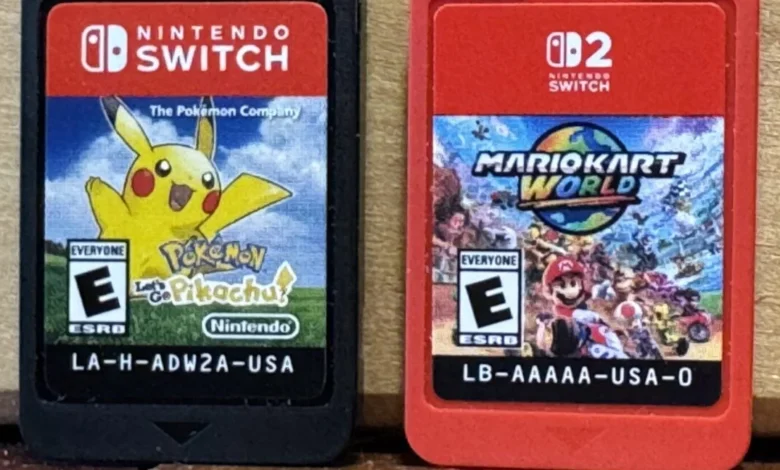
- Late 2025: Japanese publisher Inin provides a critical look at the production economics of the Switch 2. The company publicly notes that a full physical release for titles like R-Type Dimensions III was only made possible because Nintendo introduced smaller, lower-capacity, and more cost-effective cartridge sizes for the new hardware generation.
- Early 2026: Nintendo officially implements a pricing strategy that sees physical editions of certain titles retail at a higher price point than their digital counterparts. This move is widely interpreted as a direct response to the rising costs of raw manufacturing and logistics for physical goods.
- Mid-2026: Sony publicly doubles down on its digital-only infrastructure, effectively ending its role as a primary driver of physical media for its high-end console ecosystem, drawing a sharp contrast with Nintendo’s strategy.
- Q2 2026: Industry data reveals that digital sales account for 61.5% of Nintendo’s total software revenue, marking a steady year-over-year increase in consumer preference for downloadable content.
Economic Implications of the ROM Shortage
The rising cost of physical media is not merely a corporate line-item concern; it is a trend that is already being passed on to the consumer. When Nintendo charges a premium for physical game copies, they are essentially creating a "collector’s tax." This pricing strategy acknowledges that the physical medium is moving from a utility to a premium good.
Furthermore, the reliance on specialized semiconductor foundries poses a risk to game distribution. If the cost of manufacturing a 16GB or 32GB cartridge continues to rise, smaller independent publishers may be priced out of the physical market entirely. This could lead to a two-tier industry where only "blockbuster" titles receive physical releases, while the vast majority of software becomes digital-only by default. The logistical burden—shipping, warehousing, and inventory management—further complicates the picture, as retailers increasingly view physical game boxes as low-margin inventory that occupies valuable floor space.
Supporting Data: The Shift in Consumption
Market research indicates that the 61.5% digital capture rate reported in the second calendar quarter of 2026 is part of a broader, irreversible trend. Even for a company like Nintendo, which has historically enjoyed high physical attach rates compared to its competitors, the convenience of the digital storefront—eShop—is winning.
Industry analysts, including David Gibson, have noted that this percentage has climbed steadily from approximately 50% just three years ago. If this trend continues at its current trajectory, the percentage of digital sales could realistically exceed 70% by 2028. This shifts the internal calculus for Nintendo: at what point does the cost of maintaining a supply chain for physical ROM chips exceed the revenue generated by the diminishing percentage of players who demand them?
While Nintendo’s management has insisted that fans still value the ability to trade, sell, and collect games, the data suggests that the "silent majority" of the player base is already moving on. The company is essentially subsidizing the preferences of a dedicated minority, a strategy that is sustainable only as long as the cost of production remains manageable.
Official Responses and Strategic Positioning
Nintendo’s official stance remains one of moderation. In recent briefings, executive leadership has emphasized that the physical format is "core to the Nintendo experience," citing the importance of gifting and the secondhand market. However, there is a notable absence of long-term guarantees regarding the longevity of these physical support structures.
Industry experts suggest that Nintendo is likely adopting a "managed decline" strategy. By introducing smaller, cheaper cartridge tiers for new consoles and allowing retail prices to fluctuate based on production costs, Nintendo is effectively buffering its bottom line against the volatility of the semiconductor market. They are not pulling the plug, but they are clearly preparing for a world where physical media is a luxury option rather than the industry standard.
Broader Impact on the Gaming Ecosystem
The implications of this shift extend beyond Nintendo’s balance sheets. For the retail sector, a decline in physical game sales represents the loss of a major foot-traffic driver. For developers, the reliance on digital distribution creates a "discovery" problem; when storefronts become saturated with millions of digital titles, the physical box once served as a marketing tool that stood out on a shelf.
Additionally, there is the environmental and archival concern. Digital-only libraries are subject to server shutdowns, licensing expirations, and account restrictions. The physical cartridge, while increasingly expensive to produce, remains the only form of "ownership" that provides a degree of autonomy from the publisher’s digital ecosystem.
As the hardware cycle progresses, the industry will be watching closely to see if Nintendo’s commitment holds firm when the cost of ROM production hits a breaking point. If the trend of rising digital adoption continues, the cartridge may survive not as a mass-market product, but as a boutique format for legacy enthusiasts. The challenge for Nintendo will be balancing the nostalgic demand for physical media with the cold, calculated reality of a global supply chain that is increasingly uninterested in legacy technology.
Conclusion: The Long Road Ahead
Nintendo remains a holdout in a digital-first industry, but it is a holdout that is clearly feeling the pressure. By diversifying its cartridge capacity options and adjusting its pricing, the company is attempting to keep the physical format alive as long as possible. However, the data confirms that the momentum is firmly behind digital distribution.
The next few years will be critical. If Nintendo can successfully maintain a hybrid model where physical games remain accessible—albeit at a premium—they may secure a unique market position that their competitors have abandoned. If, however, the costs of ROM production continue to climb without a corresponding rise in consumer willingness to pay, Nintendo may eventually find itself forced to follow the path of least resistance. For now, the cartridge lives on, but it is undoubtedly limping along, supported by a mix of corporate strategy and an increasingly niche market of devoted collectors. The digital future is not just arriving; it is, for the majority of players, already here.