Apple CEO John Ternus Defends Strategic AI Stance Amid Industry Shifts and New Product Rollouts

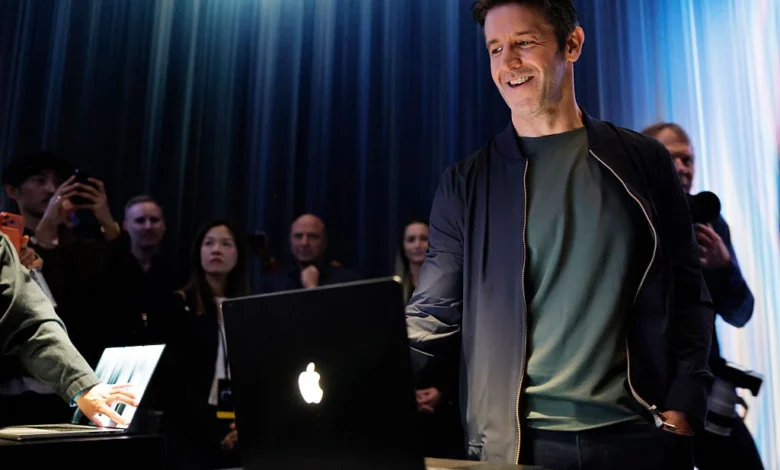
In the wake of a highly anticipated product showcase in Los Angeles, Apple CEO John Ternus has moved to define the company’s trajectory in the artificial intelligence sector. Speaking in a wide-ranging interview with Wired’s Steven Levy, the newly appointed chief executive addressed persistent industry skepticism regarding Apple’s perceived lag in the AI arms race. While critics have long pointed to the delayed rollout of an advanced, generative-AI-powered Siri as evidence of institutional stagnation, Ternus maintained that Apple’s methodical approach is not a sign of weakness, but rather a deliberate commitment to product utility over novelty.
The discourse surrounding Apple’s AI strategy has reached a fever pitch throughout 2026. Following the official transition of leadership in early September, when Ternus ascended to the CEO role, the technology sector has been watching closely to see how the company would pivot. The stakes are particularly high; as rivals like Google, Microsoft, and OpenAI integrate aggressive, large-scale language models into their core operating systems, Apple’s strategy of “integrated utility” has faced significant scrutiny from Wall Street analysts and tech enthusiasts alike.
A Chronology of Apple’s AI Evolution
To understand the current tension, one must look at the timeline of the past twenty-four months. In 2024 and early 2025, Apple remained notably quiet while competitors debuted sophisticated, cloud-reliant AI tools. This period of silence fueled speculation that Apple had missed the generative AI wave.
However, the narrative shifted in August 2026 with the release of the long-awaited, overhauled Siri. This update marked a fundamental architectural change in how Apple’s virtual assistant processed natural language, moving toward on-device processing to prioritize privacy and latency. Despite the technical achievement, the market response was lukewarm, with many users noting that the updates felt incremental rather than revolutionary.
The October 2026 Los Angeles event served as the next major data point. During this gathering, Apple showcased hardware integrated with new machine-learning-driven features. It was here that Ternus chose to clarify his vision, asserting that the company is not interested in chasing trends for the sake of market capitalization, but rather in solving specific user problems through invisible, highly effective software.
The Philosophy of Invisible Integration
At the heart of Ternus’s defense is a distinction between “AI for AI’s sake” and functional technology. During his interview, Ternus emphasized that Apple’s design philosophy has always been to abstract complexity. He suggested that if a feature is functioning correctly, the user should not be aware of the underlying mathematical or algorithmic engine that powers it.
“When we’re doing it right, people won’t have to think about whether it was AI that made this happen or more traditional software,” Ternus stated. “What matters is, did we build something that they really love?”
This perspective mirrors the company’s historical approach to technologies like multi-touch interfaces, the App Store, and the M-series silicon transition. Apple rarely enters a category as the “first mover.” Instead, the firm often waits for the technology to mature, assesses the pitfalls experienced by early adopters, and then deploys a polished, privacy-focused version that fits seamlessly into the existing ecosystem.

Data-Driven Market Realities
The pressure on Apple is reflected in recent financial and usage data. According to industry reports from mid-2026, the adoption rate of generative AI tools across smartphones has increased by 45% year-over-year. However, the churn rate for these tools is also high, with users reporting that many AI features are “gimmicky” and difficult to use in daily workflows.
Apple’s strategy seems to be betting against this trend. By focusing on on-device processing, the company is positioning itself to capture the segment of the market that is increasingly wary of cloud-based AI privacy concerns. With data centers consuming vast amounts of power and raising security red flags, Apple’s emphasis on hardware-level optimization—using its Neural Engine—offers a sustainable, private alternative that competitors using massive, centralized server clusters may struggle to match.
Reactions and Competitive Analysis
Market analysts have offered a split reaction to the Ternus doctrine. Supporters argue that Apple’s patience will eventually yield a higher-quality user experience that avoids the “hallucination” issues plaguing current Large Language Models (LLMs). By keeping the technology tethered to the device, Apple mitigates the risks of data leakage and ensures that functionality remains consistent, even in areas with poor internet connectivity.
Conversely, detractors argue that the speed of innovation in the AI space is unprecedented. They contend that by holding back, Apple risks losing its relevance as the primary interface for digital life. If users become accustomed to third-party AI agents that can manage entire workflows—such as booking travel, managing finances, and responding to emails—they may find the traditional app-based ecosystem of iOS to be restrictive and outdated.
When confronted with the possibility that AI agents might render the traditional app ecosystem obsolete, Ternus remained composed. He noted that while automation could indeed simplify life, the act of creation remains a deeply human endeavor. He suggested that Apple’s role is to provide the tools that empower human creators, rather than replacing the human element with autonomous agents that could fundamentally alter the nature of digital interaction.
Broader Implications for the Tech Landscape
The standoff between Apple’s “human-centric” approach and the industry’s “agent-centric” trend will likely be the defining theme of the next five years. Apple’s challenge is to prove that its ecosystem still offers superior value in an era where software intelligence is becoming a commodity.
If Ternus succeeds, Apple will likely solidify its reputation as the “safe harbor” of technology, where privacy and usability are paramount. If he fails, the company may find itself relegated to a premium hardware provider whose software services are viewed as secondary to the powerful AI agents being developed by its rivals.
As Apple moves into the final quarter of 2026, the focus will remain on the upcoming software updates and their ability to bridge the gap between legacy user expectations and the new demands of the AI era. Ternus has made his stance clear: Apple will not rush to compete in a race to the bottom, where speed is prioritized over reliability. Instead, the company intends to integrate AI at its own pace, ensuring that every implementation serves a tangible, human-centric purpose.
The long-term success of this strategy hinges on the company’s ability to innovate within its own constraints. With the industry watching closely, the next twelve months will determine whether the “Ternus era” is defined by a slow decline or a calculated, masterstroke re-emergence into the cutting edge of technological evolution. For now, the CEO remains confident, betting that in the long run, the quality of the user experience will far outweigh the speed of the feature rollout.