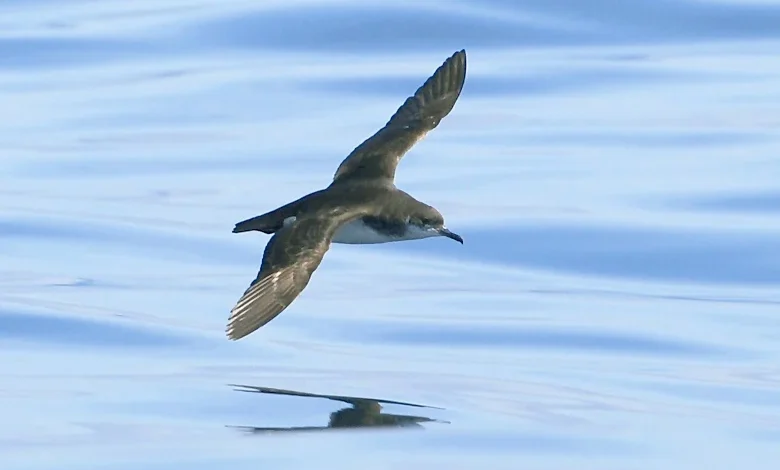
The phenomenon of jet lag, typically associated with international air travel and the physiological disruption of human circadian rhythms, is not a uniquely human experience. Recent research published in the journal Science reveals that Manx shearwaters—nimble, long-winged seabirds that traverse vast expanses of the North Atlantic—routinely induce a state of jet lag upon themselves during their arduous foraging excursions. By relying on an internal "sun compass" to navigate, these birds suffer from a measurable drift in their orientation when their internal clocks fall out of sync with the shifting local time, a byproduct of their rapid east-west movements.
The Mechanism of Avian Navigation
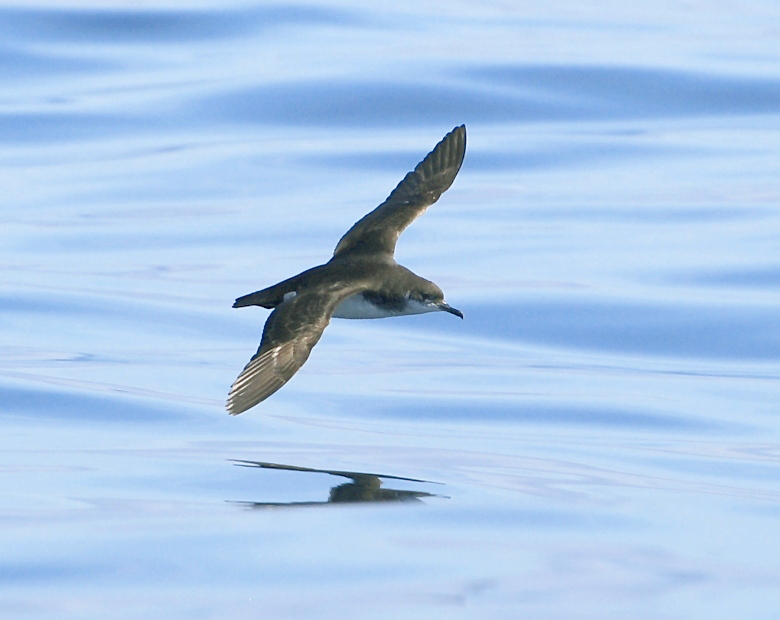
Manx shearwaters, scientifically known as Puffinus puffinus, are medium-sized seabirds that spend much of their lives on the wing. These birds, which are closely related to the albatross, are characterized by their striking black-and-white plumage and a wingspan designed for efficient long-distance gliding. During the breeding season, they nest in subterranean burrows on coastal islands across the North Atlantic, with a significant portion of the population inhabiting the rugged coastlines of Wales and other parts of the United Kingdom and Ireland.
For these birds, survival is predicated on their ability to locate patchily distributed prey, such as small fish and squid, hundreds of kilometers from their nesting sites. To return home, shearwaters employ a sophisticated, dual-layered navigation strategy. First, they utilize a "map sense," which researchers suspect relies on olfactory cues or magnetic sensitivity, to determine their general location. Once their position is established, they utilize the sun as a primary compass to maintain a consistent bearing toward their burrow.
However, relying on the sun presents a significant biological challenge: the sun’s position in the sky is dynamic. To maintain a true heading, an animal must possess an internal clock that accounts for the sun’s movement across the celestial sphere. As an individual travels across lines of longitude, their local time shifts. If the bird’s internal clock does not recalibrate instantaneously to these longitudinal changes, it perceives the sun’s position incorrectly. Consequently, the bird miscalculates its heading, leading to a subtle but distinct "veering" in its flight path—clockwise when traveling east and counter-clockwise when moving west.
Two Decades of Tracking Data
The discovery of this phenomenon was made possible by an exhaustive 20-year longitudinal study conducted by researchers at the University of Oxford. Spearheaded by behavioral and sensory ecologist Patrick Lewin, alongside established researchers Tim Guilford and Chris Perrins, the project leveraged advancements in GPS tracking technology that began in the early 2000s.
The dataset is unprecedented in its scale, comprising 3,688 individual foraging trips undertaken by 1,045 shearwaters between 2004 and 2024. These trips vary in duration from a single day to two weeks, providing a granular look at how the birds behave in the open ocean. By isolating "homing flights"—the phase of the journey where birds transition from erratic, search-based movement to high-speed, direct flight back to the colony—the team was able to correlate the birds’ actual flight paths with their predicted sun-compass errors.
The chronological progression of the research reflects the evolution of biologging. In 2004, GPS tags were heavy and limited in battery life; however, as the technology matured, the researchers were able to collect increasingly accurate data points. By calculating the bird’s position at its last observed sunrise and measuring subsequent longitudinal movement, the team could quantify the exact degree of "time-shift" error introduced by the discrepancy between the bird’s biological clock and the local solar time.
Quantifying the Error
The study found that these time shifts are, in absolute terms, quite small. Most observed deviations amounted to a difference of 10 to 15 minutes, with a maximum observed shift of approximately one hour. While such a minor discrepancy would be negligible for a human pilot using modern instruments, for a bird relying solely on solar orientation, it is significant.
Statistical analysis of 335 homing flights conducted over open water revealed that the shearwaters drifted exactly as the sun-compass model predicted. To ensure these findings were not the result of environmental variables, the researchers modeled potential biases caused by crosswinds, the Coriolis effect, and geomagnetic interference. None of these factors explained the observed deviations as cleanly as the "jet lag" hypothesis.
The navigational error resulting from this phenomenon is estimated to be around 15 degrees, though the birds rarely suffer catastrophic consequences. Because the shearwaters possess a robust map sense, they are capable of regular course corrections. The researchers estimated that a bird traveling 1,000 kilometers eastward would likely deviate by only seven degrees, resulting in a minor increase in flight distance of approximately five kilometers—a manageable cost for a bird as athletic as the Manx shearwater.
Implications for Bio-inspired Technology
The findings have sparked interest beyond the field of ornithology, particularly in the development of autonomous navigation systems. Robotics engineers and computer scientists are increasingly looking to biological models to create robust navigation algorithms for drones and autonomous underwater vehicles (AUVs) that operate in environments where GPS signals may be jammed or unavailable.

"We don’t quite know how they integrate these systems," said Lewin. "It’s an interesting question, especially as people try and design bio-inspired autonomous navigation systems." The shearwater’s ability to "weigh" information from landmarks against information from a celestial compass—never fully trusting one over the other—suggests a form of sensor fusion that could prove invaluable for future navigation technology.
Broader Biological Significance
The study raises broader questions about the prevalence of jet lag across the animal kingdom. While the researchers could not monitor physiological symptoms like sleep deprivation or metabolic hunger in the shearwaters, they believe the effect is likely universal among migratory species that move rapidly across longitudes. Animals living at high latitudes, where lines of longitude converge, may be particularly susceptible to these temporal shifts.
The long-term goal of the Oxford team is to investigate whether these animals have evolved specific compensatory mechanisms to mitigate the negative health effects associated with chronic circadian disruption. In human clinical studies, persistent jet lag is linked to immune system suppression, cognitive impairment, and metabolic disorders. Understanding how a wild animal survives while in a state of near-constant, self-induced jet lag could offer new insights into mammalian health and the management of circadian rhythms.
"In humans, if you do it a lot, in the long term it has really negative health impacts," noted Lewin. "Maybe we could take some inspiration from these animals that are constantly experiencing jet lag and see if there are ways that we can mitigate jet lag affecting humans."
Future Research Directions
The next phase of this research will likely shift toward the energetic costs of this phenomenon. Future studies could explore whether these small navigational errors lead to increased calorie expenditure, reduced food delivery rates to offspring, or variations in breeding success. Furthermore, researchers hope to determine if different species exhibit varying degrees of sensitivity to clock shifts, perhaps pointing to a spectrum of "circadian resilience" in the natural world.
As the scientific community continues to explore the intersection of behavioral ecology and sensory biology, the Manx shearwater stands as a fascinating case study in adaptation. Despite the inherent flaws in their biological clockwork, these seabirds continue to master the vast, featureless expanse of the Atlantic, proving that even with a bit of "jet lag," the natural world remains a master of navigation. The research, published in the October 2026 issue of Science, marks a significant milestone in our understanding of how living organisms synchronize their internal processes with the rotation of the Earth.
Related posts: