Boom’s airliner may be delayed, and its data center power business lost a customer.

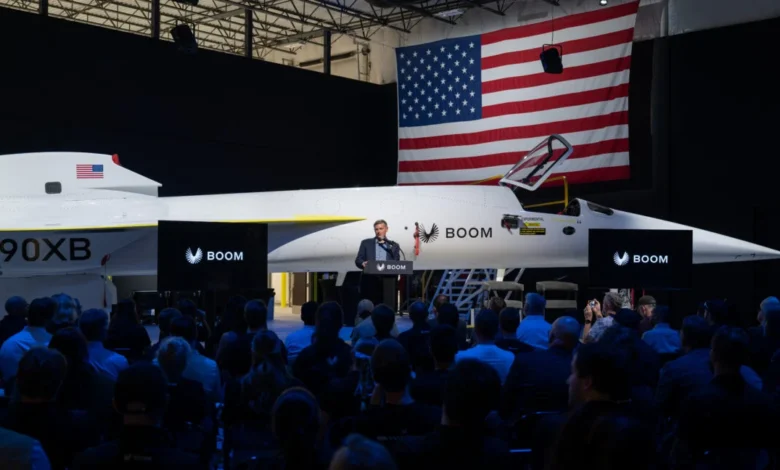
The ambitious aerospace venture Boom Supersonic, which has sought to reclaim the era of commercial high-speed travel, finds itself navigating an increasingly complex landscape of technological challenges and shifting business priorities. As the company works to transition from experimental prototypes to commercial-scale production, it is simultaneously attempting a daring pivot into the energy sector to support the voracious power demands of artificial intelligence data centers. Recent signals from key stakeholders, however, suggest that the company’s dual-pronged strategy is encountering significant friction.
United Airlines, one of the most prominent early supporters of the Overture supersonic airliner, has publicly cast doubt on the feasibility of the company’s current timeline. CEO Scott Kirby, during an interview on the October 28, 2026, episode of the Office Hours: Business Edition podcast, offered a sobering assessment of the project’s trajectory. When pressed on the viability of the 2029 target for the first Overture delivery, Kirby was direct: "’29 is their official timeline. It’s not going to happen in ’29—it’s going to take longer."
This skepticism from a high-profile partner underscores the profound engineering and regulatory hurdles that stand between Boom’s current status and the successful launch of a sustainable supersonic commercial fleet.
The Engineering and Regulatory Landscape
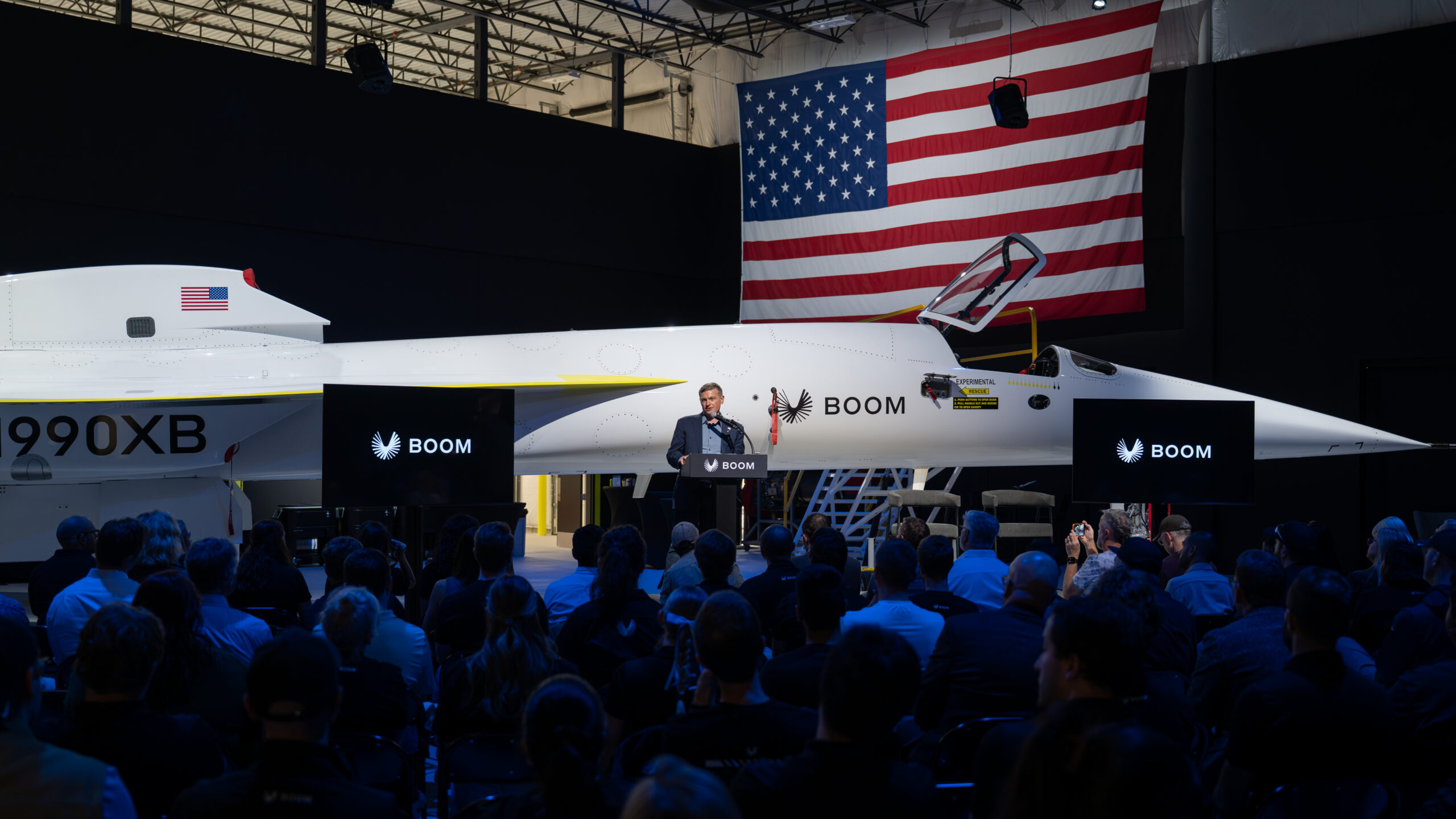
Boom Supersonic first gained international attention for its XB-1 demonstrator aircraft, which conducted test flights in 2024 and 2025. These flights were designed to validate the "boomless cruise" concept, which leverages the Mach cutoff phenomenon—a technique where aircraft fly at specific altitudes and speeds to ensure that sonic shockwaves refract upward into the atmosphere rather than reaching the ground.
While the technology has seen positive development in testing, the broader regulatory environment remains a point of contention. In June 2026, the Federal Aviation Administration (FAA) moved to overturn a long-standing ban on commercial supersonic flights over the United States, a shift encouraged by an executive order from President Donald Trump. While this regulatory easing is intended to foster innovation, the technical certification of a commercial-grade supersonic engine and airframe is a process that typically spans over a decade for established aerospace giants.
Boom currently holds conditional purchase agreements with major carriers, including American Airlines, Japan Airlines, and United Airlines. These agreements, which involve non-refundable deposits, represent a strong show of industry interest. Yet, as Kirby noted in March 2026, he viewed the odds of the Overture reaching commercial service as a "50-50" proposition. This ongoing caution suggests that while airlines are eager to explore the potential of supersonic travel, they are also bracing for the reality of significant development delays.
Infrastructure and Taxpayer Scrutiny
The narrative of progress at Boom is further complicated by the status of its manufacturing footprint. In 2024, the company completed a massive facility at Piedmont Triad International Airport in Greensboro, North Carolina, intended to serve as the primary production hub for the Overture airliner. Despite the fanfare surrounding its completion, the facility has remained largely dormant for an extended period.
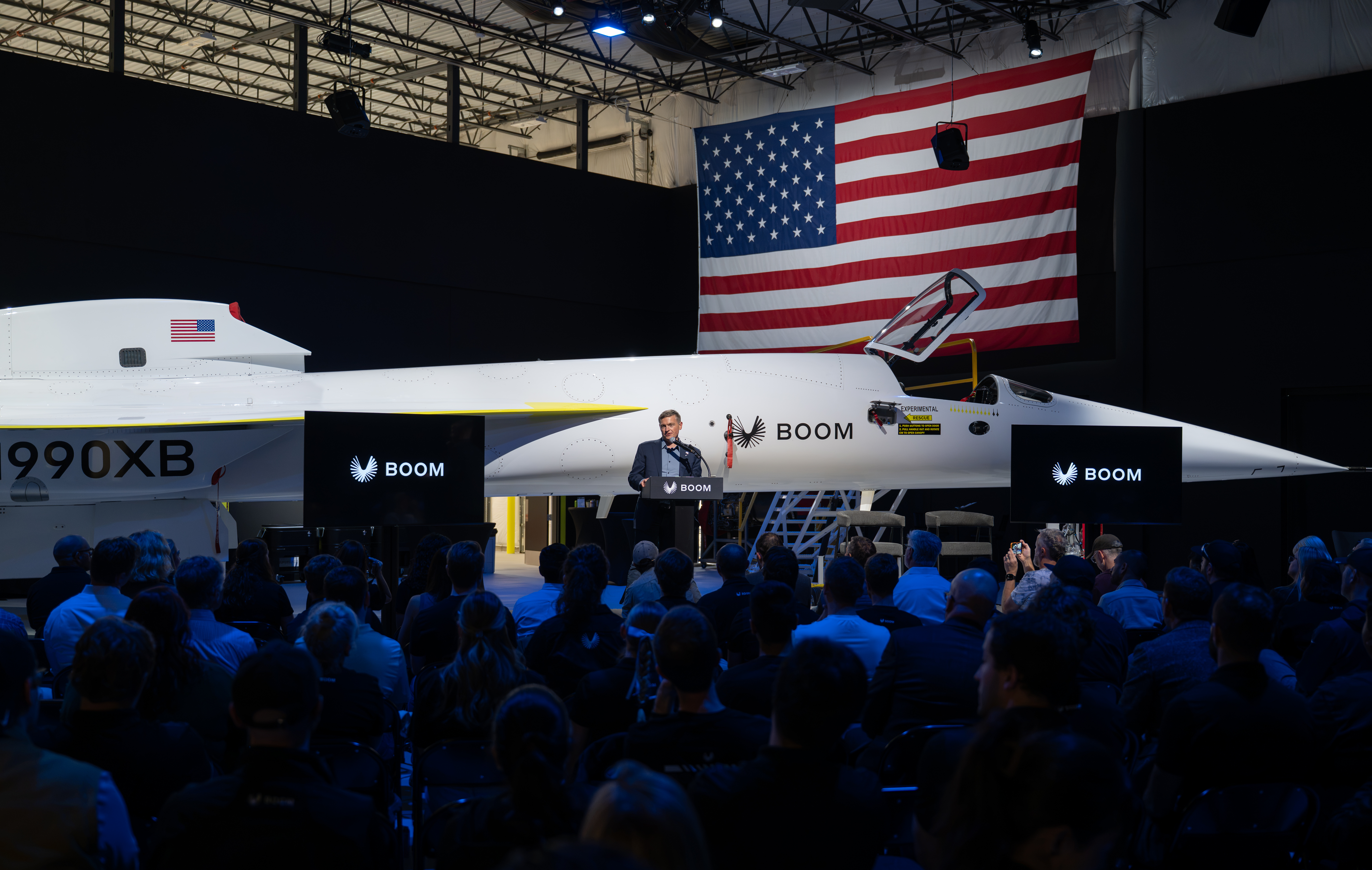
The lack of sustained activity at the site has drawn sharp criticism from North Carolina state officials. The project was bolstered by more than $50 million in taxpayer-funded incentives, and the current underutilization of the plant has raised pointed questions regarding the return on investment and the company’s internal scheduling. For a state government that banked on the promise of high-tech manufacturing jobs, the delay represents a significant political and economic liability.
A Pivot to Data Center Power
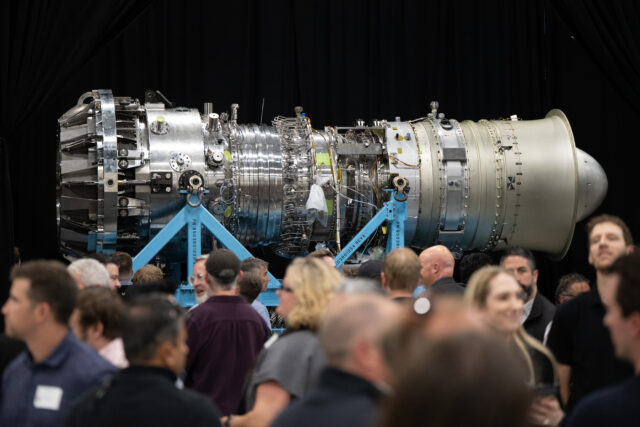
In a move that caught many industry analysts by surprise, Boom Supersonic has begun to diversify its portfolio by entering the energy market. On October 22, 2026, the company unveiled a new "Superfactory" in Centennial, Colorado, aimed at producing 42-megawatt natural gas turbines marketed as "Superpower" units. These turbines are designed specifically to meet the high-density energy requirements of modern AI data centers, which have struggled to find adequate grid capacity for their operations.
The company’s approach involves a proprietary turbine core called the "Sprint Core." By utilizing this single core design for both its aircraft engines (the Symphony engine for the Overture) and its industrial gas turbines, Boom claims it can achieve economies of scale and accelerate development timelines.
However, the reality of the energy market has proven to be as volatile as the aerospace sector. In late September 2026, CEO Blake Scholl acknowledged on social media that the company lost a major $1.25 billion contract with Crusoe, a developer of modular data center infrastructure. The deal would have seen Crusoe purchase 29 of Boom’s gas turbines. The loss of such a significant anchor customer highlights the difficulty of breaking into the energy supply chain, particularly when competitors include established industrial conglomerates with decades of experience in turbine reliability.
The Broader Implications of the Energy Pivot
The shift toward natural gas for AI data centers is a trend currently sweeping the tech industry. As large-scale language models require exponentially more compute power, firms like Oracle, Google, and Microsoft have been forced to explore decentralized power solutions. Some developers have resorted to using aeroderivative turbines—engines originally engineered for military jets or naval vessels—to bypass local grid constraints.
Boom’s entry into this space is essentially a bet on the idea that aerospace engineering is directly applicable to the energy grid. While the physics of combustion is similar, the operational requirements for a power plant are vastly different from those of a passenger jet. The upcoming testing of the Sprint Core at the Colorado Air & Space Port, scheduled for late 2026, is widely viewed by investors as a "make or break" milestone. If the turbine fails to meet efficiency or reliability benchmarks, it could jeopardize both the data center business and the engineering foundation of the Overture airliner.
Chronology of Recent Developments
- 2024-2025: Successful test flights of the XB-1 demonstrator occur, testing the "boomless cruise" concept.
- 2024: Completion of the Overture manufacturing plant in Greensboro, North Carolina.
- June 2026: The FAA proposes a rule change to permit supersonic flights over the US, following a Trump administration executive order.
- March 2026: United Airlines CEO Scott Kirby publicly assesses the success of the Overture as a "50-50" probability.
- September 25, 2026: Blake Scholl confirms the termination of a $1.25 billion turbine contract with Crusoe.
- October 22, 2026: Boom unveils its Colorado Superpower factory.
- October 28, 2026: Scott Kirby reiterates in a podcast interview that the 2029 delivery timeline for the Overture is not realistic.
Market Analysis and Future Outlook
The challenges facing Boom Supersonic are emblematic of the "deep tech" era, where companies are expected to deliver hardware-heavy, capital-intensive innovations in timescales that often conflict with the realities of physics and safety regulation. By diversifying into energy, Boom has effectively doubled its risk profile. If the company can successfully bridge the gap between aviation and power generation, it may emerge as a diversified industrial powerhouse. However, if the development of the Sprint Core continues to face delays, the company risks exhausting its cash reserves before a single commercial unit is delivered.
For now, the aerospace industry remains in a "wait and see" pattern. With the Overture manufacturing facility sitting quiet and the energy business facing its first major contract loss, the burden of proof rests heavily on Boom’s leadership to demonstrate that their ambitious timeline is not just a marketing goal, but an engineering reality. The upcoming months, marked by crucial turbine testing and potential contract renegotiations, will likely determine whether Boom becomes a pioneer of the next generation of transport or a cautionary tale of over-expansion.