GitHub Unveils Vision for End-to-End Agentic Software Delivery System at GitHub Universe 2026

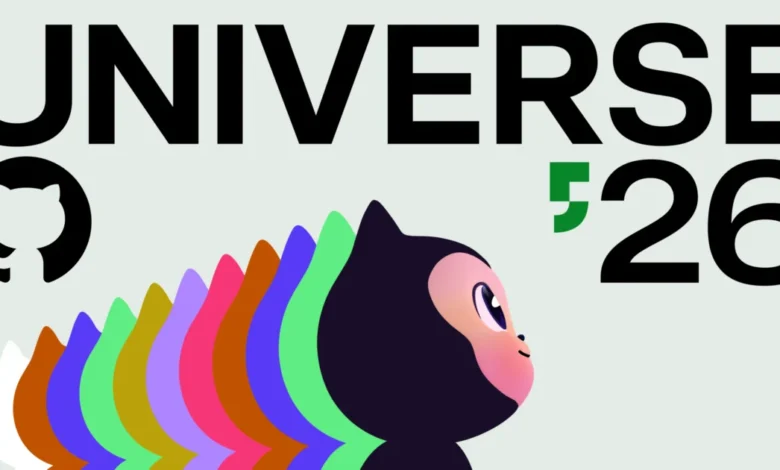
The landscape of software engineering is undergoing a fundamental architectural transformation, shifting from manual, line-by-line coding to an era dominated by autonomous artificial intelligence assistants and orchestrated fleets of digital agents. Addressing this paradigm shift at the annual GitHub Universe conference, tech executives outlined a sweeping vision for GitHub to evolve into the world’s most comprehensive, end-to-end software delivery system. Designed to accommodate a workflow where developers act as directors rather than typists, the newly announced suite of products and infrastructural upgrades aims to redefine how code is imagined, tested, merged, and deployed at enterprise scale.
Industry observers note that this evolution reflects a broader maturation within the developer ecosystem. Over the past several years, the metric of productivity has shifted away from sheer lines of code produced toward completed work—specifically, features shipped, security vulnerabilities resolved, and bugs remediated. GitHub’s latest announcements directly target this output-oriented mindset, acknowledging that the traditional software development life cycle (SDLC) is no longer a rigid, linear path from planning to deployment. Instead, contemporary workflows are dynamic and non-linear, where production metrics, peer requests, and automated code changes can trigger interventions at any point in the system.
At the core of GitHub’s newly revealed ecosystem is the principle that developers must remain firmly in control of direction, decision-making, and ultimate accountability, while AI agents handle implementation and verification. To operationalize this philosophy, the company introduced a robust array of features and products tailored for agentic development, beginning with the centralized GitHub Copilot app.
The newly launched GitHub Copilot app serves as a unified workspace designed from the ground up for agentic workflows. It connects disparate tools and autonomous agents across multiple projects, enabling engineering teams to direct operations without manually managing every administrative handoff. Beyond raw code generation, the application accommodates technical specification writing, design discussions, and telemetry analysis within a single, agent-first surface area.
To optimize performance and cost efficiency, GitHub also debuted Copilot Fusion, an advanced multi-model orchestration engine. Recognizing that different programming tasks require specialized cognitive capabilities—ranging from deep logical reasoning and architecture design to rapid code generation and targeted debugging—Copilot Fusion automatically evaluates task requirements and selects the optimal model or combination of models. According to benchmarks from the Artificial Analysis Coding Agent Index, Fusion Max scored within two points of industry-leading models like Opus 5.5 Max, while operating at roughly half the cost and reducing task execution time by forty percent.
Complementing the orchestrator is the introduction of Copilot projects, natively integrated into the Copilot app. This feature allows developers to assign broad goals to AI agents, which then execute complex, multi-repository tasks in fully managed, parallel sessions. Engineers can monitor progress, make strategic decisions, and steer outcomes from a single dashboard, drastically reducing the overhead of manual execution management.
Recognizing that modern engineering happens across diverse environments, GitHub introduced seamless session continuity. This capability allows developers to initiate, track, and modify cloud-based agent sessions fluidly across multiple interfaces, including the dedicated GitHub mobile application, Visual Studio Code, command-line interfaces (CLI), and web browsers. A developer can initiate a workflow from a mobile device during a morning stand-up, refine parameters from a desktop environment, and review progress via a web browser, all while cloud agents maintain continuous execution.
To automate recurring repository operations, GitHub announced Copilot automations. Operating in the cloud on manual triggers, event-driven hooks, or scheduled intervals, these workflows coordinate agents to handle routine tasks such as automated issue triage and code reviews. Crucially, Copilot automations incorporate a continuous learning feedback loop, analyzing the outcomes of completed work and proposing optimization strategies for future runs.
Quality assurance has similarly been elevated through the introduction of Copilot code review Max. As automated agent workflows accelerate code production, the volume of pull requests increases proportionally. Copilot code review Max addresses this bottleneck by providing deep, rigorous analysis for complex changes, achieving top-tier F1 scores on the ReviewBench benchmark for identifying high-severity bugs, complementing the lighter, faster review tiers designed for everyday pull requests.
In a strategic shift regarding commercial accessibility, GitHub announced that enterprise customers can now leverage the full suite of Copilot features—including the Copilot app, advanced automations, and enhanced code reviews—without requiring a separate subscription tier. Access is integrated directly into enterprise accounts on a consumption-based credit model, lowering the barrier to entry for organizations looking to scale AI adoption. Furthermore, GitHub reaffirmed its commitment to an open and extensible ecosystem, ensuring native integration with third-party enterprise tools such as Cloudflare, Datadog, and Figma.
Underpinning these software innovations are massive investments in underlying infrastructure. The exponential growth in data volume and computational throughput demanded by autonomous agents necessitated a fundamental re-engineering of GitHub’s architecture. Over the course of the year, the platform expanded its global capacity and initiated a comprehensive migration to a multi-region deployment within Microsoft Azure, projected for completion in the near future.
Simultaneously, GitHub has redesigned its Git architecture to withstand the unprecedented demands of the agent-scale era. Guided by three foundational principles—simplifying primitives, decoupling storage from compute, and minimizing coordination—the new infrastructure is engineered to set a higher ceiling for throughput and reliability as automated systems generate increasingly massive volumes of repository activity.
Industry analysts view these sweeping announcements as a watershed moment for enterprise software development. By transitioning from discrete AI-assisted coding tools to an integrated, end-to-end agentic delivery system, platform providers are actively redefining the boundaries of engineering productivity. As executive leadership noted during the conference, the cumulative volume of software written over past decades may soon represent a mere fraction of one percent of the code produced in the coming years. By equipping developers with the infrastructure, governance, and autonomous agents necessary to solve previously intractable problems, GitHub aims to anchor the next generation of technological innovation.
Related posts: