AWS Pioneers Autonomous Incident Remediation with DevOps Agent and Kiro CLI Integration, Dramatically Reducing MTTR for Distributed Workloads

The operational landscape for distributed workloads on AWS is witnessing a significant paradigm shift, moving towards an era of autonomous incident remediation. This cutting-edge development promises to transform how operations teams manage complex cloud environments, converting investigative findings into deployed fixes without the traditional manual toil that often extends incident resolution times into hours. Historically, when an incident erupts, particularly during off-peak hours, on-call engineers face the daunting task of sifting through vast amounts of telemetry data from disparate sources like Amazon CloudWatch, deployment pipelines, and application logs. This correlation effort is followed by the equally time-consuming process of manually writing, testing, and deploying a fix. This entire cycle routinely consumes several hours, leading to prolonged downtime and significant operational overhead.
The introduction of the AWS DevOps Agent marked a pivotal advancement in this domain, addressing the initial and often most complex phase of incident response. By autonomously investigating incidents, identifying root causes, and generating comprehensive mitigation plans, the AWS DevOps Agent has significantly streamlined the diagnostic process. During its preview phase, customers and partners reported remarkable improvements, including up to a 75% reduction in Mean Time To Recovery (MTTR), an 80% acceleration in investigations, and an impressive 94% accuracy in root cause identification. While these statistics represent a monumental leap forward in understanding and planning for incidents, they only addressed half of the challenge. The subsequent steps—reading findings, writing the fix, testing it, and deploying it—still required substantial human intervention. The critical question then became: could this second, remediation half of the incident lifecycle also be automated?
Previous explorations, such as the blog post "Leverage Agentic AI for Autonomous Incident Response with AWS DevOps Agent," demonstrated how to configure AWS DevOps Agent for continuous application monitoring, triggering autonomous investigations, and adhering to best practices for production deployments. Complementing this, an accompanying code sample illustrated how investigations could be automatically initiated upon the activation of an Amazon CloudWatch alarm. These foundational pieces established a robust framework for triggering AWS DevOps Agent investigations based on operational alerts and generating actionable mitigation plans. However, the vision of a fully closed-loop system remained unfulfilled until now.
This article delves into the groundbreaking integration of the AWS DevOps Agent’s mitigation plan outputs with Kiro CLI, operating in a headless mode on AWS CodeBuild, to achieve end-to-end incident remediation. This innovative approach ensures that when AWS DevOps Agent successfully completes a mitigation analysis, an event-driven pipeline automatically channels these findings to Kiro CLI. Kiro CLI then autonomously applies the necessary fixes to the codebase, generates a pull request for human review, and, upon approval, triggers the deployment process. The net result is a highly efficient system where Level 1 (L1) and Level 2 (L2) incidents transition from initial detection to a deployed fix with minimal human intervention, reducing the only required human touchpoint to the crucial pull request approval. This complete solution, demonstrated using a sample CloudFormation application, encompasses the infrastructure code, anomaly generation scripts, sophisticated event routing, and the precise Kiro CLI steering configuration that orchestrates this seamless workflow. All the essential source code and setup instructions are readily available in the accompanying aws-samples repository, facilitating immediate implementation for interested organizations.
The Evolving Landscape of Incident Management and the Cost of Downtime
The challenges of incident management have grown exponentially with the proliferation of distributed systems, microservices architectures, and cloud-native applications. Modern IT environments are inherently complex, characterized by numerous interconnected components, dynamic scaling, and continuous deployment cycles. This complexity makes identifying the root cause of an outage—let alone fixing it—a Herculean task for human operators. Industry reports consistently highlight the severe financial implications of downtime. According to Gartner, the average cost of IT downtime can range from $5,600 per minute to over $300,000 per hour, depending on the industry and the size of the organization. For e-commerce platforms, financial services, or critical public services, these figures can escalate dramatically, emphasizing the urgent need for faster, more reliable incident resolution.
Traditional incident response strategies, heavily reliant on manual human analysis and intervention, are simply no longer adequate to meet the demands of modern digital businesses. The human element, while indispensable for strategic decision-making and complex problem-solving, introduces variability, potential for error, and significant delays, especially during high-pressure situations or outside of standard business hours. This scenario has fueled the rise of Artificial Intelligence for IT Operations (AIOps), a discipline focused on leveraging AI and machine learning to automate and enhance IT operations processes. AIOps platforms aim to consolidate telemetry, detect anomalies, predict issues, and provide intelligent insights. The AWS DevOps Agent stands as a prime example of AIOps in action, specifically designed to tackle the investigative phase of incident management with unprecedented speed and accuracy. However, until now, the "last mile" problem of translating an intelligent diagnosis into an executable, deployed fix remained largely a manual bottleneck.
A Chronology of Automation in Operations
The journey towards fully automated operations has been a gradual but persistent evolution. Initially, IT operations were predominantly manual, with administrators performing tasks through command-line interfaces or GUI tools. The advent of scripting languages like Perl and Python brought the first wave of automation, allowing repetitive tasks to be codified. This was followed by the Infrastructure as Code (IaC) movement, with tools like AWS CloudFormation, Terraform, and Ansible, which enabled infrastructure provisioning and management to be treated as software.
The DevOps revolution further accelerated automation, integrating development and operations to foster continuous integration and continuous delivery (CI/CD). CI/CD pipelines automate the build, test, and deployment phases, significantly reducing time-to-market. However, while deployment was automated, remediation after an incident often lagged. AIOps emerged as the next frontier, promising intelligent monitoring, anomaly detection, and predictive analytics. AWS DevOps Agent, with its autonomous investigation capabilities, represents a significant milestone in this AIOps journey, particularly its general availability announcement which marked a turning point in reducing investigative overhead.
The current integration with Kiro CLI, specifically leveraging Kiro CLI 2.0’s headless mode, signifies the culmination of these evolutionary steps. It bridges the gap between intelligent diagnosis and automated remediation, effectively closing the incident response loop. Kiro CLI’s ability to act as an "agentic AI" – an AI that can understand context, generate code, and interact with development workflows – positions it as a critical enabler for this next generation of operational automation. This integration leverages the strengths of both AWS’s deep operational intelligence and Kiro’s code generation capabilities to create a truly self-healing system, reflecting years of progress in automation paradigms.
Diving Deep: The Technical Architecture and Workflow
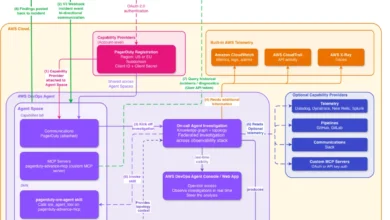
The comprehensive solution outlined here revolves around a typical AWS web application stack, comprising a frontend served by an Application Load Balancer, backend compute on Amazon EC2, and an Amazon RDS database, with all source code and CloudFormation templates managed in AWS CodeCommit. When an anomaly occurs within this environment, the system orchestrates a seamless interplay between two frontier agents: the AWS DevOps Agent for autonomous investigation and mitigation planning, and Kiro CLI for automated code remediation. This entire process is interconnected via a fully serverless, event-driven bridge designed to propel the application from an incident state to a fully resolved and redeployed fix.
The architecture is elegantly simple yet robust, leveraging core AWS services:
-
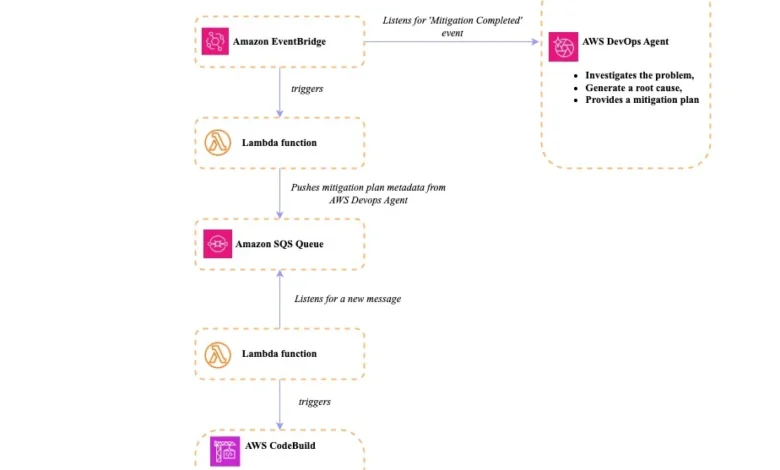
Incident Detection and AWS DevOps Agent Activation: The process begins with an incident detection, typically signaled by an Amazon CloudWatch alarm. This alarm, indicating a performance degradation or error, triggers an AWS DevOps Agent investigation. The agent, powered by advanced AI/ML models, autonomously collects and correlates telemetry from across the AWS environment, pinpointing the root cause and formulating a detailed mitigation plan. This plan includes both a summary of the recommended action and a step-by-step execution plan.
-
Capturing Mitigation Events with Amazon EventBridge: Upon successful completion of a mitigation analysis, AWS DevOps Agent publishes lifecycle events to the Amazon EventBridge default event bus. These events, sourced from
aws.aidevopsand carrying specific detail-types such asMitigation Completed,Investigation Completed, orMitigation Failed, act as the triggers for downstream automation. The solution specifically focuses on theMitigation Completedsignal, indicating that a viable fix has been identified. -
EventBridge Rule and Lambda Extraction: An Amazon EventBridge rule is configured to match the
Mitigation Completeddetail-type. This rule invokes a dedicated AWS Lambda function. The Lambda function, upon receiving the event payload—which contains critical metadata likeagent_space_id,task_id, andexecution_id—calls back to the AWS DevOps Agent. Its primary role is to extract two crucial objects: the concisemitigation summary(detailing what action to take and why) and the granularexecution plan(providing step-by-step instructions). This structured payload is then published to an Amazon SQS queue, serving as a robust, decoupled buffer for subsequent processing. -
Headless Remediation with Kiro CLI on AWS CodeBuild: The Amazon SQS queue acts as the entry point for the automated remediation phase. A trigger AWS Lambda function monitors this queue and, upon message arrival, initiates an AWS CodeBuild execution. AWS CodeBuild is an ideal environment for this task, offering on-demand compute, native integration with AWS CodeCommit for repository access, and the distinct advantage of requiring no persistent infrastructure, aligning perfectly with serverless principles.
Kiro CLI 2.0’s headless mode is central to this stage. This feature allows Kiro CLI to operate programmatically within deployment pipelines without requiring an interactive terminal. Authenticated via an API key securely stored in AWS Secrets Manager, Kiro CLI receives the mitigation prompt and executes its operations end-to-end. It leverages the same powerful tools, agents, and capabilities available in its interactive counterpart, but in an automated, scriptable fashion.
The AWS CodeBuild buildspec orchestrates the remediation sequence:
- It checks out the application and infrastructure repository from AWS CodeCommit.
- It retrieves the Kiro CLI API key from AWS Secrets Manager.
- It installs Kiro CLI and any necessary dependencies.
- It passes the mitigation summary and execution plan (received via environment variables from the SQS message) as a prompt to Kiro CLI.
- Kiro CLI then analyzes the prompt, understands the context of the codebase (aided by the steering file), and generates the required code changes.
- Finally, it commits these changes to a new feature branch and creates a pull request in AWS CodeCommit.
-
The Steering File: Guardrails for Automated Remediation: A crucial element that elevates Kiro CLI beyond generic code generation is its
steering file. This file, committed directly to the repository (e.g.,remediation-agent.md), imbues Kiro with persistent, project-specific knowledge. It acts as the guardrails for automated remediation, defining:- Project Structure: Understanding the layout of the repository, where specific types of files reside (e.g., CloudFormation templates, application code).
- Coding Conventions: Adhering to established style guides, naming conventions, and best practices.
- Decision Frameworks: Providing rules or preferences for how certain types of fixes should be implemented (e.g., "always prefer a
c5.largeinstance overt3.mediumfor scaling issues"). - Allowed Modifications: Specifying which file types or directories Kiro CLI is permitted to modify, preventing unintended broad refactors.
This steering file ensures that Kiro CLI produces targeted, predictable, and compliant changes, rather than speculative or overly generalized code.
From Pull Request to Deployment: The Human-in-the-Loop
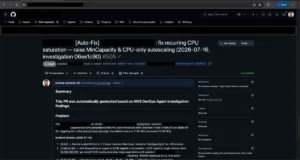
At this juncture, the automated pipeline has completed its intensive work: AWS DevOps Agent has diagnosed the issue, Kiro CLI has analyzed the mitigation plan, modified the appropriate files within the codebase, and created a pull request on a dedicated feature branch in AWS CodeCommit. The pull request description is meticulously crafted, detailing precisely what changes were made, why (directly citing the AWS DevOps Agent’s reasoning), and including the agent space and execution IDs for full traceability back to the original incident.
This is the critical juncture where the "human-in-the-loop" gate comes into play. A developer or an SRE reviews the pull request, meticulously verifying that the proposed change is correct, appropriately scoped, and safe for deployment. This approval step is intentionally deliberate and non-negotiable. While the underlying AI agents are trusted to investigate, analyze, and propose highly accurate fixes, the ultimate decision for deployment, especially for changes affecting production environments, rests with a human expert. This ensures accountability, allows for a final sanity check, and prevents unforeseen edge cases from being deployed automatically.
Once the pull request is approved and subsequently merged into the main branch, the organization’s existing deployment pipelines are automatically triggered. These pipelines then implement the approved changes in the target environment, completing the remediation cycle. The entire process—from the initial Amazon CloudWatch alarm to a fully deployed and verified fix—can now be completed in minutes rather than hours. This dramatic reduction in MTTR, with the only manual step being a focused pull request review, translates directly into significant operational benefits for organizations handling high volumes of L1/L2 incidents. It not only reduces operational toil and stress on on-call teams but also substantially improves business continuity and service availability.
Supporting Data and Industry Impact
The reported metrics—up to 75% lower MTTR, 80% faster investigations, and 94% root cause accuracy—are not merely incremental improvements; they represent a transformational leap in operational efficiency. To put these figures into perspective, typical enterprise MTTRs often range from several hours to even days for complex incidents involving multiple systems. Reducing this by 75% means that an incident that previously took four hours to resolve could now be fixed in just one hour. For businesses where every minute of downtime translates to thousands or millions in lost revenue, this acceleration offers immense financial protection. Beyond financial savings, there are profound impacts on engineering culture and team well-being. Site Reliability Engineers (SREs) and operations teams, often burdened by repetitive, high-stress "firefighting," can now redirect their expertise towards more strategic initiatives, proactive system improvements, and innovation. This shift can significantly reduce burnout and improve job satisfaction, leading to more resilient and productive teams.
Industry analysts are quick to recognize the profound implications of such integrations. "This move by AWS and Kiro CLI represents a significant evolution in autonomous operations," states a hypothetical analyst from a leading tech research firm. "It’s a clear signal that the industry is moving beyond mere passive monitoring and reactive alerting towards truly self-healing and adaptive systems. The human role shifts from constant intervention to intelligent supervision and strategic oversight." Early adopters, according to an AWS spokesperson, have already seen transformative effects on their incident response workflows, reporting not only faster recovery but also a notable reduction in cognitive load for their operational staff.
Broader Implications and The Future of Site Reliability Engineering (SRE)
This integration marks a crucial step towards the realization of highly resilient, self-healing systems, fundamentally altering the role of Site Reliability Engineers (SREs). Traditionally, SREs have balanced the tasks of incident response, system design, and automation. With autonomous investigation and remediation capabilities, the emphasis shifts dramatically. SREs can move away from being reactive "firefighters" and instead become "architects of automation," focusing on designing more robust systems, refining the AI agents’ "steering files," and building the sophisticated pipelines that enable such automation.
This model champions "human-supervised automation," where intelligent agents handle the grunt work, but human expertise retains ultimate control and decision-making authority. This balance is crucial for managing the ethical considerations and governance challenges associated with AI-driven code changes. The pull request approval step ensures transparency, auditability, and a vital human override mechanism.
Looking ahead, this pattern of integrating specialized AI agents holds immense potential. It can be extended to proactively identify and fix potential issues before they escalate into incidents, moving from reactive remediation to predictive self-healing. While the current focus is on AWS environments, the underlying principles are transferable to multi-cloud and hybrid environments, setting a precedent for enterprise-wide autonomous operations. The continuous improvement of agentic AI, coupled with refined steering mechanisms, will likely lead to even more sophisticated and context-aware automated remediation capabilities, driving the industry closer to the elusive goal of truly autonomous IT.
Availability and Getting Started
For organizations eager to embrace this next frontier in incident management, the path to implementation is well-defined. The aws-samples repository provides the complete implementation, including CloudFormation templates for infrastructure, anomaly generation scripts, and the Kiro CLI steering configuration. Interested parties can clone the repository, refer to the detailed README file for setup instructions, and begin configuring their AWS DevOps Agent Agent Spaces. Exploring the Kiro CLI documentation will provide deeper insights into its capabilities and the power of steering-file-driven code generation. This powerful integration is ready for deployment, promising to redefine operational efficiency and resilience for cloud-native applications.
Cleanup
To prevent incurring ongoing charges, it is imperative to remove all resources provisioned during the walkthrough. The README file within the aws-samples repository provides a comprehensive teardown sequence to ensure all components are properly de-provisioned.
Related posts: