Google Unveils Major Upgrades to Android CLI and AI Skills to Revolutionize Mobile Development.


The landscape of mobile application development is undergoing a paradigm shift as artificial intelligence increasingly integrates into the software engineering lifecycle. Google recently announced significant enhancements to its Android command-line interface (CLI) and an expanded library of specialized "Android Skills," designed to ground AI agents in the platform’s official architectural standards. These updates arrive as developers seek more efficient methods to bridge the gap between large language models (LLMs) and the nuanced requirements of the Android ecosystem, effectively moving beyond the limitations of generic code generation.
The Evolution of the Android Command-Line Interface
The updated Android CLI is positioned as a central orchestration layer for developers leveraging AI agents to automate project management. Traditionally, CLI tools were limited to basic build and test commands; however, the new iteration enables agents to manage the entire application lifecycle—from initial project scaffolding to complex testing sequences.
A pivotal feature of this update is the integration of Android Device Streaming directly into the CLI environment. Previously, developers were often restricted to local emulators, which, while useful, frequently fail to replicate the idiosyncrasies of physical hardware, such as specific thermal throttling, edge-case camera behavior, or unique biometric sensor responses. By enabling secure ADB (Android Debug Bridge) over SSL connections, Google allows agents to interface with a remote fleet of physical devices. This permits developers to deploy builds, execute automated tests, and capture diagnostic logs headlessly from the terminal.
This capability is particularly significant for remote teams or independent developers who lack the budget or infrastructure to maintain an extensive physical device lab. By automating device interaction, agents can now perform "smoke tests" on a variety of form factors without human intervention, identifying hardware-specific regressions that would have otherwise remained hidden until the final stages of the development cycle.
Grounding AI Agents with Android Skills
One of the primary challenges in deploying LLMs for specialized programming tasks is the "knowledge cutoff" problem. AI models are trained on vast datasets that may become stale, leading them to suggest deprecated APIs or outdated architectural patterns. To mitigate this, Google has expanded its Android Skills repository—a collection of structured instruction sets provided in Markdown format that act as a "source of truth" for AI agents.
These skills are not mere documentation; they are functional, environment-agnostic instructions that provide agents with the latest API references, sample code, and architectural best practices directly from official developer portals. With over 20 distinct skills currently available, developers can equip their coding assistants to handle specialized tasks ranging from complex migration efforts to UI implementation standards.
The methodology behind these skills focuses on "verifiability." By incorporating rigorous evaluation benchmarks (evals) into the skill development process, Google aims to ensure that the code produced by agents is not only syntactically correct but also adheres to the latest security and performance standards set forth by the Android platform team.
Case Study: Wear OS and the Material 3 Migration
The practical application of these tools was recently demonstrated through the release of the Wear Compose Material 3 skill. Developing for wearable technology requires a unique set of constraints, including round screen geometries, rotary input management, and extreme power efficiency. Without explicit guidance, standard LLMs often struggle to reconcile these requirements with traditional mobile UI patterns.
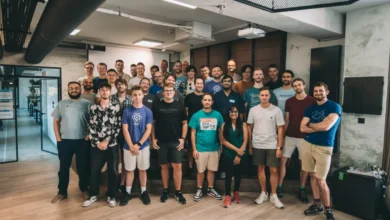
The engineering team at FotMob, a leading sports data application, served as an early adopter of this specific skill. Faced with the daunting task of modernizing their existing Wear OS application, the team utilized the skill to automate the migration of multiple complex lists to the modern TransformingLazyColumn component.
According to Roy Solberg, an Android Tech Lead at FotMob, the impact was immediate. The AI agent, guided by the Wear Compose Material 3 skill, successfully handled the implementation of content padding, theme typography, and rotary input handling. By automating these repetitive tasks, the team was able to strip away legacy wrappers and redundant boilerplate code. Crucially, the skill corrected common developer errors that the underlying model had initially overlooked—such as failing to propagate content padding or mistakenly utilizing hardcoded units instead of theme-based typography. The project concluded with eight major list migrations completed in a single afternoon, highlighting the productivity gains enabled by grounding agents in domain-specific expertise.
Broader Implications for the Development Ecosystem
The move toward "skill-based" AI development represents a broader trend in the software industry: the transition from general-purpose coding assistants to specialized, platform-aware agents. This evolution has several profound implications for the future of the developer workforce.
First, it reduces the "cognitive load" on developers. By offloading the maintenance of boilerplate code and the tracking of deprecated APIs to an AI agent, engineers can focus on higher-level architectural decisions and product strategy. Second, it promotes standardization. When agents are programmed with official Android Skills, the resulting codebase is more likely to follow consistent patterns, making it easier for large teams to collaborate and maintain long-term projects.
However, this shift also necessitates a change in how developers are trained. The ability to write code manually remains essential, but it is increasingly supplemented by the ability to "curate" and "instruct" AI agents. The role of the developer is evolving into that of a systems architect, where the primary objective is to define the parameters of the build and ensure the AI agent remains within the boundaries of best practices.
Timeline and Implementation
The rollout of these updates follows a clear trajectory aimed at increasing the autonomy of AI-driven workflows:

- Initial Phase: Launch of core Android CLI capabilities and basic agent grounding.
- Growth Phase: Introduction of the Skills repository, providing a framework for community and official contributions.
- Current Phase: Deep integration of hardware access (Device Streaming) and specialized domain skills (Wear OS, etc.), allowing for end-to-end automated testing and development.
For developers looking to integrate these tools, the process is streamlined via the android init command, which configures the local environment for agent interaction. Once initialized, developers can browse the skills directory using android skills add to import specific capabilities tailored to their project needs.
Conclusion and Future Outlook
Google’s commitment to providing an "environment-agnostic" toolset—one that works equally well within Android Studio or with third-party agents like Claude and Codex—underscores the company’s objective to remain the dominant ecosystem for mobile development, regardless of the tools developers prefer.
As AI agents become more sophisticated, the distinction between "writing code" and "managing an automated build system" will continue to blur. By providing the infrastructure and the authoritative knowledge base for these agents, Google is effectively establishing the "operating system" for AI-assisted software development. While the technology is still in its relative infancy, the success of early adopters like FotMob suggests that the integration of platform-specific skills is a necessary evolution for any team aiming to maintain velocity in an increasingly complex mobile landscape. As the repository of available skills grows, the barrier to entry for building high-quality, performant Android applications will likely continue to drop, fostering a new era of rapid, reliable, and intelligent mobile development.