A Strategic Pivot in Educational Deployment
The policy change, announced by Google in late 2026, marks a significant reversal of the company’s previous expansion strategy. Previously, Gemini was made available to students of all ages, with the Gemini tab enabled by default in many districts that had not proactively opted out. By switching to an "opt-in" model, Google is placing the burden of responsibility squarely on school administrators. Under the new guidelines, each service must be manually enabled by a school official, ensuring that no generative AI features are active unless a conscious decision has been made by the district’s IT leadership.
This shift comes on the heels of a rapid, and often chaotic, rollout of generative AI in schools. Throughout 2026, educators and parents voiced concerns regarding the potential for academic dishonesty, the erosion of critical thinking skills, and the lack of transparency regarding how student data is processed by large language models. The new default-off status is seen by many industry analysts as a concession to the mounting pressure from educational boards that have struggled to keep pace with the rapid evolution of these tools.

The Search Dilemma: AI as an Inseparable Component
While the disabling of standalone AI tools is straightforward, the integration of AI into Google Search presents a unique challenge for educational institutions. Google has confirmed that the standard Search experience will now include AI Overviews and AI-driven guidance, features designed to assist students by breaking down complex problems into manageable, step-by-step components.
For schools that wish to maintain a "traditional" search environment free from generative interference, the situation is increasingly difficult. Google’s Vice President for Education, Chris Phillips, confirmed in reports that schools choosing to reject these AI-integrated search tools will effectively lose access to Google Search entirely. Students at these institutions will be presented with a notice informing them that the service is unavailable. This "all-or-nothing" approach forces districts into a binary choice: accept the integration of generative AI within their search functions or find alternative, perhaps less comprehensive, search providers.
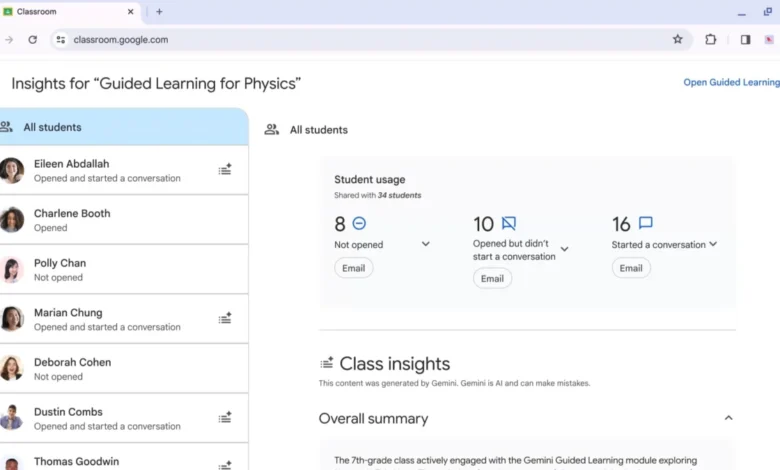
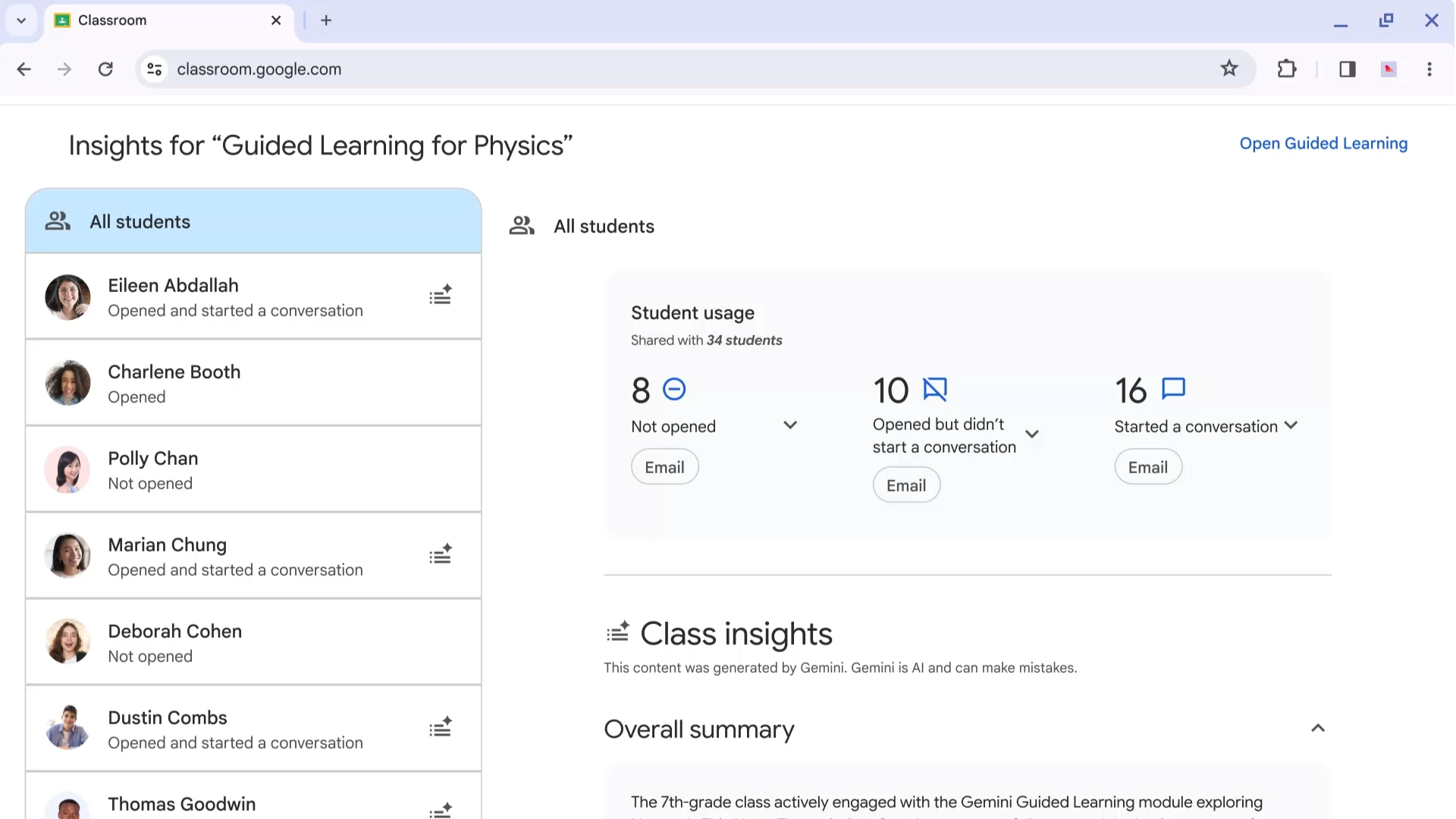
By 2027, the search experience for those who do choose to enable AI will bifurcate into two distinct paths: a consumer-style interface featuring full AI overviews and chatbot functionality, and "Guided Learning." The latter is specifically designed to function as an interactive study coach, prompting students to think critically and solve problems incrementally rather than providing immediate, synthesized answers.

A Chronology of Rapid AI Integration
To understand the current tension, one must examine the timeline of Google’s push into the classroom.
- Pre-2026: AI access in Google Workspace for Education was largely restricted to users aged 18 and older, with strict administrative controls for those managing younger student cohorts.
- August 2026: Google expanded the availability of Gemini in Classroom to students of all ages. This move was intended to leverage contextualized prompts to assist with homework and research, but it caught many districts off guard, leading to immediate calls for stricter oversight.
- September 2026: Major districts, including New York City Public Schools and the Los Angeles Unified School District (LAUSD), implemented bans or severe restrictions on generative AI tools on district-issued devices, citing concerns over student safety, data privacy, and pedagogical integrity.
- November 2026: Google announced the upcoming policy shift to "default-off" status, responding to the feedback loop generated by the August expansion and the subsequent backlash from major school boards.
The Growing Chasm in Digital Sovereignty
The contrast between North American school policies and those emerging in Europe provides a compelling look at the varying approaches to digital sovereignty. In Germany, several states—including Berlin, Hamburg, Hesse, Bremen, North Rhine-Westphalia, and Rhineland-Palatinate—have taken a markedly different path. Through a four-year framework contract awarded to IONOS, these states are moving toward a cloud infrastructure built on Nextcloud, an open-source, self-hosted platform.
The German model is defined by the freedom of choice and the explicit requirement for open-source software, as mandated by the Open Source Initiative (OSI). This allows schools to opt into a digital environment that they can manage independently, without being locked into a specific vendor’s ecosystem or being forced to adopt integrated AI features they may deem inappropriate for their specific pedagogical goals.
This highlights a fundamental tension: while U.S. districts are often constrained by the necessity of utilizing established, "free" (ad-supported or data-harvesting) ecosystems, European schools are increasingly prioritizing digital autonomy. The ability to "opt-out" of AI features without losing the underlying utility of the search engine remains a point of contention for U.S. educators who feel their options are being artificially narrowed by the tech giants they rely on for daily operations.
Implications for Academic Integrity and Data Privacy
The pedagogical implications of "Guided Learning" versus traditional search are profound. Proponents argue that an AI "coach" can democratize access to high-quality tutoring, providing personalized support that a single teacher in a classroom of thirty students cannot offer. However, critics point to the risk of "black-box" pedagogy, where the logic behind a student’s answer is influenced by an algorithm that the teacher cannot fully audit or understand.
Furthermore, the data privacy aspect remains a top-tier concern. When a student interacts with AI-enabled Search, that data is processed in ways that extend beyond standard search logs. Although Google maintains that data used for these educational tools is handled with higher privacy standards, the sheer volume of behavioral data collected—how a student struggles with a math problem, what follow-up questions they ask, and how they navigate an interface—creates a highly detailed digital profile of the learner. For parents and privacy advocates, the question is whether the benefit of "smarter" search outweighs the cost of this granular data collection.

Looking Toward the Future
As the 2027 rollout approaches, school administrators are tasked with a significant administrative burden. They must not only decide which AI tools to enable but must also communicate these choices to parents, teachers, and students. The lack of a middle ground for Google Search—where one could have access to the index without the AI-driven "overviews"—will likely force a new wave of district-level policy debates.
The coming months will see Google providing further documentation and technical support to districts, attempting to mitigate the friction created by this transition. For the company, the stakes are high: if the default-off policy leads to a widespread rejection of their AI tools by major school districts, it could signal a long-term decline in their influence within the K-12 sector. Conversely, if they can successfully frame these tools as essential, safe, and academically rigorous, they will solidify their position as the primary architecture of the modern digital classroom.
Ultimately, the situation serves as a bellwether for the broader integration of AI into public life. When the world’s most dominant search engine forces a choice between "AI-enabled or nothing," it moves the conversation from one of simple software preference to one of fundamental infrastructure governance. Whether the future of education is one of AI-assisted, highly personalized learning or one of digital simplicity and human-led instruction remains an open question—one that will be answered in thousands of school board meetings over the next eighteen months.