The Evolution of the Development Paradigm
For decades, the software engineering process has remained largely linear: a developer writes code, compiles it, tests it, and repeats the cycle until a feature is complete. The integration of autonomous agents into Wing Pro 12.1 breaks this pattern. Instead of micro-managing syntax, developers are now positioned as product designers. By providing a high-level specification—a roadmap of desired functionality—users empower the Tasks Manager to decompose complex requirements into granular, actionable tasks.
The system then orchestrates a team of AI agents that function asynchronously. These agents are tasked with writing code, drafting unit tests, and producing technical documentation. Crucially, they commit their work in logical units, maintaining a clean version control history. This evolution allows for a significant compression of the development timeline; tasks that previously required days of human labor can now be managed in a fraction of the time, provided the initial specifications are clear and the environment is properly configured.
Chronology of Implementation and Setup
The transition to an autonomous workflow requires adherence to a structured, safety-first setup process. According to the deployment guidelines released by Wingware, the implementation should follow a rigorous sequence to ensure security and efficiency.
- Environmental Isolation: Security experts and the Wingware team recommend operating within isolated environments, such as virtual machines, to minimize the risk of unauthorized access. It is standard practice to withhold sensitive infrastructure keys and prevent agents from accessing production repositories until they have been thoroughly vetted.
- Agent Selection: The choice of AI agent is critical. As of November 2026, tools like Claude Code and Codex are favored for autonomous workflows due to their inherent command-safety protocols. Other options like Antigravity, Copilot, and Cursor remain compatible but lack the specialized safety constraints required for high-stakes autonomous operations.
- Version Control Integration: The system relies on Git or Mercurial to track every modification made by the agents. This ensures that every decision made by the AI is auditable, reversible, and traceable to a specific task.
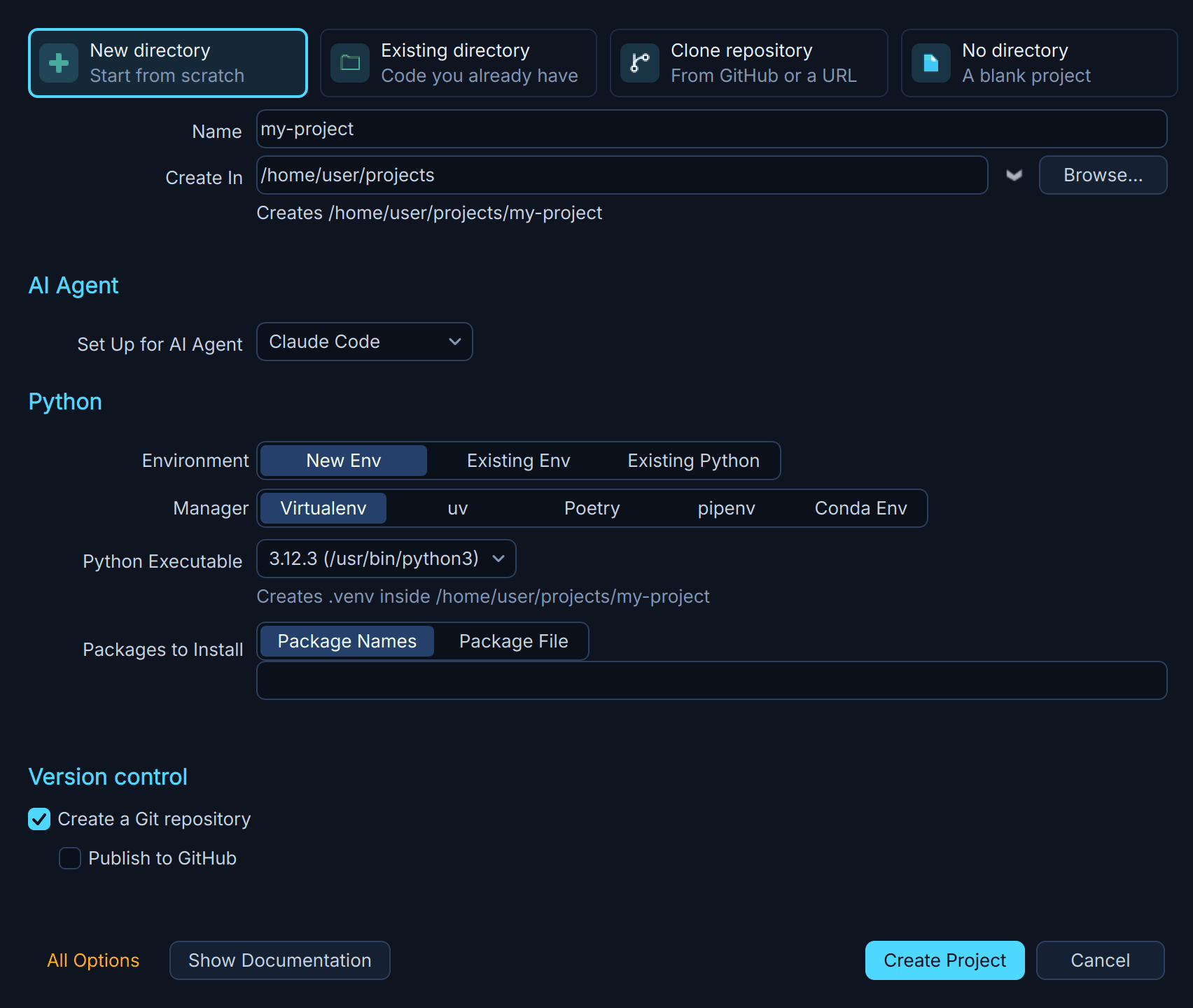
- Project Initialization: During the "New Project" phase in Wing Pro 12.1, developers define the AI agent and the Python environment. This activation turns on the Tasks Manager, enabling the system to begin planning and execution.
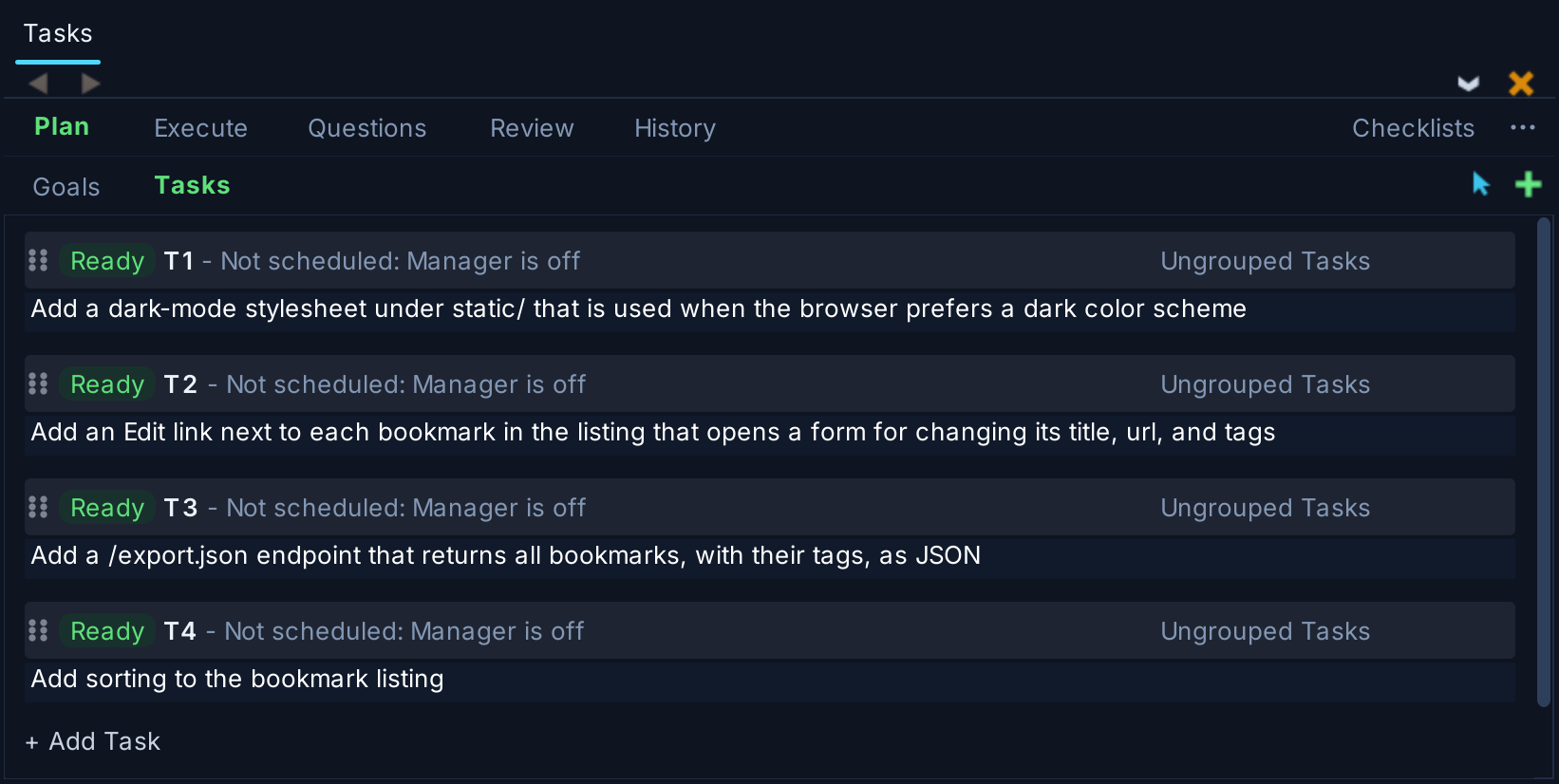
- Specification and Delegation: Users define the project goals on the "Plan" tab. Once marked as "Ready," the Manager takes over, conducting research and requesting clarification on ambiguous requirements.
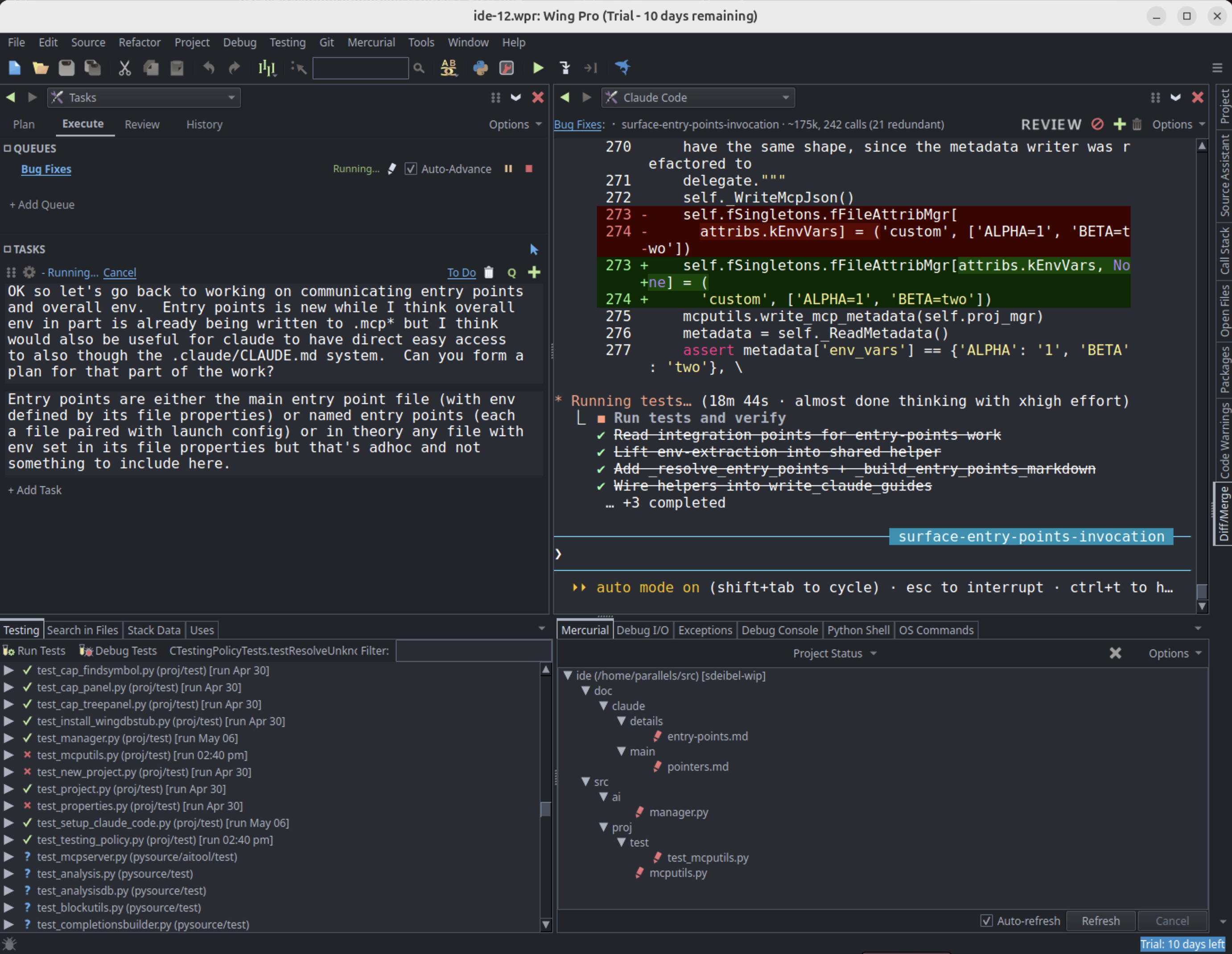
- Iterative Feedback: Through the "Questions" and "Review" tabs, the human lead maintains control. If an agent hits a blocker or requires a design decision, it pauses the specific task and notifies the developer, who can then provide guidance without interrupting the progress of other concurrent tasks.
Supporting Data and Technical Context
The shift toward agent-led development is supported by significant advancements in large language model (LLM) capabilities over the past two years. Industry data suggests that autonomous agent frameworks can improve developer productivity by up to 40% when applied to standard boilerplate-heavy tasks.
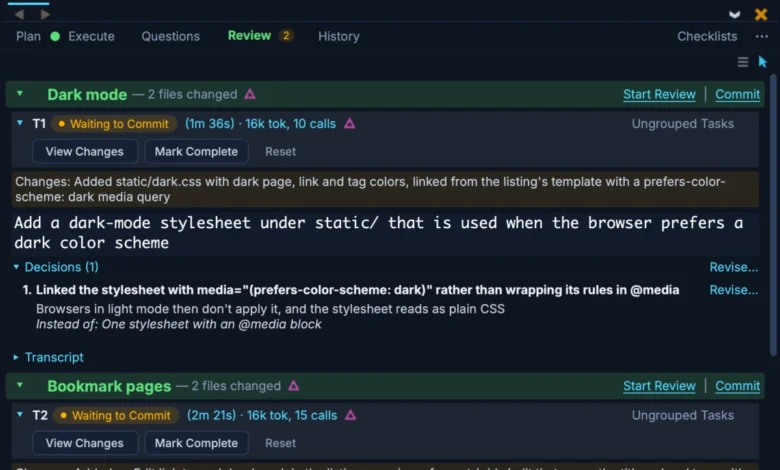
Wing Pro’s approach is unique because it emphasizes "logical units" of work. Rather than allowing an agent to rewrite an entire repository, the Tasks Manager enforces a modular structure. This minimizes the "black box" nature of AI code generation. The "Review" tab serves as a critical bridge between automation and quality assurance, offering a summary of decisions made during the coding process. This feature addresses one of the primary concerns among enterprise teams: the lack of transparency in AI-generated commits. By forcing a summary report for every task, Wing Pro ensures that human developers retain a comprehensive understanding of the codebase’s evolution.
Implications for Enterprise Development
The introduction of autonomous development in Wing Pro 12.1 has profound implications for software engineering teams. Historically, scaling a team required hiring more developers to handle the manual workload of feature implementation. With autonomous agents acting as force multipliers, small teams can now handle larger codebases with greater speed.
However, this transition also places a higher premium on "systems thinking." Because the AI agents rely on the quality of the provided specification, the role of the lead developer is shifting toward product management, architecture design, and rigorous unit test development. If the specification is flawed, the agents will execute a flawed vision at scale. Therefore, the ability to clearly define constraints, edge cases, and technical requirements has become the most valuable skill in the modern developer’s toolkit.
Safety Protocols and Best Practices
Security remains the primary hurdle for widespread adoption of autonomous agents. The Wingware documentation emphasizes that users should treat AI agents as external contractors. Just as one would not give a contractor full root access to a production database, users must restrict the scope of what an AI agent can modify.
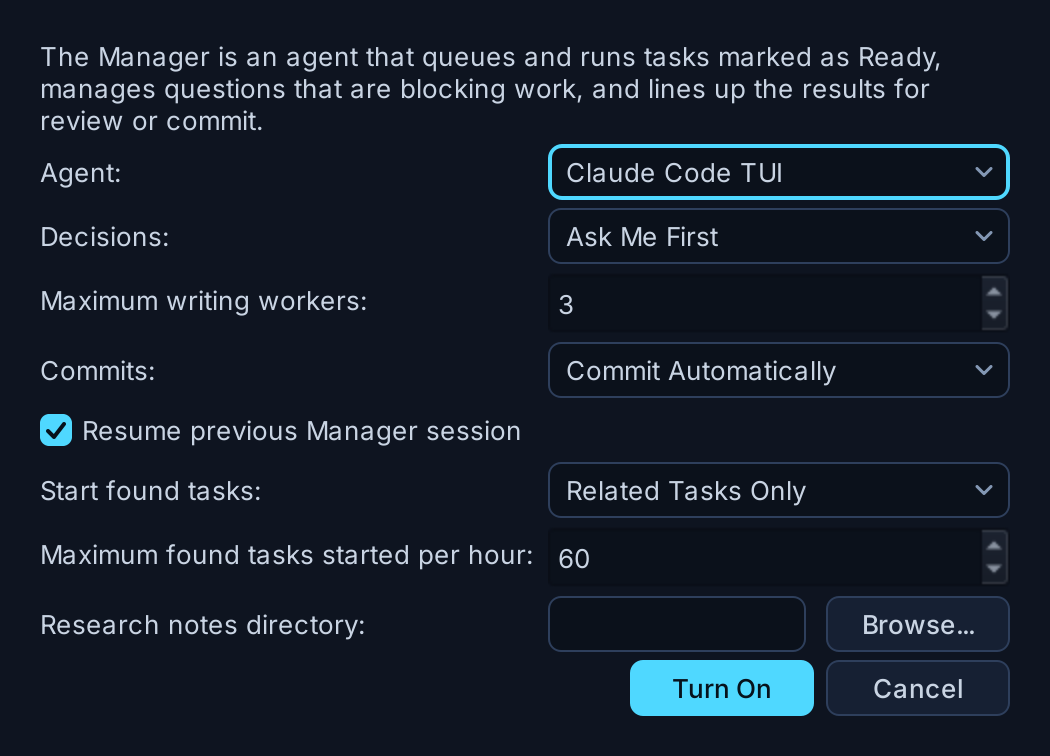
To mitigate risk, the system includes built-in "Review" workflows. Even with automatic commits enabled, the "Review" tab acts as a final audit point where developers can inspect the changes before they are pushed to a main branch. By enforcing a separation between the execution environment and the final production environment, Wing Pro 12.1 provides a safety net that allows for experimentation without the risk of catastrophic system failure.
The Road Ahead
As of late 2026, the industry is closely watching the adoption rates of autonomous development tools. While some developers express skepticism regarding the long-term reliability of AI-generated code, the efficiency gains are becoming too significant to ignore. The "Wing Tips" series, which provides the instructional framework for these tools, acts as a bridge for developers to transition from traditional coding to agent-orchestration.
The integration of the Tasks Manager and the AI Agent tool within Wing Pro marks a departure from static IDEs. These tools are evolving into collaborative platforms where the IDE itself is a participant in the creative process. For those unfamiliar with the transition, the software includes an onboarding path within the "Execute" tab, where the Manager can assist in setting up the development environment, effectively teaching the user how to use the tool through practical application.
In summary, the release of Wing Pro 12.1 confirms that autonomous software development is no longer a theoretical exercise but a practical reality. As the technology matures, the focus of the industry will likely shift from whether AI can write code to how effectively human engineers can design, manage, and audit the autonomous systems that write that code for them. The future of software development, as presented by this latest update, is not one where the human is replaced, but one where the human is elevated to the role of a supervisor for a tireless, automated workforce.