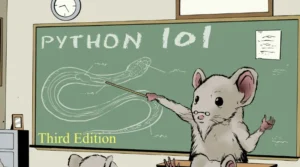
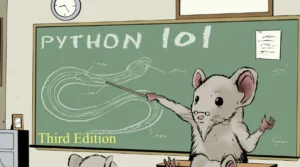
Python 101 Third Edition Kickstarter Campaign Launches to Update Classic Programming Guide for Modern Developers

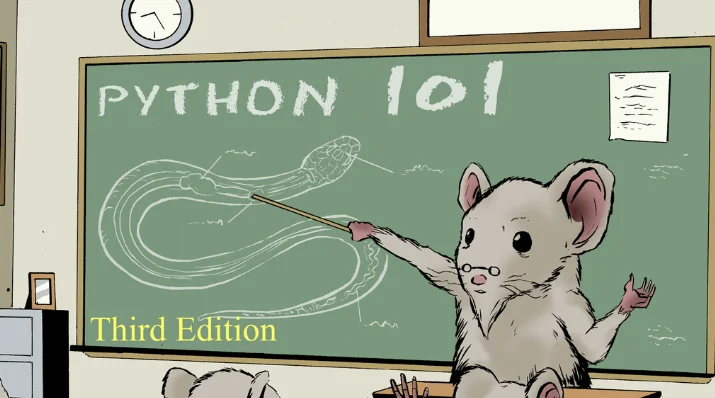
Programming education continues to undergo a rapid transformation as the software development landscape shifts toward modern paradigms, artificial intelligence integrations, and streamlined syntax standards. Amid this continuous evolution, veteran technical author and software developer Michael Driscoll has officially announced the launch of a crowdfunding campaign for the third edition of his widely recognized programming guide, Python 101. Hosted on the Kickstarter platform, the campaign aims to secure the necessary financial backing to rewrite, update, expand, and professionally publish a comprehensive revision of a textbook that has served as an introductory gateway for thousands of aspiring developers over the past decade.
The announcement arrives at a pivotal moment in the technology sector, where Python remains consistently ranked as one of the world’s most popular and rapidly growing programming languages. According to recent telemetry from the TIOBE index, GitHub Octoverse reports, and the Stack Overflow Developer Survey, Python dominates fields ranging from web development and automated testing to data science, machine learning, and artificial intelligence engineering. Despite this massive proliferation of career opportunities, the barrier to entry for complete novices can often feel intimidating due to outdated instructional materials that fail to reflect modern language capabilities. By bringing Python 101 up to date with contemporary programming standards, Driscoll’s initiative seeks to bridge the gap between absolute beginner concepts and the practical skills demanded by today’s technology employers.
Background Context and Evolution of Python 101
To understand the necessity of a third edition, it is essential to examine the historical trajectory of Python 101 within the broader ecosystem of technical literature. When the original edition of the book was first conceptualized and published, the programming world operated under different paradigms. Python 3 was still establishing widespread dominance as legacy systems transitioned away from Python 2, and the language ecosystem lacked many of the syntactic conveniences, speed improvements, and structural enhancements that define modern development today.
Over successive years, Driscoll updated the text to reflect minor iterations of the language, cultivating a reputation for clarity, conciseness, and a pedagogical approach tailored specifically to self-taught programmers and academic students alike. However, the pace of technological change has accelerated dramatically in recent years. Python has introduced major performance updates—such as those spearheaded by core developers aiming to double the execution speed of the interpreter—alongside powerful typing features, structural pattern matching, and refined error handling mechanisms. Consequently, much of the existing literature on introductory Python either remains anchored in outdated methodologies or introduces advanced concepts too early, overwhelming readers who require a gradual, structured foundation.
The decision to pursue a third edition is therefore driven by an industry-wide imperative to keep instructional resources aligned with current best practices. The updated manuscript will systematically rebuild the curriculum from the ground up, ensuring that every code snippet, programming exercise, and conceptual explanation conforms to contemporary Pythonic standards.
Chronology and Campaign Timeline
The launch of the Kickstarter campaign marks the official commencement of the production phase for Python 101: Third Edition. The project timeline has been carefully structured to balance rigorous editorial standards with a transparent delivery schedule for backers who pledge financial support to the initiative.
The preliminary phase of the project, which concluded prior to the public announcement, involved extensive syllabus auditing, identification of outdated codebases, and the integration of new Python language features into a restructured draft outline. With the opening of the Kickstarter campaign, the project enters its active funding and community engagement window. During this period, backers can choose from various pledge tiers that correspond to different reward packages, ranging from digital copies of the finished book to exclusive supplementary learning materials, code repositories, and acknowledgment listings.
Following the successful closure of the Kickstarter funding window, the project will transition into the intensive writing and editing phase. Unlike traditional publishing models where authors face strict corporate deadlines that can compromise quality, the crowdfunding model provides Driscoll with the dedicated focus time required to refine explanations, develop practical real-world exercises, and implement rigorous technical reviews. Beta chapters will be distributed incrementally to eligible backers, allowing for community feedback and error detection prior to final typesetting. The ultimate milestone of the project timeline centers on the publication and digital distribution of the completed e-book and print editions, followed closely by the fulfillment of all physical and digital Kickstarter rewards.
Why Kickstarter: Crowdfunding in Technical Publishing
The choice of Kickstarter as the funding and distribution vehicle for Python 101: Third Edition reflects a broader trend among independent technical authors seeking alternatives to traditional publishing conglomerates. Writing a comprehensive programming book requires hundreds of hours of dedicated labor, encompassing curriculum design, code testing across multiple operating systems, technical editing, graphic design, and marketing.
Traditional academic and technical publishers often impose restrictive royalty structures, exercise heavy editorial control that can dilute an author’s unique voice, and price specialized textbooks out of the reach of students and self-taught learners. By contrast, crowdfunding empowers authors to maintain complete creative independence while directly establishing a direct-to-reader relationship.
Furthermore, the Kickstarter model serves as an empirical validation mechanism for the project. By gauging community demand before the ink is finalized, the author can ensure that the resources allocated to professional editing, cover design, and formatting are justified by market interest. Backers are transformed from passive consumers into active stakeholders in the educational process, participating in a collaborative effort that has historically defined the open-source and developer communities. The financial contributions secured through the campaign directly subsidize production costs, allowing Driscoll to dedicate uninterrupted professional hours to crafting the highest-quality instructional material possible.
Target Audience and Pedagogical Approach
A central tenet of the Python 101 philosophy is accessibility. The programming landscape is replete with reference manuals written for computer science doctorate holders and enterprise system architects, leaving a critical void for individuals who have never written a line of code in their lives. The third edition is meticulously engineered to serve a diverse demographic of learners.
Primary beneficiaries of the book include absolute beginners seeking a structured, jargon-free introduction to computational logic and syntax. For these readers, the book strips away intimidating academic theories and focuses immediately on practical problem-solving. By utilizing relatable examples and incremental lessons, students build confidence as they progress from basic variables and conditional statements to loops, functions, and object-oriented programming.
In addition to hobbyists and career-switchers, the text is optimized for university students enrolled in STEM disciplines where Python has become the de facto standard for scientific computing, data analysis, and laboratory automation. Professionals working in non-technical sectors—such as finance, marketing, administration, and human resources—who wish to automate repetitive workflows through scripting will also find the material immediately applicable to their daily occupations. Crucially, the curriculum assumes zero prior programming background, ensuring that no reader is left behind due to unstated prerequisites.
Comprehensive Content Updates in the Third Edition
While the foundational pedagogical goals of the previous editions remain intact, the third edition introduces sweeping updates designed to reflect the state of the art in Python development. These enhancements encompass both syntactic modernization and pedagogical refinements.
The updated manuscript incorporates modern language features introduced in recent Python releases, ensuring that readers learn idioms that are actively utilized in professional software engineering environments. This includes comprehensive coverage of type hinting, which has become indispensable for maintaining large codebases and utilizing modern integrated development environments (IDEs) with robust autocomplete and error-detection capabilities.
Furthermore, the book expands its coverage of error handling, debugging strategies, and virtual environment management—critical skills that are frequently omitted from introductory texts but are essential for preventing common beginner frustrations. The exercises and code repositories accompanying the text have been entirely refreshed to utilize clean, readable, and efficient structures that adhere to the official Python style guide (PEP 8). The overarching editorial objective is not merely to patch the second edition, but to deliver an entirely reimagined learning experience that stands as the definitive modern introduction to the language.
Pledge Tiers, Rewards, and Community Engagement
To incentivize participation and express gratitude to early supporters, the Kickstarter campaign features a tiered reward structure tailored to various budgets and learning preferences. While specific offerings may vary based on pledge levels, the rewards ecosystem is designed to deliver maximum value to the programming community.
Entry-level pledges typically grant backers early access to digital editions of the book as chapters are completed and compiled. Mid-tier and premium pledges expand upon this by including companion resource packs, source code repositories, bonus modules on specialized Python topics, and acknowledgment credits within the published book’s dedication pages.
Throughout the campaign and the subsequent production cycle, regular project updates will be published via the Kickstarter dashboard. These updates serve to maintain transparent communication between the author and the backers, detailing developmental milestones, editorial hurdles overcome, and sneak peeks into newly drafted chapters. This participatory approach fosters a sense of shared ownership, uniting a global cohort of learners around a common educational resource.
Broader Impact and Implications for Python Education
The successful funding and release of Python 101: Third Edition carries significant implications for the broader ecosystem of programming education. As artificial intelligence tools begin to reshape how code is generated and consumed, foundational literacy in programming principles has paradoxically become more important than ever. Developers who understand core logic, data structures, and algorithmic thinking are vastly better equipped to utilize AI coding assistants effectively, audit generated code for security vulnerabilities, and architect scalable software solutions.
By providing an approachable, accurate, and contemporary textbook, Driscoll’s initiative contributes directly to lowering the barriers of entry into the technology sector. Empowering self-taught developers, students, and career-transitioners with high-quality educational materials helps democratize access to high-demand technical skills, fostering diversity and innovation within the global software engineering workforce.
As the Kickstarter campaign progresses toward its funding targets, the technical community has an opportunity to support an independent author dedicated to the craft of teaching. For veterans looking to recommend a reliable starting point for junior colleagues or novices eager to write their first functional script, Python 101: Third Edition promises to set a new benchmark for introductory programming literature.