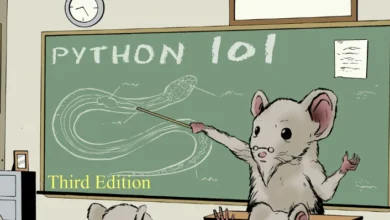
Author Michael Driscoll Announces Kickstarter Campaign for the Highly Anticipated Third Edition of Python 101

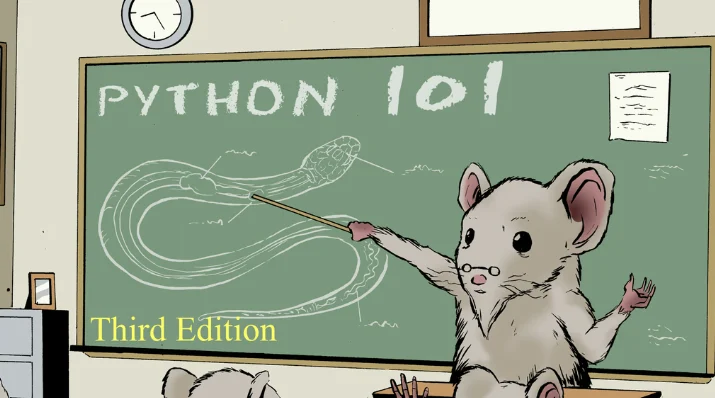
Longtime software developer, technical author, and educator Michael Driscoll has officially launched a crowdfunding campaign on Kickstarter to fund the production and publication of the third edition of his widely recognized programming guide, Python 101. The campaign aims to modernize the foundational textbook, aligning its curriculum with contemporary Python standards, modern language syntax, and current industry best practices. Designed specifically for individuals with zero prior exposure to computer programming, the forthcoming edition seeks to bridge the gap between academic theory and practical software development. As Python maintains its dominance as one of the world’s most popular and versatile programming languages, the release of an updated, beginner-centric resource arrives at a critical juncture for aspiring developers, data analysts, and tech professionals.
Background Context of the Event
The genesis of Python 101 dates back to Driscoll’s extensive career in software engineering and technical writing. Having authored several prominent books on Python development, GUI creation with wxPython, and automated testing, Driscoll identified a recurring hurdle for newcomers entering the ecosystem: while countless programming manuals exist, many fail to balance accessibility with comprehensive technical accuracy. Early editions of Python 101 were crafted to counter this trend by offering step-by-step guidance, plain-language explanations, and hands-on coding exercises.
Over the years, the programming landscape has undergone a seismic shift. Python has transitioned from a favored tool of system administrators and academic researchers into the undisputed backbone of artificial intelligence, machine learning, data science, web development, and cloud automation. Consequently, pedagogical approaches must adapt. Programming languages evolve through successive version releases—introducing performance optimizations, type-hinting enhancements, structural pattern matching, and cleaner syntax. Driscoll’s decision to pursue a third edition stems from the urgent necessity to update legacy code examples and introduce modern conventions to a new wave of students.
Chronology and Development Timeline
The roadmap for the third edition of Python 101 follows a structured, community-backed production model. The Kickstarter campaign serves as the foundational financial catalyst, initiating a multi-phase lifecycle designed to guarantee editorial rigor and production quality.
Phase one, spanning the duration of the Kickstarter campaign, focuses on securing capital from the developer community, students, and institutional supporters. Once the crowdfunding target is successfully achieved, the project enters phase two: manuscript revision and content expansion. During this stage, Driscoll will systematically rewrite out-of-date chapters, integrate new language features introduced in recent Python releases, and design fresh programming exercises.
Phase three involves professional technical editing, peer review, and copyediting. Historically, technical books are prone to typographical and logical errors that can frustrate novices; rigorous review mitigates these risks. Phase four encompasses layout design, ebook formatting, cover art finalization, and physical book typesetting. The final phase, projected for fulfillment according to the Kickstarter delivery schedule, involves the digital distribution of ebooks and the physical shipping of printed volumes to backers worldwide. Throughout this entire timeline, regular project updates will be published on the Kickstarter platform to ensure transparency and maintain active engagement with contributors.
Supporting Data and Market Context
The launch of the Python 101 third edition arrives amidst unprecedented demand for Python education. According to the TIOBE Index, the PYPL (PopularitY of Programming Language) Index, and stack overflow developer surveys, Python consistently ranks as either the top programming language or among the top three globally. Its growth is largely propelled by the explosion of generative artificial intelligence, machine learning frameworks like PyTorch and TensorFlow, and data analysis libraries such as Pandas and NumPy.
However, market research consistently indicates that beginner attrition rates in computer science remain high. The initial learning curve—often exacerbated by poorly structured tutorials, dense academic texts, or obsolete documentation—frequently discourages learners. Industry analysts emphasize that introductory texts focusing on practical application, incremental complexity, and clear pedagogical scaffolding are vital for workforce development. By targeting complete beginners, students, and career-transitioners, Python 101 directly addresses the widening skills gap in the global technology sector, where employers continually report a shortage of qualified entry-level technical talent.
Statements and Reactions from Related Parties
While Michael Driscoll is heading the project independently, the announcement has drawn notable reactions from the broader software development and open-source communities. Educational advocates and previous readers have lauded the decision to update the textbook via Kickstarter rather than relying on traditional publishing conglomerates.
In statements accompanying the campaign launch, early readers of previous editions emphasized the unique value of Driscoll’s teaching style, which prioritizes clarity without oversimplifying core programming concepts. Industry observers note that crowdfunding allows technical authors to retain creative control, ensuring that the material reflects real-world engineering practices rather than adhering to rigid, arbitrary publisher guidelines. Furthermore, community-driven publishing models foster a collaborative ecosystem where readers feel invested in the book’s success, functioning almost as an extended editorial board.
Broader Impact and Implications
The successful funding and publication of Python 101 Third Edition carry significant implications for technical education and self-taught programming. As tuition costs for traditional computer science degrees continue to rise, alternative learning pathways—including self-directed study, bootcamps, and certification courses—have become increasingly mainstream. High-quality foundational literature is the cornerstone of these alternative pathways.
By providing an affordable, up-to-date, and approachable entry point into coding, the book democratizes access to technical literacy. Proficiency in Python is no longer confined to software engineers; professionals in finance, biology, journalism, and marketing increasingly rely on basic programming skills to automate workflows and analyze datasets. A thoroughly revised Python 101 equips these diverse demographics with the computational thinking tools required to navigate an increasingly data-driven economy.
Ultimately, the Kickstarter campaign for Python 101 Third Edition represents more than just the update of a technical manual; it underscores the enduring value of community-supported education. Through transparent development, targeted pedagogy, and a steadfast commitment to beginner success, Michael Driscoll’s forthcoming book is poised to shape the foundational knowledge of the next generation of software developers.
Related posts: