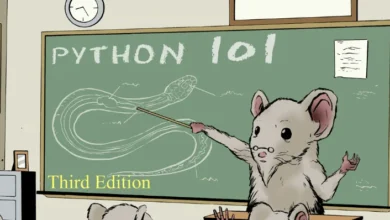
Python 101 3rd Edition Kickstarter Campaign Launches to Update Essential Programming Guide for Modern Standards

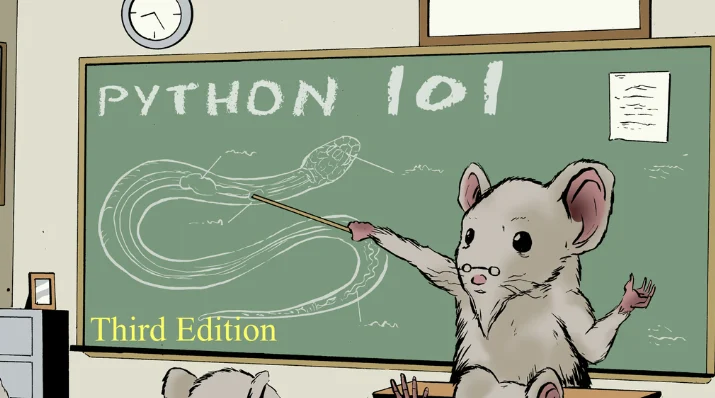
Long-time software developer, technical writer, and prominent Python educator Michael Driscoll has officially launched a crowdfunding campaign for the third edition of his widely recognized programming guide, Python 101. Hosted on the Kickstarter platform, the campaign aims to secure financial backing to cover the comprehensive writing, professional editing, modern production standards, and publication of a fully revised text. For over a decade, Driscoll’s foundational literature has served as a primary gateway for students, hobbyists, and professionals seeking to acquire practical software engineering skills. As the Python programming language continues to evolve and cement its status as a dominant force in artificial intelligence, data science, web development, and automation, this updated edition seeks to align beginner-level pedagogy with contemporary programming paradigms and ecosystem best practices.
The Main Facts of the Kickstarter Campaign
The newly announced Kickstarter campaign for Python 101 (3ridged Edition) is designed to transition the legacy teaching material into a modern reference manual. While the core philosophy of making coding approachable, practical, and engaging remains unchanged, the underlying technical content requires a thorough overhaul. Python has undergone significant functional, syntactic, and performance enhancements across recent iterations, rendering older instructional materials partially obsolete or misaligned with current industry standards.
The campaign funds will be allocated toward several vital publishing milestones. These include dedicated writing time to restructure learning modules, professional technical editing to ensure code accuracy across multiple operating systems, layout and graphic design for both digital and physical formats, and administrative distribution costs. By turning to crowdfunding, Driscoll aims to maintain creative independence while delivering a high-quality educational asset directly supported by the developer community. Backers of the project are offered a tiered system of rewards, ranging from digital PDF and EPUB copies of the finished book to physical softcover editions, exclusive code repositories, and supplementary learning modules designed to accelerate the onboarding process for novice programmers.
Background Context and the Evolution of Python
To understand the necessity of a third edition, one must examine the rapid and continuous evolution of the Python programming language. Created by Guido van Rossum and first released in 1991, Python was designed with a strong emphasis on code readability and clean syntax. Over the past fifteen years, it has transformed from a niche scripting tool into one of the most widely adopted programming languages in the world, regularly topping indexes maintained by organizations such as the TIOBE Company and IEEE Spectrum.
The release of Python 3 in late 2008 marked a major turning point, though widespread industry migration took nearly a decade. Since the transition to the Python 3 ecosystem, the language core team has maintained a rigorous annual release cycle, introducing incremental features designed to optimize performance, enhance security, and improve developer ergonomics. Innovations such as structural pattern matching (introduced in Python 3.10), precise type hinting enhancements, improved error messages, and asynchronous programming optimizations have fundamentally changed how professional software is written in Python.
When earlier editions of beginner books were written, many of these modern features were either non-existent or considered advanced concepts reserved for senior engineers. Consequently, introductory books risk teaching outdated idioms—such as legacy string formatting or inefficient data handling—that beginners must later unlearn. The third edition of Python 101 seeks to address this pedagogical lag by embedding modern best practices directly into the foundational chapters, ensuring that readers build correct habits from their very first line of code.
Chronology of the Python 101 Legacy
The trajectory of Michael Driscoll’s publishing career mirrors the broader democratization of programming education over the last two decades. Driscoll, known within the Python community for his extensive blogging at The Mouse Vs. The Python and his contributions to desktop application development libraries like wxPython, initially identified a gap in the literature for absolute beginners who found dense academic textbooks intimidating.
The original conception of Python 101 focused on stripping away unnecessary computer science jargon to deliver actionable programming knowledge. Over the years, the project expanded through successive revisions, adapting to the shifts from Python 2 to Python 3 and incorporating feedback from thousands of readers, educators, and self-taught developers. The decision to pursue a third edition via Kickstarter follows a proven industry trend where technical authors bypass traditional legacy publishing houses to engage directly with their readership. This direct-to-consumer model ensures that the final product accurately reflects the needs of contemporary learners without being constrained by corporate publishing timelines or restrictive pricing structures.
Target Audience and Accessibility in Modern Programming
A central tenet of the Python 101 curriculum is its low barrier to entry. The forthcoming third edition is meticulously tailored for a diverse demographic of learners who share a common objective: acquiring functional programming literacy without getting bogged down in theoretical abstractions.
The target audience encompasses several distinct groups:
- Complete beginners who have never written a line of code and are looking for a gentle, structured introduction to computational thinking.
- High school and university students seeking a reliable supplementary text for computer science coursework or independent study.
- Working professionals in fields such as finance, marketing, biology, and administrative operations who need to automate repetitive tasks and analyze data efficiently.
- Career switchers aiming to transition into software engineering, data analytics, or machine learning engineering roles.
By assuming zero prior programming knowledge, the text bridges the gap between digital literacy and technical competency. The pedagogical approach emphasizes hands-on examples, clear explanations of common error messages, and practical projects that reinforce core concepts such as control flow, data structures, object-oriented programming, and file input/output operations.
Implications and Broader Impact on Tech Education
The launch of this crowdfunding campaign arrives at a critical juncture in the technology sector. As the demand for technical skills outpaces the capacity of traditional educational institutions, self-directed learning and alternative credentialing have become primary pathways for workforce entry. Python, due to its readable syntax and vast library ecosystem, remains the undisputed lingua franca for emerging technologies, including generative artificial intelligence, data science, and cloud automation.
High-quality introductory literature plays a disproportionate role in shaping the diversity and accessibility of the tech industry. When instructional materials are clear, affordable, and practically focused, they lower the psychological and financial hurdles associated with entering the software engineering field. By funding projects like the third edition of Python 101, the developer community actively contributes to the pipeline of future technologists.
Furthermore, the crowdfunding model provides valuable market validation for technical authors. It demonstrates that there is sustained, organic demand for curated, human-authored educational content in an era increasingly saturated by automated tutorials and generative AI code generation tools. While artificial intelligence tools can generate code snippets, they frequently lack the pedagogical sequencing, conceptual scaffolding, and contextual empathy found in a well-structured instructional book written by an experienced educator.
Looking Forward and Project Roadmap
As the Kickstarter campaign progresses, Michael Driscoll plans to maintain transparent communication with all backers through regular project updates, draft previews, and milestone announcements. The timeline for the release involves a structured phase of content writing and peer review, followed by layout formatting and distribution of digital assets, with physical book manufacturing scheduled to follow shortly thereafter.
For aspiring programmers, educators, and enterprise teams looking to support independent technical writing, the Python 101 third edition campaign offers an opportunity to invest in the longevity and clarity of programming education. By updating this essential resource, the project ensures that the next generation of software developers and automation specialists will have access to accurate, modern, and engaging foundational training.