The Evolution of the AI-Integrated Design Workflow
The rapid maturation of artificial intelligence has fundamentally altered the landscape of digital product development. Over the past twenty-four months, the industry has witnessed a shift from simple text-based prompting to complex agentic systems that can interpret design intent, generate code, and maintain design system consistency. However, despite the proliferation of AI-assisted tools, many professional teams report a "implementation gap." While the theoretical potential of AI is well-documented, the day-to-day reality often involves disjointed workflows, poor documentation, and a lack of standardized patterns.
The AI 2027 Conference addresses this gap by prioritizing "showing over telling." Rather than hosting high-level theoretical panels, the event organizers have curated a curriculum centered on technical fluency. The session schedule covers the spectrum of modern design challenges, including the integration of Figma with Model Context Protocol (MCP) standards, the prototyping of AI-native functionality, and the creation of design systems that are inherently "AI-ready." By examining real-world case studies, the conference aims to provide attendees with a roadmap for 2027 that emphasizes utility, efficiency, and architectural stability.
Chronology of the Event and Strategic Schedule
The conference is structured as a concentrated, high-intensity half-day event. Attendees are advised to account for timezone variations, as the live broadcast begins on December 1, 2026. The morning session commences at 8:10 AM with a foundational look at designing AI experiences, followed by an immediate deep dive into the mechanics of prototyping AI functionality at 8:45 AM.
A significant portion of the event is dedicated to the relationship between AI and documentation, a persistent pain point for engineering teams. At 9:20 AM, the session titled "Nobody Will Read Your Documentation" will examine why traditional documentation strategies are failing in an era where AI agents act as the primary consumers of technical specifications. This is followed at 9:40 AM by a technical exploration of Figma and MCPs—a critical session for those looking to bridge the gap between design software and large language models (LLMs). The final technical sessions, occurring at 10:15 AM and 10:50 AM, will synthesize these concepts into actionable, real-world workflows that teams can implement immediately upon returning to their professional environments.
Expert Insights and Industry Leadership
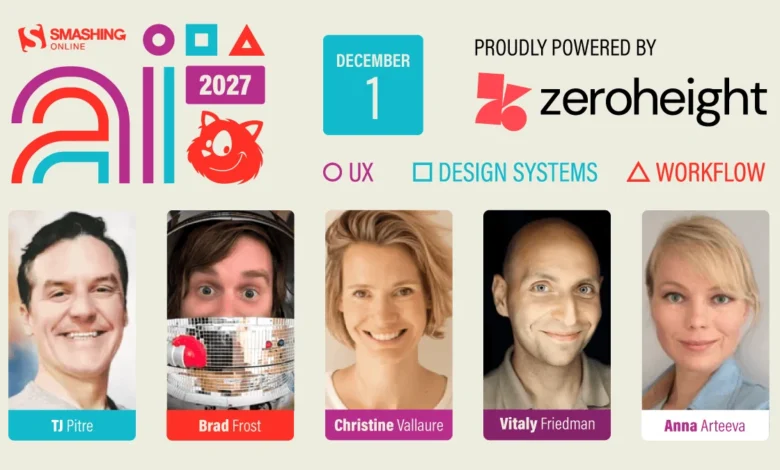
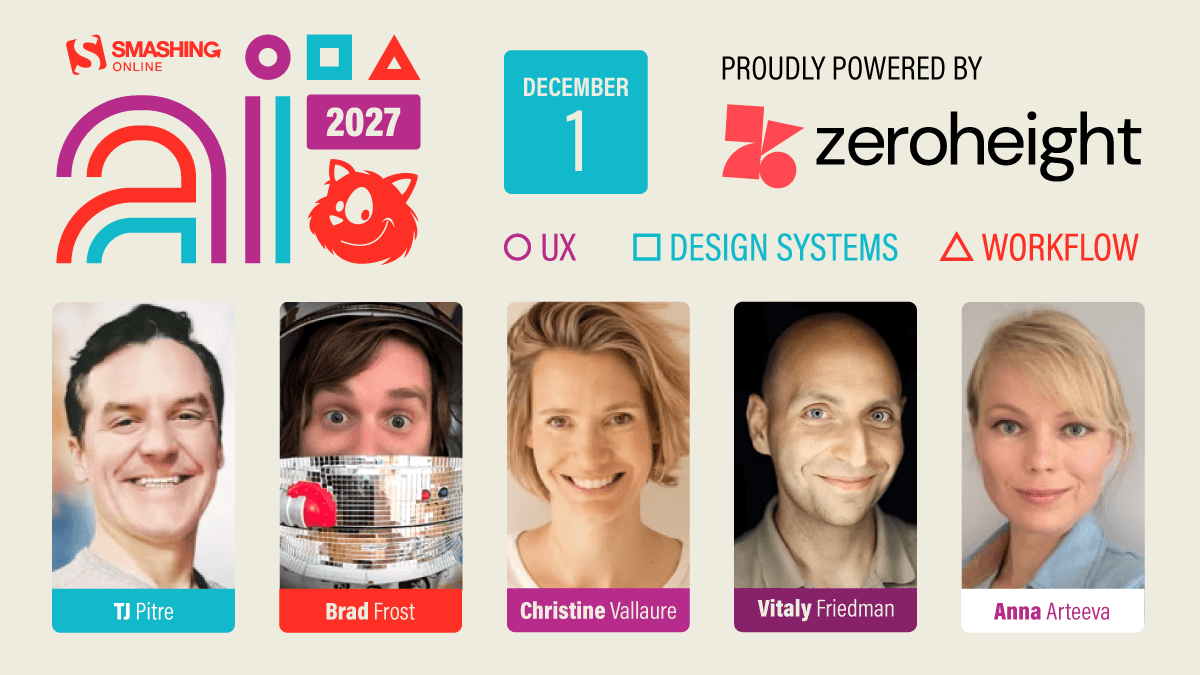
The speaker lineup for the AI 2027 Conference represents a cross-section of the most influential voices in the design systems and front-end development communities. Vitaly Friedman, the host of the event and a seasoned authority on UX performance, emphasizes that the conference was born out of a necessity to filter the overwhelming noise surrounding AI. His perspective aligns with a growing consensus among lead designers: the industry has moved past the "discovery" phase of AI and is now firmly in the "utility" phase.
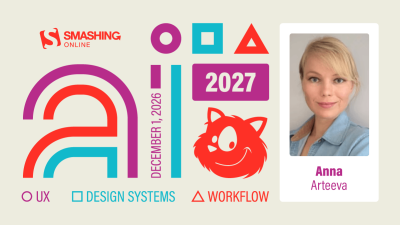
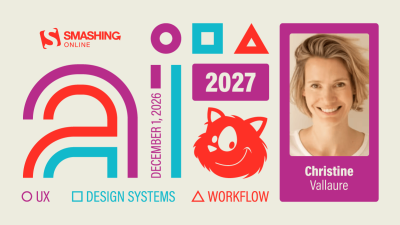
Supporting this curriculum are industry experts who bridge the divide between design and engineering. Anna Arteeva, a product design leader with a focus on agentic coding, brings a unique perspective on how to move past one-shot prototypes toward robust, production-ready AI integration. Christine Vallaure, founder of Moonlearning.io, continues her work in demystifying the developer-designer divide, providing the "too-detailed" technical insights that often define successful implementation.
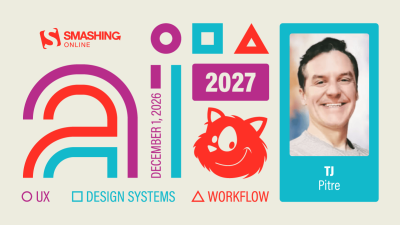
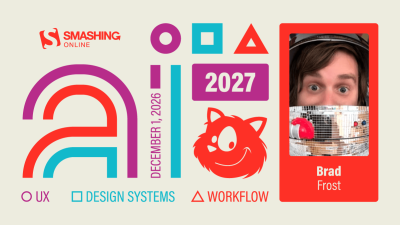
Additionally, the presence of TJ Pitre, Product Architect for AI and Design Systems at Figma, provides an institutional view of where the world’s most popular design tool is heading. His inclusion suggests that the conference will feature high-level discussions on the future of design-to-code pipelines. The involvement of Brad Frost, a pioneer of the Atomic Design methodology, underscores the importance of modularity in an AI-driven age. Frost’s ongoing efforts to create educational resources for AI and design systems ensure that the conference remains grounded in established design principles rather than fleeing toward unproven fads.
Partner Collaboration and Institutional Support
A notable feature of the AI 2027 Conference is the direct collaboration with zeroheight, a platform specifically designed for managing design system documentation. The partnership highlights a shift in how organizations view documentation; in the age of AI, documentation is no longer just for human consumption. It is the training data and context layer that allows AI agents to function accurately.
Luke Murphy, Principal Design Advocate at zeroheight, will lead a specific segment regarding the evolution of documentation. His session is expected to address the "coding agent" requirement, specifically exploring how technical documentation must be structured so that AI models can interpret it without hallucinating or misapplying design tokens. This represents a major shift in the industry: treating documentation as a form of "system API" rather than static text.
Implications for the Future of Work
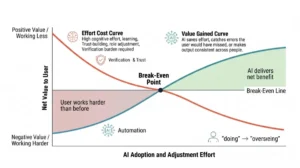
The broader impact of the technologies discussed at the conference cannot be overstated. As AI agents begin to handle routine tasks—such as updating component libraries, generating responsive layouts based on design tokens, and auditing code for accessibility compliance—the role of the human designer is expected to transition toward that of an "architect" or "curator."
The data suggests that teams utilizing integrated AI workflows can see a significant reduction in the time required for design-to-code handoffs. However, the risk of "automated technical debt" remains high. If design systems are not properly structured for AI interaction, the speed of automated generation can lead to a rapid accumulation of inconsistent code and fragmented design patterns. The AI 2027 Conference serves as a critical intervention in this process, providing the necessary guidance to ensure that as design teams scale their reliance on AI, they do so with a foundation of order rather than chaos.
The conference also serves as a barometer for the health of the design industry. By focusing on "agentic UX patterns," the organizers are signaling that the next wave of innovation will not just be about how we build products, but how users interact with them. Designing for AI-driven interfaces—where the system might make autonomous decisions—requires a new set of UX patterns that prioritize transparency, user agency, and error handling.
Conclusion and Participation Details
For practitioners aiming to remain relevant in the evolving digital landscape, the AI 2027 Conference provides an opportunity to consolidate their knowledge and learn from those currently at the bleeding edge of the industry. The combination of expert-led sessions, practical demonstrations, and moderated breakout rooms allows for a level of engagement that is rarely achieved in broader, less specialized industry gatherings.
As the December 1, 2026, date approaches, the emphasis remains on the practical application of technology. By focusing on the specific "small things that are easy to miss," the conference aims to minimize the learning curve for those struggling to incorporate AI into their daily professional life. Whether through optimizing Figma workflows, refining design system documentation, or learning to build agentic coding assistants, the event is positioned to be a definitive resource for designers and developers alike. Interested participants are encouraged to verify their local time zones and secure their registrations early to participate in the moderated breakout sessions, which are expected to be a highlight for those seeking personalized advice on their specific workflow challenges. The event stands as a clear signal that the future of design is not about replacing the human element, but about empowering it through the intelligent application of machine-assisted systems.