Microsoft launches unified harness strategy and Copilot harness in Foundry Agent Service to streamline autonomous AI development

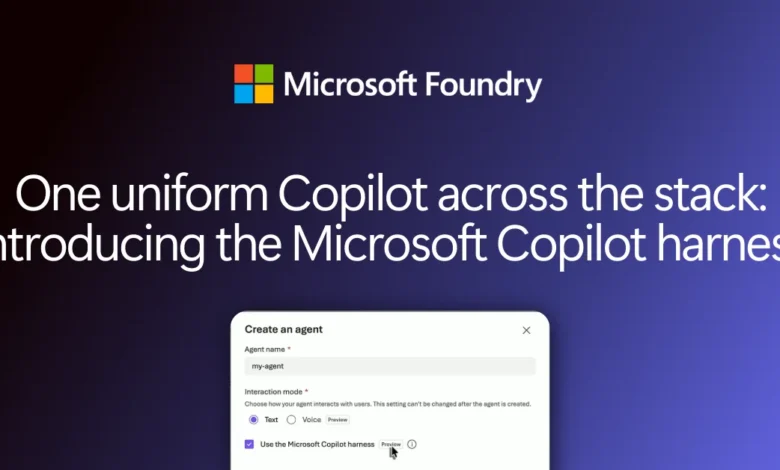
The evolution of artificial intelligence from static chatbots to autonomous agents capable of reasoning and task execution has necessitated a shift in infrastructure. Recognizing that developers frequently replicate the same foundational engineering—such as managing model-tool orchestration, context persistence, and execution environments—Microsoft has officially introduced a unified harness strategy within its Microsoft Foundry platform. This strategy, highlighted by the public preview of the Microsoft Copilot harness in Foundry Agent Service, aims to provide a standardized, fully managed execution layer for complex, long-running AI workflows.
By decoupling the "reasoning" capabilities of a large language model from the "execution" environment, Microsoft is attempting to lower the barrier to entry for enterprise-grade agentic applications. This move reflects a broader industry trend where the focus of software engineering is moving away from building bespoke infrastructure for every AI project and toward leveraging managed platforms that handle the complexities of state, security, and persistence.
The Architecture of Modern Agentic Workflows
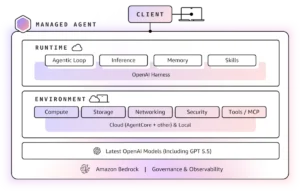
A model’s ability to reason is only as potent as the environment in which it operates. Historically, developers tasked with building autonomous agents had to construct a custom loop to handle several critical, non-differentiated components: coordinating model calls with tool executions, maintaining a coherent working memory or context, managing file uploads, and determining when a task requires multi-step recursive reasoning.
The Microsoft Copilot harness serves as an opinionated, managed system designed to handle these mechanics. By utilizing this framework, developers define their agents declaratively, focusing their efforts on the "expertise" of the agent—its specific knowledge base, operational procedures, and specialized tools—while delegating the "plumbing" of the execution loop and sandboxed runtime to Microsoft.
This approach is expected to reduce the time-to-market for complex applications. By providing a pre-built execution harness, teams can avoid the common pitfall of "reinventing the wheel," allowing engineers to focus on business-specific logic, evaluation, and safety guardrails.
A Strategic Shift Toward Standardized Execution
The launch of the Microsoft Copilot harness follows a steady evolution in Microsoft’s AI infrastructure offerings. Since the inception of Azure AI and the later introduction of Microsoft Foundry, the company has sought to create a cohesive ecosystem for developers. The current strategy rests on three distinct tiers of abstraction, allowing developers to choose the level of control that best suits their operational needs.
- Prompt Agents (Basic): For simpler tasks where standard instructions and direct tool access suffice.
- Prompt Agents (Copilot Harness): For complex, long-running tasks requiring managed execution, file handling, and sophisticated tool coordination.
- Hosted Agents: For teams requiring full control over the framework, custom middleware, specific dependencies, and unique runtime behaviors.
This tiered structure is a direct response to the diverse requirements of the enterprise sector. While some organizations require the "black box" simplicity of a managed harness to accelerate development, others—such as financial institutions or healthcare providers—may require granular control over every aspect of the execution environment to meet regulatory and performance standards.
Ensuring Resilience in Long-Running Operations
One of the most significant hurdles in deploying AI agents for real-world business processes is the inherent fragility of long-running workflows. A process that requires several hours, or even days, to complete is prone to transient network failures, model timeouts, or compute interruptions.
In tandem with the Copilot harness announcement, Microsoft has reached general availability (GA) for "long-running resilience for hosted agents." This feature addresses the volatility of distributed systems. When an interruption occurs, the platform automatically detects the failure and initiates a recovery protocol. The agent does not simply restart from the beginning; instead, it leverages checkpoints saved by the developer, allowing the system to resume from the last known good state.
This capability is essential for workflows such as large-scale data analysis, multi-stage procurement processes, or complex reporting, where starting from scratch after a failure would be economically or operationally unfeasible. It shifts the burden of fault tolerance from the application developer to the platform, provided the developer implements the necessary logic to save intermediate state.
Industry Perspectives and Practical Applications
The adoption of the Copilot harness in Foundry Agent Service has already begun among early partners. Chris Evans, Chief Technology Officer at Confluence Technologies, noted that the platform allowed his team to transition from concept to functional solution in less than a week. "That speed will help us bring our vision of AI that runs within and alongside our products to market faster," Evans stated, emphasizing the efficiency gains of offloading infrastructure management.
Similarly, Fashable CEO Orlando Ribas Fernandes highlighted the potential for the harness to bridge the gap between AI-driven discovery and human-controlled decision-making. By using the harness to create "tech packs" from institutional knowledge, Fashable is able to scale sourcing and negotiation workflows while maintaining strict human oversight. This "human-in-the-loop" requirement is a critical component of the platform’s design, ensuring that while agents handle the data-heavy lifting, commercially binding decisions remain under human control.
Implications for the AI Ecosystem
The introduction of these tools suggests a shift in the role of the AI engineer. As platforms like Microsoft Foundry continue to abstract away the mechanics of agent orchestration, the "AI developer" role will increasingly resemble a role in domain expertise and systems integration.
Furthermore, the pricing model introduced with the Copilot harness—which moves to a consumption-based structure in December 2026—indicates that Microsoft views this as a foundational utility. By billing for vCPU-hours and GiB-hours of sandbox compute, Microsoft is aligning the costs of agent execution with standard cloud computing metrics, making it easier for financial departments to forecast and manage AI spending.
However, the reliance on an "opinionated" harness comes with trade-offs. Developers adopting the Microsoft Copilot harness are effectively committing to an architecture managed by Microsoft. For organizations with highly specific, non-standard runtime requirements, the "Hosted Agents" path remains the necessary alternative. The choice between these paths is no longer just a technical one; it is a strategic decision regarding the level of operational autonomy an organization wishes to retain versus the speed of innovation it hopes to achieve.
Technical Implementation and Deployment
The flexibility of the new tooling is perhaps best illustrated by its support for the Azure Developer CLI (azd). By defining agent skills and instructions in standard formats (such as YAML and Markdown), developers can maintain their agent configurations alongside their application code. This "infrastructure-as-code" approach ensures that agent definitions are version-controlled, reproducible, and easily integrated into existing CI/CD pipelines.
The example provided by Microsoft—a research-brief agent—demonstrates how an agent can be configured to use specific tools (web search and code interpreters) while adhering to strict behavioral guidelines. By clearly delineating between "data" (retrieved content) and "instructions" (system prompts), developers can mitigate the risks of prompt injection and ensure that the agent remains within its intended operational bounds.
Looking Ahead
As of the current public preview, the platform is undergoing a period of rigorous testing. Microsoft has noted that existing agents are currently static and cannot be migrated to the new harness post-creation, a limitation that likely reflects the deep integration between the harness and the underlying execution environment.
The successful implementation of this strategy will depend on how well developers adapt to the "managed" paradigm. If the platform proves reliable in handling the complexities of stateful, long-running agentic workflows, it will likely set a new standard for enterprise AI development. For now, the introduction of the Copilot harness marks a pivot from the "experimental" phase of agent development to a more disciplined, enterprise-ready approach where scale, reliability, and human accountability are prioritized alongside the raw reasoning power of modern large language models.
Related posts: