Amazon Web Services Unveils Bedrock Managed Agents Powered by OpenAI Integration and Details Major Product Lifecycle Updates

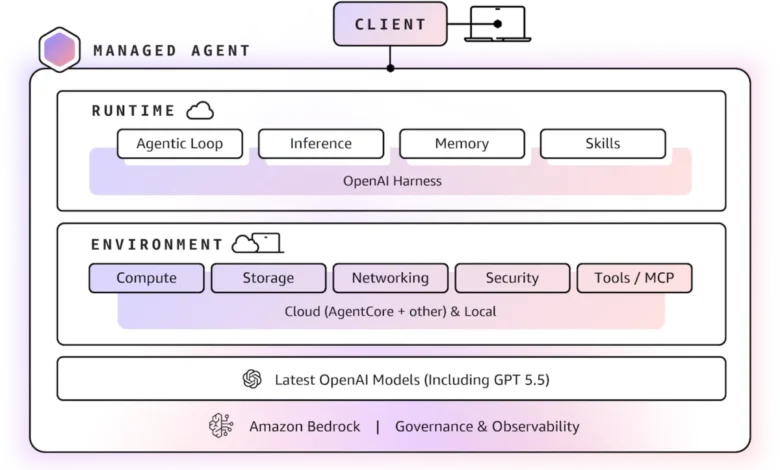
Amazon Web Services (AWS), the cloud computing subsidiary of e-commerce and technology giant Amazon.com, has officially announced the public preview of Amazon Bedrock Managed Agents powered by OpenAI. This significant release introduces a customized version of OpenAI’s Agents API that has been engineered to run natively within the AWS ecosystem. The strategic integration aims to provide enterprise customers with the ability to construct, deploy, and scale advanced artificial intelligence agents optimized specifically for OpenAI models while leveraging established AWS infrastructure, security identities, granular permissions, and robust governance frameworks.
The announcement represents a notable convergence of leading generative artificial intelligence technologies and enterprise-grade cloud management. By blending OpenAI’s sophisticated model architecture with AWS-native security and operational controls, organizations can streamline the development of complex automated workflows without sacrificing compliance or data sovereignty.
Background Context of the AWS and OpenAI Integration
The generative artificial intelligence landscape has evolved rapidly over recent years, transitioning from raw model experimentation to practical, agentic workflows capable of autonomous multi-step reasoning and task execution. Historically, enterprises utilizing advanced foundational models from various AI providers often faced architectural friction when attempting to integrate these external capabilities into secure, highly regulated cloud environments.
Amazon Bedrock was originally launched to simplify the deployment of high-performing foundation models through a unified API, offering customers access to models from AI21 Labs, Anthropic, Cohere, Meta, Mistral AI, Stability AI, and Amazon’s own Titan models. By incorporating optimized support for OpenAI’s agent capabilities into the Bedrock ecosystem, AWS is addressing a critical enterprise demand: the flexibility to utilize industry-leading AI tools while maintaining rigorous security postures, centralized identity management, and compliance auditing within a single cloud provider environment.
Architecture and Execution Environments
The newly introduced Amazon Bedrock Managed Agents framework offers developers and enterprise architects distinct deployment flexibility through two primary execution environments. Organizations can choose between a self-hosted compute model or the newly established Amazon Bedrock AgentCore Runtime.
The self-hosted compute option allows developers to utilize existing local development machines, custom container images, or alternative compute environments to test and run their agent logic. Conversely, the Amazon Bedrock AgentCore Runtime provides a fully managed runtime session infrastructure equipped with configurable, secure storage managed directly within the customer’s designated AWS account. This architecture ensures that sensitive data processed by the agents remains governed by the organization’s existing AWS Key Management Service (KMS) keys, Identity and Access Management (IAM) roles, and virtual private cloud (VPC) configurations.
Chronology of Recent AWS Announcements and Product Lifecycle Updates
Alongside the Bedrock Managed Agents preview, AWS outlined important updates regarding its broader product catalog, service availability, and lifecycle management timelines. These updates are designed to help enterprise customers manage their technical debt, plan long-term infrastructure migrations, and adopt modernized cloud services.
As part of the routine product lifecycle governance updates released on September 29, 2026, AWS detailed changes concerning multiple services entering maintenance phases, sunset schedules, and formal end-of-support milestones. Maintaining transparency regarding service deprecations is a critical function of enterprise cloud management, enabling corporate IT departments to audit their dependencies and transition workloads to supported alternatives well before operational disruptions can occur.

Under the updated guidelines, services transitioning into maintenance mode will no longer be accessible to new customers starting October 29, 2026. Existing users of these services are strongly encouraged by AWS engineering teams to review migration documentation and consult specialized technical support channels to identify optimal modernization paths. Furthermore, specific legacy features that have reached their official end-of-support dates as of September 29, 2026, have been formally deprecated, prompting mandatory transitions for remaining legacy deployments.
Frontier Model Expansion on Amazon Bedrock
In addition to agentic capabilities, AWS continues to broaden the spectrum of foundation models available on the Amazon Bedrock platform. The ongoing expansion reflects a multi-model strategy that ensures enterprises are not locked into a single artificial intelligence provider. By continuously onboarding new frontier models, AWS enables data scientists and machine learning engineers to benchmark different models for specific enterprise use cases, ranging from complex financial modeling and customer service automation to software code generation and automated document synthesis.
Industry analysts note that a multi-model approach is rapidly becoming the gold standard for enterprise artificial intelligence adoption. Different models exhibit distinct strengths in reasoning latency, token efficiency, domain-specific accuracy, and cost structures. By expanding model choices inside a unified managed service like Bedrock, AWS minimizes the engineering overhead traditionally associated with integrating disparate third-party APIs into enterprise applications.
Fact-Based Analysis of Enterprise Implications
The integration of OpenAI-powered managed agents within Amazon Bedrock carries significant implications for the enterprise software market. For corporate IT leaders, the announcement bridges a gap between specialized AI model capabilities and enterprise governance requirements.
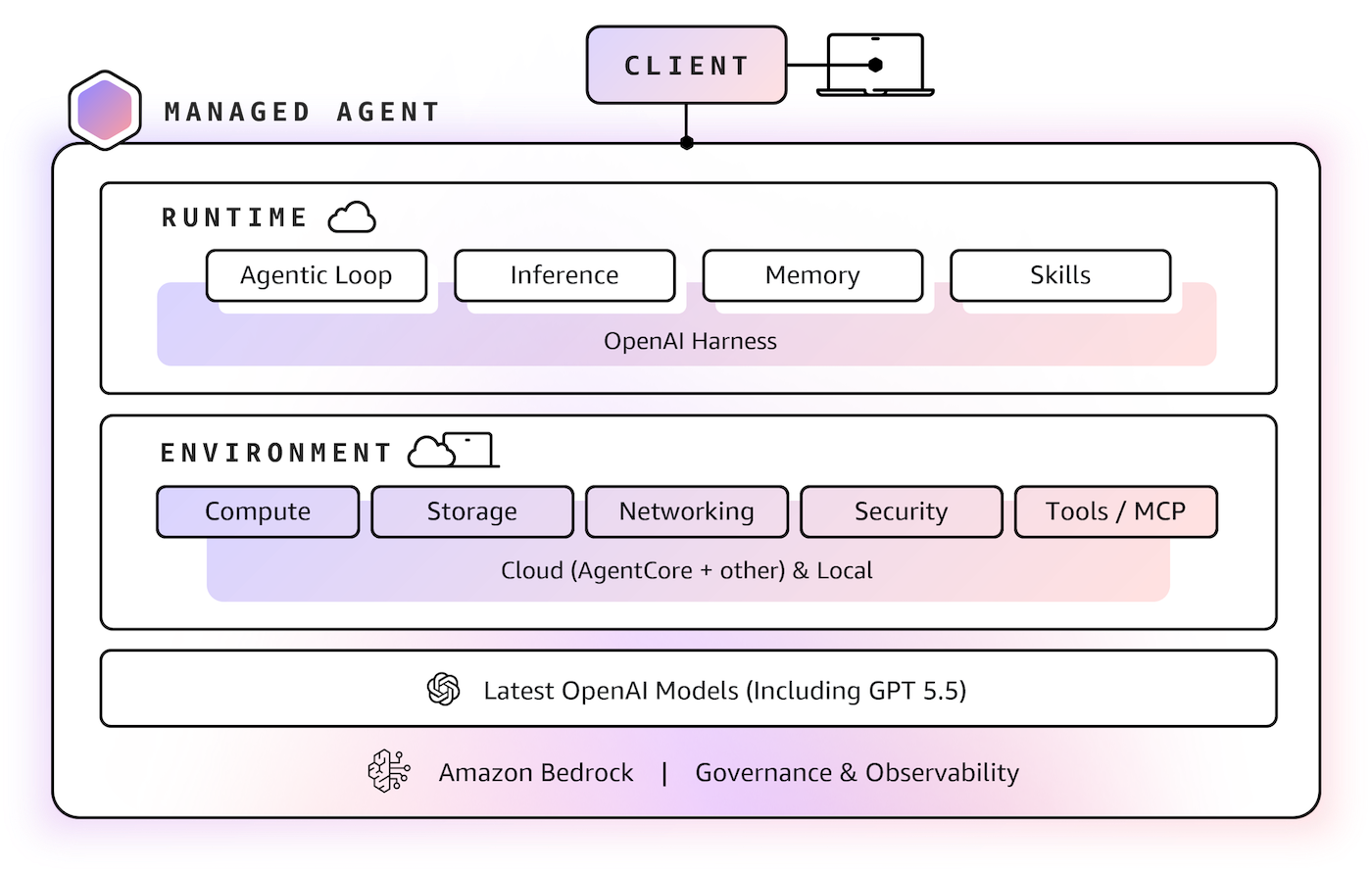
Historically, deploying third-party AI models at scale required organizations to construct custom middleware to handle authentication, logging, rate limiting, and data encryption. By embedding these controls directly into the AWS-native framework, organizations can apply standardized organizational policies—such as AWS CloudTrail auditing, AWS Config compliance monitoring, and fine-grained IAM access boundaries—directly to AI agent workflows.
Moreover, the availability of managed execution environments via the Bedrock AgentCore Runtime reduces the operational burden on internal DevOps and platform engineering teams. Rather than managing the underlying container orchestration, scaling infrastructure, and persistent session state for autonomous agents, developers can rely on AWS-managed infrastructure designed for high availability and elastic scalability.
Broader Ecosystem Engagement and Upcoming Events
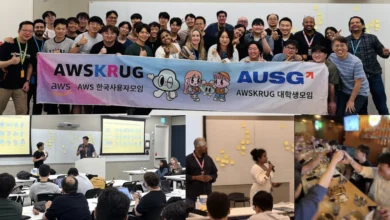
To support builders, developers, and enterprise decision-makers as they navigate these technological shifts, AWS continues to foster an active community through targeted events, educational resources, and developer forums. Upcoming gatherings, including regional AWS Community Days, specialized startup events, and the flagship annual conference, AWS re:Invent, serve as primary venues for technical deep dives, architectural workshops, and hands-on demonstrations of new platform capabilities.
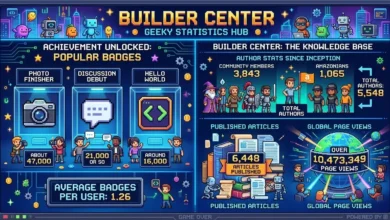
The AWS Builder Center remains a central hub for practitioners to collaborate, share reusable code solutions, and access comprehensive documentation covering advanced topics such as agentic orchestration, model fine-tuning, and cloud security architecture.
As enterprises accelerate their transition from generative AI experimentation to production-grade deployments, updates such as the public preview of Amazon Bedrock Managed Agents underscore the industry’s continuous evolution toward secure, scalable, and deeply integrated cloud-AI ecosystems. Organizations are advised to review the official Amazon Bedrock user guides and product lifecycle documentation to evaluate how these new capabilities and deprecation schedules impact their ongoing technology roadmaps.