Is the AI industry experiencing a structural correction or a permanent decline as market valuations shift and hardware demand surges


The global artificial intelligence landscape is currently navigating a period of intense volatility, characterized by a sharp divergence between software valuation and hardware infrastructure demand. While major financial reports suggest a cooling of investor enthusiasm in the AI sector—particularly within the Chinese market—the underlying physical architecture required to power these technologies continues to generate record-breaking revenues. This dichotomy between the "AI bubble" sentiment in equity markets and the sustained necessity for high-performance computing components has created a complex environment for both industry stakeholders and end-users.
Market Corrections and the Chinese AI Landscape
The perception that the AI bubble has reached a breaking point gained significant momentum following reports that Chinese AI and semiconductor stocks have shed approximately $480 billion in valuation. According to data from the Reuters news agency and the STAR 50 index, this correction has been swift and severe, with major industry players such as MetaX and Moore Threads witnessing their market capitalization drop by roughly 50% since July 2026.

Financial analysts attribute this downturn to several compounding factors. Firstly, the valuations placed on emerging AI enterprises earlier in the cycle appear to have outpaced their actual revenue-generating capabilities, leading to a classic speculative bubble contraction. Secondly, geopolitical pressures and the increasing likelihood of restrictive trade policies regarding the deployment of Chinese AI systems in foreign data centers have severely hampered investor confidence. These bans threaten to limit the global reach of domestic Chinese models, forcing a reassessment of long-term profitability for firms that were banking on international scalability.
The Hardware Paradox: SK Hynix and the Memory Shortage
Contrasting sharply with the decline in software stock valuations is the performance of the semiconductor manufacturing sector. SK Hynix, a cornerstone of the global memory market, recently announced record-breaking third-quarter financial results. The company reported an operating profit of 83.3 trillion won on a total revenue of 104.6 trillion won, achieving an extraordinary 80% profit margin.
These figures underscore a fundamental reality of the modern AI economy: while software companies may struggle to monetize their models, the hardware manufacturers providing the High Bandwidth Memory (HBM) and DDR5 RAM essential for training and inference are seeing unprecedented demand. SK Hynix leadership has signaled that this supply-demand imbalance is not a temporary spike. Projections suggest that the global memory shortage will likely persist through 2030, with significant portions of production capacity for 2027 and 2028 already secured by long-term contracts. For the consumer market, this implies that the hope for a rapid decrease in the price of high-performance memory components remains distant.

Strategic Realignment in Western Tech Giants
In the West, the narrative is one of strategic consolidation. Major technology firms are shifting away from the "sprint" mentality that characterized the initial generative AI boom toward a more sustainable, efficiency-focused operational model. A prime example is Amazon, which has reportedly moved the majority of its Nova model operations into a "keep the lights on" maintenance mode. This shift indicates a move toward capital allocation efficiency, where resources are concentrated on a single, high-potential frontier model rather than the wide-scale, experimental deployment of numerous competing iterations. This "pruning" of AI divisions is consistent with broader industry trends, where the initial "gold rush" phase is being replaced by a focus on long-term viability and return on investment.
Emerging Trends in Localized and Open-Weight AI
Amidst the turbulence of Big Tech, the open-source and local-first AI communities continue to ship innovative tools that prioritize user privacy and computational efficiency. The development of tools like LokalBot, which enables local transcription and meeting analysis via llama.cpp, highlights a growing preference for privacy-centric AI that operates entirely on local hardware. Similarly, OpenNoteTaker leverages WebAssembly to perform audio processing within a browser tab, ensuring that sensitive data never leaves the user’s device.
The release of Subtitld 26.10, a GPL-3.0 licensed subtitle editor, further illustrates the advancement of localized AI tools. By integrating whisper.cpp and Vosk for speech recognition alongside voice synthesizers like Piper and Kokoro, developers are creating robust, offline-capable workflows that bypass the need for expensive, centralized cloud services.

The Evolution of Development Frameworks and Git Forges
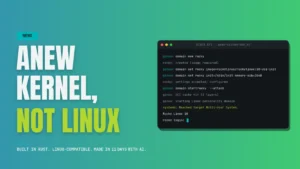
The integration of AI into the software development lifecycle remains a major area of innovation. Gregory Kurtzer, known for his work with CentOS and Rocky Linux, recently unveiled Ginux, an experimental kernel written primarily in Rust. Notably, the architecture was developed with the assistance of a Codex agent that generated approximately 139,000 lines of code, serving as a significant proof-of-concept for AI-augmented systems programming.
Simultaneously, the launch of Entire, a platform spearheaded by former GitHub CEO Thomas Dohmke, represents an evolution in how developers and AI agents collaborate. By treating pull requests as "Trails" that incorporate real-time evaluation scores, the platform aims to formalize the role of AI agents within professional software engineering teams. These developments suggest that while the "bubble" in speculative AI stocks may be popping, the functional integration of AI into technical infrastructure is entering a more mature, professionalized phase.
Clarifying AI Terminology: Open Weights vs. Open Source
A critical aspect of the current discourse involves the distinction between "open weights" and "open source." As the industry matures, stakeholders are increasingly emphasizing that releasing a model’s weights—the parameters derived from training—is not synonymous with providing an open-source product.

True open source typically requires the availability of the training data, the underlying training code, and the methodology used to curate the dataset. In contrast, "open weights" allow a user to download and execute a model on their own hardware, effectively insulating them from the risk of a provider "retiring" or removing access to the service. While this provides a degree of autonomy, it leaves the user dependent on the provider for any future updates or modifications to the model’s fundamental architecture. Understanding this distinction is essential for enterprises and hobbyists alike when determining the long-term risk profile of their AI deployments.
Future Outlook and Market Implications
The coming months, including the highly anticipated release of Mistral Large 4 on October 31, will serve as a barometer for the health of the frontier model market. If these releases continue to push the boundaries of performance while simultaneously becoming more efficient to run, the industry may stabilize.
However, the divergence between the hardware and software sectors is likely to remain a central theme. While the "AI bubble" in speculative equities continues to deflate, the foundational demand for memory and compute continues to grow, bolstered by the shift toward local-first and edge-computing models. The future of AI appears less like a monolithic, centralized phenomenon and more like a fragmented ecosystem where high-end hardware remains a scarce commodity, and open-weight models become the standard for private, localized applications. As developers and businesses continue to adapt, the emphasis will undoubtedly remain on long-term efficiency and the mitigation of dependence on proprietary, cloud-hosted black-box systems.