Canonical Unveils Ubuntu 26.10 Stonking Stingray Featuring Linux Kernel 7.0 and Advanced AI Integration

The landscape of open-source computing is set for a significant evolution as Canonical officially announces the development and release schedule for Ubuntu 26.10, codenamed "Stonking Stingray." Scheduled for a global rollout on October 15, 2026, this interim release marks a critical juncture in the Ubuntu roadmap, serving as a high-velocity testing ground for technologies destined for the 2028 Long Term Support (LTS) milestone. While LTS versions such as the preceding "Resolute Raccoon" (26.04) focus on enterprise-grade stability and five-to-twelve-year support cycles, the "Stonking Stingray" is designed to push the boundaries of the Linux desktop through aggressive kernel updates, a transition toward memory-safe system tools, and the debut of local-first artificial intelligence.
The choice of codename follows Canonical’s traditional alphabetical naming convention. "Stonking," a British colloquialism for something impressively large or excellent, paired with "Stingray," a creature known for its steady, seafloor-dwelling nature, reflects a release that aims to be both substantial in features and grounded in architectural refinement. As an interim version, Ubuntu 26.10 will receive nine months of security updates and maintenance, concluding its lifecycle in July 2027. This brief window allows Canonical to gather telemetry and user feedback on radical changes—such as a redesigned installer and a total overhaul of the system’s messaging bus—before these features are "baked in" for the broader, more conservative enterprise user base.
A Strategic Timeline for Development
The journey toward the October launch is governed by a rigorous development cycle intended to balance innovation with system integrity. Canonical has laid out a clear roadmap for developers and early adopters to track the progress of the Stonking Stingray. The cycle officially intensified in early July 2026, leading into several critical milestones:
- July 2, 2026: Initial Ubuntu Testing Week begins, allowing the community to identify early regressions in the development snapshots.
- August 20, 2026: Feature Freeze. At this stage, no new major features are added to the release, shifting the focus entirely to bug fixes and stability.
- August 27, 2026: Second Ubuntu Testing Week.
- September 24, 2026: Beta Release. This provides the first look at a near-final version of the operating system for the general public.
- October 1, 2026: Kernel Freeze. The specific version of the Linux kernel is locked in to ensure hardware compatibility is finalized.
- October 8, 2026: Release Candidate. The final polish phase.
- October 15, 2026: Final Release of Ubuntu 26.10.
This structured cadence is essential for an interim release, as it allows Canonical’s engineering teams to manage the integration of upstream projects like GNOME and the Linux kernel while maintaining the distribution’s reputation for reliability.
Revolutionizing the Installation and Onboarding Experience
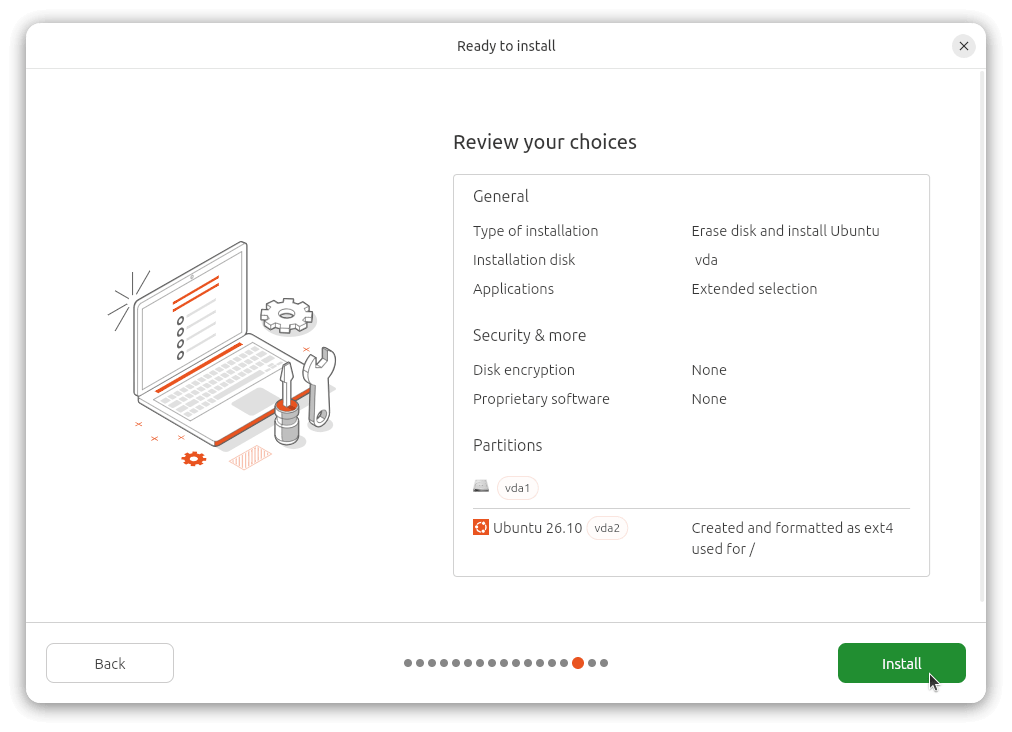
One of the most visible changes in Ubuntu 26.10 is a comprehensive redesign of the installation process. Historically, Linux installations have been perceived as daunting due to complex partitioning menus and technical jargon regarding file systems. With the Stonking Stingray, Canonical is introducing a "safe defaults" philosophy. The new installer aims to reduce friction by hiding advanced storage configurations behind optional menus, guiding the average user through a streamlined, aesthetic workflow.

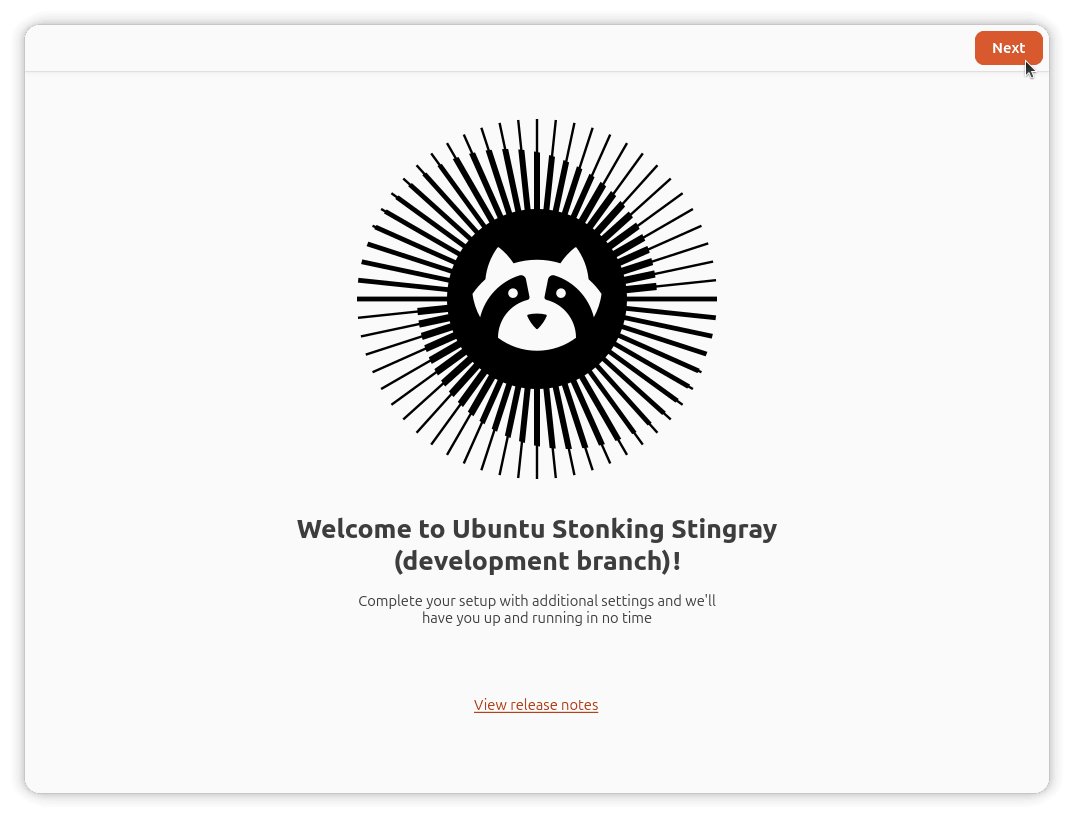
Parallel to the installer is a reimagined onboarding flow. Rather than forcing users to configure every aspect of their system—such as time zones, online accounts, and privacy settings—during the initial setup, Ubuntu 26.10 moves these choices to a "first-boot" experience. This allows the system to reach a functional desktop state faster. For enterprise environments and system administrators, Canonical has ensured that these steps remain fully automatable through existing deployment tools. Although this design work is debuting in 26.10, industry analysts view it as a multi-release project aimed at perfecting the user experience for the Ubuntu 28.04 LTS release.
Architectural Shifts: Linux Kernel 7.0 and D-Bus Broker
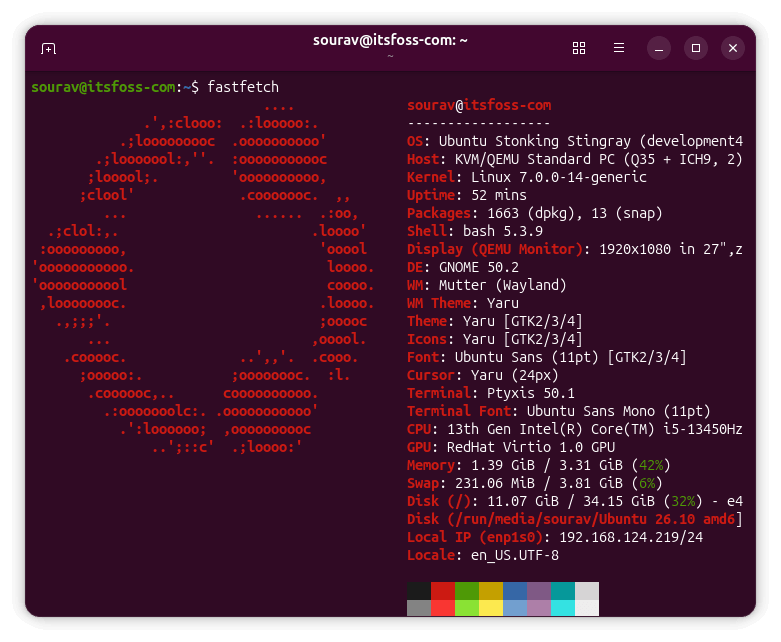
Under the hood, Ubuntu 26.10 continues Canonical’s 2024 policy of shipping the absolute latest upstream kernel available at the time of release. Early development builds have utilized Linux kernel 7.0.0-14. This move ensures that users of the latest hardware—including next-generation CPUs and GPUs from Intel, AMD, and NVIDIA—benefit from the most recent driver optimizations and power management features. The 7.x kernel series introduces significant improvements in scheduler efficiency and file system performance, particularly for NVMe storage devices.
In a move that marks the end of a twenty-year era, Ubuntu is also replacing dbus-daemon with dbus-broker. D-Bus is the essential messaging system that allows different software components to communicate, handling everything from hardware notifications to app-to-app data transfers. While dbus-daemon has served as the industry standard since 2004, it has struggled with latency and message loss under the heavy loads of modern desktop environments. The transition to dbus-broker provides an asynchronous, event-driven architecture that is fully compatible with existing D-Bus specifications but offers superior performance and reliability. This change is expected to result in a more responsive desktop feel, especially during intensive multitasking.
GNOME 51 and the Modern Desktop
The Stonking Stingray will be among the first major distributions to ship with GNOME 51. This version of the desktop environment focuses on "quality of life" improvements and UI consistency. Notable changes include:
- Improved Shell Mechanics: Screenshots now snap perfectly to monitor edges, and the overview search box has been optimized to prevent UI flickering during rapid typing.
- Audio and Power Management: The system now saves and restores monitor brightness across reboots and introduces custom, high-fidelity sound effects. A new microphone privacy icon only activates when an application is actively recording, enhancing user security.
- Application Updates: The "Software" center now proactively warns users when an application has reached its end-of-life (EOL) status. The "Calendar" app has been rebuilt for better performance and now supports direct integration with Microsoft Teams meeting links.
- Legacy Hardware Deprecation: Mutter, the GNOME window manager, is officially dropping support for legacy NVIDIA drivers, signaling a total shift toward modern Wayland-compatible driver architectures.
The Dawn of Local-First AI: Project Myna
Addressing the global trend of artificial intelligence, Canonical is implementing a strategy that prioritizes user privacy and local hardware utilization. Unlike competitors who rely on cloud-based AI processing, Ubuntu 26.10 introduces "Implicit" and "Explicit" AI features designed to run entirely on the user’s machine.
The flagship feature of this initiative is "Myna," a sophisticated speech-to-text tool. Utilizing a push-to-talk mechanic, Myna allows users to transcribe speech directly into any text field across the OS. The transcription is handled by the "Canonical Inference Snap," a sandboxed environment that uses open-weight AI models. This approach ensures that sensitive voice data never leaves the local device, a move that has been praised by privacy advocates and enterprise security experts alike.
Memory Safety and the "Rustification" of Ubuntu
In response to increasing calls from cybersecurity agencies like the CISA for "memory-safe" software, Canonical is accelerating its transition to the Rust programming language. Following its €40,000 yearly gold sponsorship of the Trifecta Tech Foundation, Canonical has begun replacing core C-based utilities with Rust equivalents.
Ubuntu 26.10 sees the introduction of ntpd-rs in the testing archives, a memory-safe rewrite of the Network Time Protocol daemon used to synchronize system clocks. This follows the successful implementation of sudo-rs in the 25.10 cycle. By moving toward Rust for critical system-level tasks, Ubuntu aims to eliminate entire classes of vulnerabilities, such as buffer overflows, that have plagued Linux utilities for decades.
Hardware Certification and Package Agnostic Design
To assist users in hardware selection, the "About" page in the System Settings now includes an "Ubuntu Certified" check. This feature queries Canonical’s extensive hardware database to confirm if the user’s specific machine has been officially validated for performance and compatibility. Results are granular, informing the user if their device is fully certified, certified for a different version, or unrecognized.
Furthermore, the Ubuntu App Center is evolving to be truly package-agnostic. After the initial controversy during the 23.10 release regarding limited support for local DEB files, the new App Center in 26.10 offers a unified interface for Snaps, DEBs, and other formats. This version focuses on consistent metadata, search results, and user ratings, ensuring that the installation source does not dictate the quality of the user experience.
Broader Impact and Industry Implications
The release of Ubuntu 26.10 "Stonking Stingray" is more than a simple incremental update; it is a declaration of intent. By integrating local AI, memory-safe system tools, and a modernized messaging bus, Canonical is positioning Ubuntu to remain the primary choice for developers and workstation users in an increasingly complex digital landscape.
While the interim nature of the release means it is not recommended for production-critical environments, the technologies it debuts will define the Linux experience for the next decade. As the "Stingray" settles into the sand of the development cycle, the feedback from its "Stonking" feature set will provide the essential data needed to polish the 28.04 LTS, ensuring that the future of Ubuntu remains both innovative and rock-solid. Early adopters are encouraged to test the snapshots in virtual environments, contributing to a release that promises to be one of the most architecturally significant in the history of the distribution.
Related posts: