GitHub Octoverse 2026 Report Reveals Record-Breaking Developer Growth Driven by AI Agents and Global Expansion

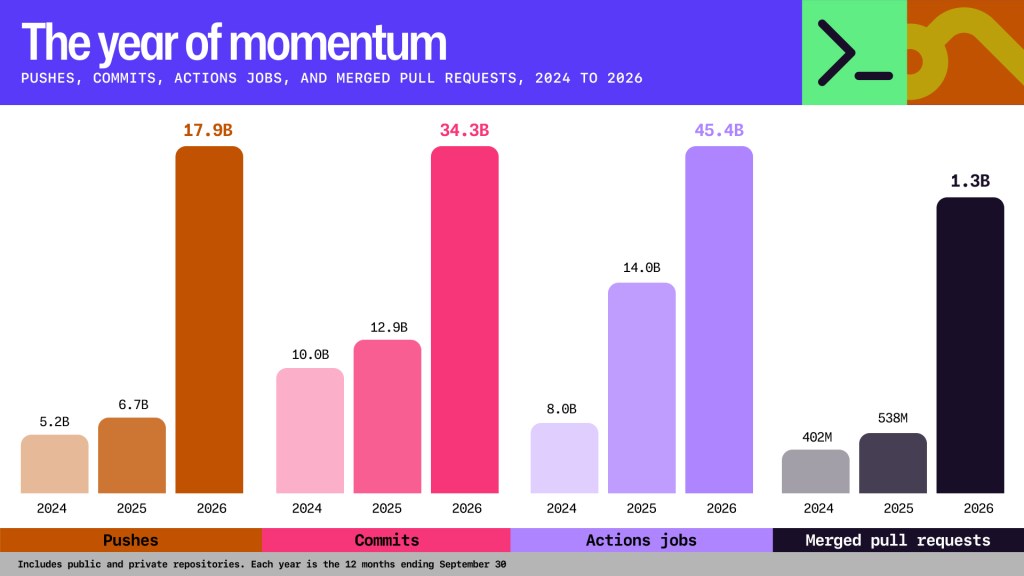
The global software development landscape experienced an unprecedented surge of activity over the past twelve months, according to the newly released 2026 Octoverse report. Developers pushed code to GitHub 17.9 billion times between September 2025 and September 2026, surpassing the combined total of the previous two years. This extraordinary milestone highlights a fundamental shift in how software is created, accelerated by the widespread adoption of artificial intelligence agents, cross-industry digitalization, and a rapidly expanding international developer base now exceeding 225 million individuals.
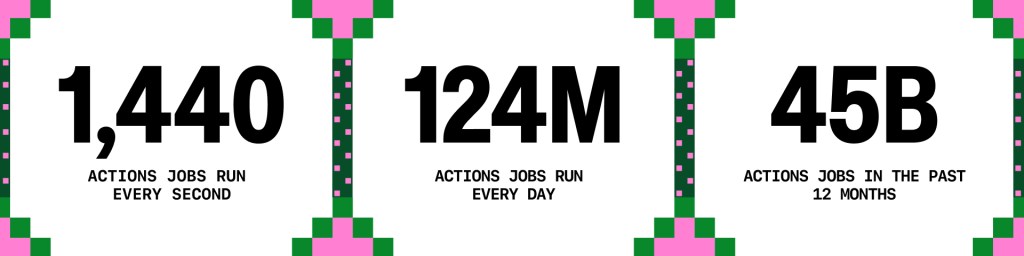
The dramatic acceleration in platform activity is underscored by key performance metrics. Total code commits climbed to 34.3 billion, representing a threefold increase compared to figures from two years prior. Simultaneously, merged pull requests surged to 1.3 billion, averaging 3.5 million daily merges. Automation also played a critical role in maintaining project velocity, with GitHub Actions executing jobs at a rate of 1,440 times every second—totaling 45.4 billion jobs over the year. Furthermore, security and dependency management scaled significantly, as developers merged over 30 million Dependabot pull requests to address known vulnerabilities and maintain software integrity.
A Chronology of Acceleration: The 2026 Inflection Point
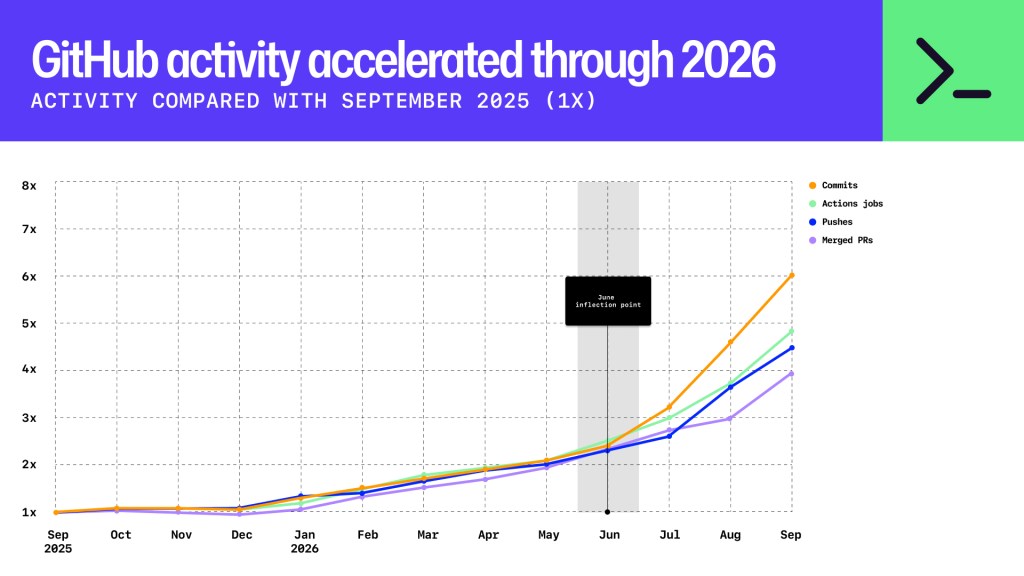
The trajectory of developer activity throughout 2026 was marked by a distinct inflection point mid-year. Platform telemetry indicates that development momentum climbed steadily from January before experiencing a sharp upward bend around June. This mid-year surge coincided with industry-wide maturation in AI tooling, specifically the transition of coding agents from experimental single-session utilities into persistent, autonomous systems capable of orchestrating complex tasks across multiple days and executing workloads in cloud environments.
Following this June shift, brand-new repositories accounted for approximately 55% of all code commits. Concurrently, seasoned developers demonstrated sustained engagement, with active contributors maintaining an average platform tenure of 36 months. The introduction of persistent agents fundamentally altered traditional workflows; repositories configured with agent workflows logged an average of eight times more commits than newly created repositories operating without them.
Global Expansion and Regional Growth Dynamics
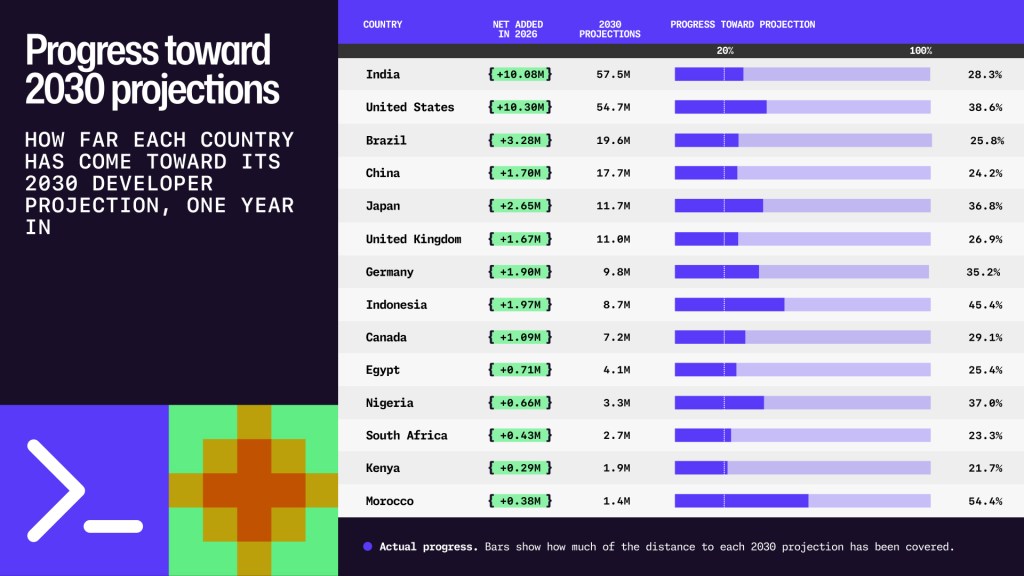
Geographic distribution of the global developer population continued to diversify rapidly in 2026. The United States and India remain the world’s largest developer communities, boasting 38.3 million and 32.0 million registered developers respectively, with each region adding over ten million new users during the year. Brazil followed closely as the third-fastest growing market, incorporating 3.28 million new developers.
This rapid expansion has outpaced previous long-term projections. One year into a five-year forecasting window established in 2025, several countries have already closed at least a fifth of the projected distance toward their 2030 population milestones. The United States has achieved 38.6% of its projected growth, while India has completed 28.3%. Regional growth drivers varied distinctly across markets:
- The Americas experienced accelerated development centered around mature fintech and digital payment ecosystems, particularly in Brazil and Canada.
- Europe, the Middle East, and Africa (EMEA) saw robust enterprise AI adoption within manufacturing sectors, alongside burgeoning startup and coding bootcamp communities in Nigeria, Kenya, and South Africa.
- The Asia-Pacific (APAC) region benefited significantly from government-backed artificial intelligence infrastructure initiatives and targeted talent development programs in nations such as Japan, South Korea, and Indonesia.
Cross-Industry Penetration and Non-Traditional Sectors
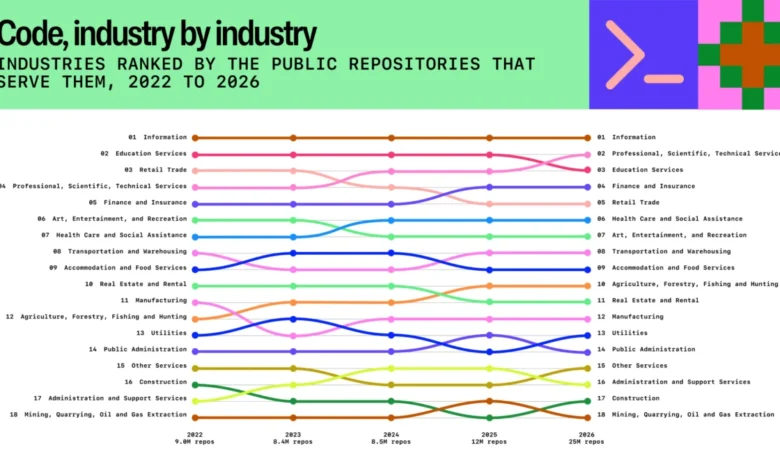
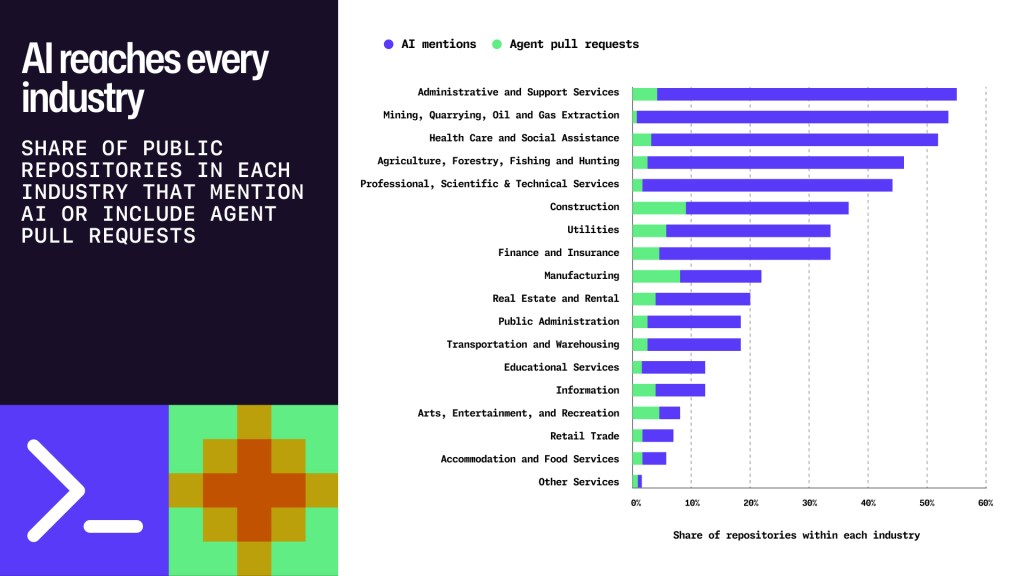
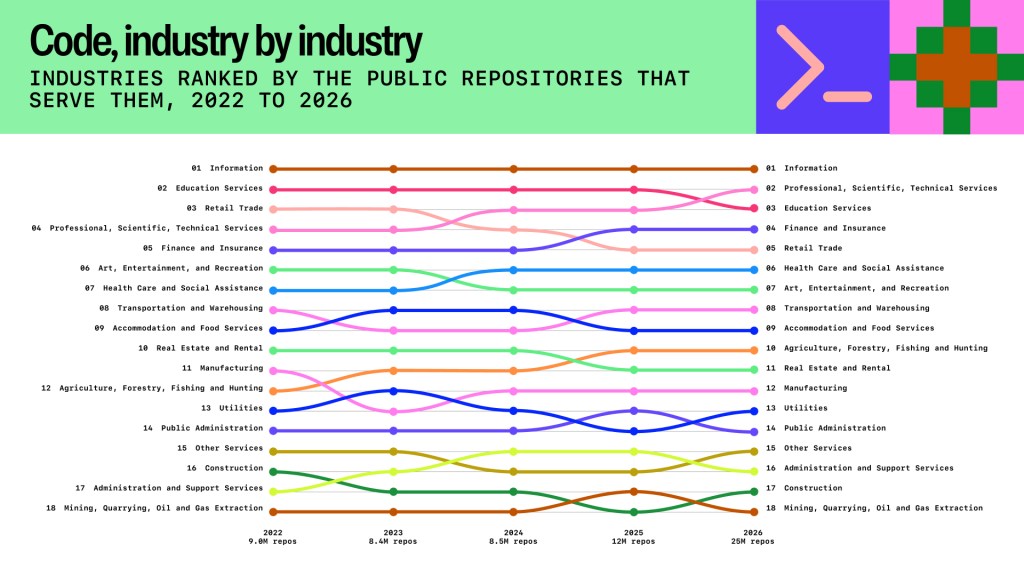
Beyond traditional software and information technology sectors, the 2026 Octoverse report highlights a profound expansion of code-driven innovation into non-traditional industries. Utilizing classification models mapped to the North American Industry Classification System (NAICS), the data demonstrates substantial growth in fields such as professional and technical services, agriculture, health care, mining, and construction.
Sectors traditionally detached from software development have increasingly integrated computational solutions. For instance, mining and administrative services exhibited high frequencies of AI mentions within public repositories, exceeding 40%. Meanwhile, the construction sector led all industries in the utilization of agent-generated pull requests at approximately 9%, followed closely by manufacturing. Professionals closest to domain-specific challenges—ranging from agricultural researchers tracking crop data to healthcare laboratories analyzing tissue scans—are increasingly leveraging AI coding assistants to build bespoke, functional software solutions tailored to their operational environments.
The Evolution of Developer Workflows and AI Model Orchestration
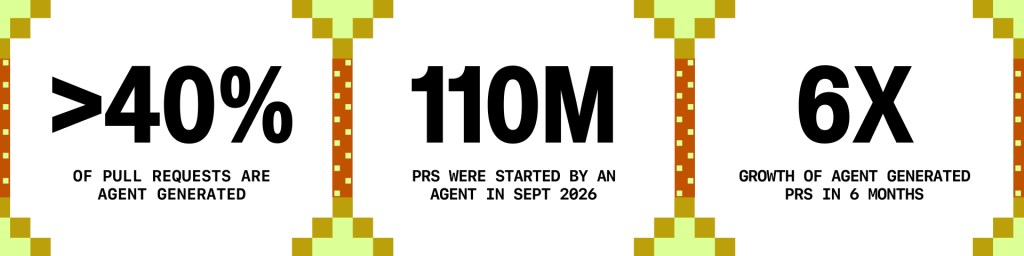
The integration of artificial intelligence into daily engineering routines has fundamentally reshaped code contribution patterns. By September 2026, more than 40% of all pull requests on GitHub initiated with an agent-generated first draft, representing 110 million pull requests in that month alone and marking a sixfold increase since March.
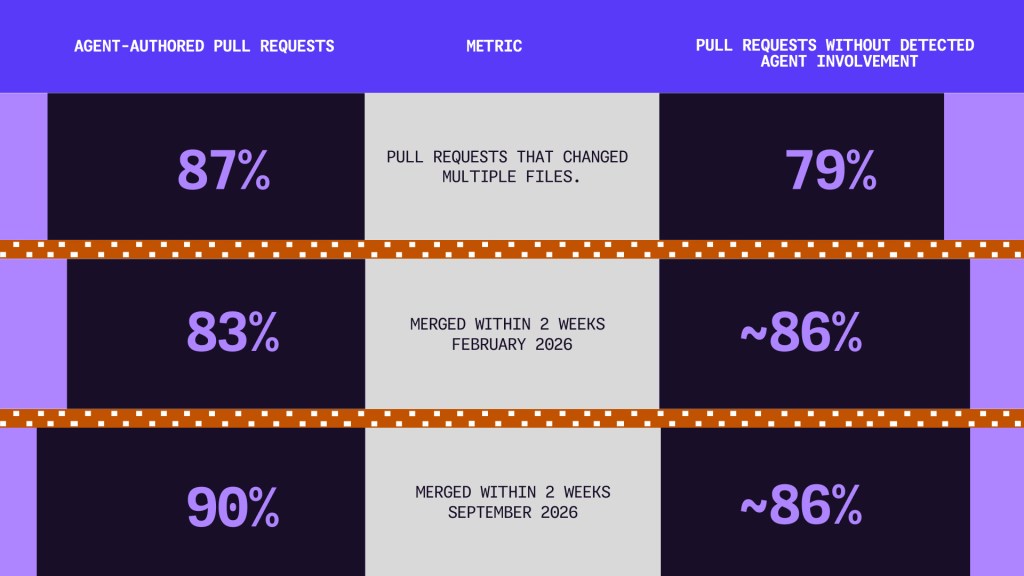
Analysis of these agent-involved workflows reveals distinct operational characteristics. Agent-authored pull requests more frequently spanned multiple files—reaching 87% compared to 79% for standard pull requests—and demonstrated high merge efficiency, with 90% successfully merged within a two-week window by September.
Furthermore, developer engagement with AI models reflected a sophisticated multi-model strategy. Rather than relying on a single system, 61% of active GitHub Copilot users utilized multiple distinct models across their working sessions. Paid subscribers leveraged an average of 47 different models during the period, balancing requirements for deep reasoning, general-purpose tasks, and fast, lightweight execution. This trend culminated in the general availability of platform features such as automated model selection and GitHub Copilot Fusion, which dynamically orchestrate models according to the specific demands of each development phase.
Programming Language Trends and Open Source Ecosystems
In the domain of programming languages, TypeScript maintained its position as the most widely used language by monthly active contributors, followed by Python and JavaScript. TypeScript and Python experienced the largest absolute gains, each expanding their active contributor base by over three million users year-over-year. Rust emerged as the fastest-growing language by percentage, doubling its community size over the past twelve months.
Correlational data indicates a strong alignment between fast-growing programming languages and high rates of AI integration. Languages such as TypeScript, Python, and Rust recorded the highest proportions of merged pull requests involving AI assistance, ranging between 40% and 44%. Repository creation data suggests that when developers leave language selection unconstrained, autonomous agents exhibit a higher tendency to generate code in languages with robust typing and verification ecosystems, such as TypeScript.
Implications and Future Outlook
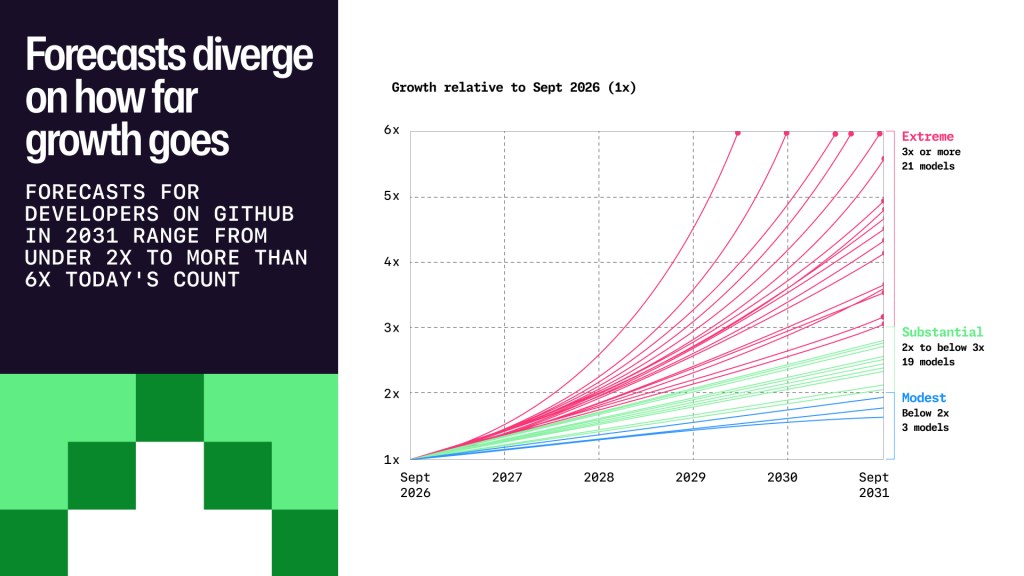
The findings of the 2026 Octoverse report illustrate a defining moment for the software engineering discipline. The confluence of hyper-accelerated developer growth, autonomous agent deployment, and cross-industry software creation has permanently altered productivity baselines. While automation and artificial intelligence have vastly reduced the friction required to transform concepts into functional applications, the core responsibilities of architectural oversight, security verification, and creative problem-solving remain firmly in human hands. As predictive forecasting models project continued exponential expansion through 2031, the global developer community enters a new era defined by unprecedented scale, operational velocity, and pervasive technological integration.