Svelte Monthly Development Update Highlights Major Advancements in Svelte 5.57 and SvelteKit 3 Release Candidate

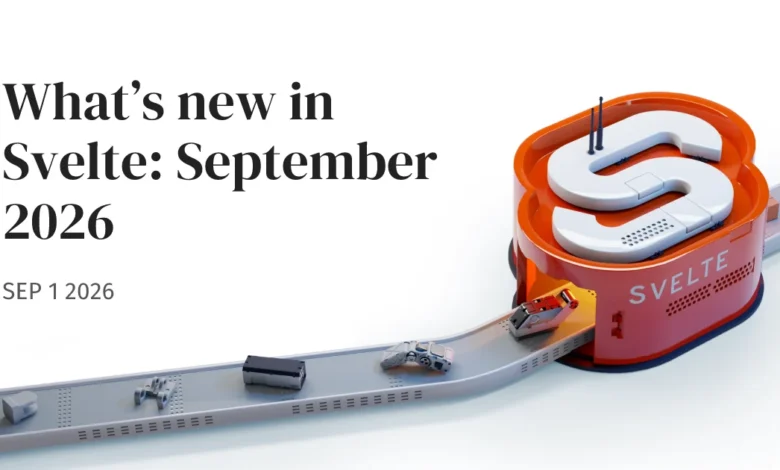
The Svelte ecosystem has reached a pivotal juncture this month, marked by the release of Svelte 5.57 and the continued progression of the SvelteKit 3 Release Candidate. As the web development community increasingly gravitates toward frameworks that prioritize reactivity, performance, and developer ergonomics, the Svelte core team has introduced significant enhancements aimed at streamlining complex application state management and simplifying the migration path for existing projects. These updates arrive at a time when the broader frontend landscape is grappling with the overhead of virtual DOM reconciliation and the complexities of hydration, positioning Svelte’s compiler-first approach as a highly efficient alternative for enterprise-grade architecture.
The Evolution of Svelte 5.57: Enhancing State Management
At the heart of the latest Svelte 5.57 update is the expansion of the SvelteMap API. The introduction of new, specialized methods for SvelteMap reflects the team’s ongoing commitment to robust, native-like reactivity for collections. In modern JavaScript development, the Map object is often preferred over standard objects due to its predictable iteration order and performance characteristics. By integrating deeper support for these structures, Svelte 5.57 enables developers to handle dynamic state updates with greater granularity.
This release is not merely a collection of minor patches; it represents a refinement of the "runes" reactivity system introduced in the Svelte 5 cycle. By optimizing how these data structures interact with the compiler, the framework continues to reduce the amount of boilerplate code required to maintain reactive stores. For developers, this means that tracking changes within complex state objects—which previously required manual signaling or more cumbersome patterns—can now be achieved with native-level efficiency. The cumulative impact of these quality-of-life additions is a lower cognitive load for developers building high-performance UIs, effectively shrinking the gap between standard vanilla JavaScript and framework-managed reactive code.
SvelteKit 3: The Path to Stable Release
SvelteKit 3, the upcoming iteration of the framework’s meta-framework, has officially entered its Release Candidate (RC) phase. This milestone indicates that the core architecture is feature-complete and is now undergoing rigorous testing to ensure stability, backward compatibility, and security. The transition to an RC status is a critical phase in the software development lifecycle, signaling to the ecosystem that the API surface is unlikely to change significantly before the final release.
The development of SvelteKit 3 has been marked by a focus on modularity and "zero-config" developer experiences. Throughout the past few months, the @next release line has served as a sandbox for these refinements. By integrating feedback from early adopters and enterprise partners, the core team has successfully optimized routing, improved load-time performance, and tightened the integration between server-side rendering (SSR) and client-side hydration. The objective is clear: to provide a robust framework that scales from small prototypes to massive, data-intensive web applications without sacrificing the simplicity that initially made Svelte popular.
Tooling Advancements: The New sv CLI Add-ons
A significant shift in the developer experience has arrived with the update to the sv CLI. The previous mcp (Model Context Protocol) add-on has been deprecated in favor of a new, more versatile ai-tools add-on. This pivot underscores the industry-wide trend of integrating Large Language Models (LLMs) directly into the development workflow. By leveraging ai-tools, developers can now interact with their Svelte projects using natural language queries, allowing for automated code generation, refactoring suggestions, and documentation lookups directly within the terminal environment.
Furthermore, the introduction of a task-based sveltekit-3 migration tool via sv@next represents a strategic move to lower the barrier for adoption. Migrating large-scale applications is often the single greatest obstacle to framework upgrades. By automating the identification and conversion of legacy patterns to SvelteKit 3 standards, the team is effectively shortening the "time to migration" for organizations currently operating on SvelteKit 2.x. This task-based approach ensures that the migration process is transparent and reproducible, reducing the risk of regression in complex codebases.
Chronology of Releases and Technical Stability
The current release cycle has been characterized by a dual-track strategy: pushing innovation in the 3.x line while maintaining the absolute stability of the 2.x series. The 2.70.x series—specifically releases 2.70.1, 2.70.2, and 2.70.3—demonstrates the core team’s ongoing maintenance of the current stable version. This ensures that users who are not yet prepared to migrate to SvelteKit 3 can continue to benefit from security patches and critical bug fixes.
This two-pronged approach is essential for the long-term health of the Svelte ecosystem. It acknowledges that large enterprises operate on different cycles than individual open-source contributors. By maintaining a clear roadmap and providing distinct documentation for both versions, the Svelte team is mitigating the "version fragmentation" that often plagues popular web frameworks. The dedicated documentation site at next.svelte.dev serves as the primary hub for this transition, providing detailed migration guides that break down the necessary changes into manageable, logical steps.
Broader Implications for the Web Ecosystem
The implications of these updates extend beyond simple feature lists. As the web ecosystem moves toward more integrated tooling, the Svelte team’s emphasis on a cohesive developer experience—encompassing the framework, the CLI, and language tools—is creating a formidable, end-to-end development environment. The move toward ai-tools and standardized migration tasks demonstrates an understanding of the modern developer’s needs: productivity, speed, and maintainability.
Furthermore, the performance gains achieved in the Svelte 5.x cycle have solidified the framework’s reputation for generating highly efficient code. Because Svelte shifts the heavy lifting from the browser (runtime) to the build step (compiler), the resulting applications are inherently faster. This architectural choice has profound implications for Core Web Vitals, particularly regarding Largest Contentful Paint (LCP) and Interaction to Next Paint (INP). In an era where search engine rankings are heavily influenced by page performance, Svelte’s approach provides a distinct competitive advantage for businesses.
Future Outlook and Community Engagement
Looking ahead, the momentum generated by the SvelteKit 3 Release Candidate suggests that the final release is imminent. The feedback loop between the core developers and the community, facilitated through platforms like Reddit and Discord, has been instrumental in refining the framework’s features. This collaborative process ensures that the framework remains grounded in real-world use cases rather than abstract design philosophies.
For developers and organizations currently using Svelte, the current period is ideal for evaluating the new sv CLI tools and beginning a dry run of the migration process in a staging environment. The transition to SvelteKit 3 is designed to be an incremental improvement rather than a wholesale rewrite, emphasizing the framework’s stability and maturity. As the documentation continues to expand and the community shares their migration experiences, the collective knowledge base will only grow stronger.
In conclusion, the combination of Svelte 5.57’s refined reactivity and the pending arrival of SvelteKit 3 marks a significant step forward for the framework. By prioritizing developer productivity through automated tooling and maintaining a steadfast commitment to performance, the Svelte project continues to solidify its position as a top-tier choice for modern web development. The transition toward a more integrated, AI-assisted development workflow indicates a forward-thinking roadmap that is well-prepared to meet the demands of the next generation of web applications.