Anthropic CEO Dario Amodei Faces High-Stakes White House Dinner Amidst Rising AI Policy Tensions

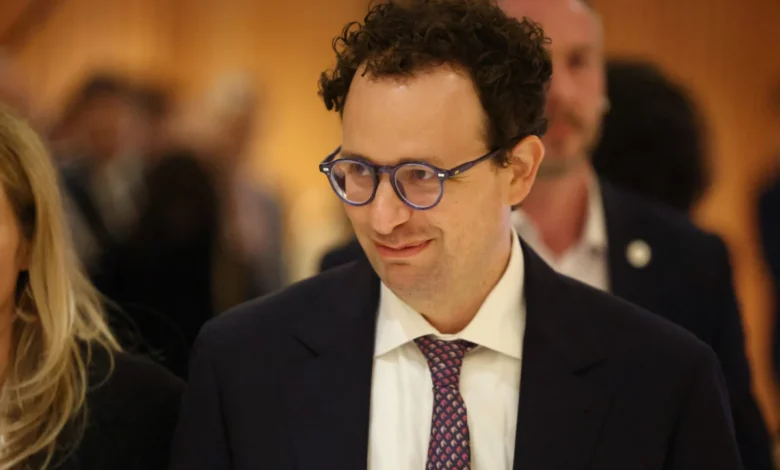
The intersection of artificial intelligence policy and executive leadership has reached a fever pitch this weekend as Dario Amodei, the chief executive of AI powerhouse Anthropic, prepares for a high-profile dinner with President Donald Trump at the White House. The meeting, which marks the first one-on-one session between the two figures, comes at a moment of profound legislative uncertainty for the tech sector. Amodei’s presence at the executive mansion follows a whirlwind 48 hours for the executive, who was prominently featured in a satirical sketch during the season premiere of Saturday Night Live, underscoring his sudden emergence as a primary cultural and political focal point in the debate over the future of machine intelligence.
A Complex Diplomatic Landscape
The scheduled dinner arrives as a critical juncture in the ongoing dialogue between the White House and the Silicon Valley elite. President Trump has recently taken an unorthodox approach to the rapid proliferation of AI, characterizing current concerns regarding safety and existential risk as a "Democratic hoax." Furthermore, the administration has proposed a linguistic and conceptual pivot, with the President suggesting that the technology be rebranded as "super intelligence" in an attempt to distance the sector from the baggage of established AI ethics frameworks.
Conversely, Amodei has become the face of a more cautious, "safety-first" movement. Earlier this month, he released a comprehensive manifesto outlining a path for the industry to slow down the development of frontier models. His argument rests on the premise that rapid, unbridled scaling of AI capabilities without commensurate safety research poses significant, if not catastrophic, risks to societal stability and national security. This philosophical schism—between the administration’s drive for uninhibited technological supremacy and Anthropic’s push for measured, risk-mitigated development—will likely serve as the primary subtext for the evening’s discussion.
Chronology of a Fraught Relationship
The tension between Anthropic and the current administration is not a recent development. The relationship has been characterized by a series of legal and bureaucratic hurdles that have placed the company at the center of a national security tug-of-war.
- April 2026: Initial reports suggested a thawing of relations between Anthropic and the executive branch, as various federal agencies began to recognize the utility of AI in bureaucratic efficiency.
- August 2026: The Department of Defense officially designated Anthropic as a "supply-chain risk." This move was largely attributed to the company’s internal policies, which included implementing strict guardrails that limited the access of certain defense contractors to the most advanced iterations of their models.
- Late August 2026: Anthropic launched a formal legal challenge against the Pentagon’s designation, arguing that the security labels were based on a misunderstanding of their safety protocols rather than genuine intelligence threats.
- September 12, 2026: Amodei published a formal proposal to "pace the frontier," advocating for a temporary slowdown in the training of massive models to allow safety research to catch up.
- September 19, 2026: President Trump responded to industry concerns by announcing plans for an "AI Force," aimed at fast-tracking national development of intelligence systems to ensure American dominance.
- September 27, 2026: The meeting at the White House was confirmed, capping a week of intense public scrutiny regarding the direction of AI governance.
Supporting Data: The Cost of Caution
The debate surrounding AI safety is deeply rooted in the economic reality of the industry. As of late 2026, the cost of training a single "frontier" model—one capable of reasoning at a human-expert level—has eclipsed the $2 billion threshold. These astronomical capital expenditures, largely fueled by cloud computing costs and specialized GPU procurement, have created a "race to the top" dynamic.
Anthropic’s recent financial disclosures indicate that while they remain a leader in high-performance AI, their operational expenditures have increased by 140% year-over-year. The decision to "slow down," as proposed by Amodei, is not merely a moral stance; it is a business strategy that risks ceding market share to competitors who may be less inclined to implement similar safety constraints. Market analysts note that for every month a company pauses development, they potentially lose out on the "first-mover advantage" in critical sectors like healthcare, cybersecurity, and materials science.

Official Responses and Industry Sentiment
While the White House has remained tight-lipped regarding the specific agenda for the dinner, press secretaries have hinted that the President is interested in "hearing from all stakeholders" as he shapes the administration’s upcoming executive order on emerging technologies. Industry insiders suggest that the invitation represents a calculated attempt by the administration to bring the most prominent advocate for regulation into the fold, perhaps to gauge how much "cautious" firms are willing to compromise in exchange for federal support.
Anthropic has maintained a standard corporate posture, stating that the CEO welcomes the opportunity to discuss the "responsible stewardship of powerful technologies." Outside of the company, the response has been mixed. Civil society groups dedicated to AI safety have praised Amodei for taking his case directly to the President, while some venture capitalists—who have invested heavily in the sector—worry that any agreement between the administration and Anthropic could lead to a restrictive regulatory environment that might stifle startups unable to meet high compliance costs.
Broader Implications for AI Governance
The implications of this meeting extend far beyond the two individuals involved. The outcome could signal a shift in the global AI race. If the administration successfully pressures or incentivizes Anthropic to prioritize performance over current safety guardrails, it could trigger a new, more aggressive phase of development across the entire industry. Conversely, if Amodei is able to persuade the President of the validity of his safety concerns, it could pave the way for a bipartisan legislative framework that defines the future of AI for the next decade.
Furthermore, the "supply-chain risk" litigation remains a pivotal variable. If the courts rule in favor of Anthropic, it would severely undermine the Pentagon’s current method of blacklisting tech companies based on their internal safety policies. This would be a landmark victory for the tech industry, establishing a legal precedent that protects corporations from government interference when they choose to restrict the use of their own proprietary technology.
The Path Forward
As the industry watches the White House closely, the consensus among policy experts is that the era of "move fast and break things" has officially ended for the frontier AI sector. The focus has shifted from simple capability metrics to the governance of power. Whether the result of the upcoming dinner is a policy pivot, a public relations exercise, or the beginning of a genuine collaboration, it is clear that the relationship between the state and the developers of the world’s most powerful software is the defining political story of 2026.
Amodei’s presence on the national stage—transitioning from the halls of academia and engineering to the satire of late-night comedy and finally the dining room of the President—mirrors the trajectory of the technology he oversees. Artificial intelligence is no longer an abstract academic pursuit; it is a geopolitical asset. The dinner in Washington tonight is not merely a conversation between two men; it is a negotiation over the guardrails of the future. The public, the markets, and the international community await the results, knowing that the ripple effects will be felt in every corner of the global digital economy.