FAA Issues Unprecedented Nationwide Ground Stop Following Widespread Telecommunications Outage Affecting Air Route Traffic Control Centers

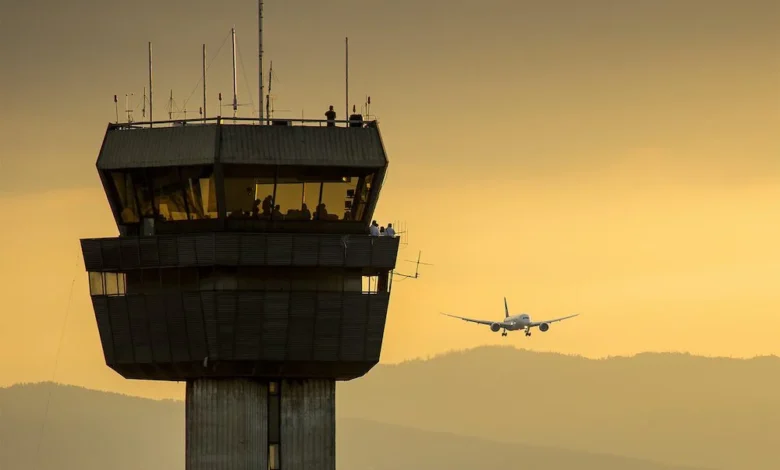
In a move that has paralyzed the United States aviation network, the Federal Aviation Administration (FAA) issued a mandatory nationwide ground stop on Friday afternoon, effectively halting all departures from U.S. airports. The directive, which represents one of the most significant disruptions in the history of American commercial aviation, comes just days after the agency expanded the integration of advanced artificial intelligence tools designed to optimize air traffic congestion management across the national airspace.
The announcement, delivered via the social media platform X by Secretary of Transportation Sean Duffy, cited a critical "communication issue" affecting all Air Route Traffic Control Centers (ARTCCs). As the situation continues to unfold, the agency has mobilized its entire technical infrastructure to troubleshoot the failure, with officials warning that the recovery process will likely be protracted.
Chronology of the Disruption
The crisis began in the early afternoon hours on Friday when regional controllers reported intermittent signal degradation across multiple ARTCC nodes. Within minutes, the degradation transitioned into a systemic failure of the agency’s internal data-sharing network, which coordinates flight plans, altitude clearances, and sector handoffs between controllers.
By mid-afternoon, the FAA determined that the integrity of the communication link was insufficient to ensure the safety of departing aircraft. The ground stop was formally enacted, preventing any commercial, private, or cargo flight from leaving the tarmac at any U.S. airport. Incoming international flights are currently being managed on a case-by-case basis, with many long-haul aircraft currently in transit being directed to hold in designated patterns or divert to airports outside the affected jurisdiction if fuel reserves necessitate an immediate landing.
Context and Precedents
This event marks only the third time in history that the FAA has implemented a nationwide ground stop. The gravity of this decision is underscored by the rarity of such actions, which are reserved for scenarios involving existential threats to aviation safety or infrastructure.
The first and most somber instance occurred on September 11, 2001, in the immediate aftermath of the terrorist attacks on the World Trade Center and the Pentagon. During that event, the FAA took the unprecedented step of clearing the entire U.S. sky, grounding all civilian departures and ordering every airborne aircraft to land at the nearest available airport. The national airspace remained closed for two full days, with commercial operations not resuming until September 13.
The second instance took place on January 11, 2023, when a failure in the Notice to Air Missions (NOTAM) system—which provides essential safety information to pilots—forced a two-hour nationwide grounding. While the 2023 event was resolved relatively quickly, it exposed systemic vulnerabilities in the FAA’s aging technological backbone, sparking a congressional debate regarding the urgent need for infrastructure modernization. Today’s event appears to be significantly more complex, as the failure encompasses the core communication fabric of the Air Route Traffic Control Centers rather than a singular notification system.
Security and Official Responses
Department of Homeland Security Secretary Markwayne Mullin held an emergency press briefing to address mounting public concern. Addressing the possibility of a cyberattack or deliberate sabotage, Secretary Mullin sought to decouple the technical failure from potential national security threats.
"This is a telecommunications outage out of the FAA," Mullin stated. "Out of an abundance of caution, we have grounded all of the flights. There is no indication as of yet that this is a nefarious attack against us."
The distinction is critical, as it narrows the scope of the investigation to internal hardware failure, software instability, or a third-party telecommunications provider fault. Secretary Mullin emphasized that despite the scale of the outage, the flights currently in the air are accounted for and remain under the surveillance of the FAA’s backup and regional systems. "Flights are accounted for, and there should be no fear to the public at all," he added, aiming to quell panic among passengers currently stranded in terminal buildings across the country.
Impact of Recent AI Integration
The timing of this outage has drawn immediate scrutiny to the FAA’s recent adoption of new AI-driven traffic management tools. Earlier this week, the agency touted the successful implementation of a pilot program designed to predict and mitigate bottlenecks in high-density airspace. While the FAA has not yet established a causal link between the AI rollout and the current communication failure, industry analysts suggest that any major update to the agency’s "NextGen" architecture introduces significant integration risks.
"When you layer new, high-compute AI modules onto existing, legacy infrastructure, you are essentially introducing a new variable into a system that is already operating at peak capacity," noted an aviation systems engineer familiar with FAA modernization efforts. "Whether the AI caused the crash or simply triggered a latent vulnerability in the underlying network is the question that the recovery team is currently attempting to answer."
Operational Implications and Economic Fallout
The economic impact of a nationwide ground stop is measured in hundreds of millions of dollars per hour. Beyond the immediate costs to airlines—including crew displacement, fuel burn, and passenger compensation—the disruption creates a ripple effect that often takes several days to resolve.
Major carriers, including American Airlines, have already signaled that disruptions will persist through the remainder of the day, with many flights canceled outright. The process of "re-banking" the national fleet—the synchronization of aircraft and flight crews—is a mathematical nightmare that typically leads to rolling delays well into the following week.
For the traveling public, the immediate reality is one of chaos. Thousands of passengers are currently occupying airport lounges, facing long wait times for rebooking and limited hotel availability. The FAA’s advisory warns that as the agency transitions from "troubleshooting" to "system restoration," priority will be given to aircraft already taxiing and those that have been held for the longest duration, though no definitive timeline for a full return to service has been established.
Technical Analysis: The Fragility of the System
The FAA manages one of the most complex, high-traffic airspace environments in the world. On any given day, the agency handles approximately 45,000 flights and 2.9 million passengers. The communication infrastructure supporting this volume relies on a combination of legacy radar systems, satellite-based navigation, and ground-based data centers.
Experts point out that the reliance on centralized telecommunications hubs creates a single point of failure. If the communication backbone between ARTCCs fails, the ability of controllers to "hand off" aircraft as they move across regional boundaries is severed. Without this handoff capability, the entire system must be locked down to prevent mid-air conflicts.
The push for modernization, while necessary to accommodate increasing air traffic, requires a seamless transition that current funding and staffing levels have struggled to maintain. As the FAA works to restore connectivity, the incident will almost certainly trigger a series of congressional hearings aimed at auditing the agency’s modernization roadmap and its reliance on proprietary, integrated third-party telecommunications services.
Looking Ahead
As of late Friday, the focus remains on stabilization. Secretary Duffy and the FAA administration are expected to hold further briefings as the technical teams move through the recovery protocol. For now, the U.S. aviation network remains in a state of suspended animation.
The FAA has encouraged passengers to check their airline’s website or the flight status monitors at their respective airports before heading to the terminal, though the reality is that the entire system is effectively paused. The recovery, once the technical hurdle is cleared, will require a meticulously staged restart to ensure that the influx of departing aircraft does not overwhelm the system, suggesting that the "ground stop" is merely the first phase of a broader operational challenge that will continue into the weekend.