Waymo Resumes San Francisco Robotaxi Operations Following Brief Service Suspension During Citywide Power Outage

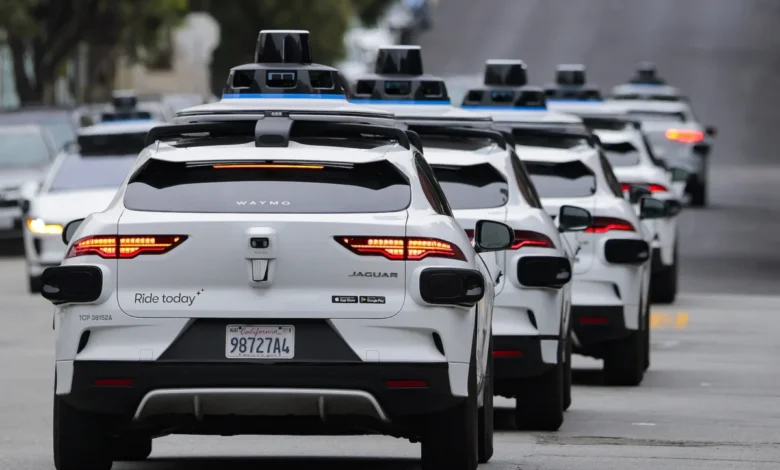
Waymo, the autonomous driving subsidiary of Alphabet Inc., has officially resumed its robotaxi operations in San Francisco after a temporary service suspension triggered by a significant power outage that disrupted the city’s infrastructure. The outage, which primarily affected the Pacific Gas and Electric Company (PG&E) grid, left approximately 7,000 customers without electricity and created a challenging environment for the deployment of autonomous vehicles (AVs). While service has been restored, the company noted that certain "temporary adjustments" remain in place, including the continued unavailability of freeway routes as the company monitors local conditions and infrastructure stability.
The disruption began on the afternoon of July 18, 2026, when a failure in the local power grid caused widespread blackouts across several San Francisco neighborhoods. As traffic signals went dark and communication networks experienced intermittent interference, Waymo took the preemptive step of pausing its fleet to ensure passenger safety and prevent the types of traffic congestion incidents that have plagued the company during previous utility failures. According to internal communications and social media reports from affected users, the Waymo app notified customers that service was "temporarily paused" and that the system would not be accepting new ride requests for a duration of approximately one hour.
Chronology of the July 18 Service Disruption
The events of July 18 unfolded rapidly, highlighting the sensitivity of autonomous fleets to urban infrastructure health. At approximately 12:00 PM PDT, PG&E reported a mid-sized outage affecting a large portion of the city’s northeastern corridor. By 12:15 PM, social media platforms were flooded with screenshots from the Waymo One app, informing users that the fleet was being sidelined.
During the hour-long suspension, Waymo’s operations team conducted a comprehensive assessment of the scale of the outage. A company spokesperson confirmed that the pause was a strategic decision to "coordinate with local officials" and evaluate whether the autonomous driving system could safely navigate intersections where traffic lights were no longer operational. By 1:30 PM PDT, Waymo began a phased reactivation of its fleet. However, the company maintained a restriction on freeway travel, a move seen by industry analysts as a conservative measure to avoid high-speed complications in areas where emergency response might be hindered by the ongoing power issues.
This incident marks the third time in less than a year that Waymo has had to significantly alter its operations in response to external environmental or infrastructure stressors in San Francisco. The company’s statement emphasized its commitment to reliability, stating, "We know riders depend on us, and we will return to normal operations as soon as possible."
Historical Context and Recurring Infrastructure Challenges
The decision to pause service on July 18 was likely informed by a series of high-profile incidents over the past several months that have intensified scrutiny on the autonomous vehicle industry. In December 2025, a similar blackout in San Francisco resulted in multiple Waymo vehicles "bricking" or stalling in the middle of active thoroughfares. During that event, the lack of functioning traffic signals and the degradation of cellular connectivity caused the vehicles to enter a "minimal risk condition" (MRC) state, effectively stopping them in their tracks and causing significant gridlock.
A second major incident occurred on the Fourth of July, 2026, during a fireworks display near the Golden Gate Bridge. Massive crowds and localized traffic anomalies led to a situation where several robotaxis became paralyzed, unable to predict the movement of pedestrians and unauthorized vehicles in restricted zones. These recurring issues have fueled a growing debate among San Francisco residents and city officials regarding the readiness of AV technology to handle "edge cases" involving infrastructure failure.
The technical challenge for an autonomous vehicle during a power outage is twofold. First, the vehicle must rely entirely on its onboard sensors (LiDAR, cameras, and radar) to interpret the right-of-way at dark intersections, which traditionally requires human-like negotiation and eye contact with other drivers. Second, many AV systems rely on cloud connectivity for real-time routing and fleet management. When a power outage affects cellular towers or data centers, the "brain" of the fleet can become partially isolated, leading the vehicles to prioritize a safe stop over continued movement.
Regulatory Pressure and the Response from City Hall
The frequent service interruptions and traffic "fiascos" have drawn the ire of local leadership. San Francisco Mayor Daniel Lurie has become an outspoken critic of the current regulatory framework, which grants much of the oversight authority to state agencies like the California Public Utilities Commission (CPUC) and the Department of Motor Vehicles (DMV), rather than the city itself.
In the wake of the July 18 outage, Mayor Lurie reiterated his call for tougher state regulations. "We need to adequately address how autonomous vehicles operate during major incidents, planned or not," Lurie stated in a recent press briefing. The Mayor’s office is pushing for legislation that would require AV companies to provide more robust "contingency protocols" and grant the city the power to fine companies when stalled vehicles obstruct emergency responders or public transit.

City officials argue that while Waymo’s decision to pause service on July 18 was a step in the right direction to avoid stalling, the fact that the service is so easily disrupted raises questions about its role as a reliable component of the city’s transportation network. Critics point out that traditional ride-hail services, such as Uber and Lyft, which utilize human drivers, are generally able to navigate power outages by applying standard four-way stop rules at dark intersections—a task that remains complex for AI.
Technical Analysis of Autonomous Navigation During Outages
From a technical perspective, Waymo’s "temporary adjustments" reflect the current limitations of Level 4 autonomous driving. When a traffic light loses power, it effectively becomes a four-way stop. While Waymo’s software is programmed to recognize a non-functioning signal and treat it as a stop sign, the unpredictability of human drivers in those scenarios creates a high-risk environment.
Data from previous incidents suggest that autonomous vehicles often struggle with the "social signaling" required at a dark intersection. Human drivers use subtle cues—creeping forward, hand gestures, or brief eye contact—to determine who goes next. Without these cues, an AV may wait indefinitely if it perceives even a slight movement from a surrounding vehicle, leading to the "stalling" behavior observed in the December 2025 blackout.
Furthermore, the exclusion of freeway routes during the July 18 resumption suggests concerns over high-speed connectivity. Freeways require the highest level of predictive accuracy. If the backend infrastructure supporting the vehicles is compromised by a power outage, the latency in data transmission could theoretically impact the vehicle’s ability to receive long-range traffic updates or emergency alerts, making surface-street operation a significantly safer alternative during the recovery phase.
The Economic and Social Implications of AV Reliability
As Waymo continues to expand its footprint in San Francisco, Phoenix, Los Angeles, and Austin, the reliability of its service is becoming a critical economic factor. Thousands of San Francisco residents have integrated robotaxis into their daily commutes, relying on them for trips to work, medical appointments, and social engagements.
A one-hour service pause, while seemingly brief, can have a ripple effect on urban mobility. For a city like San Francisco, which is positioning itself as the global hub for artificial intelligence and autonomous technology, these disruptions are more than just a convenience issue; they are a test of the technology’s viability as a public utility. If robotaxis are to eventually replace or supplement mass transit, they must demonstrate a level of resilience comparable to traditional buses and trains, which often have redundant systems to handle power fluctuations.
The July 18 outage also highlights the dependence of high-tech solutions on low-tech infrastructure. The multi-billion dollar AI systems powering Waymo’s fleet are ultimately beholden to the stability of PG&E’s electrical grid and the maintenance of physical traffic signals. This intersection of 21st-century software and 20th-century hardware remains one of the most significant hurdles for the widespread adoption of autonomous transportation.
Future Outlook and Industry Coordination
In response to the Mayor’s criticisms and the recurring technical hurdles, Waymo has indicated a willingness to work more closely with San Francisco’s Department of Emergency Management. Future updates to the Waymo Driver software are expected to include enhanced "outage mode" behaviors, which could allow the vehicles to better predict human behavior at unlit intersections and maintain better functionality during low-connectivity events.
Industry analysts suggest that the solution may lie in "V2X" (Vehicle-to-Everything) communication, where traffic lights and city infrastructure are equipped with independent power sources and sensors that broadcast their status directly to autonomous fleets. However, such an infrastructure overhaul would require billions of dollars in public and private investment, a prospect that remains years away.
For now, Waymo’s cautious approach—pausing service to assess the scale of outages and restricting freeway travel—represents the "new normal" for autonomous mobility in complex urban environments. As the city of San Francisco recovers from the July 18 power outage, the focus remains on how these two entities—the tech giants of the future and the utility providers of the present—can better synchronize to prevent a citywide standstill.
The resumption of service at 1:30 PM PDT on July 18 served as a successful test of Waymo’s new "rapid assessment" protocol, but the broader questions of regulatory oversight and infrastructure resilience continue to loom over the industry. As Waymo and its competitors move toward full-scale commercialization, the lessons learned from San Francisco’s dark streets will likely shape the safety standards for autonomous vehicles across the globe.
Related posts: