Automating Database Migration Troubleshooting with AWS DevOps Agent and the Model Context Protocol

Migrating a production database is a high-risk operational event that often pushes engineering teams to their limits, as the most critical failures rarely occur during the initial data copy. Instead, they manifest in the volatile hours immediately following the cutover, when query performance regressions, connection pool exhaustion, and downstream service timeouts threaten system stability. These operational hurdles have traditionally required engineers to manually correlate disparate data points—ranging from AWS Database Migration Service (DMS) task states and Amazon CloudWatch metrics to Amazon RDS Performance Insights and historical deployment logs—often under intense pressure. To address this complexity, a new integration between the AWS DevOps Agent and the Model Context Protocol (MCP) allows organizations to transform an autonomous agent into a specialized migration expert capable of diagnosing and resolving these issues in real-time.
The Anatomy of Migration Failure
Database migrations involve a complex interplay of infrastructure, configuration, and data integrity. While AWS DMS is highly efficient at moving rows reliably between relational databases, data warehouses, and other data stores, it is not inherently designed to predict application-level bottlenecks post-migration. Common failure modes include query plans that degrade on new database engines, resulting in costly full-table scans, or misconfigured connection pools that cannot handle the latency characteristics of the new environment.
Historically, troubleshooting these issues has been a fragmented, manual process. An on-call engineer might spend upwards of 30 minutes cross-referencing endpoint tests, task statuses, and validation states across multiple console windows. By the time a root cause is identified, the business impact—measured in downtime or degraded user experience—has already occurred. The introduction of the AWS DevOps Agent, now enhanced by the Model Context Protocol, changes this paradigm by providing an "always-on" teammate that understands the semantic relationship between resources, code, and telemetry.
Architectural Framework for Autonomous Investigation
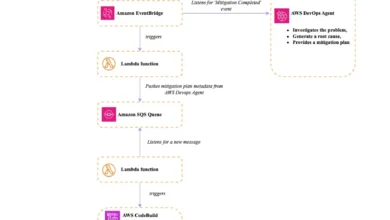
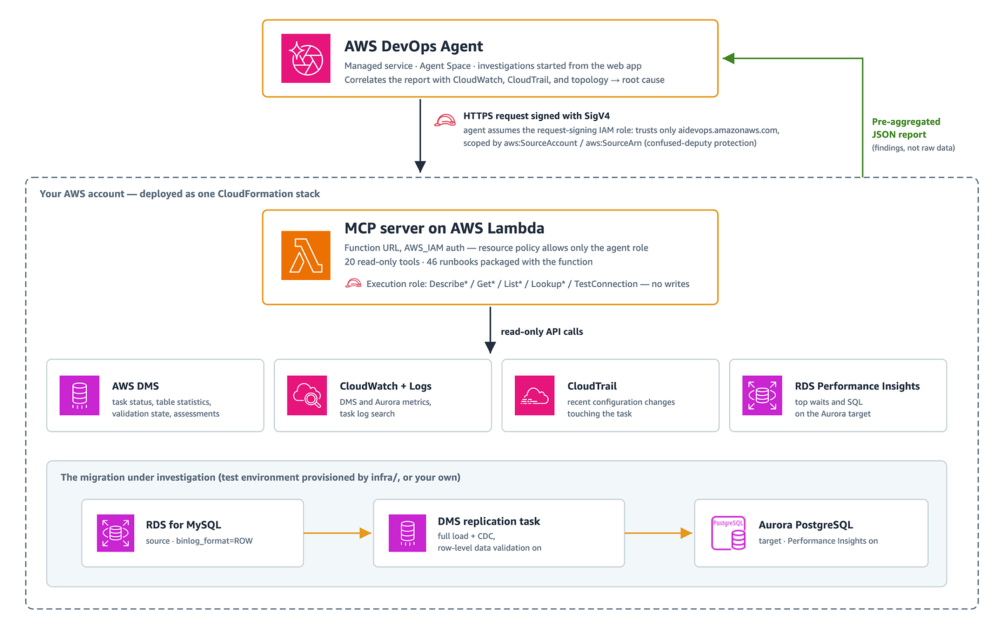
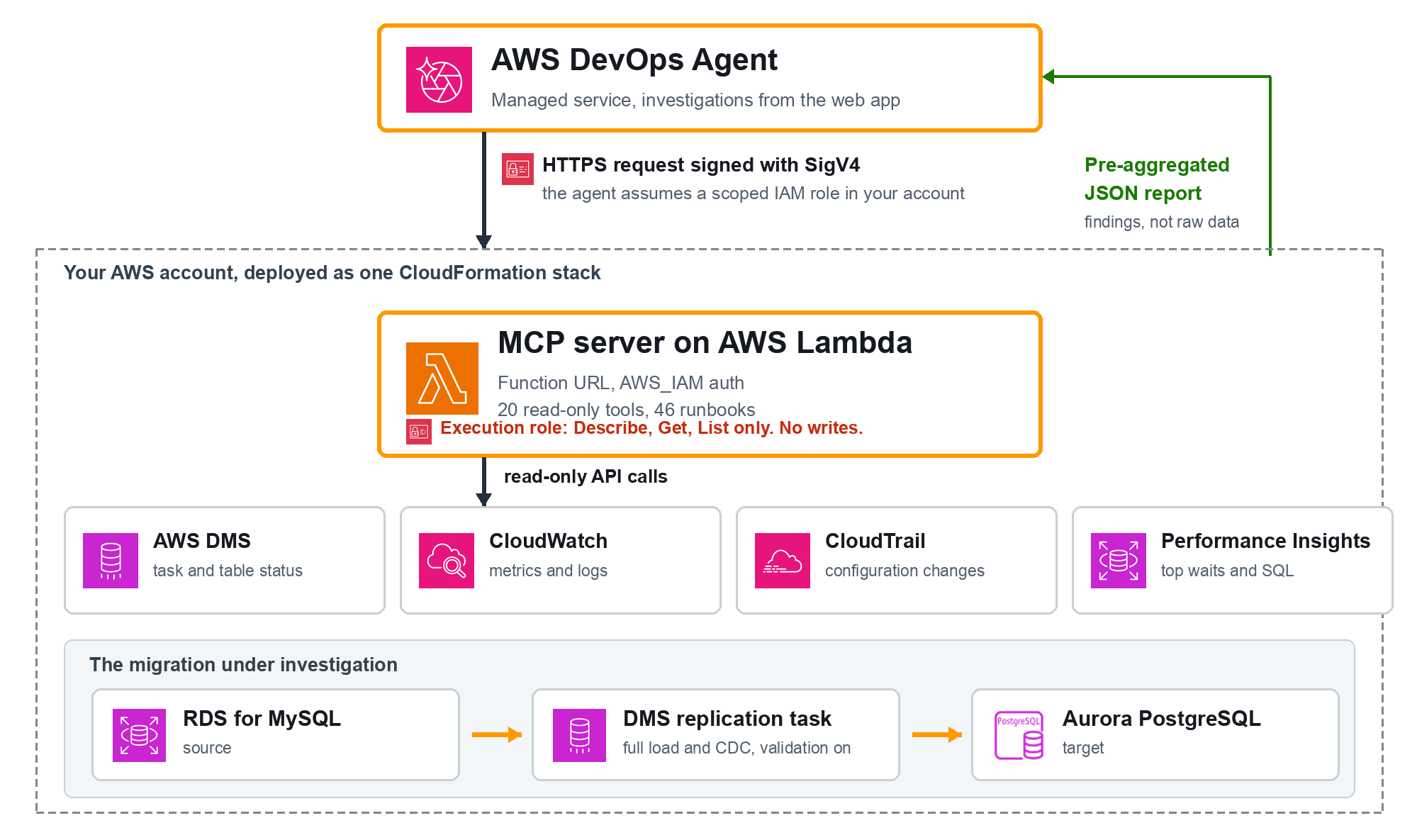
The integration leverages a sample MCP server deployed via AWS Lambda, which serves as the bridge between the agent and migration-specific tools. Security is maintained through the use of AWS Signature Version 4 (SigV4), the standard IAM-based authentication mechanism, ensuring that the agent accesses migration tools without the need for shared secrets or long-lived API keys.
The architecture is designed to be lean and non-invasive. By deploying the MCP server within an AWS account, organizations can provide the DevOps Agent with a suite of read-only tools that perform Describe, Get, List, and Lookup operations. Because these tools are strictly read-only, they can be safely utilized by an autonomous agent without risking unintended modifications to production infrastructure. The deployment process is streamlined through a CloudFormation stack that creates the necessary IAM roles and Lambda function URLs, allowing for rapid integration into existing DevOps workflows.
Operational Lifecycle and Tooling
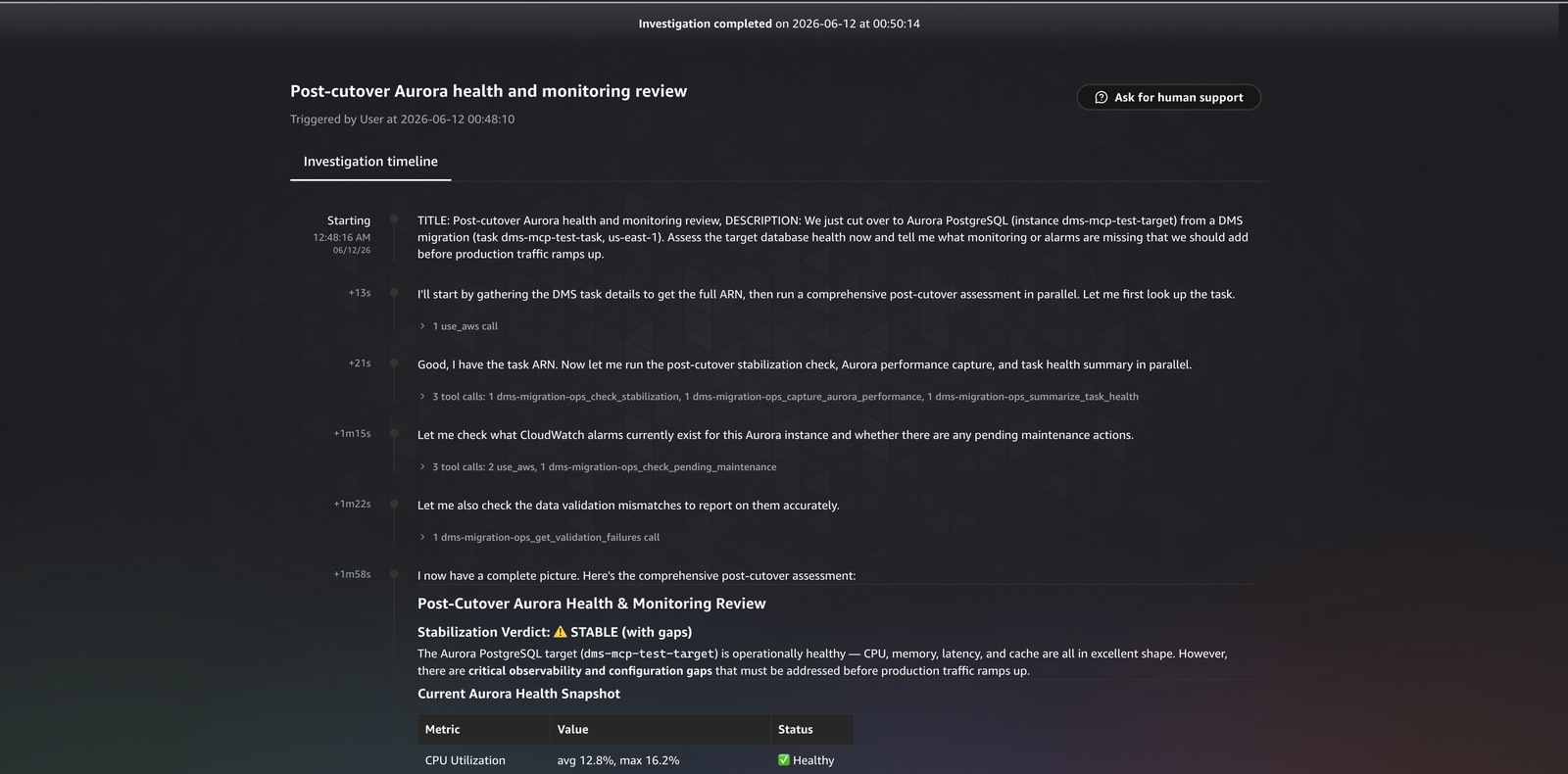
The MCP server exposes 20 specialized tools designed to cover the entire migration lifecycle, from pre-migration readiness assessments to post-cutover stabilization. Among the most frequently utilized tools are validate_migration_data, which provides granular reports on failed or suspended tables, and analyze_cdc_latency, which helps engineers distinguish between source-side and target-side bottlenecks. Additionally, the inclusion of 46 pre-defined runbooks enables the agent to navigate complex troubleshooting scenarios, such as diagnosing why a Change Data Capture (CDC) process might be lagging behind or identifying missing alarms on a newly promoted Amazon Aurora instance.
Chronology of an Autonomous Investigation
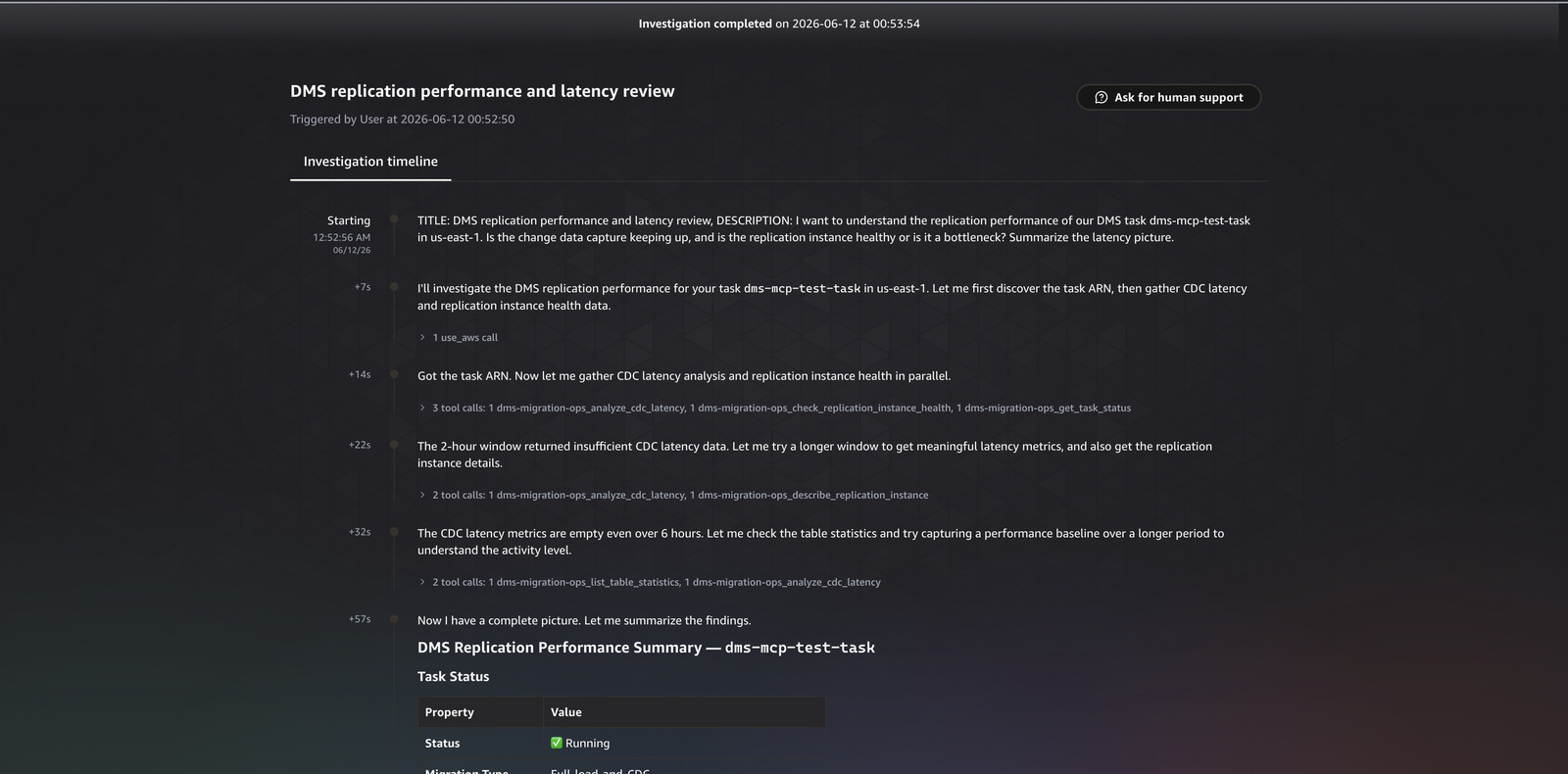
To validate the effectiveness of this approach, technical teams conducted a series of live trials involving an Amazon RDS for MySQL source replicating to an Aurora PostgreSQL target. These trials simulated real-world failure classes, including data validation mismatches and performance degradation.
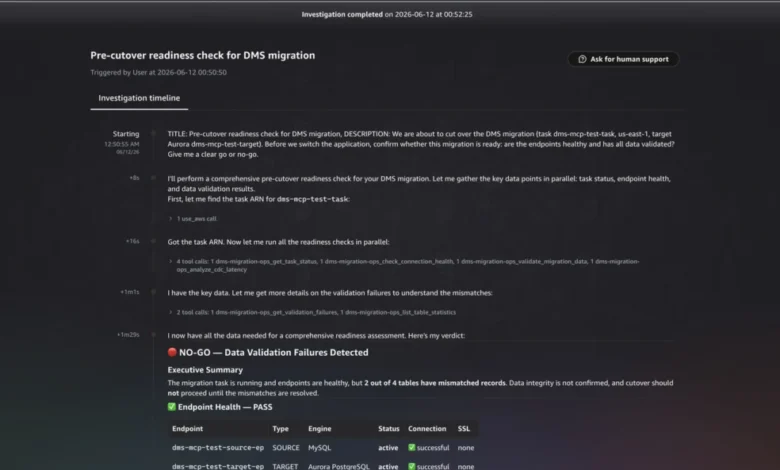
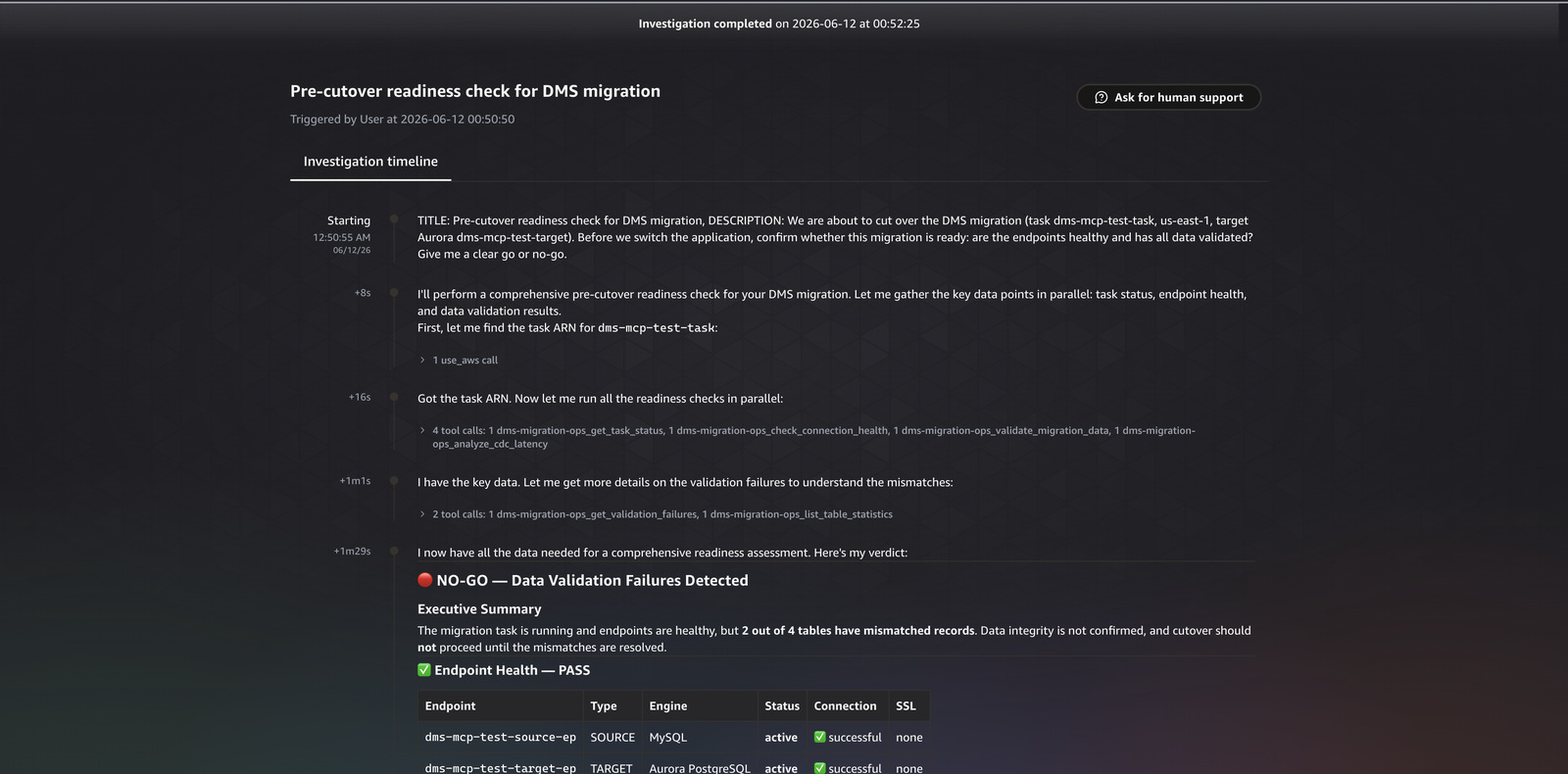
In one scenario, the agent was tasked with confirming cutover readiness. Rather than relying on simple "100% complete" status indicators, the agent autonomously ran a comprehensive suite of checks—including check_connection_health and validate_migration_data—to verify that actual data parity had been achieved. The process, which typically consumes 15 to 30 minutes of manual labor, was completed by the agent in under two minutes, providing a clear "go/no-go" signal based on grounded metrics.
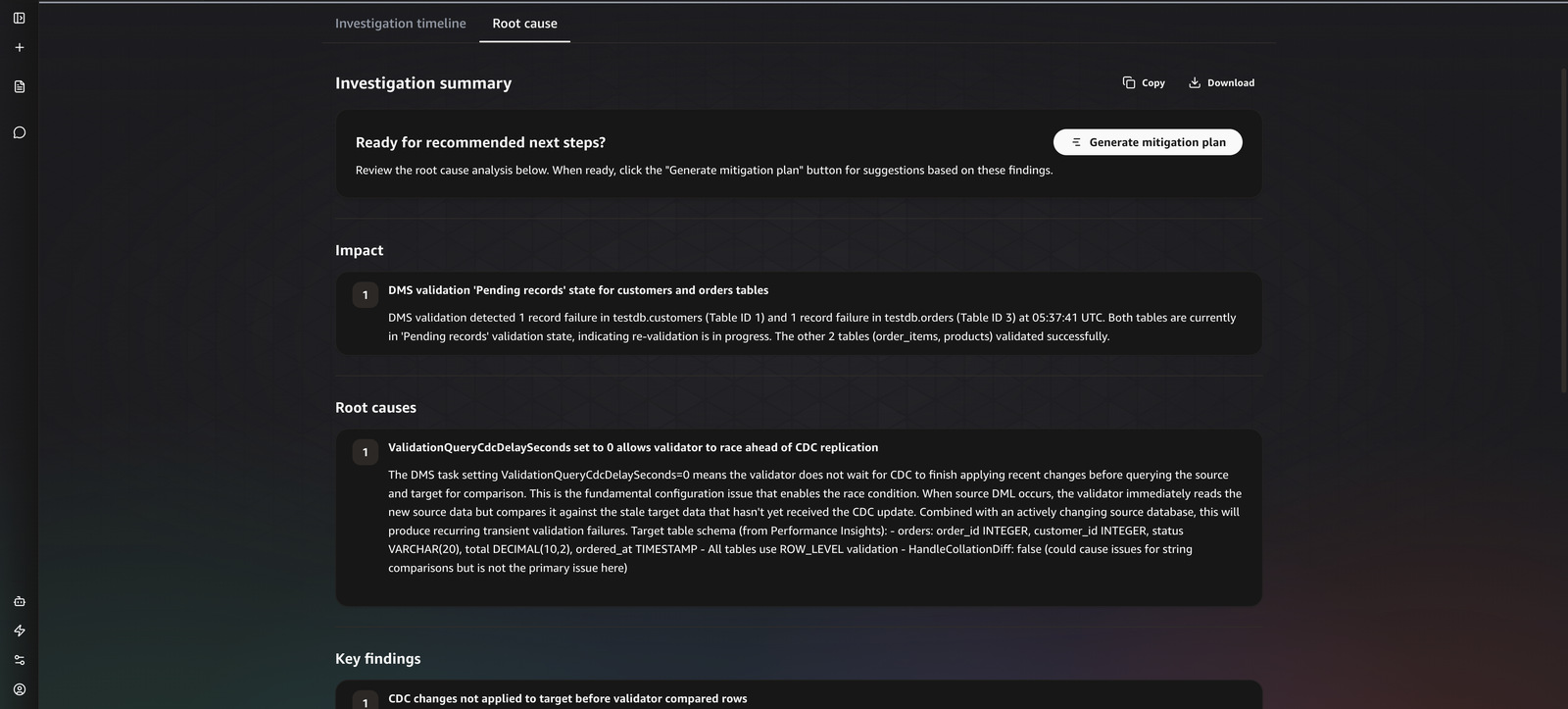
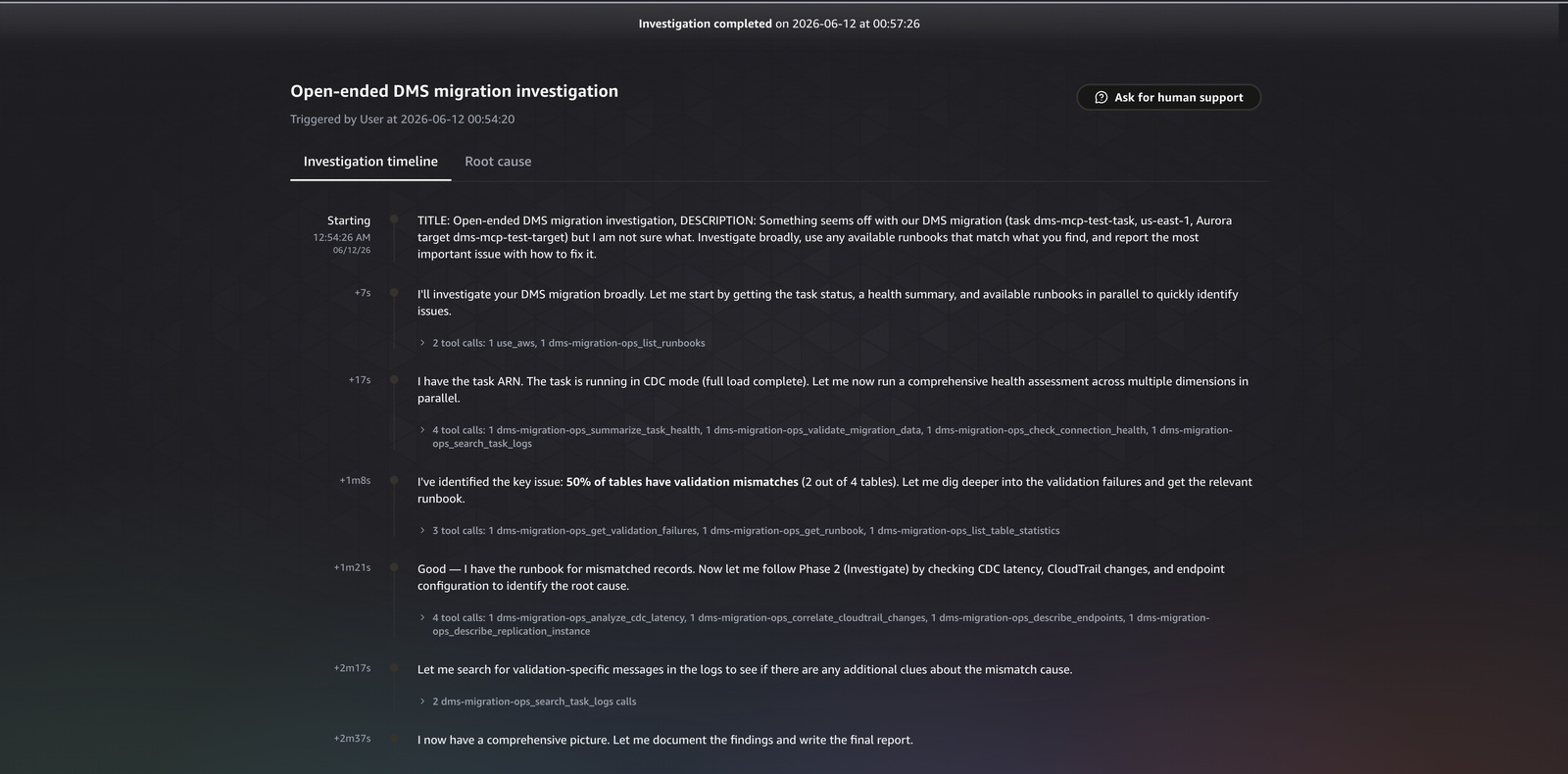
In a more complex scenario involving validation failures caused by out-of-band writes, the agent demonstrated sophisticated reasoning. By correlating 73 journal records and executing 33 tool calls, it identified that a specific task setting—ValidationQueryCdcDelaySeconds—was set to zero, allowing the validator to race ahead of CDC replication. By pinpointing this specific configuration parameter, the agent provided an actionable remediation path that an operator could execute immediately.
Data-Driven Insights and Human Oversight
The strength of the AWS DevOps Agent lies in its ability to avoid "hallucinated" solutions. The framework mandates that every finding must cite actual metrics rather than estimates. When data is insufficient to reach a confident conclusion, the agent is programmed to return an "insufficient_data" verdict and request a longer telemetry window, rather than forcing a potentially erroneous diagnosis.
This behavior is governed by "Skills"—Markdown-based instruction sets that guide the agent’s reasoning. For instance, the data-validation skill explicitly instructs the agent on how to interpret the DMS "ValidationState" machine, distinguishing between "Mismatched records" (which require intervention) and "Suspended records" (which often indicate high source churn). This knowledge base is dynamic; as teams encounter new issues, they can fold these findings back into the runbooks or skills, ensuring the agent becomes more effective with each migration.
Broader Implications for Cloud Operations
The shift toward agentic AI in database migration represents a significant evolution in operational excellence. By automating the "triage" phase of incident response, organizations can reduce the cognitive load on engineering teams, allowing them to focus on high-level architectural improvements rather than repetitive troubleshooting.
This approach is particularly valuable for large-scale enterprise environments where migration windows are tight and the cost of human error is high. However, industry experts caution that this technology is intended to augment, not replace, human oversight. It functions best alongside established monitoring frameworks, such as Amazon CloudWatch alarms, serving as a rapid-response engine that interprets and contextualizes the data those systems provide.
Future-Proofing the Migration Process
As companies continue to migrate legacy databases to cloud-native solutions like Aurora, the complexity of these transitions will only increase. The ability to codify institutional knowledge into runbooks that an agent can execute on demand offers a pathway to more resilient operations. By integrating the Model Context Protocol with the AWS DevOps Agent, organizations are not just automating a task; they are building a "learning flywheel" where every migration failure informs the success of the next.
For teams looking to adopt this model, the process begins with the deployment of the MCP server from the public GitHub repository and the registration of the toolset within their Agent Space. By combining the speed of automated analysis with the precision of human-authored runbooks, organizations can significantly lower the risk profile of their database migrations, ensuring that the transition to the cloud is both smooth and sustainable. This methodology provides a blueprint for the next generation of autonomous cloud management, where the focus shifts from managing infrastructure to managing the intelligence that keeps that infrastructure healthy.
Related posts: