Neo4j Accelerates AI Integration with Hosted Model Context Protocol for Aura Database Services

The global graph database leader Neo4j has announced the launch of a hosted Model Context Protocol (MCP) server for its Aura platform, a strategic move designed to eliminate the significant infrastructure and security hurdles that typically accompany the integration of artificial intelligence with enterprise data. This new offering, titled MCP for Aura, is now available across Free, Professional, and Business Critical tiers at no additional cost, with support for Virtual Dedicated Cloud (VDC) environments expected in the near future. By hosting the MCP server directly within its managed cloud environment, Neo4j is effectively removing the "setup tax"—the complex series of installation, configuration, and maintenance tasks—that has historically hindered developers from connecting AI agents to their graph data.
The Evolution of AI-Data Interconnectivity
The Model Context Protocol (MCP) is an open standard that facilitates a seamless interface between AI applications, such as Anthropic’s Claude Desktop or the Cursor code editor, and external data sources. Traditionally, when a developer wished to grant an AI client access to a database, they were required to host a separate MCP server. This involved installing specific binaries, editing complex JSON configuration files, generating and safely storing credentials, and ensuring the server remained online and patched against security vulnerabilities. For many organizations, particularly those with stringent security protocols, this operational weight often caused AI proofs of concept to stall before reaching production.
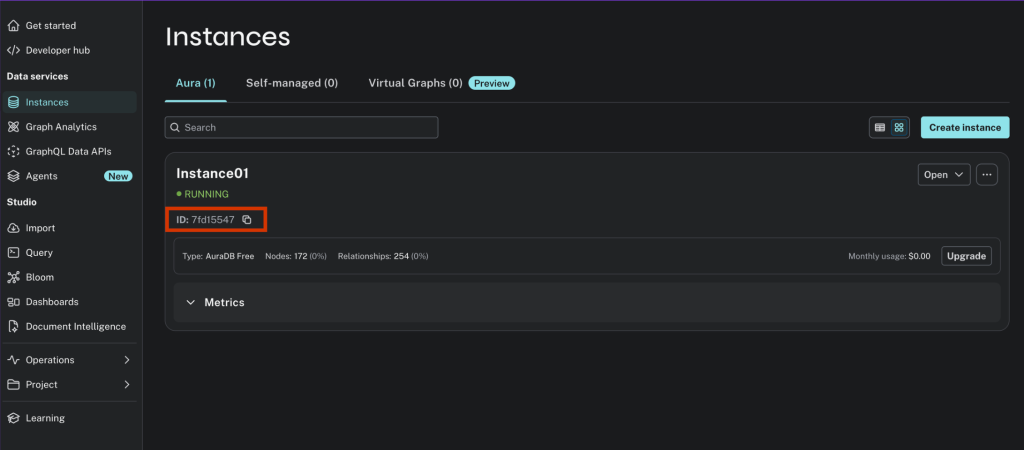
Neo4j’s decision to integrate MCP directly into Aura addresses these friction points. Because Aura is a fully managed service, the underlying infrastructure for the MCP server is already in place. Authentication is handled through existing Aura credentials, and the server is maintained by Neo4j’s engineering teams. This "zero-install" approach means that AI clients can reach secured data without the need for additional middleware or new security reviews for third-party hosting environments.
A Chronology of Neo4j’s MCP Integration
Neo4j has been an early and active participant in the MCP ecosystem. Over the past year, the company has released several community-driven MCP servers and an official local MCP server available on GitHub. These tools allowed developers to point a local installation at a database to expose tools for AI interaction. However, these local solutions still required manual management.
The announcement of MCP for Aura represents the final stage in this evolutionary timeline:
- Early 2024: Community development of initial Neo4j MCP connectors.
- Mid-2024: Release of the official Neo4j local MCP server, allowing for standardized tool-calling against graph databases.
- Late 2024: Integration of MCP into the Aura Console, moving from local execution to a fully hosted, cloud-native model.
- Future Roadmap: Expansion to Virtual Dedicated Cloud (VDC) and the introduction of Graph Data Science (GDS) tools.
This trajectory highlights a broader industry trend toward "Agentic AI," where large language models (LLMs) are no longer static entities but active participants capable of querying live databases to find grounded, factual information.
Technical Mechanics and the OAuth Framework
The primary innovation within MCP for Aura is its handling of authentication. Rather than relying on static API keys that can be leaked or mismanaged, the system utilizes a "human-in-the-loop" OAuth redirect. When an AI client attempts to connect to an Aura instance for the first time, it triggers a browser-based login. The user authenticates through the Aura Console using their standard credentials, and the session is securely established via a redirect back to the client.
Once the connection is established, three primary tools are exposed to the AI client:
- Schema Tool: Allows the AI to read the node labels, relationship types, and properties of the graph. This provides the "context" necessary for the AI to understand the domain without human intervention.
- Read Tool: Enables the AI to execute Cypher queries (the graph equivalent of SQL) to retrieve data.
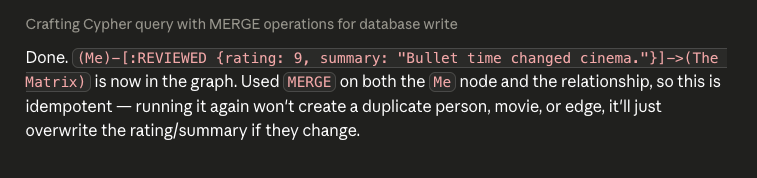
- Read-Write Tool: Permits the AI to modify the graph, such as creating new nodes or updating relationships, though this is strictly governed by user permissions.
By separating these tools, Neo4j allows administrators to provide AI agents with the ability to explore production graphs freely without necessarily granting them the power to alter the data. This granular control is essential for enterprise deployments where data integrity is paramount.
Supporting Data: Graph vs. Relational Efficiency in AI
The integration of MCP is particularly potent for graph databases due to the way LLMs process information. In a traditional relational database (RDBMS), complex relationships require multiple table joins, which can be difficult for an AI to navigate and prone to errors. In contrast, graph databases store relationships as first-class citizens.
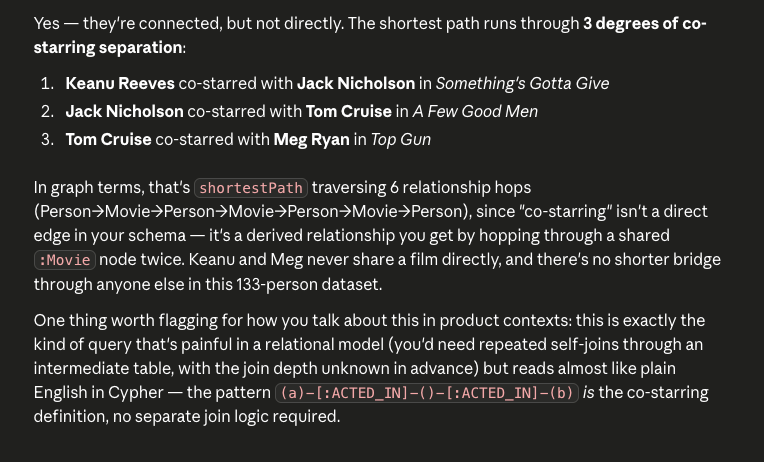
Industry data suggests that "GraphRAG" (Graph-based Retrieval-Augmented Generation) significantly reduces the rate of LLM hallucinations. While a standard LLM might "guess" a relationship based on its training data, an MCP-connected Neo4j agent uses the Schema tool to verify what actually exists in the database. For example, in a shortest-path query—such as finding the connection between two individuals in a social network—a graph database can return an exact result in milliseconds, whereas an RDBMS or a vector-only database might struggle with the computational overhead or lack the structural context to provide a precise answer.
Practical Implementation: A Case Study in Movie Analytics
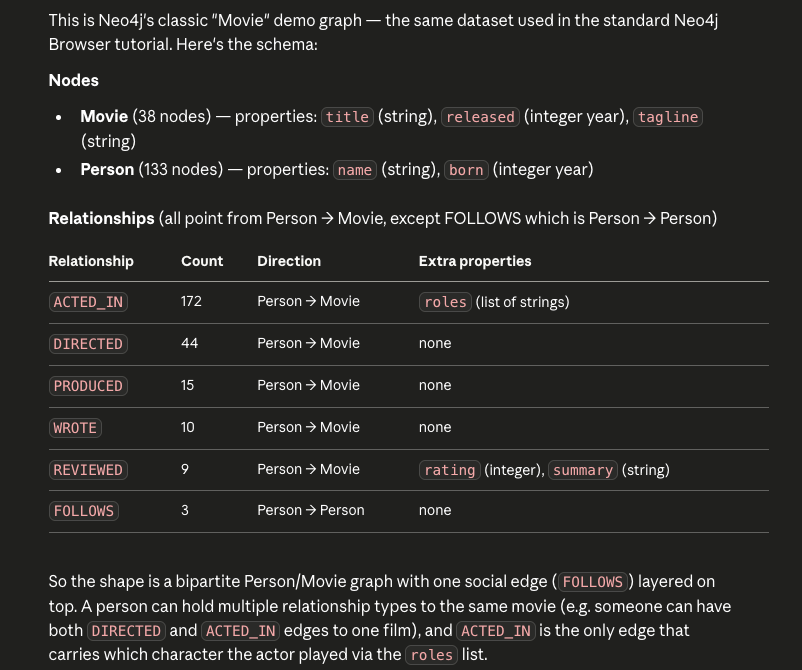
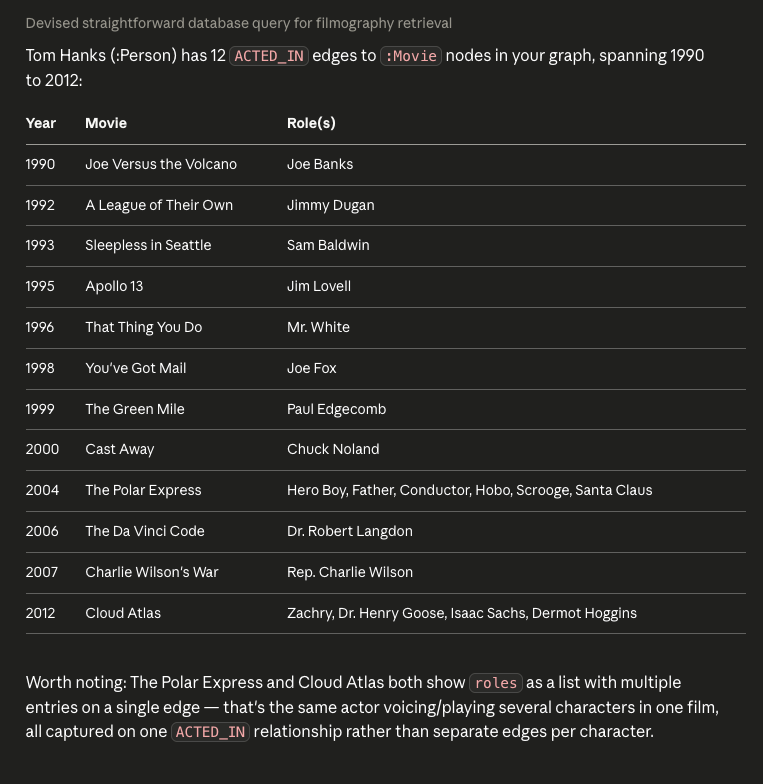
To demonstrate the efficacy of the hosted MCP server, Neo4j points to its classic "Movie Graph" dataset. By configuring an AI client like Claude Desktop to point to an Aura instance ID, developers can perform complex traversals using natural language.
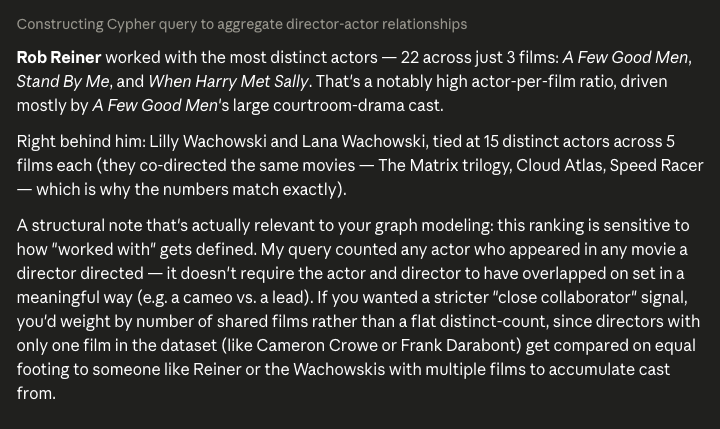
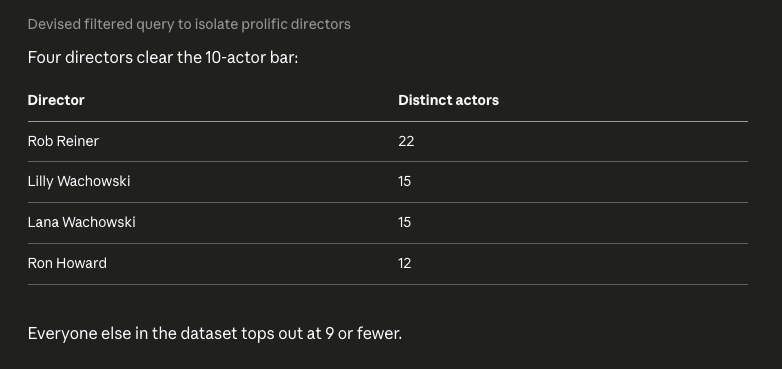
The configuration process involves a simple addition to the claude_desktop_config.json file, specifying the npx mcp-remote command and the unique Aura instance URL. Once connected, the AI can answer sophisticated questions that would typically require a skilled data scientist to write Cypher code. For instance, an AI can identify which director has worked with the highest number of distinct actors or trace the "Six Degrees of Kevin Bacon" style connections across thousands of nodes. The AI generates the Cypher, executes it, and if an error occurs, it uses the schema knowledge to retry and refine the query autonomously.
Industry Implications and Market Analysis
The launch of MCP for Aura signals a shift in the database market toward AI-native infrastructure. Analysts suggest that as AI agents become more prevalent in the enterprise, the value of data will be determined by its "accessibility" to non-human agents. Neo4j’s move to host the MCP server suggests that database providers are now taking responsibility for the communication layer between the data and the model.
This development is expected to have several long-term implications:
- Reduced Development Cycles: By removing the infrastructure setup, companies can move from an AI idea to a working prototype in minutes rather than weeks.
- Enhanced Security Posture: By centralizing MCP hosting within a managed service, security teams can apply a single set of policies to the database and its AI interface, reducing the "shadow AI" risk of developers hosting their own unmanaged servers.
- The Rise of Contextual AI: As AI agents gain the ability to "orient themselves" using the Schema tool, the need for extensive prompt engineering decreases. The agent becomes self-sufficient in navigating complex data architectures.
Future Outlook and Roadmap
Neo4j has confirmed that the current toolset is only the beginning. The roadmap for MCP for Aura includes support for Graph Data Science (GDS), which will allow AI agents to run advanced algorithms—such as PageRank or community detection—directly on the graph. Furthermore, the company plans to introduce more granular tool selection, allowing administrators to choose exactly which tools are exposed on a per-graph basis.
As the industry moves toward more autonomous AI systems, the ability to ground these systems in real-time, structured data becomes the primary differentiator for enterprise AI. By eliminating the setup tax and hosting the MCP protocol directly, Neo4j is positioning Aura not just as a storage engine, but as a fundamental pillar of the modern AI stack. This integration ensures that when an AI asks a question, the answer is grounded in the reality of the user’s data, secured by their existing infrastructure, and delivered through a standardized, open protocol.
Related posts: