Revolutionizing Incident Remediation: AWS DevOps Agent and Kiro CLI Forge a New Era of Autonomous Operations

In a significant leap forward for cloud operations, Amazon Web Services (AWS) has announced a groundbreaking integration between its AWS DevOps Agent and Kiro CLI, ushering in a new paradigm of automated incident remediation. This innovative partnership promises to transform the way organizations manage and resolve critical incidents in their distributed workloads running on AWS, effectively closing the loop from incident detection to deployed fix with minimal human intervention. The collaboration addresses a long-standing challenge in modern IT environments: the manual toil and significant time expenditure traditionally associated with identifying root causes, developing fixes, and deploying them across complex cloud infrastructures.
The Escalating Challenge of Cloud Operations
Modern enterprises increasingly rely on highly distributed, microservices-based architectures hosted on cloud platforms like AWS. While these environments offer unparalleled scalability, flexibility, and resilience, they also introduce a formidable level of operational complexity. A typical web application might involve dozens or hundreds of interconnected services, each generating vast quantities of telemetry data across various monitoring tools such as Amazon CloudWatch, deployment pipelines, and application logs. When an incident occurs – often during off-hours – on-call engineers face the daunting task of sifting through this deluge of information to correlate events, pinpoint the root cause, and then manually craft and deploy a solution. This process is inherently time-consuming, frequently extending to several hours, leading to prolonged downtime, increased operational costs, and significant stress on engineering teams. Industry reports consistently highlight the substantial financial implications of IT downtime; Gartner, for instance, has estimated the average cost of IT downtime at $5,600 per minute, or upwards of $300,000 per hour for many organizations, underscoring the critical need for rapid incident resolution. The manual nature of traditional incident response, often involving "war rooms" and extensive human collaboration, stands in stark contrast to the automated efficiency promised by cloud computing, creating a bottleneck that hinders true operational agility.
AWS DevOps Agent: The First Frontier in Autonomous Investigation
Recognizing these acute pain points, AWS introduced the AWS DevOps Agent, an innovative solution designed to autonomously investigate incidents, identify root causes, and generate comprehensive mitigation plans. Before this integration with Kiro CLI, the AWS DevOps Agent had already made substantial strides in streamlining the initial phases of incident response. During its preview phase and subsequent general availability, customers and partners reported remarkable improvements: up to a 75% reduction in Mean Time To Recovery (MTTR), an 80% acceleration in investigation times, and an impressive 94% accuracy in identifying root causes. These figures alone represent a significant advancement, shifting the paradigm from reactive, labor-intensive troubleshooting to proactive, AI-driven analysis. The agent achieves this by intelligently correlating telemetry data from disparate AWS services, providing a unified view of an incident’s lifecycle and context. While the AWS DevOps Agent excelled at diagnosis and planning, a crucial gap remained: the actual implementation of the recommended fixes. Engineers still needed to translate these mitigation plans into executable code, test it, and deploy it, perpetuating a significant manual effort in the latter half of the remediation process. Previous AWS blog posts and code samples demonstrated how to configure the agent for autonomous investigations triggered by Amazon CloudWatch alarms, producing detailed mitigation plans. However, the vision of true end-to-end automation required a further step – one that the integration with Kiro CLI now addresses.
Kiro CLI: Closing the Remediation Loop with Code Automation
The newly announced integration leverages Kiro CLI to bridge this gap, automating the crucial second half of incident remediation. Kiro CLI, running in a headless mode within an AWS CodeBuild environment, is now capable of taking the detailed mitigation plan generated by the AWS DevOps Agent and autonomously applying the necessary fixes to the codebase. This revolutionary capability means that once the AWS DevOps Agent completes its mitigation analysis, an event-driven pipeline automatically routes these findings to Kiro CLI. Kiro CLI then modifies the relevant application or infrastructure code, creates a pull request (PR) for human review, and, upon approval, triggers the deployment of the fix. This entire sequence transforms L1/L2 incidents from detection to deployed resolution with unprecedented speed, with the human touchpoint strategically placed at the PR approval stage – a critical "human-in-the-loop" safeguard. This not only minimizes manual toil but also significantly accelerates recovery times, ensuring business continuity and reducing the cognitive load on operations teams.
A Detailed Look at the End-to-End Solution: Architecture and Workflow
The comprehensive solution unfolds within a fully serverless, event-driven architecture, designed to orchestrate the seamless interaction between AWS DevOps Agent and Kiro CLI. Consider a typical AWS-hosted web application comprising a frontend behind an Application Load Balancer, backend compute on Amazon EC2, and an Amazon RDS database, with all source code and CloudFormation templates managed in AWS CodeCommit. When an anomaly triggers an Amazon CloudWatch alarm, the automated remediation pipeline springs into action:
-
Incident Detection and Investigation Trigger: An Amazon CloudWatch alarm, indicating a performance degradation or error, is raised. This alarm automatically triggers an AWS DevOps Agent investigation, as configured through pre-existing best practices for production deployments.
-
Autonomous Investigation and Mitigation Planning: The AWS DevOps Agent autonomously investigates the incident, correlating telemetry across various AWS services. It then generates a detailed mitigation plan, outlining the root cause and the recommended actions to resolve the issue.
-
Capturing Mitigation Events: Upon successful completion of the mitigation analysis, the AWS DevOps Agent publishes a "Mitigation Completed" lifecycle event to the Amazon EventBridge default event bus. This event carries crucial metadata, including
agent_space_id,task_id, andexecution_id. -
EventBridge Rule and Lambda Extraction: An Amazon EventBridge rule, specifically configured to match the "Mitigation Completed" detail-type from the
aws.aidevopssource, invokes a dedicated AWS Lambda function. This Lambda function then utilizes the provided metadata to call the AWS DevOps Agent API, extracting two vital objects: the mitigation summary (explaining the "what" and "why" of the fix) and the execution plan (detailing the step-by-step instructions). This structured payload is then published to an Amazon SQS queue, acting as a buffer for downstream processing.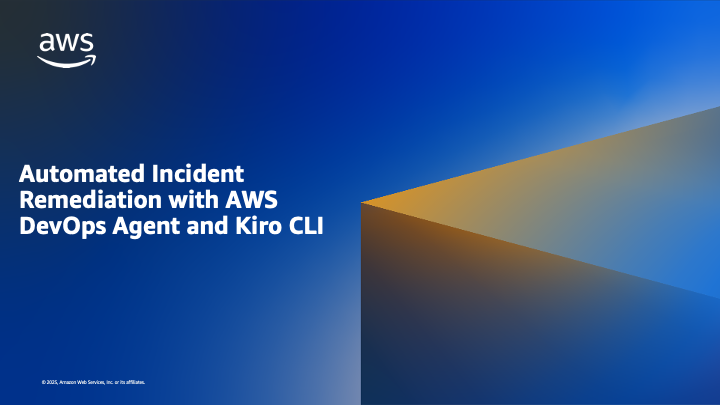
-
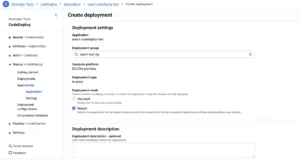
Headless Remediation with Kiro CLI on CodeBuild: The Amazon SQS queue acts as the trigger for the next phase. A separate AWS Lambda function, invoked by messages landing in the SQS queue, initiates an AWS CodeBuild execution. AWS CodeBuild is an ideal environment for this task due to its on-demand compute capabilities, native integration with AWS CodeCommit, and serverless nature. Kiro CLI 2.0, with its headless mode, is central to this step. Authenticated via an API key stored securely in AWS Secrets Manager, Kiro CLI receives the mitigation payload as a prompt. It then programmatically executes, leveraging its agents and capabilities to perform the necessary code changes.
-
CodeBuild Orchestration of the Fix: The AWS CodeBuild buildspec follows a predefined sequence to orchestrate the fix:
- It clones the application and infrastructure repositories from AWS CodeCommit.
- It configures Kiro CLI using the API key retrieved from AWS Secrets Manager.
- It then executes Kiro CLI in headless mode, passing the extracted mitigation plan as the prompt.
- Kiro CLI analyzes the plan, identifies the relevant files, and applies the code changes according to its steering file.
- Once changes are made, AWS CodeBuild commits these changes to a new feature branch.
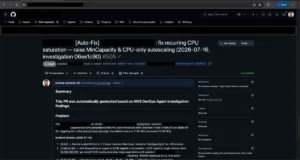
- Finally, it creates a pull request in AWS CodeCommit, detailing the changes, the reasoning (directly from the AWS DevOps Agent’s analysis), and the original agent space and execution IDs for full traceability.
-
The Steering File: Guardrails for Automated Remediation: A crucial element ensuring the effectiveness and predictability of Kiro CLI’s actions is the
steering file. This file, committed directly to the repository, provides Kiro CLI with persistent, project-specific knowledge. It defines the repository structure, coding conventions, architectural patterns, and decision frameworks specific to the application. For automated remediation, the steering file acts as guardrails, instructing Kiro CLI on:- Which files or directories are relevant for specific types of changes.
- The preferred syntax and style guides to adhere to.
- Any specific architectural constraints or design patterns that must be respected.
- Guidelines for generating pull request descriptions and commit messages.
This ensures that Kiro CLI makes targeted, predictable, and compliant changes rather than broad, potentially disruptive refactors.
-
Human-in-the-Loop Approval and Deployment: The creation of the pull request marks the designated human touchpoint in this highly automated pipeline. A developer reviews the PR, verifying the correctness, scope, and safety of the proposed changes. This deliberate approval step acknowledges that while AI agents excel at investigation and proposing fixes, the ultimate decision to deploy a change into production rests with human oversight. Once approved and merged into the main branch, the organization’s existing deployment pipelines are triggered, implementing the approved changes in the target environment. This entire cycle, from a CloudWatch alarm to a deployed fix, can now complete in minutes, dramatically reducing the operational burden and accelerating recovery.
Transformative Impact and Measurable Benefits
The integration of AWS DevOps Agent and Kiro CLI signifies a paradigm shift in operational excellence, delivering tangible and measurable benefits for enterprise operations:
- Drastically Reduced Mean Time To Recovery (MTTR): The reported 75% reduction in MTTR translates directly into minimized downtime and service disruptions. For businesses where every minute of outage can cost thousands or even millions of dollars, this accelerated recovery is invaluable. This far surpasses industry averages for manual remediation, which can often stretch into hours or even days for complex incidents.
- Significant Reduction in Operational Toil: By automating the most repetitive and time-consuming aspects of incident response—from investigation to code generation and PR creation—engineering teams are freed from reactive firefighting. This allows on-call engineers to focus on more strategic initiatives, innovation, and preventative measures, leading to improved job satisfaction and reduced burnout.
- Enhanced Root Cause Accuracy and Consistency: With 94% root cause accuracy from AWS DevOps Agent, combined with Kiro CLI’s consistent application of fixes based on defined steering files, organizations benefit from more reliable and standardized remediation. This reduces the likelihood of recurring incidents caused by incomplete or incorrect fixes.
- Improved Business Continuity and Resilience: Faster incident resolution directly enhances the resilience of applications and services. Businesses can maintain higher levels of availability, leading to greater customer satisfaction and trust.
- Economic Efficiencies: Beyond the direct cost savings from reduced downtime, the automation reduces the operational expenditure associated with manual incident response, including labor costs and the opportunity cost of engineers diverted from other projects.
- Democratization of Expertise: The steering file mechanism allows organizations to embed best practices, architectural patterns, and security guidelines directly into the automated remediation process. This effectively democratizes expert knowledge, ensuring that even complex fixes adhere to organizational standards without requiring constant human oversight for every detail.
Industry analysts are quick to highlight the implications of such advancements. "This integration represents a significant stride towards the vision of self-healing infrastructure," comments one prominent analyst specializing in AIOps. "By automating both the diagnostic and prescriptive phases of incident management, AWS is empowering organizations to achieve unprecedented levels of operational efficiency and resilience. It shifts the human role from execution to oversight and strategic refinement, fundamentally altering the IT operations landscape." While AWS itself does not provide direct statements in this context, the continued investment in agentic AI for DevOps underscores its commitment to reducing operational friction for its vast customer base, fostering an environment where innovation can flourish unhindered by repetitive operational burdens.
The Road Ahead: Towards Fully Autonomous Infrastructure
This integration between AWS DevOps Agent and Kiro CLI is not merely a product enhancement; it’s a foundational step towards the broader vision of fully autonomous infrastructure. The "human-in-the-loop" pull request approval serves as a prudent safeguard, ensuring that critical changes are reviewed before deployment. However, as AI models become more sophisticated and trusted, and as organizations gain confidence in their automated systems, it is conceivable that even this approval step could evolve. For highly specific, low-risk, or well-understood incident patterns, pre-approved remediation pathways could potentially lead to immediate deployment without explicit human review, further accelerating resolution times. The future of AIOps will likely see deeper integration of AI-powered agents across the entire software development lifecycle, from proactive anomaly detection and predictive maintenance to self-optimizing systems and automated security remediation. This collaborative approach, where specialized AI agents work in concert, promises to unlock new levels of operational efficiency, allowing organizations to innovate at an accelerated pace while maintaining robust and resilient systems.
Conclusion
The integration of AWS DevOps Agent and Kiro CLI marks a pivotal moment in the evolution of cloud operations. By creating a closed-loop incident remediation pipeline, AWS is enabling organizations to move beyond reactive incident management towards a proactive, highly automated, and resilient operational model. This innovative approach delivers measurable impact, including drastically reduced MTTR, significant cuts in operational toil, and enhanced business continuity. For enterprises grappling with the complexities of modern distributed systems, this solution offers a clear pathway to greater efficiency and stability. Organizations are encouraged to explore the accompanying AWS Samples repository for complete implementation details, configure their AWS DevOps Agent spaces, and delve into Kiro CLI documentation to harness the power of steering-file-driven code generation. This collaborative effort sets a new benchmark for what is possible in autonomous operations, paving the way for a future where incidents are not just resolved faster, but often mitigated before they can significantly impact business.
Related posts: