Connected Intelligence: Operationalizing Production-Grade Graph Solutions Across Enterprise Networks


The landscape of enterprise artificial intelligence has reached a pivotal inflection point, transitioning from a phase of speculative experimentation to the rigorous demands of production-grade deployment. As global organizations seek to ground generative AI applications and complex reasoning engines in verifiable real-world logic, they are increasingly confronted by the limitations of legacy data infrastructure. Traditional methodologies involving the constant moving, copying, and siloing of data have proven inadequate, failing to meet the speed and cost-efficiency requirements of modern enterprise environments. In response to these challenges, Neo4j, a leader in graph database technology, has unveiled a series of strategic milestones in its second-quarter report, headlined by the launch of Neo4j Virtual Graph and the acquisition of GraphAware. These developments signal a fundamental shift in how graph intelligence is integrated into cloud data ecosystems, aiming to eliminate infrastructure hurdles and accelerate data strategies through the remainder of 2024 and into 2026.
The Dawn of Zero-Copy Graph Intelligence
A primary obstacle to the adoption of graph technology has historically been the friction associated with Extract, Transform, Load (ETL) processes. Moving massive datasets from cloud warehouses to specialized graph databases often incurs significant latency and high egress costs. To solve this, Neo4j has introduced Virtual Graph, a native integration designed for the Databricks and Snowflake ecosystems. This technology allows organizations to leverage Neo4j’s advanced graph reasoning capabilities directly where their data currently resides.
The Virtual Graph architecture facilitates a "zero-copy, zero-ETL" entry point, enabling users to run Cypher queries—the industry-standard graph query language—and complex graph algorithms against data stored in Snowflake, Databricks, and other lakehouse environments. By maintaining data in its original location, enterprises can ensure that existing governance controls and security protocols remain intact. This approach eliminates the need to manage a new system of record while simultaneously exposing the latent relationships hidden within traditional tabular data formats.
Industry analysts suggest that this move toward "in-place" analytics is crucial for the next generation of AI agents. These agents require deep relational context to perform complex reasoning tasks, and by bypassing the migration phase, Virtual Graph significantly reduces the time-to-value for generative AI applications. This innovation allows enterprises to maximize their existing investments in cloud data platforms while gaining the analytical depth of a native graph environment.
Strategic Acquisition of GraphAware to Fortify Security and SI Capabilities
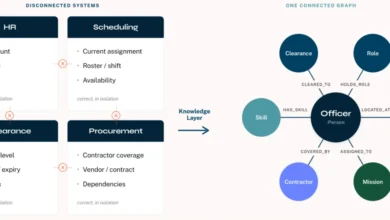
Parallel to its architectural innovations, Neo4j has announced the strategic acquisition of GraphAware, a move specifically targeted at the high-stakes security and investigative sectors. Enterprise threats have grown increasingly sophisticated, involving intricate financial fraud networks and coordinated nation-state cyber risks. Detecting these patterns requires visibility into highly connected data environments where relationships are as important as the data points themselves.
The acquisition integrates GraphAware’s advanced investigator user interface natively into the Neo4j core enterprise data stack. This provides global organizations, system integrators (SIs), and strategic consultants with a robust front-end solution for capturing complex security workloads. The unified architecture enables security teams to model cyber assets rapidly, map compliance-as-code, and explore multi-tier transactional paths in real-time.
By bridging the gap between deep-tier graph analytics and intuitive visual discovery, Neo4j is positioning itself as a central pillar in national security, corporate risk compliance, and fraud detection. The ability to expose hidden threat patterns through a user-friendly interface allows non-technical investigators to interact with complex data structures, democratizing the power of graph intelligence across the enterprise.
Deepening Integration with Microsoft Fabric and the Lakehouse Ecosystem
Recognizing the ubiquity of the Microsoft ecosystem in the enterprise, Neo4j has expanded its integration with Microsoft Fabric. The introduction of the "Export to Lakehouse" capability represents a significant advancement for systems architects and data engineers. This feature allows graph-enriched insights, such as calculated node properties and structural relationship metrics, to sync directly back into Microsoft OneLake tables.
Previously, syncing graph data with downstream analytical tools required custom integration code or fragile secondary pipelines. The new native capability provides a standardized, repeatable blueprint. Engineering teams can now run high-performance graph algorithms in Neo4j and write the resulting multi-hop relationship data back to unified Delta Lake formats.
This synchronization ensures that downstream tools—including Microsoft Power BI, Synapse analytics, and Microsoft Copilot—can consume graph-intelligent feature stores natively. For an enterprise, this means that its business intelligence reports are no longer just reflecting raw data but are informed by the structural context provided by graph analysis, leading to more accurate forecasting and deeper operational optimization.
Native Engineering Milestones within Google Gemini and Vertex AI
Neo4j’s expansion into the Google Cloud ecosystem has also seen significant technical milestones. The company has achieved seamless, bidirectional data synchronization with Google Gemini and Vertex AI (now recognized as the Gemini Enterprise Agent Platform). These native engineering touchpoints allow for more fluid, real-time agentic workflows.

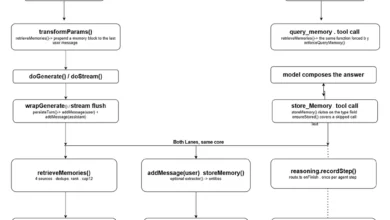
In these advanced configurations, Large Language Models (LLMs) can dynamically read from and write back to the Neo4j graph. This creates what technical teams describe as "self-correcting memory loops," where the LLM uses the graph to verify facts and store new discoveries, thereby drastically reducing the "hallucinations" common in standard generative AI models.
Furthermore, these updates are backed by expanded regulatory compliance and automated governance mapping. This ensures that enterprises can maintain AI sovereignty across multi-cloud environments without sacrificing the transactional performance required for real-time applications. The integration makes it easier for field teams to attach graph capabilities to existing Google Cloud footprints, providing a clear path for scaling AI initiatives securely.
Specialized Reference Architectures for Databricks Environments
To assist organizations in bridging the gap between isolated infrastructure and corporate strategy, Neo4j has delivered four specialized reference architectures optimized for Databricks. These blueprints are designed to act as a translation layer, grounding analytical layers with deep relationship context.
In industries characterized by complex, multi-layered data—such as supply chain management or healthcare—data fragmentation often prevents systemic problem-solving. The new reference architectures provide repeatable frameworks to turn raw cloud data into action-oriented intelligence engines. By deploying graph structures alongside lakehouse architectures, companies can solve high-value problems like identifying supply chain bottlenecks or detecting coordinated insurance fraud more effectively than with tabular models alone.
Building Sovereign AI Stacks with Mistral
A growing trend in the global market is the demand for regional data sovereignty, particularly among government entities and strictly regulated industries. Following a partnership with Mistral AI, Neo4j has established a blueprint for building "sovereign technology stacks."
By utilizing Neo4j as an independent, robust knowledge layer, organizations can swap and scale enterprise LLMs like Mistral while ensuring that sensitive data remains within secure geographic boundaries. This framework supports GraphRAG (Graph Retrieval-Augmented Generation), which uses the graph to provide the multi-hop reasoning required for complex queries. This ensures that corporate intellectual property and sensitive context are protected, satisfying strict data localization requirements while still benefiting from cutting-edge AI capabilities.
Technical Analysis: From Data to Knowledge to Action
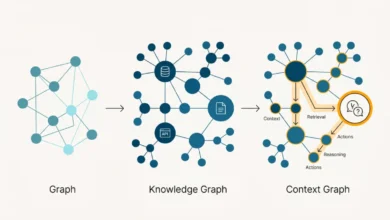
The technical foundation of these updates was recently showcased at the NODES AI event, which focused on the transformation of raw enterprise data into structured knowledge bases. The event highlighted the use of vector-graph hybrid models, which combine the semantic search capabilities of vector databases with the structural precision of graph databases.
Data from these sessions indicates that using a graph-based approach to ground LLMs can significantly optimize context retrieval. By analyzing real-world telemetry and query execution patterns, Neo4j demonstrated that organizations could drastically reduce the error rates of AI models. The shift from "static data architectures" to "live, action-oriented intelligence engines" is seen as the critical differentiator for companies looking to move past the "pilot purgatory" of AI development.
Broader Impact and Future Implications for H2 and Beyond
As Neo4j moves into the second half of the year, the mandate for enterprise data strategy is becoming increasingly clear. Organizations are no longer satisfied with disconnected infrastructure; they require unified platforms capable of real-time reasoning. The engineering milestones, native integrations, and strategic acquisitions delivered this quarter provide a foundation for this next wave of adoption.
The focus on partner momentum, including joint programs with AWS, Google Cloud, Microsoft, Snowflake, and Databricks, suggests a collaborative approach to solving the enterprise AI challenge. Hands-on lab workshops and digital event series like "Connected Intelligence" are designed to move technical audiences beyond high-level messaging toward practical implementation.
Looking toward 2025 and 2026, the integration of graph intelligence into the standard data stack appears inevitable. By removing the barriers of data movement and providing intuitive interfaces for complex analysis, Neo4j is positioning itself not just as a database provider, but as an essential layer of the modern AI infrastructure. For enterprises, the ability to turn connected data into actionable knowledge will likely be the primary driver of competitive advantage in an increasingly AI-driven global economy.
Related posts: