Transforming Database Migrations with Autonomous Intelligence and Model Context Protocol

Migrating a production database remains one of the most high-stakes operations in enterprise information technology. While tools like the AWS Database Migration Service (DMS) provide a robust foundation for moving relational data, warehouses, and complex data stores between environments, the most critical risks often emerge not during the initial data transfer, but in the volatile hours immediately following a cutover. Engineering teams frequently encounter "post-migration fatigue," where latent issues—such as inefficient query execution plans on new engines, exhausted connection pools, or cascading timeouts in downstream microservices—trigger emergency on-call pages. These operational hurdles are rarely data-integrity failures; rather, they are systemic performance bottlenecks that require complex correlation of logs, metrics, and deployment history, often under the intense pressure of a live production outage.
The Shift Toward Autonomous Operational Triage
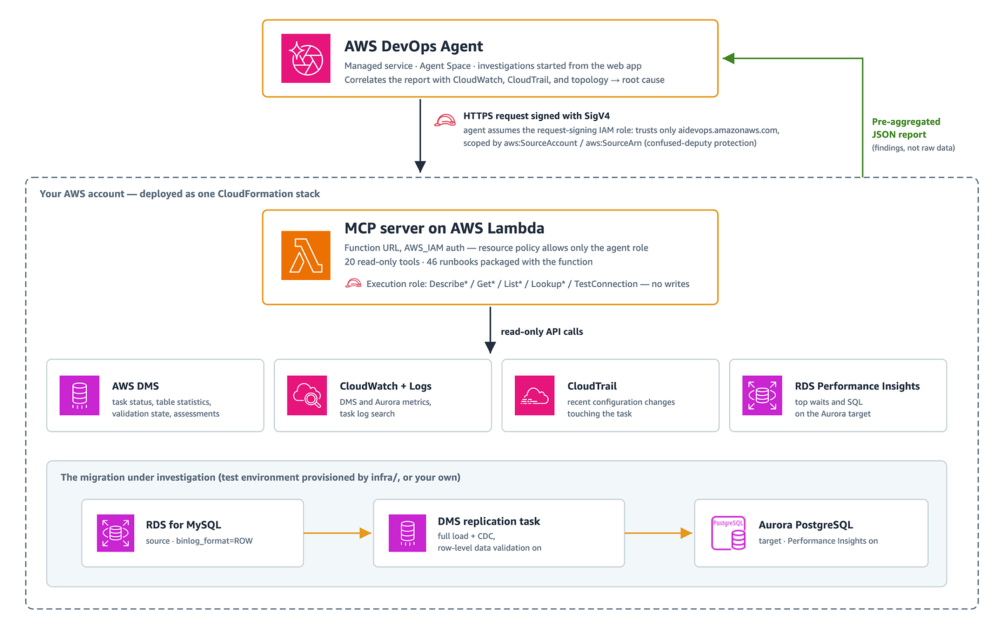
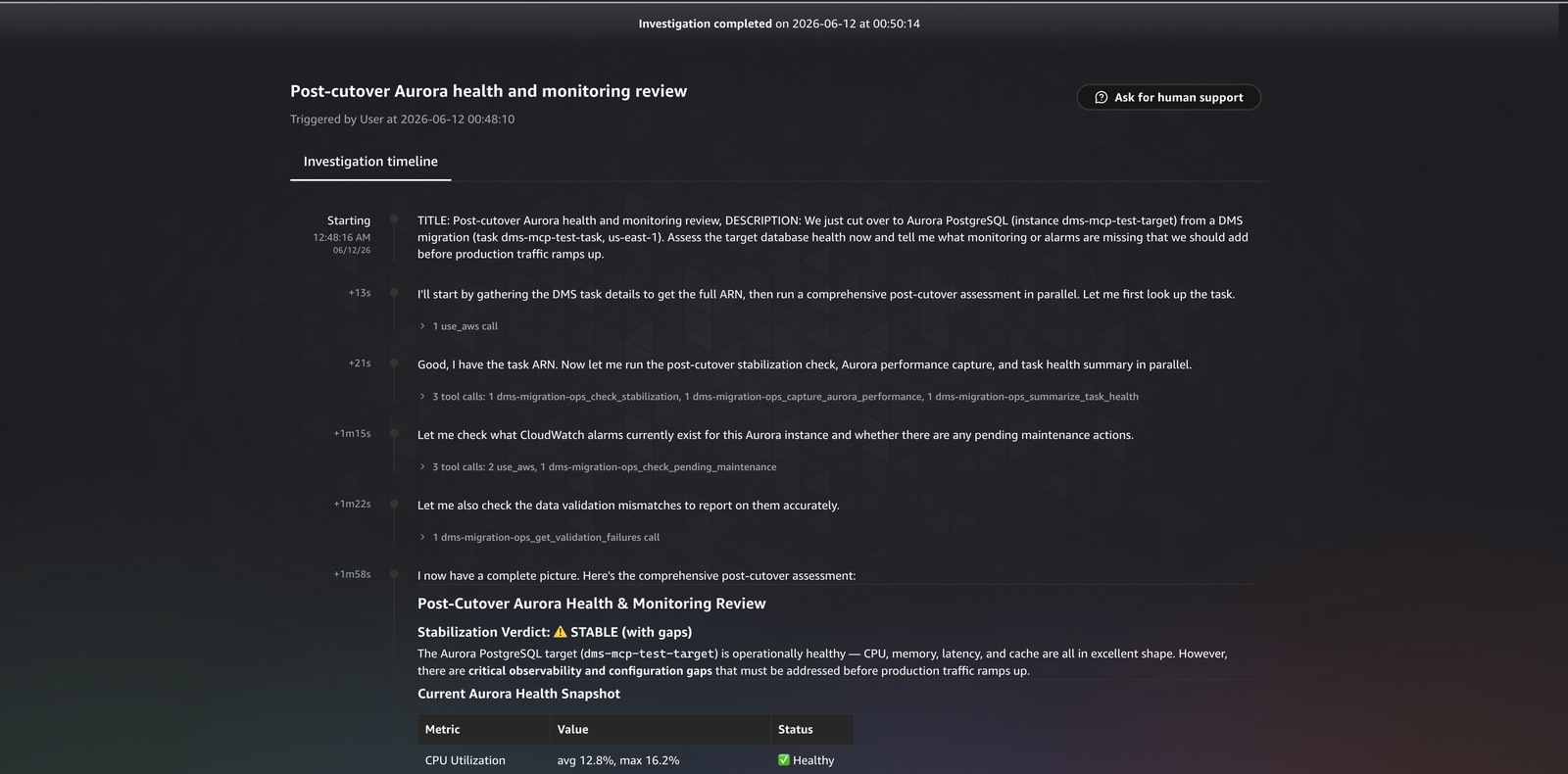
To address these challenges, AWS has introduced a framework for extending the AWS DevOps Agent into a specialized migration assistant. By utilizing the Model Context Protocol (MCP), engineers can now equip an autonomous agent with read-only, migration-specific toolkits and comprehensive runbook libraries. This approach represents a paradigm shift from manual dashboard monitoring to autonomous root-cause analysis. The agent acts as an always-available teammate that correlates telemetry from Amazon CloudWatch, RDS Performance Insights, and AWS CloudTrail to provide actionable, grounded insights.
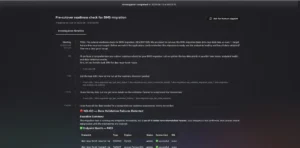
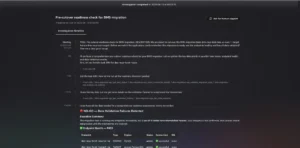
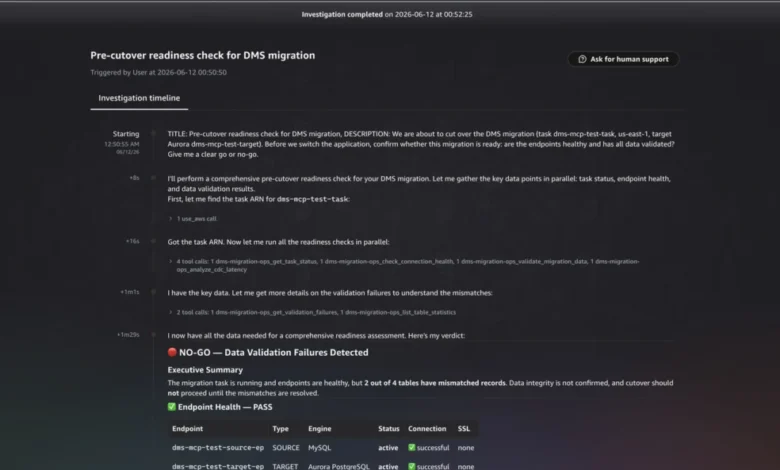
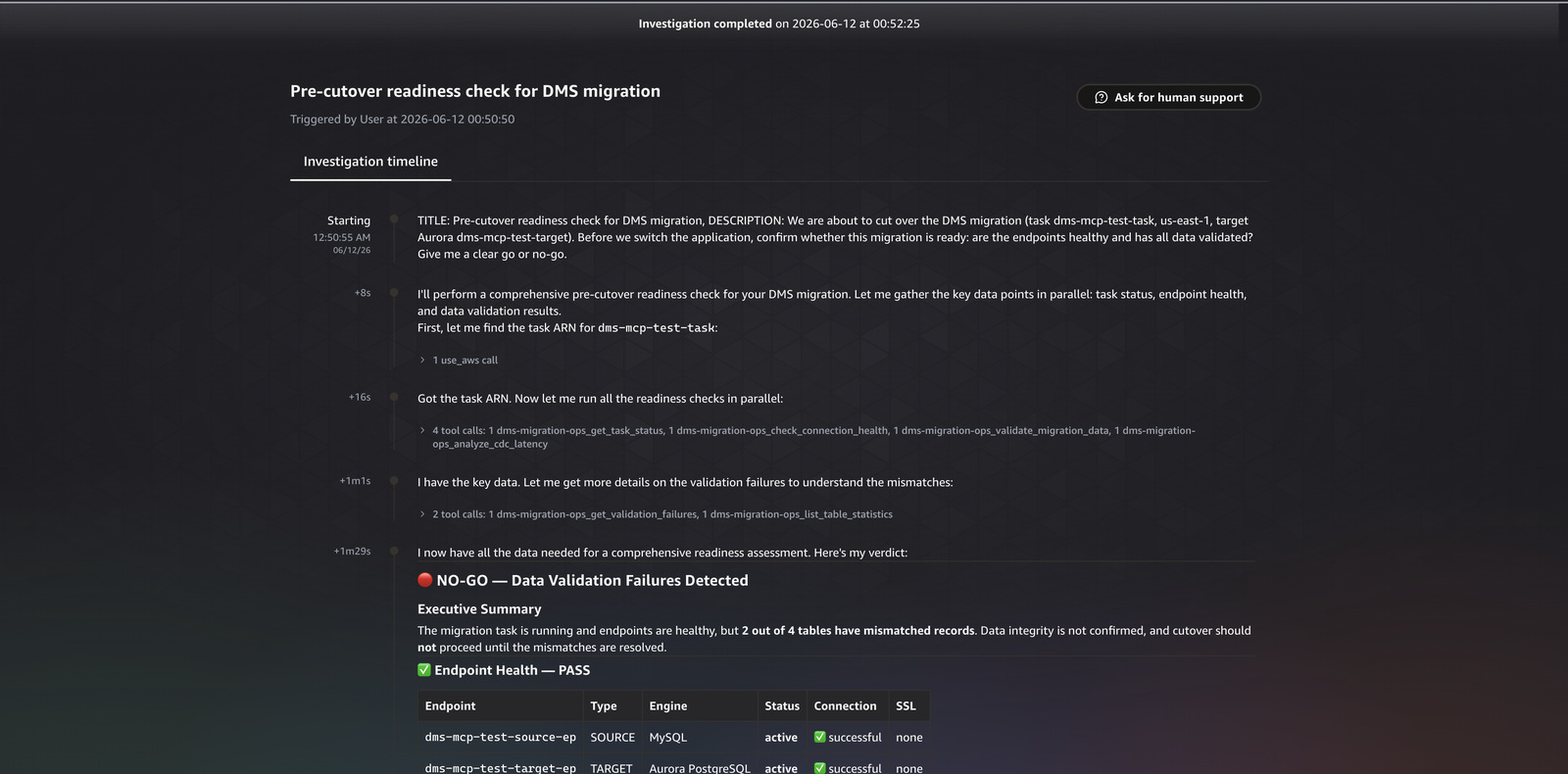
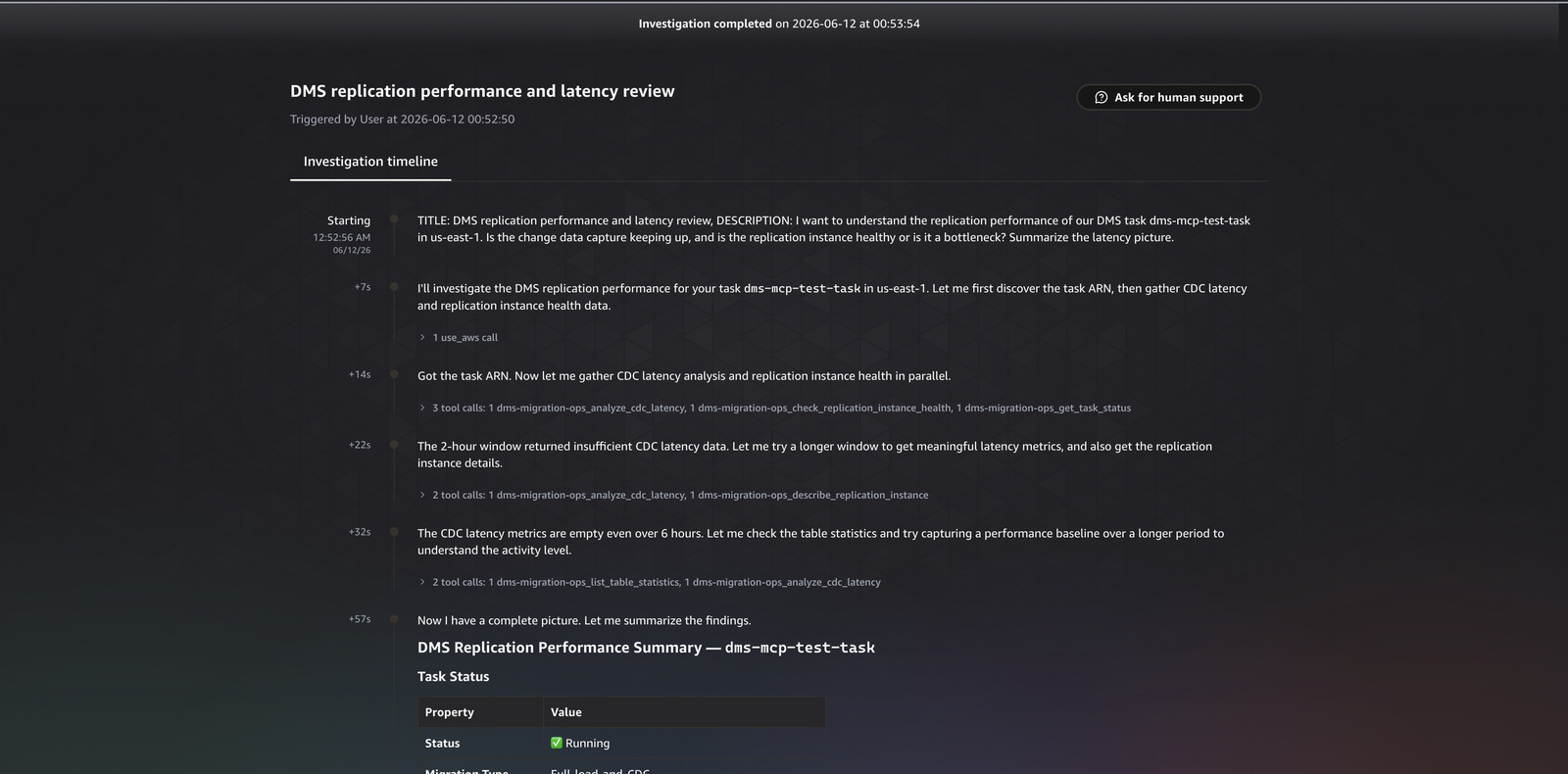
Historically, database migrations followed a linear, manual progression. Initial phases involved pre-migration assessments, followed by schema conversion, full-load data migration, and finally, Change Data Capture (CDC) replication. Throughout this process, engineers spent significant time cross-referencing DMS task statuses with database health metrics. The integration of an MCP-enabled agent changes this dynamic by automating the correlation of disparate data sources. Instead of an engineer spending thirty minutes manually reconciling connection health, replication latency, and validation states, the agent can synthesize these signals in seconds, providing a definitive "go/no-go" recommendation for cutover readiness.
Architecture and Security Protocols
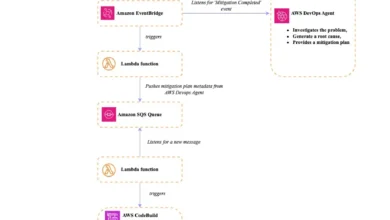
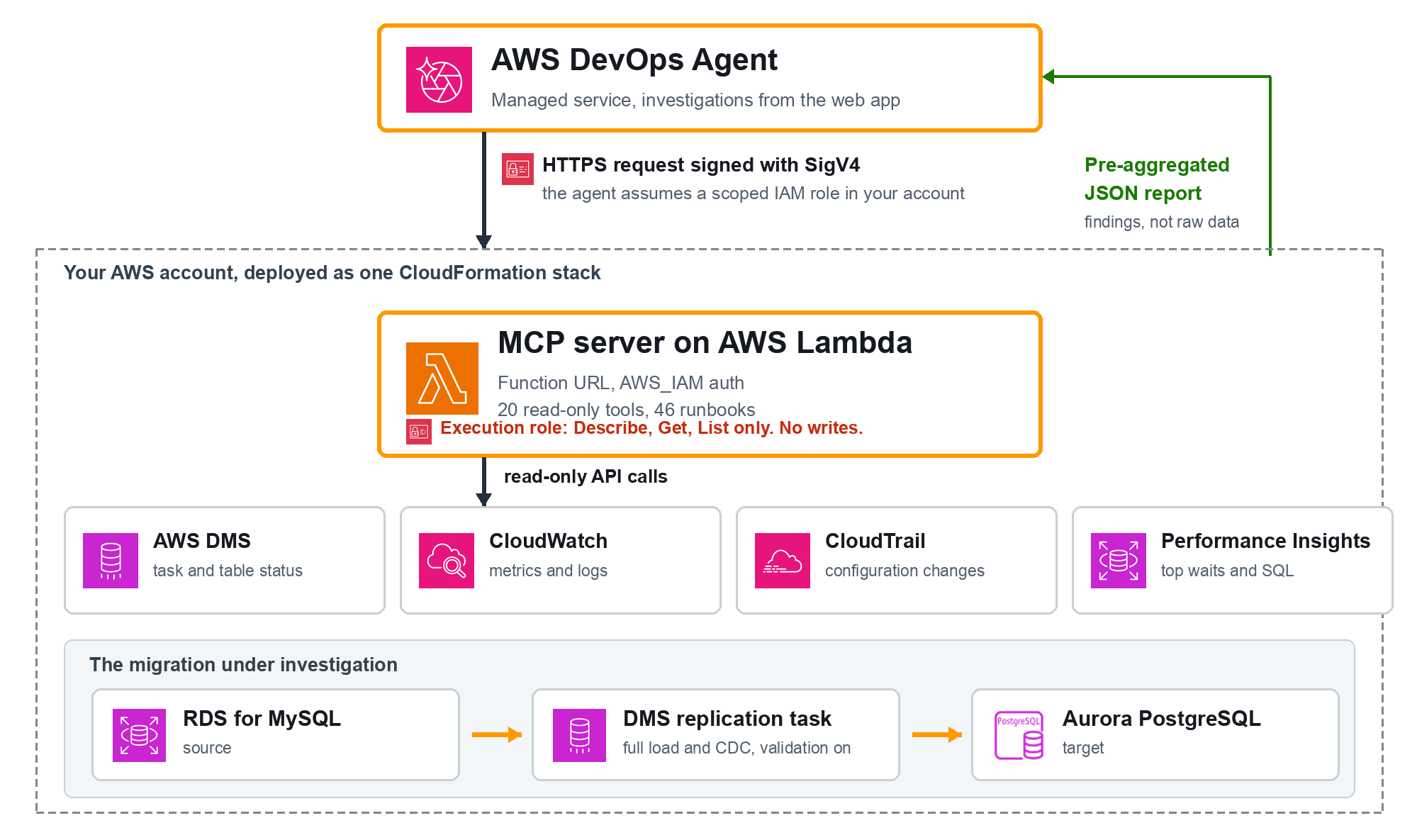
The security architecture of this solution relies on AWS Signature Version 4 (SigV4) to authenticate requests between the AWS DevOps Agent and the MCP server. By deploying the MCP server via AWS Lambda and utilizing a Lambda function URL with AWS_IAM authentication, organizations can ensure that only authorized principals can trigger investigative actions. This design eliminates the need for shared secrets or long-lived API keys, adhering to the principle of least privilege.
The server operates as a stateless intermediary. When an issue occurs—such as a data validation failure or a sudden spike in CDC latency—the agent invokes the server to perform read-only operations. Because the toolset is strictly limited to Describe, Get, List, and Lookup API calls, the agent is incapable of modifying production data. This safety mechanism is essential for enterprise adoption, allowing teams to grant autonomous agents the ability to investigate without granting them the authority to execute destructive changes.
Taxonomy of Migration Failures
Data from recent pilot programs suggests that the vast majority of migration-related incidents fall into seven specific categories: data validation mismatches, full-load completion errors, CDC bottlenecks, endpoint connectivity, replication-instance health, target-side database performance, and cutover readiness.
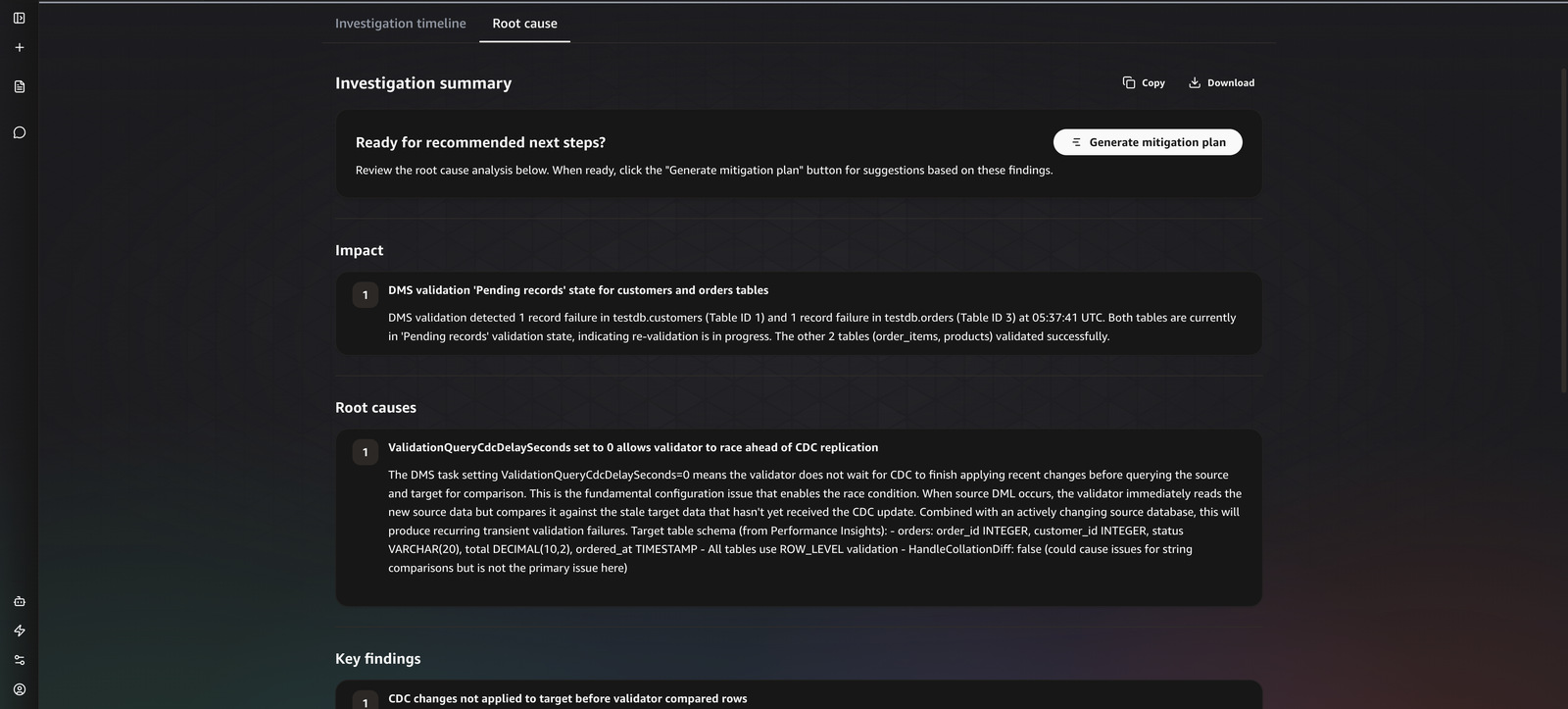
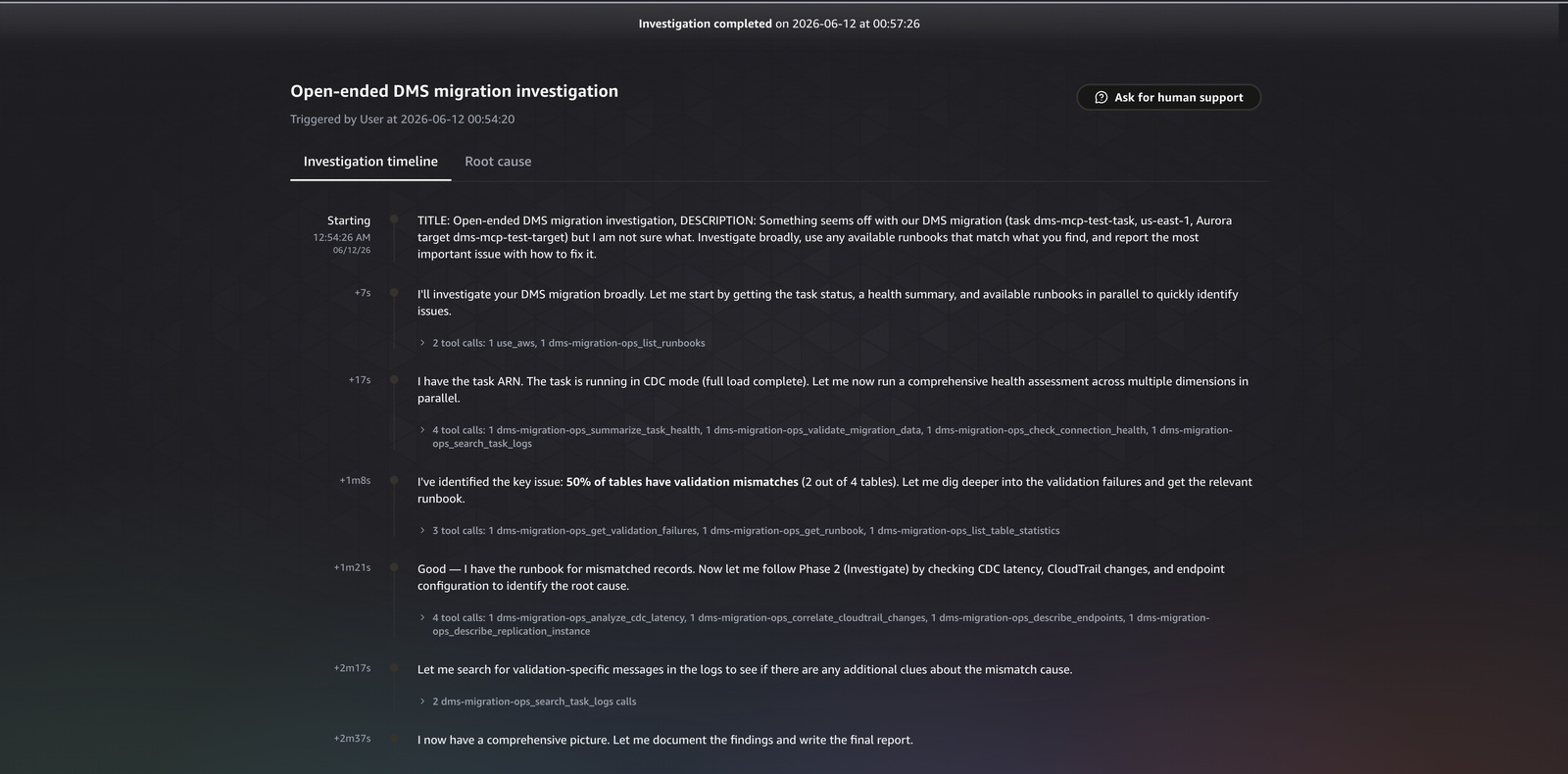
In a controlled environment, investigators analyzed five specific failure scenarios. In one case, a "validation race condition" was identified. When the DMS validator compared source and target records while CDC changes were still in transit, it generated false-positive mismatch reports. The agent, equipped with specific migration runbooks, was able to pinpoint the exact configuration parameter—ValidationQueryCdcDelaySeconds—that required adjustment. This level of granular, context-aware diagnosis illustrates the difference between traditional automated monitoring, which merely alerts on a failure, and agentic AI, which explains the "why" and "how" behind the issue.
Comparative Efficiency: Manual vs. Agentic Response
The impact of this technology on operational efficiency is significant. In standardized test scenarios, manual triage of complex migration issues often requires between 15 and 30 minutes of cross-console investigation. The DevOps Agent, leveraging its integrated toolset, consistently reduced this time to under three minutes per incident.
| Scenario | Manual Triage Time (Approx.) | Agentic Response Time (Approx.) |
|---|---|---|
| Cutover Readiness Check | 20-30 Minutes | < 2 Minutes |
| Validation Failure Analysis | 30+ Minutes | ~ 3 Minutes |
| CDC Latency Assessment | 10-15 Minutes | < 1 Minute |
| Stabilization Review | 15-20 Minutes | ~ 2 Minutes |
These findings are not mere benchmarks but represent the potential for substantial reductions in Mean Time to Resolution (MTTR). By providing the agent with a catalog of 46 specialized runbooks, organizations can institutionalize the knowledge of their most senior engineers. When a new error pattern is identified, it is converted into a structured runbook or an updated "Skill" instruction set, ensuring the system becomes more capable with every migration.
Broader Implications for Cloud Operations
The introduction of MCP-based agents into the database migration lifecycle signals a broader trend toward "agentic cloud management." Industry analysts suggest that as cloud environments grow in complexity, the human capacity to track every metric, log, and configuration change in real-time is being eclipsed. The ability to deploy a "specialist" agent that understands the nuances of a specific service—such as DMS—allows human operators to transition from reactive, manual troubleshooting to higher-level oversight.
However, experts caution that these agents should complement, not replace, traditional observability. "The agent is not a replacement for continuous monitoring or robust alerting," noted lead researchers in the field. "It is an investigative force multiplier." The most successful deployments are those where the agent is used alongside existing CloudWatch alarms, serving as a secondary layer of intelligence that interprets the data when an alarm is triggered.
Future-Proofing Migration Strategies
As enterprises continue to modernize their data estates, the ability to execute migrations with minimal downtime and maximum predictability is a competitive advantage. The ability to "fold back" lessons learned into the agent’s skill set creates a flywheel effect. For example, once the agent identifies a specific bottleneck related to character-set mismatches or precision errors during a migration to Aurora PostgreSQL, that knowledge is permanently captured. Future migrations will automatically benefit from this "learned experience," preventing the recurrence of previous errors.
For organizations looking to implement this, the process is straightforward: deploy the MCP server as an AWS CloudFormation stack, register it within the DevOps Agent environment, and ensure that data validation is active on all DMS tasks. By doing so, teams can ensure that their migration projects are backed by a consistent, repeatable, and increasingly intelligent operational framework.
Ultimately, this evolution in database operations underscores the reality that while migration is a technical event, its success is defined by operational resilience. By bridging the gap between raw telemetry and actionable engineering insights, the integration of autonomous agents into the AWS ecosystem marks a significant step forward in ensuring that production databases remain stable, performant, and reliable throughout the transition to the cloud. As these tools continue to mature, the focus of the IT professional will shift further away from the mechanics of moving data and toward the strategic optimization of the platforms that house it.