The digital landscape is increasingly characterized by a paradox: while an abundance of specialized software tools promises to enhance productivity, users often find themselves overwhelmed by the sheer volume, leading to "tool fatigue" and decreased efficiency. A growing consensus among user experience (UX) professionals and industry analysts suggests that the future of effective human-computer interaction lies not in the proliferation of new applications, but in the intelligent, seamless integration of useful features that align with established user mental models. This paradigm shift emphasizes "Quiet AI" – artificial intelligence that operates unobtrusively in the background, assisting users without demanding constant attention or disrupting familiar workflows.
The Paradox of Digital Productivity: Too Many Tools, Too Little Flow
For decades, the trajectory of software development has often favored specialization. The rise of Software-as-a-Service (SaaS) solutions, in particular, has brought forth an ecosystem where users often employ dozens of distinct applications for various aspects of their daily work – from communication and project management to data analysis and content creation. While each tool may excel in its specific domain, the aggregate effect can be detrimental. Users are frequently forced to navigate between multiple interfaces, remember disparate command sets, and manually transfer information, leading to what is often termed "context-switching" or "app sprawl."
Research consistently highlights the negative impact of this fragmentation. Studies by organizations like the American Psychological Association have shown that frequent task-switching, often necessitated by juggling multiple applications, can decrease productivity by as much as 40 percent and significantly increase error rates. A 2023 survey by Statista indicated that information workers spend an average of 3.6 hours per day searching for information across various platforms, a clear symptom of disconnected tools. This constant friction erodes user satisfaction, increases cognitive load, and ultimately detracts from the core work users are trying to accomplish. The allure of a "shiny new tool" often fades quickly when its adoption requires a fundamental overhaul of deeply ingrained habits or introduces yet another silo into an already fragmented digital routine.
Anchoring Innovation in Established Mental Models
At the heart of effective user experience design is the concept of mental models – the internal representations users have of how a system works. These models are built over years of interaction with technology, shaping expectations about how interfaces should behave, how information should be organized, and how tasks should be accomplished. When new tools or features deviate significantly from these established models, users face a steep learning curve, leading to frustration and resistance to adoption.
The challenge for innovators, particularly those leveraging powerful new technologies like Artificial Intelligence, is to integrate these capabilities in a way that respects and enhances existing mental models, rather than dismantling them. Users are not inherently excited by complex "smart workflows" or the need to master command-line interfaces or engage in endless back-and-forth chat interactions to achieve a simple outcome. Instead, they seek solutions that address problems with high severity, high frequency, and a high level of frustration – all within the comfortable confines of their familiar digital environments. This means embedding intelligence where the work actually happens, making it accessible and intuitive, rather than requiring users to migrate to an entirely new platform.
AI-First vs. Quiet AI: A Crucial Distinction
The advent of advanced Artificial Intelligence has spurred a wave of "AI-first" products, designed from the ground up with AI as their central premise. While these products often showcase impressive technological capabilities and can accelerate certain aspects of production, they frequently overlook the accumulated wisdom of decades of design decisions that have shaped user expectations and mental models. An "AI-first" approach, if not carefully balanced with user-centric design, risks creating powerful but ultimately alienating experiences that force users into entirely new paradigms of interaction. The initial enthusiasm for generative AI, for instance, sometimes led to interfaces that required extensive prompt engineering or presented information in formats unfamiliar to professional workflows, creating a barrier to widespread adoption beyond early enthusiasts.
In contrast, the concept of "Quiet AI" represents a more subtle, yet profoundly impactful, approach. Quiet AI tools are largely invisible, operating discreetly in the background to perform small, assistive tasks on the user’s behalf. They do not demand attention but rather anticipate needs, automate repetitive processes, and augment human capabilities without disrupting the flow of work. This form of AI seamlessly integrates into existing applications and workflows, acting as an intelligent helper that alleviates common pain points.
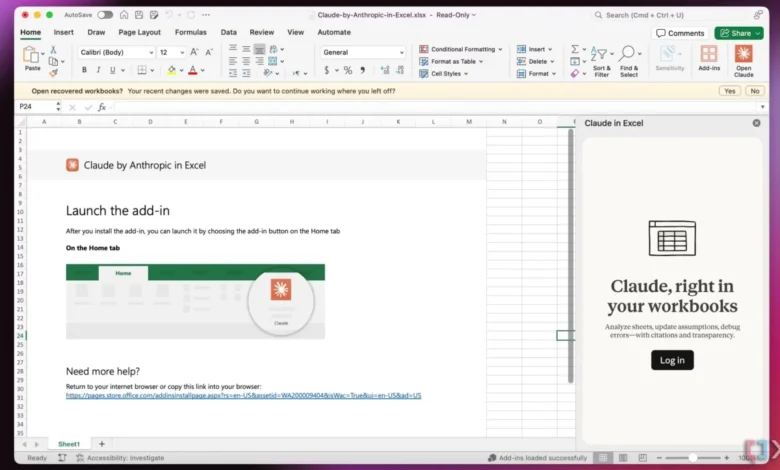
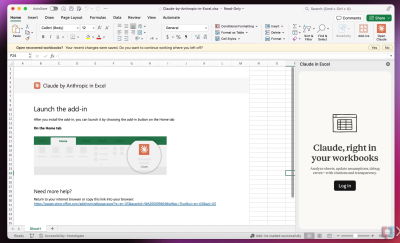
A prime example of Quiet AI in action is the integration of advanced language models like Claude within widely used applications such as Microsoft Excel, PowerPoint, and Word. Instead of requiring users to copy data into a separate AI application for analysis or text generation, Claude can assist directly within the context of their current document or spreadsheet. Users can leverage AI to analyze specific rows or columns in Excel, summarize lengthy documents in Word, or generate slide content in PowerPoint – all without ever leaving the familiar Microsoft Office environment. This not only streamlines workflows but also significantly reduces the cognitive load associated with switching between different applications, ensuring that the AI truly serves the user, rather than the other way around. Industry analysts, such as those from Gartner, have noted a significant uptick in demand for such embedded AI capabilities, predicting that by 2027, over 80% of enterprise applications will feature some form of integrated AI assistance.
"Folder Instructions": A Paradigm for System-Level AI Integration
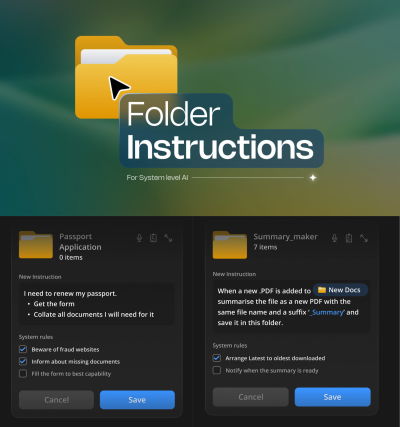
Further illustrating the power of seamless integration is the innovative concept of "folder instructions" for system-level AI actions, as eloquently articulated by Karthikeya GS. This idea reimagines traditional file management by allowing users to define the intent of a folder, effectively turning it into an intelligent agent that automates tasks based on its designated purpose.
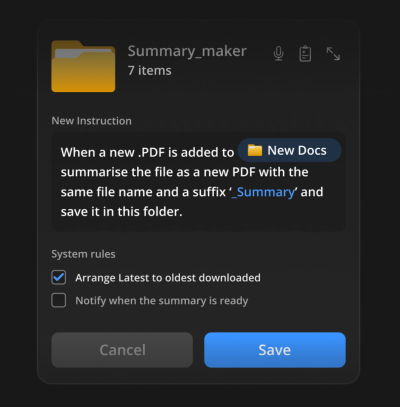
Imagine creating a folder titled "Passport Application." Instead of merely being a container, this folder could be configured with specific instructions: "Collect all necessary documents (birth certificate, previous passport scan, photos, application form). Check for completeness. If all documents are present, draft an email to the passport office attaching the completed application. If a document is missing, notify me." Similarly, a folder named "Summarize Research Papers" could automatically process any PDF dropped into it, extracting key findings, generating an executive summary, and perhaps even categorizing it based on topic – all without explicit user prompts beyond the initial setup.
This approach offers several compelling advantages:

- Contextual Automation: AI assistance is available precisely where and when it is needed, directly within the user’s established file management system.
- User-Defined Control: Users retain full control, defining instructions and system rules that are locally scoped to that specific folder on their machine. Permissions and actions are not extended unless explicitly authorized by the user, addressing privacy and security concerns.
- Reduced Manual Overhead: Repetitive and frustrating tasks, such as organizing files, checking for completeness, or generating summaries, are automated, freeing up user time and reducing the potential for human error.
- Alignment with Mental Models: Users are already accustomed to organizing files into folders. This system simply imbues those familiar containers with intelligence, enhancing an existing mental model rather than introducing a new one.
This concept represents a profound shift towards a more proactive and intelligent operating system, where the environment itself becomes an active participant in managing and processing information according to user-defined intent. It moves beyond reactive AI, where users must initiate every interaction, to a system where AI anticipates and executes tasks based on the established context of user activities.
Broader Implications for Design and Development
The emphasis on seamless integration and "Quiet AI" carries significant implications for software design, development, and the competitive landscape:
- For Users: The primary benefit is a more fluid, less fragmented digital experience. Productivity increases not just from faster task completion, but from a reduction in cognitive burden and mental fatigue. This fosters greater job satisfaction and allows users to focus on higher-value, creative work.
- For Businesses: Organizations can expect improved operational efficiency, fewer errors, and better data hygiene. Employee training costs for new tools may decrease, and the overall return on investment for technology stacks could improve as existing tools become more powerful through intelligent integration. Companies that adopt this philosophy are likely to see higher user adoption rates for new features.
- For Software Developers and Designers: The focus shifts from feature bloat to thoughtful integration. This requires a deeper understanding of user workflows, a commitment to robust APIs, and a collaborative mindset to ensure different systems can communicate effectively. Designers must prioritize intuitive interfaces that make powerful AI capabilities accessible without overwhelming the user. The challenge is to make the technology disappear, allowing the user’s intent to drive the interaction.
- Competitive Landscape: Software vendors that successfully integrate AI into their existing product lines, enhancing core functionalities without disrupting established user habits, will likely gain a significant competitive edge. This encourages partnerships and ecosystem development, rather than purely standalone solutions.
Wrapping Up: The Future is Integrated, Not Isolated
The true value in the digital experience does not emerge from users constantly juggling between multiple applications, views, and sources every few minutes. Such fragmentation leads to slowdowns, mistakes, and immense frustration. Instead, value is created by intelligently assisting users in the work they need to do – by proactively reducing friction, mitigating delays, and taking care of tasks that would otherwise consume too much time and effort.
Seamless integrations, though often underused, represent an incredibly impactful way to deliver this value. They enhance existing tools with advanced capabilities, allowing users to leverage powerful AI without the burden of installing and learning yet another standalone application. This approach champions an era where technology truly serves humanity by fading into the background, empowering users to achieve their goals with greater ease and efficiency. The ongoing evolution of human-computer interaction will undoubtedly be defined by how elegantly and unobtrusively we can weave intelligent assistance into the fabric of our daily digital lives.
For those eager to delve deeper into crafting such intelligent and user-friendly experiences, resources like "Design Patterns For AI Interfaces" by Vitaly offer a comprehensive video course. It provides hundreds of real-life examples and UX guidelines specifically tailored to designing AI features that people genuinely use, underscoring the principles of integration and user-centricity that will define the next generation of digital tools. This course, complemented by live UX training, aims to equip designers and developers with the knowledge to create AI interfaces that seamlessly augment human capabilities, proving that the most powerful AI is often the quietest and most integrated.