The Elusive Nature of User Truth
The journey to genuine user understanding is fraught with complexities, primarily because human behavior is rarely straightforward. Companies frequently operate on "big assumptions and big hunches" about their users, overlooking the critical fact that surface-level statements can be misleading. Users themselves are often unreliable narrators of their own experiences and motivations, influenced by a myriad of cognitive biases, social pressures, and the inherent difficulty of articulating subconscious drivers. This foundational challenge underscores the necessity for research methodologies that delve beneath verbal declarations to uncover the true impetus behind user actions. The reliance on easily gathered data, such as direct survey responses or anecdotal feedback, can inadvertently lead to product development decisions based on an incomplete or even distorted understanding of the target audience.
In an increasingly user-centric market, the cost of misunderstanding customers is substantial, ranging from wasted development resources to failed product launches and diminished brand loyalty. Early adopters of user experience (UX) research often focused on basic usability testing, asking users direct questions about their preferences or difficulties. However, the field has evolved considerably, recognizing that genuine insights emerge not just from what users say, but from a holistic investigation into why they act in particular ways. This evolution reflects a growing acknowledgment that effective design is not merely about fulfilling stated requirements but about anticipating unarticulated needs and addressing underlying frustrations.
The Four Levels of Customer Understanding: A Framework for Depth
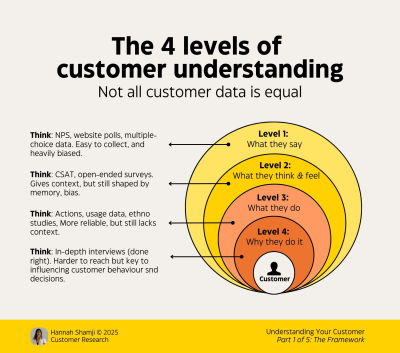
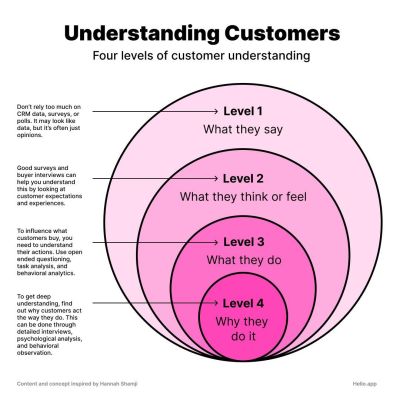
To navigate this complex landscape, experts advocate for a multi-layered approach to customer understanding. Hannah Shamji’s framework, which triangulates across four distinct levels, offers a robust model for achieving this depth. This framework moves systematically from the most superficial expressions to the deepest underlying motivations, providing a structured path to comprehensive insight.
-
Level 1: What They Say: This outermost layer represents direct verbal feedback, survey responses, and stated preferences. While seemingly straightforward, this level is often the most deceptive. Users may provide socially desirable answers, articulate what they think they want based on limited information, or simply struggle to express their true feelings accurately. For instance, a user might say they want "more features" without being able to specify which ones, or state a preference for a particular aesthetic that doesn’t align with their functional needs. This data, while easy to collect, requires careful interpretation and should never be the sole basis for design decisions. Its primary value lies in identifying initial areas of interest or concern, which then warrant deeper investigation.
-
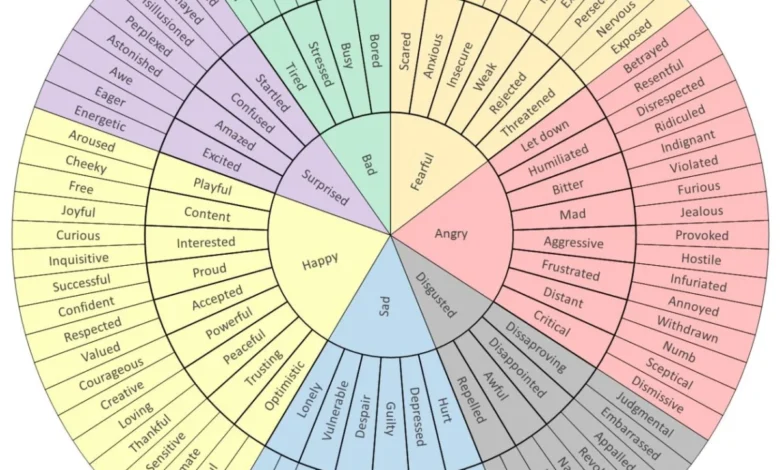
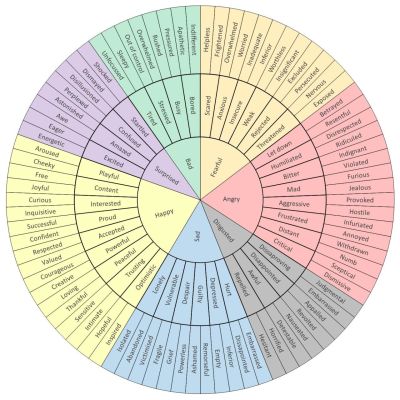
Level 2: What They Think or Feel: This level delves into users’ cognitive and emotional states, exploring their conscious thoughts, beliefs, expectations, and immediate emotional responses. This goes beyond mere statements to understand the internal monologue and affective reactions. Researchers might employ techniques like journaling, contextual interviews, or emotional mapping to access this layer. For example, a user might express frustration (feeling) when navigating a complex menu, or articulate a belief (thinking) that a certain feature is missing, even if it exists elsewhere. While richer than "what they say," this level is still subject to self-reporting biases and may not fully reveal unconscious drivers. The "Emotion Wheel" by Geoffrey Roberts, for instance, can be a helpful tool in user interviews to guide individuals beyond simplistic "good" or "bad" descriptors, allowing for more precise articulation of their emotional state during an interaction.
-
Level 3: What They Do: This crucial level shifts the focus from introspection to observable behavior. It involves meticulously tracking and analyzing how users interact with a product or service in real-world or simulated environments. Data sources at this level include analytics (clickstreams, navigation paths, time on task), eye-tracking studies, and direct observation during usability testing. What users do often contradicts what they say or think. For example, a user might state a strong preference for a particular navigation style but consistently struggle to use it, or they might express satisfaction with a process while repeatedly abandoning it mid-way. This behavioral data provides an objective record of interaction, uncolored by self-reporting biases, making it an invaluable source for identifying pain points and areas for improvement.
-
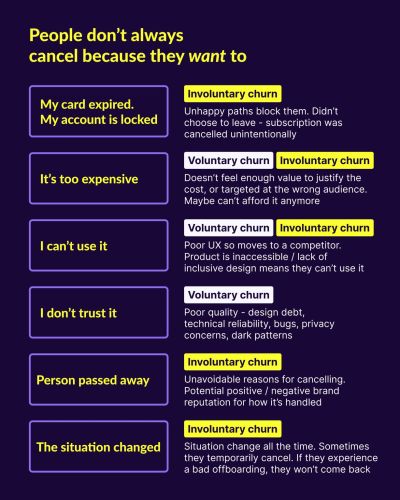
Level 4: Why They Do It: This innermost and most challenging level aims to uncover the fundamental motivations, goals, and underlying needs that drive user behavior. It seeks to understand the "job to be done" – the deeper purpose a user is trying to achieve by interacting with a product or service. This level requires synthesizing insights from all previous layers, combined with ethnographic research, in-depth interviews, and psychological analysis. Understanding "why" a user acts allows designers to create solutions that address root causes rather than just superficial symptoms. For instance, knowing that a user cancels a subscription not because they dislike the service (Level 1/2) but because their financial situation changed (Level 4) allows a company to offer different solutions, such as a temporary pause or a more flexible plan, rather than just improving features. This deep understanding moves beyond feature-level thinking to strategic design that truly resonates with users’ lives.
The Peril of Direct Questions and Linguistic Ambiguity
A significant impediment to achieving profound user understanding is the common practice of directly asking users "burning questions." As Erika Hall insightfully notes, asking a question directly is often "the worst way to get a true and useful answer to that question." This is because individuals are not always privy to their true motivations, or they may unknowingly apply their own context and interpretations, leading to biased or inaccurate responses. Users tend to exaggerate, focus on "edge cases," and often prioritize "short-term goals" over more significant long-term objectives, further skewing the data. For instance, if users emphatically request a "product comparison table," their underlying goal might simply be to make an informed purchasing decision efficiently, a goal that could potentially be met through alternative, less complex design solutions.
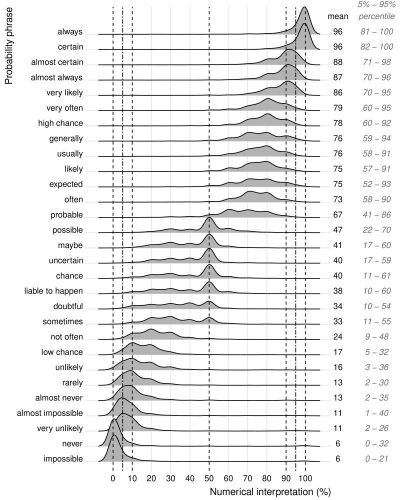
Beyond these cognitive pitfalls, the very language we use and interpret can introduce substantial ambiguity. Research by Thomas D’hooge, highlighting the distinction between "possible," "plausible," and "probable," underscores how subtle nuances in verbal probability terms can lead to widely divergent numerical interpretations. A study on Dutch verbal probability terms further illustrates this, revealing that while extreme words ("certainly," "never") might elicit some agreement, terms like "possible," "maybe," "uncertain," or "likely" are subject to a vast spread of interpretations among individuals. This linguistic imprecision means that relying solely on what people say in response to direct questions can lead to misinterpretations and flawed design decisions. Researchers must therefore adopt methods that transcend the limitations of language, focusing instead on observed behavior and inferred motivations.
Empathy and Observation: Redefining Research Methodologies
The evolution of UX research has seen a critical shift from purely interrogative methods to more observational and empathetic approaches. Early techniques, such as the "speak-aloud protocol," where users verbalize their thought processes while completing tasks, have been found to be disruptive. The cognitive load of simultaneously performing a task and articulating one’s thoughts can obscure genuine emotions and hinder natural behavior. As a result, many valuable insights remain hidden or are distorted by the verbalization process itself.
Current best practices in usability testing increasingly advocate for silent observation. Researchers meticulously watch user interactions – where they tap, hover, scroll, pause, and navigate – without interruption. This allows for the capture of authentic behaviors and subtle non-verbal cues that speak volumes about a user’s experience. Only after a task is completed, or when a user explicitly indicates being stuck, are questions posed. This allows researchers to inquire about specific observed behaviors or expressions of confusion, frustration, or delight, providing context to the actions without influencing them.
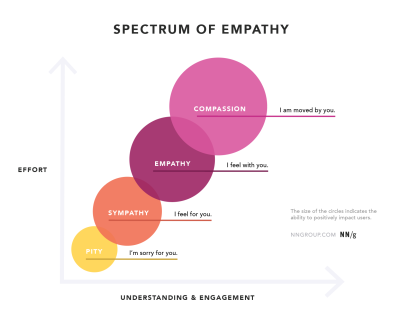
The ability to positively impact users is profoundly enhanced by moving along a "Spectrum of Empathy," as articulated by Sarah Gibbons. This spectrum progresses from pity to sympathy, then to empathy, and finally to compassion. While pity and sympathy involve feeling for someone, empathy involves feeling with someone, understanding their experience from their perspective. Compassion takes this a step further, combining understanding with a desire to alleviate suffering or improve their situation. While some, like Alin Buda, argue against an overemphasis on emotional absorption, asserting that "our job is to make sense of it and then do something about it. Not to emote or perform but to act on and solve it," the emotional response of a user serves as a vital "signal." These signals indicate how well a product is functioning, the user’s level of engagement, their confidence, or their confusion. Emotions, therefore, are not ends in themselves but critical indicators that guide researchers toward deeper behavioral and motivational inquiry. The goal is not merely to feel what the user feels, but to leverage that emotional insight to diagnose underlying problems and design effective solutions. Tools like the Emotion Wheel can be invaluable post-observation, helping users articulate nuanced feelings that might otherwise be dismissed as simple "good" or "bad" experiences. Techniques like "mirroring" – repeating what a user has said or rephrasing a question – can also encourage users to elaborate, uncovering deeper contexts and details that were initially withheld.
From Validation to Diagnosis: A Paradigm Shift in UX Research
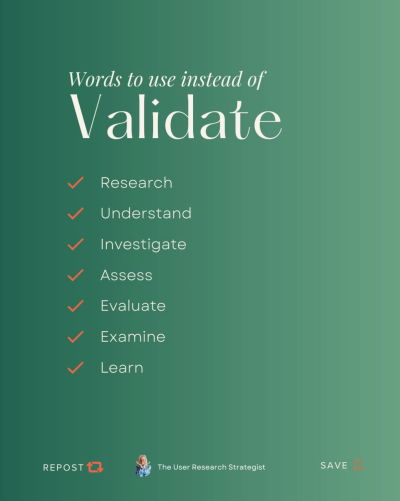
A prevalent misconception in product development is the idea of "validation" through user testing. Often, this term is misused to mean confirming pre-existing assumptions or justifying design decisions already made. However, true user research is not about validating; it is about "diagnosing existing behavior" without preconceived notions. As Nikki Anderson suggests, instead of "validate," teams should aim to "research," "understand," "investigate," "assess," "evaluate," "examine," and "learn." This fundamental shift in mindset is crucial for unbiased discovery.
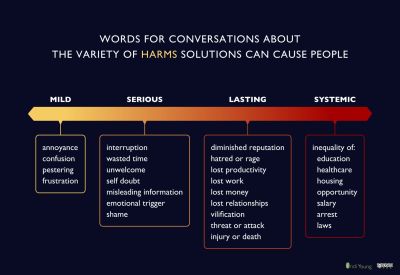
The dangers of a "validation" approach are manifold: it can lead to confirmation bias, where researchers selectively interpret data to support their hypotheses; it can result in tunnel vision, preventing the discovery of unforeseen problems or opportunities; and it ultimately leads to products that are optimized for assumptions rather than real user needs. Genuine research, in contrast, involves a relentless pursuit of understanding "customers’ real motivations," including their risks, doubts, concerns, worries, and potential harms, as highlighted by Indi Young. This requires building a "sincere, honest, and trustworthy relationship" with users, where they feel comfortable sharing their true experiences without fear of judgment. When users genuinely care and trust the research process, the path to authentic understanding becomes significantly clearer and more impactful. This diagnostic approach fosters a culture of continuous learning and iterative improvement, where product teams are constantly seeking to refine their understanding and adapt their solutions based on empirical evidence.
Actionable Strategies for Uncovering Deep User Needs
Uncovering profound user needs does not necessarily demand elaborate or expensive tools. Instead, it requires a commitment to creating environments where "customers’ struggles can be exposed" and made "visible across the entire company." David Travis provides a comprehensive overview of numerous practical strategies that extend beyond traditional focus groups or surveys.
Key initiatives include:
- Sharing Short Video Clips of User Sessions: These raw, unfiltered glimpses into user interactions can be incredibly powerful. A brief video showing a user struggling with a particular interface element, expressing confusion, or delighting in a smooth interaction can convey more impact than reams of data or written reports. These clips serve as a visceral reminder of the human element behind the product.
- Monthly Newsletters Detailing Research Learnings: A regular digest of insights gleaned from user research can keep all departments—from marketing and sales to engineering and product management—informed and aligned. Highlighting recurring pain points, unexpected behaviors, or unmet needs ensures that user struggles remain "at the back of their minds" throughout the development cycle.
- Observational Walkthroughs: Inviting non-research team members to observe live user sessions or participate in field studies can foster empathy and a direct understanding of user challenges. This direct exposure can dismantle preconceived notions and build a shared sense of purpose.
- User Personas and Journey Maps: While not direct research methods, these artifacts are powerful tools for synthesizing and communicating deep user understanding. They consolidate qualitative and quantitative data into relatable narratives that illustrate user goals, motivations, pain points, and entire experiences, helping teams design with a clear user in mind.
- Customer Support Analysis: Examining customer support tickets, chat logs, and call transcripts can reveal recurring issues, common misunderstandings, and areas of significant frustration. This passive data collection offers insights into real-world problems users encounter when primary methods fail or are not immediately available.
The core principle behind these strategies is to democratize user insights. By making user struggles visible and tangible across the organization, companies can cultivate a user-centric culture where everyone, regardless of their role, feels connected to the customer experience and motivated to contribute to meaningful solutions. This collective awareness fosters a proactive approach to problem-solving and innovation, moving beyond reactive fixes.
Triangulation and Synthesis: Building a Holistic View
Achieving a "more realistic and less biased view of customers’ needs" necessitates a multi-faceted approach, emphasizing "triangulation" across various data sources and methodologies. Different research levels and methods often reveal "conflicting or contradictory data," which is not a sign of failure but an opportunity for deeper inquiry. For instance, quantitative data might show a high bounce rate on a particular page, while qualitative interviews reveal that users say they find the page useful. Reconciling such discrepancies requires careful analysis, often through mixed-method research, to understand the underlying causes of the conflicting signals. This might involve further investigation into specific user segments, re-evaluating the research questions, or designing new experiments to test hypotheses derived from the conflicting data.
Furthermore, relying on single, simplistic metrics like the Net Promoter Score (NPS) can be insufficient, as these often capture surface-level sentiment without revealing the "why" behind the score. While NPS can be a useful directional indicator, it should always be complemented by qualitative data and behavioral analysis to provide meaningful context. The goal is to synthesize insights from quantitative metrics (e.g., analytics, A/B tests), qualitative feedback (e.g., interviews, usability tests), and observational data to construct a comprehensive and coherent understanding of the user experience. This holistic view allows organizations to move beyond mere metrics to actionable insights that drive strategic product improvements.
Broader Implications for Business and Product Development
The implications of truly understanding user intent extend far beyond individual product features. A deep, empathetic, and evidence-based understanding of customers forms the bedrock of sustainable business growth and competitive differentiation. Companies that excel in this area are better equipped to innovate, anticipate market shifts, and build enduring customer relationships.
Strategically, this understanding leads to products that are not only usable but also desirable and valuable, fostering higher user engagement, satisfaction, and loyalty. Operationally, it streamlines product development cycles by reducing rework and misguided efforts, leading to more efficient resource allocation. Ethically, a commitment to understanding users, including potential "harms" as Indi Young points out, ensures that products are designed responsibly, minimizing negative consequences and promoting inclusivity.

Ultimately, the pursuit of deep user understanding is a continuous organizational journey, not a one-time project. It requires an ongoing investment in robust research, a culture that values learning over assumptions, and a leadership commitment to placing the user at the core of every strategic decision. Without this foundational commitment, product development risks becoming an expensive guessing game, yielding solutions that fail to resonate with the complex and evolving needs of their intended audience.
Conclusion
To make a tangible impact in today’s dynamic market, organizations must transcend superficial user feedback. It is never enough to passively collect survey responses or listen to casual suggestions. Instead, a proactive and rigorous approach is required: one that meticulously "observes customers’ actual behaviors," diligently builds "trustworthy relationships," and relentlessly seeks to comprehend their deepest goals and underlying motivations. Crucially, this process involves defining precisely "what questions we actually want to have answered," moving beyond mere "validation" to genuine, open-ended "research." This commitment to authentic inquiry, exploring what remains unknown rather than merely confirming existing biases, is the only reliable path forward. Without this profound, multi-layered understanding, all product development efforts remain rooted in "hunches and assumptions"—often proving to be both inaccurate and prohibitively expensive in the long run.