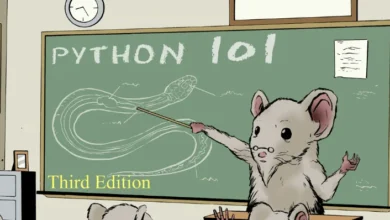
Python 101 Third Edition Kickstarter Campaign Launches to Update Beginner Programming Education for Modern Standards

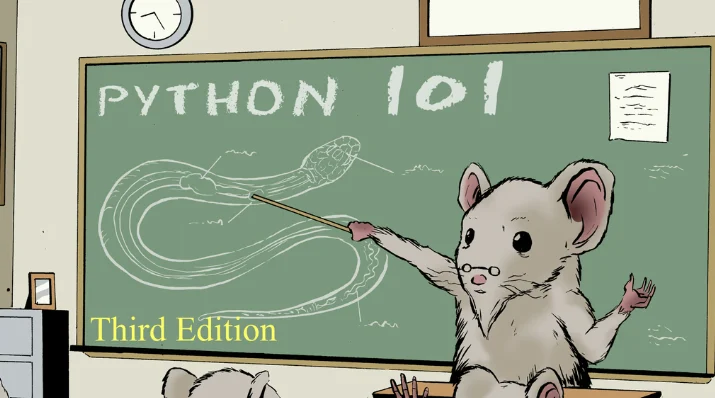
Long-time software developer, author, and technical educator Michael Driscoll has officially launched a crowdfunding campaign for the third edition of his widely recognized programming guide, Python 101. Hosted on the Kickstarter platform, the campaign aims to secure the financial backing necessary to rewrite, edit, and publish a thoroughly modernized version of the textbook. The initiative arrives at a pivotal moment in the software development industry, where Python continues to dominate global programming indices while simultaneously undergoing rapid syntactic and structural modernization. By turning to crowdfunding, Driscoll seeks to maintain the independence and quality of the publication process, ensuring the final output directly meets the pedagogical needs of contemporary learners entering the tech workforce.
The Evolution of Python 101 and the Necessity for a Third Edition
Since its original publication, Python 101 has served as a foundational gateway for thousands of aspiring developers, academic students, and professionals seeking to integrate automation into their daily workflows. However, the Python ecosystem is not static. Over recent years, the language has introduced major performance enhancements, refined type-hinting standards, and sophisticated syntactic additions—such as structural pattern matching introduced in Python 3.10 and continuous speed optimizations spearheaded by core developers.
As the programming language evolves, instructional materials risk obsolescence if they fail to adapt. The previous iterations of Python 101, while successful for their respective eras, reflect earlier paradigms of the language. The third edition is designed to bridge the gap between legacy teaching methods and modern Pythonic best practices. According to project announcements, this upcoming volume is not merely a superficial copy-editing pass; it represents a ground-up restructuring aimed at addressing contemporary development workflows, including modern environment management, enhanced error handling, and cleaner idiomatic code structures.
Target Audience and the Accessibility Paradigm in Coding Education
The educational philosophy underpinning Python 101 has consistently centered on radical accessibility. The modern technology sector faces a dual challenge: an unprecedented demand for skilled software engineers and a persistent barrier to entry characterized by overly dense academic literature or advanced computer science prerequisites. Driscoll’s curriculum specifically targets absolute beginners who possess no prior programming background, alongside self-taught hobbyists and professionals transitioning from non-technical disciplines.
Data from major developer surveys, including the annual Stack Overflow Developer Survey, consistently rank Python as one of the most desired and commonly used programming languages globally. Its readability and versatility make it the default language for artificial intelligence, machine learning, data science, web development, and systems automation. Despite this popularity, true beginner-friendly resources that bridge the gap between basic syntax and practical application remain in high demand. The third edition of Python 101 aims to democratize technical education further by stripping away academic jargon and focusing heavily on practical, hands-on code examples that students can immediately apply to real-world scenarios.
Understanding the Crowdfunding Model for Technical Literature
The choice to launch Python 101 Third Edition via Kickstarter highlights a broader shift in how specialized technical literature is financed and produced. Traditional publishing houses often impose rigid formatting constraints, aggressive timelines, and commercial restrictions that can compromise the depth and independence of technical manuals. Crowdfunding bypasses these traditional bottlenecks, allowing authors to maintain creative control while establishing a direct line of communication with their reader base.
Through Kickstarter, financial contributions directly subsidize the critical phases of book production, including professional technical editing, peer review, layout design, and digital or physical distribution logistics. This model establishes a symbiotic relationship between author and reader. Backers are not merely purchasing a commodity in advance; they are actively investing in the creation of a public educational resource. Furthermore, tiered pledge structures typically offer tiered rewards, ranging from digital e-book editions and physical paperback copies to supplementary code repositories, instructional screencasts, and acknowledgement in the book’s dedication pages.
Chronology of Python’s Growth and the Rise of Modern Documentation
To contextualize the release of Python 101 Third Edition, one must examine the rapid trajectory of the Python programming language over the past decade. Created by Guido van Rossum and first released in 1991, Python experienced exponential adoption during the 2010s, largely driven by the explosive growth of data analytics and machine learning frameworks like TensorFlow and PyTorch.
The transition from Python 2 to Python 3—completed officially in 2020 after a protracted, decade-long deprecation cycle—marked a watershed moment for the language. Since the stabilization of Python 3, the language’s steering council has prioritized developer velocity, memory safety, and performance parity with compiled languages. Major milestones such as Python 3.11 introduced dramatic speed improvements, making the language increasingly attractive for cloud-native and high-performance computing environments.
As the language matured, the pedagogical community faced a unique challenge: teaching modern Python required unlearning legacy habits that were standard practice just a few years prior. Books written during the early phases of Python 3 adoption frequently omitted advanced typing constructs or modern async/await programming patterns. By updating Python 101 to reflect the current state of the language—specifically aligning with Python versions 3.12 and 3.13—the author ensures that new developers build habits grounded in current industry standards rather than outdated idioms.
Broader Industry Implications and the Future of Python Training
The publication of an updated, highly accessible beginner text carries significant implications for the broader technology labor market. Industry analysts frequently point to a widening skills gap in software engineering, where entry-level candidates struggle to transition from theoretical tutorial hell to practical, production-ready coding.
Educational texts that prioritize practical problem-solving over abstract computer science theory play a vital role in workforce development. By lowering the cognitive barrier to entry, resources like Python 101 enable professionals from diverse fields—such as finance, biology, marketing, and administration—to upskill and incorporate automation into their respective industries. This democratization of code literacy not only benefits individual career trajectories but also accelerates digital transformation across traditional sectors of the economy.
Moreover, the success of independent technical publishing models demonstrates that readers value authentic, community-supported educational materials. As automated code generators and AI-driven tutors become ubiquitous, the value proposition of human-authored textbooks shifts toward structured mentorship, pedagogical clarity, and curated learning pathways. A well-crafted foundational text offers a structured cognitive roadmap that raw AI prompts frequently fail to replicate for absolute novices.
Conclusion and Next Steps for the Kickstarter Campaign
As the Kickstarter campaign for Python 101 Third Edition progresses, attention turns toward meeting its production milestones and engaging the broader developer community. Technical authors and independent educators continue to watch such campaigns closely as a barometer of health for independent technical publishing.
For prospective learners, students, and seasoned professionals looking to support the project or secure their copy of the upcoming book, the campaign page remains open for pledges and community updates. By leveraging collective patronage to fund editorial and production expenses, the project stands as a testament to the collaborative nature of software development education—proving that the best technical resources are often built by the community, for the community.
Related posts: