Microsoft’s July Patch Tuesday Unleashes a Record-Breaking Barrage of 570 Security Fixes, Fueled by AI Advancements

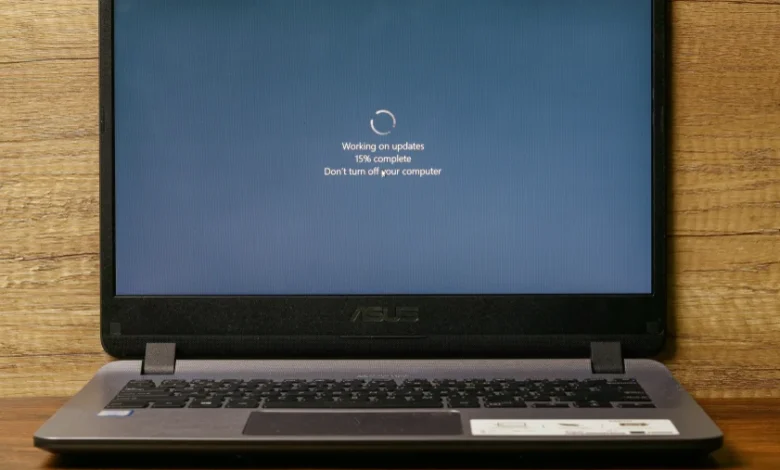
Microsoft Corp. today released software updates to plug at least 570 security holes in its Windows operating systems and other software, almost triple the number of vulnerabilities the software giant fixed in its record-smashing Patch Tuesday release last month. Microsoft attributed the burgeoning patch counts to vulnerability discoveries aided by artificial intelligence. The sheer volume of this month’s security update, dubbed "Patch Tuesday" by industry insiders, signals a significant escalation in the digital arms race, with artificial intelligence emerging as a dual-edged sword in the ongoing battle for cybersecurity.
The Unprecedented Scale of July’s Security Overhaul
The July 2026 Patch Tuesday, released on the second Tuesday of the month as is customary for Microsoft, stands out not just for its sheer quantity of fixes but also for the critical nature of many of the vulnerabilities addressed. A staggering 570 security flaws were patched across Microsoft’s extensive software ecosystem, encompassing the ubiquitous Windows operating systems, server products, and various other applications. This figure represents a dramatic surge from previous months, with last month’s record of approximately 200 fixes now appearing modest by comparison.
Of the nearly 60 vulnerabilities classified as "critical," a substantial portion posed an immediate and severe threat. These critical flaws are particularly concerning as they could allow malicious actors or malware to gain complete remote control over a vulnerable Windows device with minimal to no user interaction. Such vulnerabilities are prime targets for exploitation, as they offer a low barrier to entry for attackers seeking to compromise systems for various nefarious purposes, including data theft, espionage, or launching further attacks.
Microsoft also addressed three zero-day vulnerabilities, a particularly alarming category. Zero-day flaws are software weaknesses that are unknown to the vendor or for which no patch has yet been released. The fact that two of these zero-day vulnerabilities were already being actively exploited in the wild underscores the urgency with which organizations needed to apply these updates. The discovery and exploitation of zero-days often precede widespread awareness, leaving systems vulnerable for a period before vendors can respond.
AI: The Catalyst for Increased Vulnerability Discovery and Exploitation
Microsoft’s acknowledgement of artificial intelligence’s role in accelerating vulnerability discovery is a pivotal development. Pavan Davuluri, Executive Vice President at Microsoft, articulated this shift in a blog post on July 9th, stating, "The pace of vulnerability discovery is changing with advances in AI making it possible to find more issues, faster, across more code, with new mechanisms that can accelerate both discovery and analysis." This statement confirms what many in the cybersecurity industry have anticipated: AI’s capabilities are now significantly impacting the speed and scale at which software vulnerabilities are identified.
AI-powered tools can analyze vast amounts of code with unprecedented efficiency, identifying patterns and anomalies that might elude human researchers. This enhanced discovery capability means that more vulnerabilities are being unearthed, leading to the larger patch releases observed by Microsoft and potentially other software vendors. However, this advancement is not solely beneficial for defenders.
Critical Vulnerabilities and the Specter of Exploitation
The July Patch Tuesday addressed a wide array of vulnerabilities, with particular emphasis on privilege escalation flaws, which allow attackers to gain higher-level access to a system. Two of the addressed zero-day vulnerabilities fall into this category, enabling attackers to elevate their user rights on a Windows system. This trend is further amplified by approximately 250 other elevation of privilege flaws patched this month.
Among these are two specific vulnerabilities that have garnered attention:
- CVE-2026-56155: A vulnerability within Active Directory Federation Services (AD FS). AD FS is a crucial component for enabling single sign-on and federated identity management, making its compromise a significant security risk for organizations relying on it for access control.
- CVE-2026-56164: A vulnerability in Microsoft SharePoint. SharePoint is widely used for collaboration and document management, and a flaw here could expose sensitive corporate data or disrupt business operations.
Another notable vulnerability is CVE-2026-50661, a security feature bypass in Windows BitLocker. BitLocker is Microsoft’s full-disk encryption solution designed to protect data at rest. This bypass flaw, if exploited by an attacker with physical access to a device, could allow them to gain access to encrypted data. While Microsoft stated that this bug has been publicly detailed, they are not aware of any active exploitation. However, the mere existence of such a flaw raises concerns about the integrity of data protection for users relying on BitLocker.
The AI Arms Race: Accelerating Both Defense and Offense
The increasing sophistication of AI in vulnerability discovery presents a complex challenge for cybersecurity. While it empowers Microsoft and other vendors to identify and fix flaws more rapidly, it also equips adversaries with similar tools to develop exploits more efficiently.
Jack Bicer, director of vulnerability research at Action1, highlighted a particularly concerning vulnerability: CVE-2026-48561. This vulnerability, found in Microsoft Copilot, carries a critical CVSS threat score of 9.6, indicating a high severity. It allows an unauthorized attacker to execute code remotely over a network. The exploit mechanism is particularly insidious: an attacker could host a malicious website that, when visited by a user using Microsoft Edge for Android, automatically sends crafted prompts to Copilot. This could lead to the execution of malicious code on the user’s device, potentially compromising their system or data.
Microsoft has long employed an "exploitability index" to gauge the likelihood of a vulnerability being exploited. This index is based on factors that help predict how easily attackers might devise a reliable exploit. However, the rapid advancements in AI are challenging the efficacy of this traditional approach.
Satnam Narang, senior staff research engineer at Tenable, argues that Microsoft’s exploitability index needs to adapt to the "machine speed" of AI-driven discovery. He points to the SharePoint zero-day vulnerability (CVE-2026-56164) as an example. Microsoft initially rated this flaw as "less likely" to be exploited. However, it was subsequently added to CISA’s Known Exploited Vulnerabilities list on July 1st, indicating active exploitation in the wild.
Narang further elaborates on the fragility of current exploitability assessment systems, citing findings from Anthropic’s Red Team. Their Mythos Preview model was reportedly able to produce proof-of-concept exploits for 13 out of 14 vulnerabilities that were rated as "Exploitation Less Likely" or "Exploitation Unlikely." This suggests that AI tools are becoming increasingly adept at circumventing traditional exploitability assessments. "What this means is that our way of looking at Patch Tuesday has changed, because the exploitability index is centered around humans, not AI tools, and as these tools continue to improve, defense needs to improve alongside it," Narang stated.
A Broader Trend: Increased Patch Cadence Across the Industry
Microsoft’s record-breaking patch release is not an isolated incident. Chris Goettl at Ivanti observed a broader trend of major software vendors increasing their patch cadence. Adobe, for instance, announced a move to twice-monthly security bulletins, published on the second and fourth Tuesday of each month, also citing AI as a factor in accelerating their patch cycles. Cisco, Mozilla, and Oracle are also reportedly shipping updates more frequently. Google’s patch batches in June 2026 alone totaled over 900 security fixes, further illustrating the escalating volume of security patches being issued across the software landscape.
This industry-wide shift reflects a growing recognition of the dynamic threat landscape and the need for more agile security responses. The speed at which vulnerabilities are discovered, and the potential for rapid exploitation, necessitates a more proactive and frequent patching strategy.
Implications for End Users and Organizations
The sheer volume of fixes released by Microsoft this month presents a logistical challenge for IT departments and end users alike. While applying these patches is crucial for maintaining security, the risk of introducing system instability with such a large update cannot be ignored.
IT professionals are now faced with the task of testing and deploying hundreds of patches across their networks, a process that requires careful planning and resource allocation. For individual users, the update process can be time-consuming and may require system reboots, potentially disrupting workflow.
Microsoft’s advice on applying updates remains consistent: always back up your Windows system and/or data before applying operating system updates. Given the unprecedented volume of patches this month, it may be prudent for end users to consider waiting a few days before applying these fixes. This allows for potential issues or conflicts to be identified and reported by the broader user community or IT professionals, potentially leading to quicker hotfixes from Microsoft if necessary. The increased probability of system stability issues with such a gigantic patch count is a tangible concern that warrants careful consideration before immediate deployment.
The evolving nature of vulnerability discovery and exploitation, significantly influenced by AI, necessitates a continuous re-evaluation of cybersecurity strategies. Organizations and individuals must remain vigilant, prioritizing timely patching while also implementing robust security practices that go beyond just reactive measures. This includes employing advanced threat detection, endpoint security solutions, and maintaining a strong security posture to mitigate the risks posed by an increasingly complex and rapidly evolving digital threat landscape. The July 2026 Patch Tuesday serves as a stark reminder that the cybersecurity battle is an ongoing and intensifying one, where both defenders and attackers are leveraging cutting-edge technologies to gain the upper hand.